
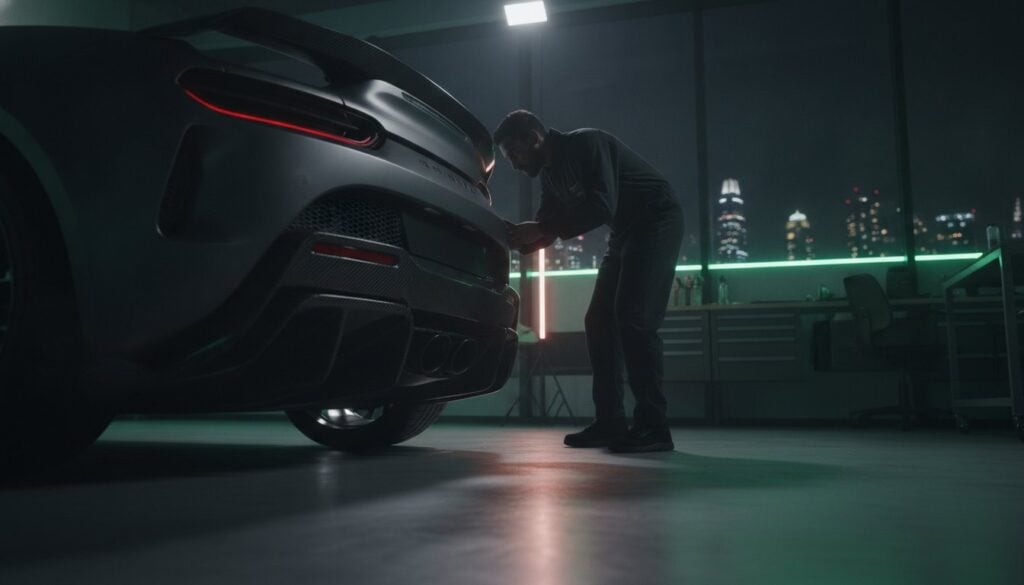
Did you know that custom carbon fiber parts can reduce individual component weight by up to 50% compared to traditional steel? It’s a staggering statistic that defines the current era of high-performance tuning. You’ve likely felt the frustration of purchasing off-the-shelf components only to find the weave is crooked or the fitment is dangerously loose. There’s a valid fear that a poor installation might compromise your vehicle’s integrity or ruin its sleek lines. You expect a level of precision that matches the elite engineering of your car, not a generic compromise.
This 2026 guide reveals how bespoke engineering and elite craftsmanship transform your vehicle’s performance and visual impact. You’ll learn the vital differences between forged composites and dry carbon; we’ll also explain why professional installation is the only path to achieving a flawless factory-level fit. We’ll preview the latest trends in aerodynamic design and structural repair, giving you the technical knowledge to make informed decisions. From aggressive aesthetic overhauls to essential weight reduction, you’re about to discover how to master the intersection of high-octane passion and professional precision.
Key Takeaways
- Master the hierarchy of carbon manufacturing to distinguish between high-performance pre-preg dry carbon and cost-effective aesthetic wet carbon options.
- See how custom carbon fiber parts leverage advanced 3D scanning technology to achieve a flawless, factory-level fitment for any luxury or supercar.
- Learn to enhance elite conversions from Brabus and Mansory with one-off carbon accents that create a truly unique and aggressive vehicle profile.
- Discover why specialized carbon fiber repair is a core competency required to preserve both the safety and the premium finish of your bespoke components.
- Identify the latest 2026 trends in active aerodynamics and weight-saving panels that significantly boost vehicle performance and efficiency.
The Evolution of Custom Carbon Fiber Parts in 2026
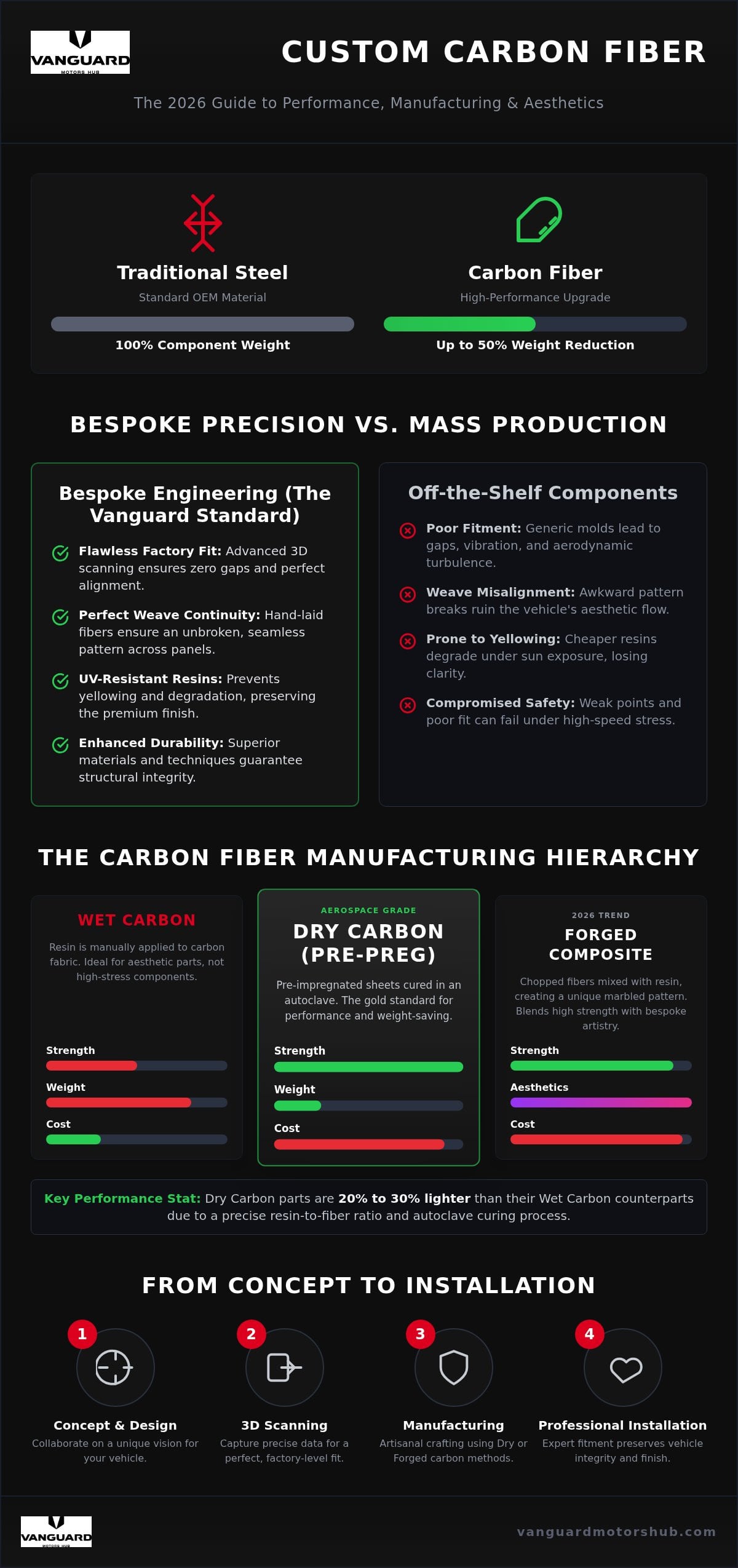
Carbon fiber has transitioned from a specialized racing material to the definitive hallmark of modern luxury. Formally classified as Carbon Fiber Reinforced Polymer (CFRP), these custom carbon fiber parts are now the standard for owners who refuse to accept factory limitations. By 2026, the industry has seen a decisive shift. It’s no longer just about shaving seconds off a lap time; it’s about the intersection of elite performance and bespoke visual identity. These components offer a dual advantage that traditional materials can’t match. You gain up to 50% weight reduction over steel while simultaneously increasing structural rigidity. At Vanguard Motors Dubai, we call this the ‘Vanguard Standard’. It represents a commitment to precision that ensures your vehicle performs as aggressively as it looks.
Why ‘Off-the-Shelf’ Carbon Often Fails High-End Cars
Mass-produced carbon components are frequently built with generic molds that overlook the unique tolerances of high-end chassis. You’ll often notice weave misalignment where the pattern breaks awkwardly across a fender or hood line. This lack of continuity ruins the aesthetic flow of a precision-engineered supercar. Fitment is another critical failure point. Gaps between panels don’t just look poor; they create aerodynamic turbulence and can cause vibration damage at high speeds. High-quality custom carbon fiber parts utilize advanced UV-resistant resins to prevent the yellowing common in cheaper alternatives. We prioritize hand-laid techniques to ensure the fibers are perfectly tensioned and aligned. This artisanal approach guarantees a level of durability and finish that mass-market parts simply can’t achieve.
The Aesthetic Appeal: Weave Patterns and Finishes
The visual landscape of automotive carbon has matured significantly. While the 2×2 Twill remains a classic choice for its balanced look, Forged Carbon is the dominant trend in 2026 for its organic, marbled texture. Each piece becomes a unique work of art because no two chopped fiber patterns are ever the same. The choice of finish further defines the vehicle’s character. Gloss finishes provide a deep, reflective shine that accentuates body curves, while satin and matte options offer a stealthy, technical appearance. High-quality carbon fiber possesses an incredible visual depth that makes the weave appear to be suspended in a three-dimensional crystalline structure. It’s a level of sophistication that transforms a standard machine into a bespoke engineering marvel.
Wet vs. Dry vs. Forged: Understanding the Manufacturing Hierarchy
The technical soul of your build resides in the manufacturing method you select. While we have already explored the aesthetic shift toward luxury, the manufacturing hierarchy dictates the actual performance profile of your custom carbon fiber parts. Wet carbon is the entry-level standard. It’s suitable for non-structural trim where visual impact matters more than mechanical load. However, the excess resin required in hand-application adds unnecessary weight. At Vanguard Motors Dubai, we guide you toward the upper tiers of this hierarchy to ensure your investment delivers genuine results.
Dry Carbon: Aerospace Technology for the Road
Dry carbon, or pre-preg, is the undisputed gold standard for high-performance applications. This process uses sheets already impregnated with a precise resin-to-fiber ratio, which eliminates the heavy pools of resin found in wet-layup. The curing stage occurs within an autoclave. This high-pressure environment forces out microscopic air pockets that would otherwise create structural weak points. This level of precision is increasingly accessible due to an innovative method of preparing low-cost, large tow textile grade carbon fiber. It’s the same technology used in aerospace engineering to ensure components can withstand extreme aerodynamic forces.
Opting for dry carbon results in parts that are consistently 20% to 30% lighter than their wet-carbon counterparts. This reduction is vital for high-stress areas like active rear wings or structural hoods. It’s the difference between a part that merely mimics a race car and one that actually functions like one. You can consult with our technical team to evaluate which tier of manufacturing aligns with your vehicle’s performance targets.
Forged Carbon: The New Frontier of Customization
Forged carbon has redefined the 2026 luxury landscape by moving away from traditional woven fabric. This method utilizes chopped carbon fibers compressed under massive pressure. The result is a marbled, organic appearance that provides a stark contrast to the repetitive patterns of standard weaves. This process is exceptionally effective for creating complex 3D geometries that are impossible to execute with traditional cloth. It allows for intricate interior inserts and aggressive aerodynamic diffusers that retain a distinct, one-of-one signature.
The strength profile of forged carbon is uniquely multidimensional. Because the fibers are oriented randomly, the component possesses uniform strength in every direction. It’s a robust solution for high-touch interior areas and complex exterior trim that faces varied mechanical stresses. This material represents the perfect fusion of avant-garde art and structural excellence. It ensures your custom carbon fiber parts stand out in any elite automotive gathering. Every piece we produce is a testament to the intersection of modern engineering and artisanal care.
Exterior and Interior Carbon Fiber Applications
Moving from the technical science of manufacturing to the strategic art of application requires a meticulous eye for detail. The widespread adoption of automotive carbon fiber composites has proven that every vehicle surface is an opportunity for both aesthetic and mechanical enhancement. Whether it’s managing high-velocity airflow across the body or refining the tactile touchpoints of the cockpit, custom carbon fiber parts serve as the ultimate vehicle upgrade. We don’t just add components; we re-engineer the vehicle’s relationship with the road and the driver. Every modification is a calculated step toward a more responsive and visually striking machine.
Aerodynamic Performance: More Than Just Looks
Aerodynamics is a calculated manipulation of physics rather than a simple visual choice. Front splitters and rear diffusers work in tandem to accelerate air under the chassis, creating the low-pressure zone required for increased downforce. This suction keeps the tires planted during high-speed cornering and improves overall stability. Because these components face immense pressure, their structural integrity is non-negotiable. If a splitter or wing is compromised by road debris, Carbon Fibre Car Parts Repair is vital to restoring that aerodynamic balance. We ensure every active wing and front lip performs exactly as the wind tunnel intended.
Replacing heavy steel panels with carbon fiber creates a dramatic shift in the car’s center of gravity. A carbon fiber roof lowers the roll center, which sharpens turn-in response and reduces body roll during aggressive maneuvers. Similarly, bespoke hoods and mirror caps contribute to a leaner profile while shedding significant mass from the front axle. These changes aren’t just seen; they’re felt through the steering wheel during every corner. Every gram saved is a performance gain earned through precision engineering.
The Bespoke Interior Experience
The interior of a supercar is a high-pressure environment where ergonomics meet technical luxury. Customizing the cockpit with carbon fiber steering wheel inserts provides a tactile, race-inspired connection to the road that standard materials can’t replicate. We focus on dashboard overlays and door sills that match the exterior weave patterns for a cohesive, factory-plus look. These high-touch areas demand the durable, high-register resins discussed earlier to resist daily wear and tear. The result is a cabin that feels as fast as the engine sounds, surrounding the driver in a technical masterpiece.
At Vanguard Motors Dubai, we often pair these carbon upgrades with our specialized leather restoration services. The contrast between supple, hand-stitched leather and the technical precision of custom carbon fiber parts creates a sophisticated atmosphere. It’s a balance of textures that defines modern luxury in 2026. Whether you’re refreshing a classic or perfecting a new acquisition, the synergy between these materials is unmatched. Your vision deserves an interior that is as meticulously crafted as the engine under the hood.
The Customization Process: From Concept to Installation
Creating custom carbon fiber parts for a supercar is a technical journey that demands more than just a creative eye. It requires a rigorous, multi-stage engineering process to ensure every component enhances the vehicle’s performance without compromising its factory integrity. At Vanguard Motors, we treat every project as a unique engineering challenge. The journey begins with a deep-dive design consultation. Here, we identify your performance goals and select the specific weave styles and finishes that best complement your car’s existing aesthetic. Whether you’re looking for the marbled texture of forged carbon or the classic symmetry of a 2×2 twill, this stage sets the foundation for a flawless build.
The Role of 3D Scanning in Bespoke Design
Supercars are built to incredibly tight tolerances, where even a millimeter of deviation can lead to unsightly gaps or aerodynamic instability. We utilize high-resolution 3D scanning to create a precise digital twin of your vehicle’s surfaces. This technology allows us to design components that interface perfectly with factory mounting points, effectively eliminating the fitment issues common in generic aftermarket parts. Digital precision ensures that every new panel or wing preserves the vehicle’s original lines while adding a layer of aggressive, modern sophistication. It’s the only way to guarantee a result that looks like it came from the manufacturer’s own skunkworks division.
Once the digital model is finalized, the process moves into physical prototyping. We verify all clearances and mounting interfaces before committing to the final production run. This prevents the “buy and bolt” compromises that plague mass-market tuning. Following prototype approval, the parts undergo precision manufacturing. This involves meticulous hand-laying of pre-preg carbon sheets followed by a high-pressure cure in an autoclave. This aerospace-grade environment is essential for achieving the maximum strength-to-weight ratio required for high-performance driving.
Professional Fitment vs. Aftermarket Compromises
The final installation is where technical expertise meets meticulous care. Using incorrect fasteners or inferior adhesives on high-speed components is a recipe for disaster. We ensure that every piece of hardware is rated for the aerodynamic loads it will face at triple-digit speeds. Furthermore, modern supercars are packed with active aero sensors, cameras, and radar systems that must remain fully functional. Our technicians are experts at integrating these complex electronics into your new carbon components. We prioritize a ‘zero-damage’ installation technique that protects your original paintwork and chassis throughout the entire transformation. To begin your own bespoke build, book a precision design consultation with our specialists today.
Integrating Carbon Fiber with Elite Body Kits
Elite automotive transformation reaches its zenith when custom carbon fiber parts are integrated into world-class body kits. This synergy represents the ultimate evolution of the bespoke vehicle. With the global automotive carbon fiber composites market projected to reach $31.65 billion in 2026, the demand for high-end integration has never been higher. While standalone components offer significant gains, a holistic conversion ensures that every panel, wing, and vent works in perfect aerodynamic harmony. At Vanguard Motors, we specialize in bridging the gap between high-performance engineering and artisanal design. We provide a comprehensive approach that treats the vehicle as a single, unified masterpiece.
Brabus and Mansory: The Pinnacle of Carbon Integration
The technical demands of a Brabus body kit installation or a Mansory conversion are immense. These kits rely heavily on exposed carbon fiber to define their aggressive silhouettes, particularly in high-profile platforms like the Mercedes G-Wagon or the Lamborghini Urus. Integrating one-off custom carbon fiber parts into these kits allows for a level of personalization that off-the-shelf packages can’t match. It requires expert paint matching to ensure the transition between the vehicle’s body and the carbon accents is seamless. Installing full carbon widebody kits involves complex bonding and structural alignment that generic workshops simply aren’t equipped to handle. Precision is the only acceptable standard when the goal is a factory-plus finish.
The Future of Carbon Fiber Repair and Maintenance
Even the highest quality carbon fiber requires specialized care to maintain its structural and aesthetic excellence. Over time, intense UV exposure in high-heat environments can cause older clear coats to yellow or crack. This isn’t just a visual flaw; it’s a sign that the protective barrier is failing. Specialized cosmetic car repair is essential for restoring these surfaces to their original depth and luster. We utilize advanced resins and UV-stable coatings to repair structural damage and refresh the visual clarity of your components. This proactive maintenance ensures your investment remains protected against the elements while retaining its peak market value. Ready to elevate your vehicle? Consult with the experts at Vanguard Motors Hub to begin your journey toward automotive perfection.
Mastering the Future of Automotive Excellence
Transforming a supercar into a bespoke masterpiece requires a synergy of visionary design and surgical precision. You’ve seen how the choice between dry carbon’s lightweight utility and forged carbon’s marbled luxury defines both performance and presence. Achieving a factory-level finish depends on advanced 3D scanning and aerospace-grade curing. This ensures your custom carbon fiber parts integrate seamlessly with your vehicle’s original lines. At Vanguard Motors Hub, we combine technical authority with high-octane passion to deliver results that exceed manufacturer standards.
Our specialized carbon fiber repair facility and status as an authorized Brabus and Mansory installation center ensure your vehicle receives meticulous care. With national UAE service coverage, we act as your sophisticated guide in the pursuit of mechanical perfection. Whether you’re enhancing aerodynamics or restoring structural integrity, our team is committed to maintaining the highest standards. It’s time to stop settling for off-the-shelf compromises and start engineering your own legacy. Your vision deserves the precision of elite craftsmanship.
Design your bespoke carbon fiber masterpiece with Vanguard Motors Hub
Expert Insights: Custom Carbon Fiber Engineering
What is the difference between real carbon fiber and a carbon wrap?
Real carbon fiber is a structural Carbon Fiber Reinforced Polymer (CFRP) that provides genuine weight reduction and rigidity. In contrast, a carbon wrap is simply a vinyl sticker designed to mimic the appearance of a weave. Wraps offer zero performance benefits and lack the three-dimensional depth of authentic components. Choosing real custom carbon fiber parts ensures your vehicle gains the mechanical advantages of aerospace technology rather than just a superficial aesthetic change.
How long does it take to manufacture a custom carbon fiber part?
The timeline for creating a bespoke component typically ranges from several weeks to a few months depending on complexity. This duration accounts for the meticulous multi-stage process of 3D scanning, prototyping, and autoclave curing. We prioritize precision over speed to ensure every part meets the Vanguard Standard for fitment. While mass-produced parts are available instantly, a truly custom piece requires this dedicated timeframe to guarantee the structural integrity and aesthetic perfection your supercar deserves.
Can damaged carbon fiber parts be repaired or do they need replacement?
Damaged carbon fiber can often be restored through specialized structural and cosmetic repair services. We utilize advanced resins to fix cracks and restore yellowed clear coats without needing a full replacement. However, if the internal fiber structure is severely compromised in a high-stress area, replacement is the only safe option. Our technicians conduct a thorough assessment to determine if a repair can return the component to its original factory strength and visual clarity.
Does adding carbon fiber parts affect my vehicle’s warranty?
Installing aftermarket components generally doesn’t void your entire vehicle warranty, though it may affect the specific areas modified. Manufacturers can’t legally void a warranty unless they can prove the custom part caused a specific failure. We recommend checking with your local transport authority and reviewing your manufacturer’s terms before beginning a conversion. Our professional installation techniques prioritize using factory mounting points to minimize any risk to your vehicle’s original systems or structural integrity.
Is forged carbon fiber stronger than traditional woven carbon fiber?
Forged carbon fiber offers superior multidimensional strength because its chopped fibers are oriented randomly. This makes it exceptionally durable in every direction simultaneously, whereas traditional woven carbon is strongest along the axis of its fibers. This unique property allows forged carbon to be molded into complex three-dimensional shapes that traditional fabric can’t achieve. While both materials provide incredible strength-to-weight ratios, forged carbon is often preferred for intricate interior trim and high-stress aerodynamic components.
How do I maintain and clean my custom carbon fiber components?
Maintenance requires the same meticulous care as your vehicle’s paintwork. Use only pH-neutral soaps and high-quality microfiber cloths to prevent surface scratches. Applying a UV-resistant wax or ceramic coating is essential for protecting the resin from sun damage and preventing the clear coat from yellowing over time. Avoid using abrasive chemicals or automated car washes that can mar the delicate finish. Regular detailing ensures your custom carbon fiber parts maintain their deep, reflective luster for years.
Can you create custom carbon fiber parts for any car model?
We can engineer bespoke components for virtually any vehicle through our advanced 3D scanning process. This technology allows us to create a digital twin of any car’s geometry to ensure a perfect interface with factory points. While we focus heavily on luxury and supercars, the technical principles of bespoke engineering apply across all brands. Whether you’re modifying a modern hypercar or a classic restoration, we can design custom solutions that enhance both the performance and the visual profile.
Is dry carbon fiber worth the extra investment over wet carbon?
Dry carbon is absolutely worth the investment for owners prioritizing performance and weight reduction. Because it uses pre-preg sheets and autoclave curing, it’s significantly lighter and stronger than wet-layup alternatives. Wet carbon is a cost-effective choice for non-structural interior trim, but it carries excess resin weight that can hinder performance. If you demand the highest power-to-weight ratio and a flawless factory-plus finish, dry carbon is the only material that meets elite technical standards.