

Your luxury vehicle isn’t just resting during dormancy; it’s a magnet for microscopic contaminants that can compromise its finish the moment you touch it. You’ve likely felt that hesitation when uncovering a supercar after months in a UAE garage. The fear of micro-marring that pristine paint during the first wash is real, and the stale air inside suggests that a simple vacuuming won’t suffice. Detailing a car after storage requires more than a standard wash. It demands a surgical decontamination process to preserve high-performance surfaces.
This 2026 professional restoration checklist provides a systematic approach to safe decontamination, interior revitalization, and the verification of your PPF or ceramic protection layers. We’ll guide you through deep-cleaning intricate engine crevices and restoring that ‘new car’ feel, ensuring your investment remains in peak condition. Whether you’re preparing for a weekend drive or a concours event, this guide ensures your vehicle returns to the road with the precision and brilliance it deserves. We’ll show you how to wake your vehicle from its slumber with the elite care it requires.
Key Takeaways
- Conduct a comprehensive aesthetic audit to identify stagnant dust and industrial fallout before any water touches the surface.
- Avoid the dangerous “dry wipe” trap by using touchless pre-washes and snow foams that safely lift abrasive particles from your finish.
- Restore cabin elegance by utilizing deep steam cleaning and ozone treatments to eradicate storage scents and rehydrate premium leather hides.
- Verify the integrity of your Paint Protection Film (PPF) and carbon fiber components to ensure dormancy hasn’t led to lifting or yellowing.
- Master the systematic process of detailing a car after storage to prepare your vehicle for the Vanguard Premium Package and long-term preservation.
The Pre-Detail Inspection: Assessing Storage Impact
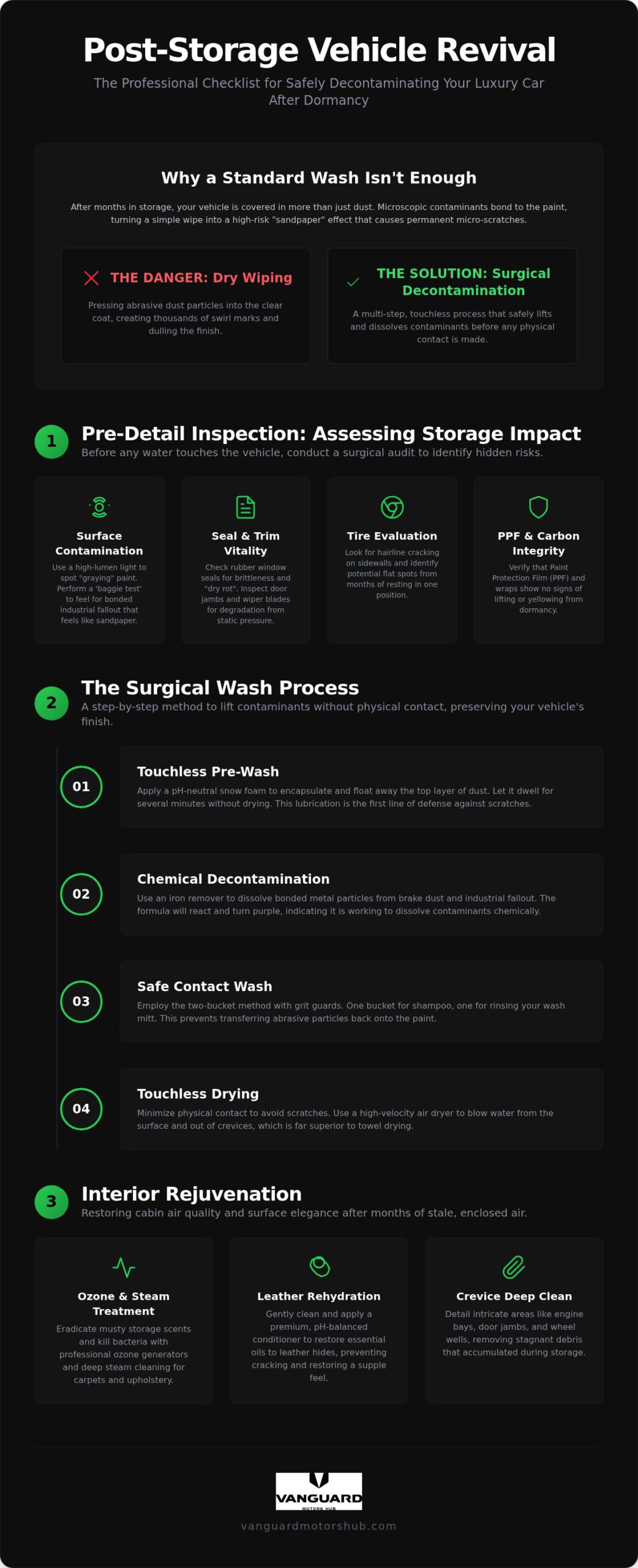
Waking a high-performance machine from its slumber is a delicate operation. Before a single drop of water touches the panel, you must conduct a surgical audit. Detailing a car after storage begins with observation, not action. Stagnant dust acts like sandpaper if handled incorrectly; the unique UAE environment can accelerate the degradation of delicate materials even in a climate-controlled facility. A multi-point aesthetic audit, a standard practice at Vanguard Motors Dubai, identifies hidden risks before they become permanent damage.
Identifying Surface Contamination
Dust isn’t just a surface issue. Over months, it settles into the microscopic pores of your paintwork. Use a high-lumen inspection light to reveal the true topography of the finish. You’ll likely see a “graying” effect where the paint has lost its depth. Perform a baggie test by placing your hand in a thin plastic bag and gliding it over the hood. If the surface feels like fine-grit sandpaper, you’re dealing with bonded industrial fallout or environmental contaminants that have fused with the clear coat. This requires a specific decontamination protocol rather than a standard wash.
Seal and Trim Vitality Check
Rubber and plastic components are often the first to surrender to dormancy. Inspect window seals for elasticity; if they feel brittle or show “dry rot,” they’ve lost their essential oils. Check door jambs for grease buildup or stagnant debris that can migrate into the cabin. Don’t forget the windshield wipers. After months of static pressure, blades often lose their pliability or take on a permanent curve. This renders them ineffective during the next sudden shamal or dust storm. Ensuring these seals remain supple is vital for maintaining the structural and aesthetic integrity of your vehicle.
Static pressure is the ultimate enemy of performance rubber. Evaluate tire sidewalls for hairline cracking, which indicates chemical leaching or UV exposure if stored near windows. Check for flat-spotting. Even with premium compounds, months of resting on a single patch can create subtle vibrations that compromise the driving experience. Identifying these issues during the initial audit allows for a more targeted restoration process, ensuring your vehicle is not just clean, but road-ready.
Exterior Decontamination: The Surgical Wash Process
Touching a dry, dusty vehicle is the fastest way to ruin a supercar’s finish. When detailing a car after storage, the most dangerous move you can make is a “dry wipe” with a microfiber cloth. Storage dust consists of abrasive particles that, when pressed against paintwork, create thousands of microscopic scratches or “swirl marks.” You need a surgical approach to lift these contaminants without physical contact. Executing a precise routine for detailing a car after storage ensures that your vehicle’s aesthetic value is preserved rather than compromised during the first wash.
The Power of the Pre-Wash
Successful decontamination begins with lubrication. Apply a pH-neutral snow foam to encapsulate and float away the top layer of dust. In the 2026 detailing landscape, products like SONAX PROFILINE ActiFoam Energy or Gtechniq W5 Citrus APC are favored for their ability to break down environmental film without stripping existing protection. Dwell time is your secret weapon; allow the foam to work for several minutes, ensuring it doesn’t dry on the surface. Use a pressure washer to clear out hidden crevices, wheel wells, and intricate trim where dust hides.
Once the surface dust is gone, you must address bonded metal particles. Iron removers, such as P&S Iron Buster, react with brake dust and industrial fallout, turning purple as they dissolve the contaminants. Mechanical decontamination follows this chemical step. A clay bar is essential if you feel any roughness after the wash, but use it with caution. If you aren’t planning a professional paint correction, aggressive claying can leave marring. For vehicles with delicate finishes, this stage is best handled by experts who can balance decontamination with surface safety.
Two-Bucket Method and Safe Drying
The physical wash must be as low-friction as possible. Use the two-bucket method with grit guards to ensure your high-GSM microfiber mitt stays clean. One bucket contains your shampoo solution; the other is for rinsing away trapped dirt. Dedicated wheel buckets are non-negotiable to prevent cross-contamination between abrasive brake dust and sensitive body panels. When it’s time to dry, minimize physical contact. High-velocity air-dryers are superior to plush towels, as they eliminate the risk of dragging any missed particles across the clear coat.
If your vehicle has been dormant for several months, consider a professional decontamination session to ensure your protection layers remain intact.
Interior Rejuvenation: Restoring Cabin Air and Surface Elegance
A luxury cabin should be a sanctuary of fine materials and filtered air. However, months of dormancy can turn this space into a reservoir for stale odors and microscopic allergens. Detailing a car after storage requires a proactive approach to interior hygiene that goes far beyond a simple vacuum. In the UAE, where humidity and dust are constant factors, stagnant air can lead to the growth of mold spores within the HVAC system and the degradation of premium textiles. You don’t want your first drive to be marred by a musty atmosphere that compromises the vehicle’s elite feel.
Eradicating the infamous “storage scent” starts with deep steam cleaning. High-temperature vapor penetrates fabric fibers and hard surfaces, killing bacteria without the need for harsh chemicals. For persistent odors, ozone treatment is a professional-grade solution. It oxidizes odor-causing molecules, effectively resetting the cabin’s atmosphere to its original state. This process is essential for ensuring your return to the driver’s seat is defined by luxury, not discomfort.
Deep Leather Conditioning
Premium hides are organic materials that require constant hydration to remain supple. During storage, the absence of cabin circulation and fluctuating temperatures can leach essential oils from the leather, leading to stiffness or even hairline cracks. The process begins with a pH-balanced cleaner to lift surface dust and oils without damaging the finish. Once clean, we apply high-grade conditioners that penetrate the pores to restore elasticity. If your upholstery has suffered significant drying, professional leather restoration car services can revitalize the material before permanent damage occurs.
Air Quality and Duct Cleaning
Your vehicle’s HVAC system is a primary collector of storage-related contaminants. Replacing the cabin air filter is a mandatory post-storage step that many owners overlook. We recommend steam cleaning the vents to neutralize any bacteria that may have settled in the ductwork. This ensures that the air you breathe is as clean as the surfaces you touch. Professional anti-bacterial treatments provide an additional layer of protection, maintaining a fresh environment for the long term.
Alcantara and other high-end textiles require a different level of precision. These materials can become matted if dust settles into the pile over time. Specialized brushing techniques and dedicated cleaners are used to lift the nap and restore that signature soft feel. By systematically addressing every surface, from the roof lining to the footwells, you ensure the interior matches the high-performance excellence of the exterior. This comprehensive approach to detailing a car after storage guarantees a driving experience that feels truly brand new.
Specialized Care for PPF, Wraps, and Carbon Fiber
Modern automotive preservation relies heavily on synthetic shields. If your vehicle is equipped with advanced protection, detailing a car after storage requires a specialized protocol that differs from standard paint care. Stagnant dust and fluctuating garage temperatures can affect the adhesive bonds of films or the resin in carbon fiber components. Ignoring these elements during your post-dormancy inspection can lead to premature failure of expensive protective layers. You must ensure these barriers are still functioning at an elite level before returning to the high-speed environments of the UAE.
PPF and Wrap Maintenance
Begin by inspecting the edges of your film. Paint Protection Film (PPF) can occasionally lift at the corners if moisture was trapped before storage or if the adhesive has dried out. Look for “yellowing” or a loss of clarity, which may indicate that environmental fallout has begun to penetrate the top coat. Because paint protection film is the standard for excellence in 2026, maintaining its integrity is paramount. Use specialized sealants designed for films rather than traditional carnauba waxes, which can cause buildup at the seams.
Vinyl wraps face a different challenge: ghosting. This occurs when stagnant dust sits on the surface for months, leaving faint outlines or stains even after a wash. If you notice minor scuffs from a car cover, you can often activate the self-healing properties of premium films using controlled heat. This restores the mirror-like finish without the need for abrasive polishing. If your wrap appears dull, a professional-grade film rejuvenator can bring back the depth of color while adding a fresh layer of UV protection.
Carbon Fiber and Kit Inspection
Exposed carbon fiber is a hallmark of high-performance engineering, but it’s susceptible to oxidation. Whether it’s a factory finish or a bespoke Brabus or Mansory kit, the clear resin can cloud over time. Use a fine-grade finishing polish to restore the deep, three-dimensional look of the weave. This is also the ideal time to check the fitment of your aerodynamic kits. Vibrations or settling during storage can occasionally loosen fasteners on front splitters or rear diffusers. Applying a dedicated UV protectant to all forged and traditional carbon components will prevent the “milky” appearance caused by intense sun exposure.
Finally, evaluate the hydrophobic properties of your ceramic coating. If water no longer beads and rolls off the surface, the coating may be “clogged” with storage contaminants. A specialized decontamination wash can often strip these particles and revive the coating’s performance. For a comprehensive assessment of your vehicle’s protective layers, you can book a professional protection audit to ensure your supercar remains showroom-ready. Detailing a car after storage is the perfect opportunity to verify that your investment is still fully shielded against the elements.
The Vanguard Protocol: Professional Post-Storage Excellence
The final phase of detailing a car after storage isn’t about cleanliness; it’s about elevation. Once the contaminants are removed and the surfaces are sanitized, your vehicle enters the preservation stage. This transition from a clean car to a protected masterpiece is best achieved through the Vanguard Premium Package. It integrates holistic vehicle protection with aesthetic refinement, ensuring every square centimeter of your machine meets our exacting standards. Precision is non-negotiable when you’re preparing a high-performance asset for the road.
Paint Correction and Protection
Storage-induced swirls are a common discovery even under the best car covers. If the initial inspection reveals micro-marring or a lack of depth in the clear coat, a simple wash won’t suffice. Professional paint correction is the only way to restore true optical clarity. This surgical leveling of the paint removes imperfections and prepares the surface for long-term shielding. If you’re considering a visual transformation, this stage is also the essential first step before applying a new car wrap to ensure the adhesive bonds perfectly to a flawless substrate.
For vehicles already equipped with ceramic protection, we apply specialized boosters. These chemicals fill in microscopic gaps in the existing coating that may have been compromised by stagnant dust or moisture spotting. This re-establishes the high-tension hydrophobic properties required to repel the UAE’s environmental fallout. We ensure that your protection layers aren’t just intact but are performing at their maximum potential.
Final Delivery Standards
No restoration is complete without addressing the mechanical aesthetics. Exhaust tips often accumulate carbon buildup and a dull tarnish during dormancy. Polishing these back to a mirror finish, alongside dressing the tires with non-sling protectants and ensuring surgical glass clarity, completes the transition. Our final ‘white glove’ interior inspection ensures a dust-free environment that matches the exterior’s brilliance. We leave no crevice unexamined, from the wheel bolts to the intricate trim of a Mansory or Brabus kit.
To ensure your vehicle never ‘settles’ again, we recommend a proactive maintenance schedule. Detailing a car after storage is a reset; keeping it in peak condition requires consistent care. Setting a routine prevents the accumulation of the very contaminants that make post-storage detailing so intensive. It’s about maintaining a state of constant readiness. Ready to wake your vehicle from dormancy? Book your professional post-storage detail via WhatsApp and experience the Vanguard standard of excellence.
Master the Road: Elevate Your Post-Storage Performance
Reclaiming your vehicle’s brilliance after a period of dormancy is a multi-layered process that demands technical mastery. From the initial multi-point audit to the surgical decontamination of your exterior, every step ensures your machine is ready for the UAE’s demanding conditions. You’ve learned the importance of safe washing techniques and the specialized care required for modern materials like PPF and forged carbon. Detailing a car after storage is the definitive way to preserve both aesthetic value and structural integrity.
Vanguard Motors Dubai combines specialized supercar detailing expertise with advanced PPF and wrap rejuvenation techniques. Our technicians excel in premium leather and interior restoration, ensuring your cabin environment is as pristine as the exterior finish. It’s time to transition your vehicle from a stationary asset back into a high-performance masterpiece.
Restore your vehicle’s elite finish today; Message us on WhatsApp
Your vehicle deserves a return to the road that matches its high-performance heritage. We look forward to helping you achieve that showroom-standard finish once again.
Frequently Asked Questions
Is it safe to use a pressure washer on a car after storage?
Yes, using a pressure washer is safe provided you maintain a distance of at least 30 centimeters from the surface. It’s an effective way to clear out hidden crevices where storage dust accumulates. Always start with a low-pressure rinse to remove loose particles before applying a pH-neutral snow foam. This prevents the pressure from driving abrasive dust into the clear coat, which is a common risk when detailing a car after storage.
How do I remove the musty smell from my car’s interior after it has been sitting?
Eliminating musty odors requires a combination of deep steam cleaning and professional ozone treatment. Steam effectively kills bacteria and mold spores trapped in the upholstery fibers or floor mats. Ozone treatment then oxidizes the remaining odor molecules to reset the cabin’s atmosphere. You should also replace your cabin air filters and sanitize the HVAC vents to ensure the air remains fresh during your first drive.
Will detailing a car after storage remove flat spots on my tires?
Professional detailing focuses on aesthetic restoration and decontamination; it won’t fix physical flat spots on tire rubber. Flat spots occur due to static pressure during long-term dormancy. While we thoroughly clean the sidewalls and apply UV-protective dressings, structural tire issues require driving the vehicle to see if the spots round out or visiting a specialist for a tire integrity check.
Should I wax my car immediately after taking it out of storage?
You shouldn’t apply wax or any sealant until the paint has undergone a full decontamination process. Applying protection over storage dust or industrial fallout will trap contaminants against the finish. Detailing a car after storage must involve a thorough chemical and mechanical cleaning phase first. Once the surface is surgically clean, you can then apply a wax, ceramic booster, or the Vanguard Premium Package to shield the paint.
What is the best way to clean dust off a car with PPF?
The safest way to clean dust from a vehicle with Paint Protection Film is a touchless pre-wash using high-lubricity snow foam. This encapsulates the dust particles so they can be rinsed away without physical agitation. If minor scuffs from a car cover are present, the self-healing properties of the PPF can often be activated with warm water or sunlight. Avoid using abrasive brushes that could dull the film’s clarity.
Can I use a clay bar on a car that has been stored for a year?
A clay bar should only be used after a thorough chemical decontamination with an iron remover. If the paint still feels rough to the touch after washing, a clay bar can safely lift bonded contaminants. However, use it with a high-quality lubricant to prevent marring. For vehicles stored for over a year, we often recommend a professional assessment to determine if a light paint correction is needed after claying.
Does Vanguard Motors offer mobile detailing for cars in storage?
Yes, Vanguard Motors Dubai provides a specialized Mobile Detailing Van designed to service vehicles directly at your location. This is a convenient solution for owners who prefer to have their car detailed before it’s even moved from its storage facility. Our mobile unit is equipped with the same professional-grade tools and chemicals used in our main center, ensuring elite quality and meticulous care on-site.
How often should I detail my car if it spends most of its time in storage?
Even if your vehicle is rarely driven, we recommend a comprehensive detail at least twice a year. This prevents stagnant dust from bonding to the paint and ensures that rubber seals remain supple. A deep interior sanitization every six months is also vital to prevent musty odors in the UAE’s humid climate. Consistent maintenance ensures your car is always road-ready and its protective layers, like PPF, remain in peak condition.