
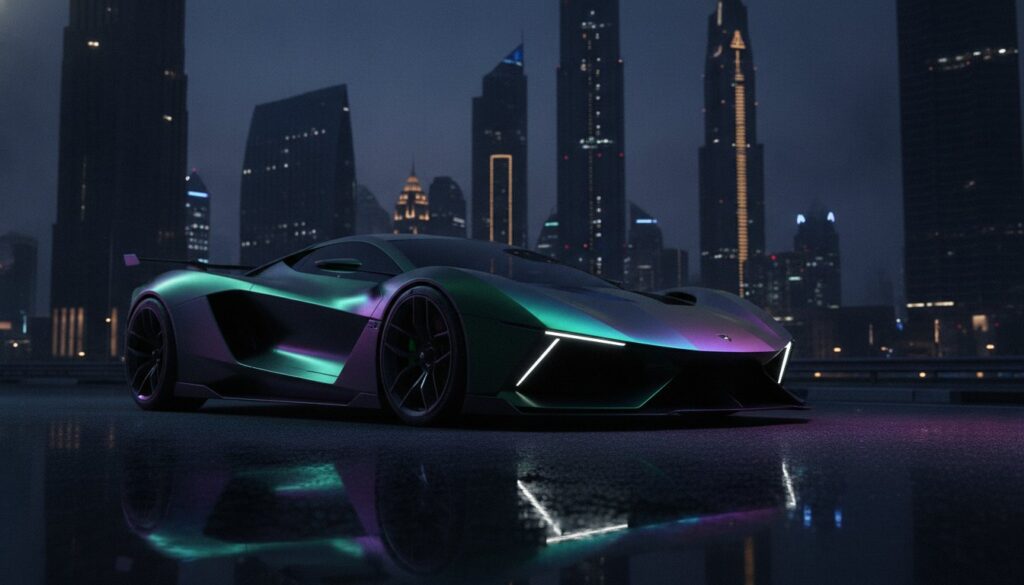
What if your vehicle’s aesthetic wasn’t just a color choice, but a high-definition expression of structural sophistication that shifts with every angle of the sun? You’ve likely felt the frustration of seeing generic, flat vinyl that fails to capture the soul of a high-performance machine. You want an elite finish that survives intense heat without losing its edge or looking like a budget imitation. This guide reveals the most sophisticated and visually stunning head-turning car wrap designs that will define automotive excellence in 2026.
We agree that a luxury vehicle demands a finish that matches its mechanical precision. You’ll discover how to achieve a one-of-a-kind look that commands respect while ensuring long-term durability. We’ll explore light-reactive textures, the rise of premium peelable paint over traditional vinyl, and how these elite trends integrate with high-end kit conversions. From satin finishes to iridescent color shifts, we’re outlining the future of precision aesthetics for the most discerning owners who refuse to settle for the ordinary.
Key Takeaways
- Understand the evolution of automotive art as it shifts from basic color swaps to sophisticated, multi-layered textures that define the 2026 aesthetic.
- Explore the visual impact of “Liquid Metal” and iridescent finishes to create head-turning car wrap designs that react dynamically to changing light.
- Discover how satin and brushed metallic textures provide a refined, tactile alternative to high-gloss finishes for a more sophisticated presence.
- Learn to avoid the “Clutter Trap” and other common design failures that can obscure your vehicle’s natural lines and engineering.
- Gain insights on integrating custom wraps with elite Brabus or Mansory body kits while utilizing Paint Protection Film to ensure a lasting, showroom-quality finish.
The 2026 Aesthetic Evolution: What Makes a Wrap Head-Turning?
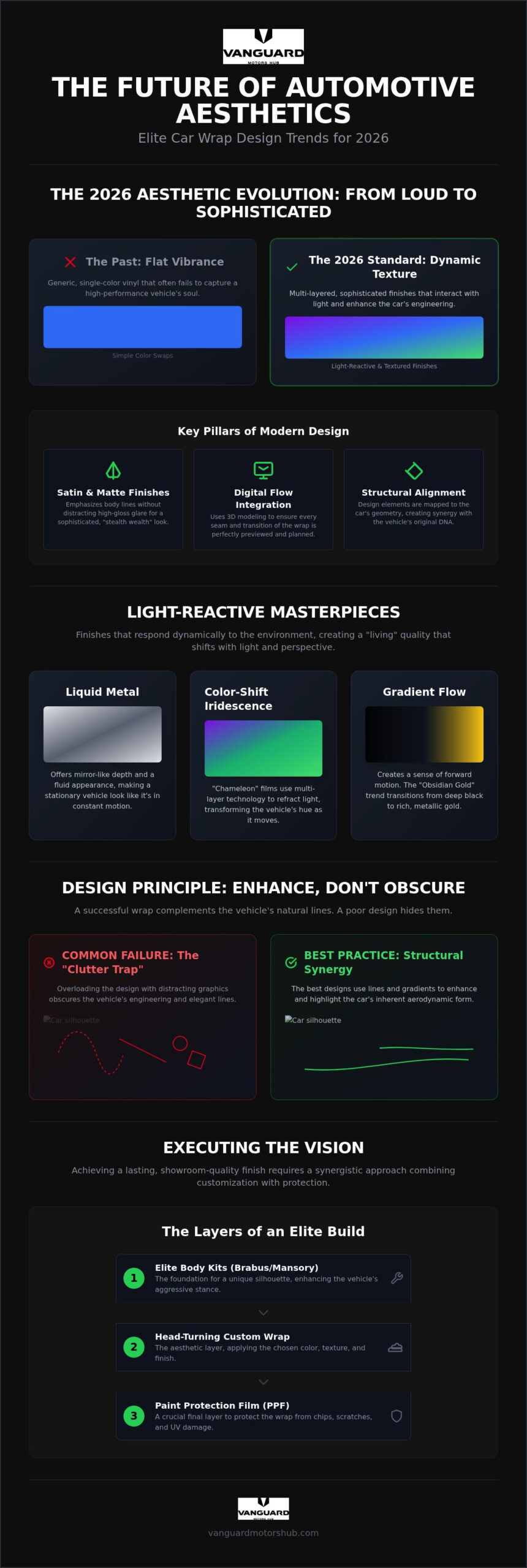
In 2026, the definition of a “head-turning” design has shifted away from mere vibrance. It’s no longer enough to be the loudest car on the road; you must be the most sophisticated. Modern high-performance automotive art now treats the vehicle as a dynamic canvas where the wrap enhances the underlying engineering. A vehicle vinyl wrap today serves as a high-tech second skin that highlights aerodynamic intent. Elite head-turning car wrap designs now leverage multi-layered textures to create a sense of depth that traditional single-stage factory paint cannot replicate.
The 2026 trends prioritize how a finish interacts with natural light and the car’s structural flow. We’ve moved beyond simple color changes into an era of “Visual Gravity.” This concept uses design to intentionally pull the viewer’s gaze toward specific mechanical features. By using gradients or textural shifts, a designer can emphasize the aggressive flare of a wheel arch or the sharp line of a carbon fiber splitter. It’s a calculated approach to aesthetics that rewards those who look closer.
The Psychology of Luxury Customization
Exclusivity is the primary driver for bespoke automotive finishes. Owners want a look that signals elite status while maintaining a polished, professional profile. The 2026 aesthetic balances this by using color psychology to influence the perception of speed and power. For example, muted earth tones like sage or deep slate, when paired with satin finishes, suggest a grounded and formidable presence. These choices reflect a confident personality that values meticulous care and high-octane performance over fleeting trends.
2026 Design Standards for Supercars
The “Stealth Wealth” aesthetic is currently dominating the elite customization market. This trend focuses on “factory-plus” looks that appear as though they originated from a manufacturer’s exclusive skunkworks division. Key elements of this standard include:
- Satin and Matte Finishes: These provide a sophisticated, non-reflective surface that emphasizes body lines without the distraction of high-gloss glare.
- Digital Flow Integration: We utilize digital design tools to preview how head-turning car wrap designs flow across 3D models, ensuring every seam and transition is perfect.
- Structural Alignment: Design elements are mapped to the car’s physical geometry, creating a seamless synergy between the wrap and the vehicle’s original DNA.
This evolution ensures that your vehicle doesn’t just stand out; it stands apart as a visionary leader in automotive style.
Light-Reactive Masterpieces: Iridescent and Gradient Finishes
Light is the ultimate architect of automotive form. In the pursuit of head-turning car wrap designs, 2026 has introduced finishes that don’t just sit on the surface; they respond dynamically to the environment. We’re seeing a decisive shift toward materials that possess a “living” quality. Liquid metal finishes represent the pinnacle of this evolution, offering a mirror-like depth that rivals the most expensive factory paint options. These finishes use high-density pigments to create a fluid appearance, making a stationary supercar look like it’s in constant motion.
The Rise of Color-Shifting Iridescence
The allure of “Chameleon” or iridescent wraps lies in their complex multi-layer film technology. These films utilize microscopic layers that refract light at different angles, causing the vehicle’s hue to transform as it moves. This level of Self-Expression Through Your Vehicle allows for a bespoke aesthetic that changes from deep purples to emerald greens depending on the viewer’s perspective. To maintain a sophisticated profile, we recommend using these effects on vehicles with sharp, aggressive lines. The shifting colors accentuate the car’s natural geometry without overwhelming its original design intent.
Gradient Flow and Transitional Designs
Gradients offer a more controlled approach to light interaction. By utilizing dark-to-light transitions, designers can create a sense of forward motion and aerodynamic speed. Vertical gradients often suit taller SUVs by grounding the vehicle, while horizontal gradients are ideal for high-performance coupes. A standout trend for 2026 is the “Obsidian Gold” transition. This design starts with a deep, ink-black front that seamlessly fades into a rich, metallic gold at the rear. It’s a bold statement of luxury that emphasizes the vehicle’s rear-biased power delivery.
The intense national sun serves as the ultimate stage for these light-reactive masterpieces. However, achieving a flawless finish requires technical precision and an understanding of how UV rays interact with multi-layered films. Proper installation ensures that the transition points are invisible and the iridescence remains vibrant for years. If you’re ready to explore how these advanced finishes can transform your vehicle, connect with our technical experts today to discuss your vision. We prioritize durability and visual impact to ensure your car remains a visionary leader on the road.
Textural Innovation: Satin, Brushed, and Carbon Fiber Accents
Texture is the new frontier in elite automotive customization. While previous years focused heavily on high-gloss vibrance, 2026 is defined by the tactile dimension of a vehicle’s surface. These materials don’t just reflect light; they sculpt it. Creating truly head-turning car wrap designs now requires a mastery of textural contrast. By mixing finishes, you can emphasize the mechanical soul of a supercar, making it look as though it was carved from a single block of industrial material. These advanced films also serve a practical purpose, as textured surfaces are significantly more effective at hiding micro-scratches and minor surface imperfections than traditional high-gloss vinyl.
Brushed metallic textures are gaining immense traction among owners who desire a rugged yet refined aesthetic. These finishes mimic the appearance of raw, directional-grained metal, providing a look that feels both engineered and bespoke. It’s a sophisticated choice for large panels on luxury SUVs or the long hoods of grand tourers. The depth provided by a brushed finish ensures the car looks premium even under the harsh, direct glare of the national sun, where gloss finishes might otherwise lose their detail in the reflection.
Satin and Matte: The Foundations of Modern Luxury
Satin remains the preferred choice for 2026 supercar owners. It offers a “frosted” sheen that sits perfectly between the flat appearance of matte and the high reflectivity of gloss. This balance allows the vehicle’s body lines to remain visible without the distraction of mirrored surroundings. Maintaining these surfaces is surprisingly straightforward; modern satin films are engineered to repel contaminants and resist the “polishing” effect that can occur with pure matte finishes over time. Regular cleaning with pH-neutral solutions keeps the unique sheen consistent and professional.
Carbon Fiber Integration and Repair
For those seeking the ultimate in performance aesthetics, integrating real carbon fiber with vinyl wraps is essential. Forged carbon wraps are a standout 2026 trend, offering a marbled, organic look that complements structural carbon fiber parts. At Vanguard Motors, we specialize in the synergy between these materials. Before applying a wrap, we ensure any damaged carbon fiber components are meticulously repaired to maintain structural integrity and a flawless surface. Strategic placement is key to a cohesive design. Focus on these areas for the best impact:
- Hoods and Roofs: Creates a lower visual center of gravity.
- Mirrors and Rear Diffusers: Adds technical detail to the vehicle’s extremities.
- Side Skirts: Emphasizes the car’s aerodynamic profile.
Achieving head-turning car wrap designs involves more than just a color choice; it’s about the precision of the finish. If your vehicle requires expert attention for carbon fiber installation or repair, explore our professional services at Vanguard Motors to ensure your transformation is handled with meticulous care.
Design Failure Analysis: Why Some Wraps Fall Flat
Elite automotive customization is as much about what you omit as what you include. Many owners fall into the “Clutter Trap” by attempting to combine too many competing trends into a single project. This overdesigning often masks the very engineering that makes a supercar special. For head-turning car wrap designs to succeed, they must respect the vehicle’s original silhouette and aerodynamic intent. Lack of contrast is another frequent pitfall. Light-on-light designs, such as silver accents on a white base, often disappear under the intense national sun. Without a clear visual hierarchy, the design loses its impact and looks unfinished.
Technical precision extends to the physical application. Poor seam placement can ruin a perfect visual concept. If a seam runs through a prominent body line or a high-visibility panel, it breaks the illusion of a factory-plus finish. This is why planning the layout on a 3D model is non-negotiable for high-end results. You want a design that feels integrated, not just stuck on. A visionary leader in customization understands that the smallest technical error can diminish the most ambitious creative vision.
Avoiding the ‘Over-Wrapped’ Look
Sophisticated design relies on the principle of negative space. This involves leaving certain areas of the vehicle in their original finish or a solid color to let the accents breathe. For private owners, balancing personal branding or logos with aesthetic flow is a delicate task. Sometimes, a partial wrap is a more powerful choice than a full body transformation. It allows you to target specific areas like the roof, hood, or mirrors to create a sharper, more focused look without overwhelming the car’s identity.
Material Quality and Climate Durability
The national climate presents a significant challenge to any vinyl application. Intense UV exposure and high heat can cause low-quality films to fail within months. Choosing premium colored car wraps is essential for long-term excellence. High-grade materials are engineered with advanced UV inhibitors that prevent fading and edge lifting. If you notice bubbling, discoloration, or the film becoming brittle, these are signs of material fatigue. These failures don’t just look “cheap”; they can potentially damage the underlying paint if the adhesive begins to bake into the clear coat.
Avoiding these common mistakes requires an expert eye and a commitment to quality. If you’re concerned about the durability of your current finish or want to plan a flawless new design, speak with our technical specialists today. We prioritize precision and climate-resistant materials to ensure your investment stands the test of time.
Executing the Vision: Synergy with Body Kits and Protection
A visionary transformation requires a holistic perspective. Elite head-turning car wrap designs shouldn’t just cover a car; they must integrate with its aerodynamic upgrades. Whether you’re installing a Brabus kit for a Mercedes or a Mansory conversion for a Lamborghini, the wrap serves as the visual glue that binds the mechanical and aesthetic components together. It’s about creating a unified presence that suggests the vehicle was born this way. We prioritize a proactive approach where the design emphasizes the aggressive stance provided by these high-end modifications.
Wrapping for Bespoke Kit Conversions
Complex body geometries found in Mansory and Jetour kits demand a higher level of installation precision. These kits often feature aggressive air intakes, sharp winglets, and intricate carbon fiber weave patterns. Achieving color consistency across aftermarket carbon fiber and factory panels is a technical challenge that requires an expert eye. Professional installation ensures that the film follows every recessed curve and sharp edge without overstretching or distortion. This meticulous care is what separates a standard wrap from a true masterpiece of automotive art that commands respect on the road.
Peelable Paint: The Premium Design Alternative
For owners seeking the absolute pinnacle of finish, peelable paint offers a depth that traditional vinyl cannot match. It provides the smooth, orange-peel-free texture of high-end automotive paint while remaining fully reversible. Elite owners often choose peelable paint for complex color matching, especially when trying to replicate rare factory shades or creating bespoke iridescent effects. You can even combine peelable paint with vinyl accents to achieve a multi-textured look that is both durable and visually striking. It’s an innovative solution for those who value both form and function.
Once your vision is executed, preservation becomes the priority. The role of Paint Protection Film (PPF) in preserving your custom design is critical in the national climate. High-quality PPF acts as a self-healing barrier against rock chips, sand abrasion, and UV degradation. It ensures that your head-turning car wrap designs maintain their showroom brilliance for years. At Vanguard Motors, we view detailing and protection as a single, cohesive package that maintains the highest standards of excellence.
The Vanguard approach to holistic automotive transformation is built on professional precision and a purposeful mindset. We don’t just apply materials; we engineer a complete aesthetic identity. From exhaust modifications to interior leather restoration, every detail is managed with meticulous care. If you’re ready to transcend generic options, our team is prepared to guide you through the intersection of technical skill and creative expression. Trust the experts who understand the synergy between high-performance results and sophisticated style.
Command the Road with Visionary Design
Mastering the 2026 aesthetic requires a move beyond generic vinyl toward sophisticated light-reactive textures and structural flow. You now understand that the most head-turning car wrap designs are those that respect a vehicle’s engineering while pushing the boundaries of creative expression. By prioritizing premium materials like peelable paint and integrating them with aerodynamic body kits, you ensure your car remains a benchmark of automotive excellence. Precision is the foundation of every elite transformation we perform.
Vanguard Motors stands as a national leader in luxury detailing and protection. We’re specialists in Brabus, Mansory, and Jetour kit conversions, offering expert carbon fiber repair and installation to ensure every seam is flawless. Our team acts as your guide through the intersection of technical skill and high-octane passion. It’s time to elevate your vehicle’s identity from the ordinary to the extraordinary.
Design your bespoke automotive masterpiece with Vanguard Motors and secure your place at the forefront of 2026 elite trends. We look forward to bringing your vision to life with meticulous care and professional precision.
Frequently Asked Questions
How long does a head-turning car wrap typically last in a high-heat climate?
A professionally installed, high-quality vinyl wrap can be expected to last 5 to 7 years with proper care. In environments with intense UV exposure and high heat, the lifespan may be slightly reduced if the vehicle isn’t sheltered. We recommend using premium films from brands like 3M or Avery Dennison, which include advanced UV inhibitors to prevent premature fading and edge lifting during the summer months.
Can a car wrap be applied over existing paint damage or scratches?
Applying film over damaged paint isn’t recommended for an elite finish. Vinyl is designed to follow the contours of the surface, meaning deep scratches, stone chips, or peeling clear coats will often be magnified once the wrap is applied. For the best results, we suggest performing cosmetic repairs or paintless dent repair (PDR) first. This ensures the adhesive bonds correctly and the final aesthetic remains perfectly smooth.
Will a custom wrap design negatively affect my car’s resale value?
A custom wrap generally protects your resale value by acting as a shield for the factory paint. It prevents minor abrasions and UV damage from reaching the original surface. Since the materials are fully reversible, you can return the car to its stock appearance when you’re ready to sell. This is a significant advantage for owners of luxury or exotic cars who want to preserve the original finish.
What is the difference between a standard vinyl wrap and peelable paint?
Standard vinyl uses adhesive-backed sheets, while peelable paint is a spray-applied coating that offers a seamless, high-definition finish. Peelable paint is often preferred for complex head-turning car wrap designs because it reaches into tight crevices and body kit gaps more effectively. While both are reversible, peelable paint provides a depth and texture that more closely mimics a high-end factory paint job without any visible seams.
How do I maintain the finish of a satin or matte wrap design?
Maintaining a satin or matte finish requires specialized care to prevent unwanted shine. You should only use pH-neutral soaps and avoid any waxes or polishes, as these can permanently alter the texture of the film. Hand washing is the safest method to avoid surface marring. We also suggest applying a matte-specific ceramic coating to provide a durable barrier against contaminants and to make the cleaning process more efficient.
Can I combine a custom wrap with Paint Protection Film (PPF)?
You can definitely combine these services for maximum impact and durability. Many owners choose to apply their head-turning car wrap designs first and then layer clear PPF over high-impact areas like the front bumper, hood, and mirrors. This dual-layer approach provides the aesthetic of a custom color with the extreme rock-chip resistance of a heavy-duty film, making it ideal for high-performance driving.
How long does the professional design and installation process take?
The entire process typically takes between 5 to 10 working days, depending on the complexity of the project. This timeline includes meticulous surface preparation, precision disassembly of trim pieces, and the careful application of the film. Projects involving full body kit conversions or intricate carbon fiber repairs may require additional time to ensure every component aligns perfectly. We prioritize a purposeful rhythm to ensure the highest standards of excellence.
Are there any legal restrictions on car wrap colors or designs nationally?
There are specific regulations you must follow when changing your vehicle’s appearance. In many jurisdictions, laws effective as of January 1, 2026, require owners to notify the relevant motor vehicle bureau of any color change within 30 days. Additionally, highly reflective or chrome finishes may be restricted if they cause glare that distracts other drivers. It’s also illegal in all states to use a design that mimics emergency vehicles.