
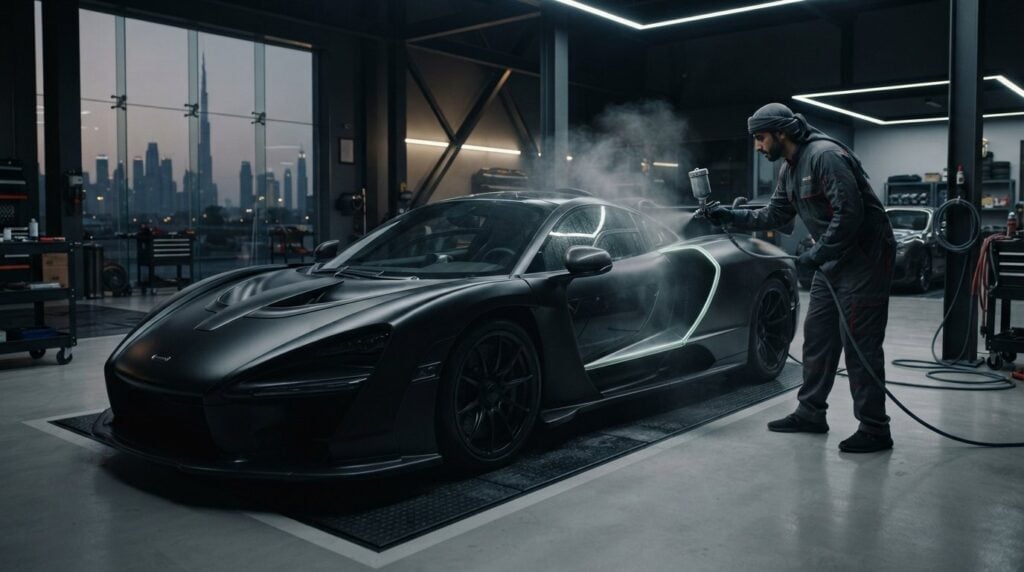
The structural integrity of a world-class automotive finish is built on precision, not guesswork. If you’ve ever seen a liquid wrap fail or tear into tiny pieces during removal, you’ve witnessed the frustrating consequence of insufficient film build. You are likely asking how many coats for a peelable paint job are necessary to guarantee a factory-quality finish that remains 100% reversible. We understand the anxiety of protecting a high-performance vehicle while ensuring that any modification can be undone without a trace. It’s a valid concern for any owner who values both aesthetic transformation and the long-term preservation of their original OEM paint.
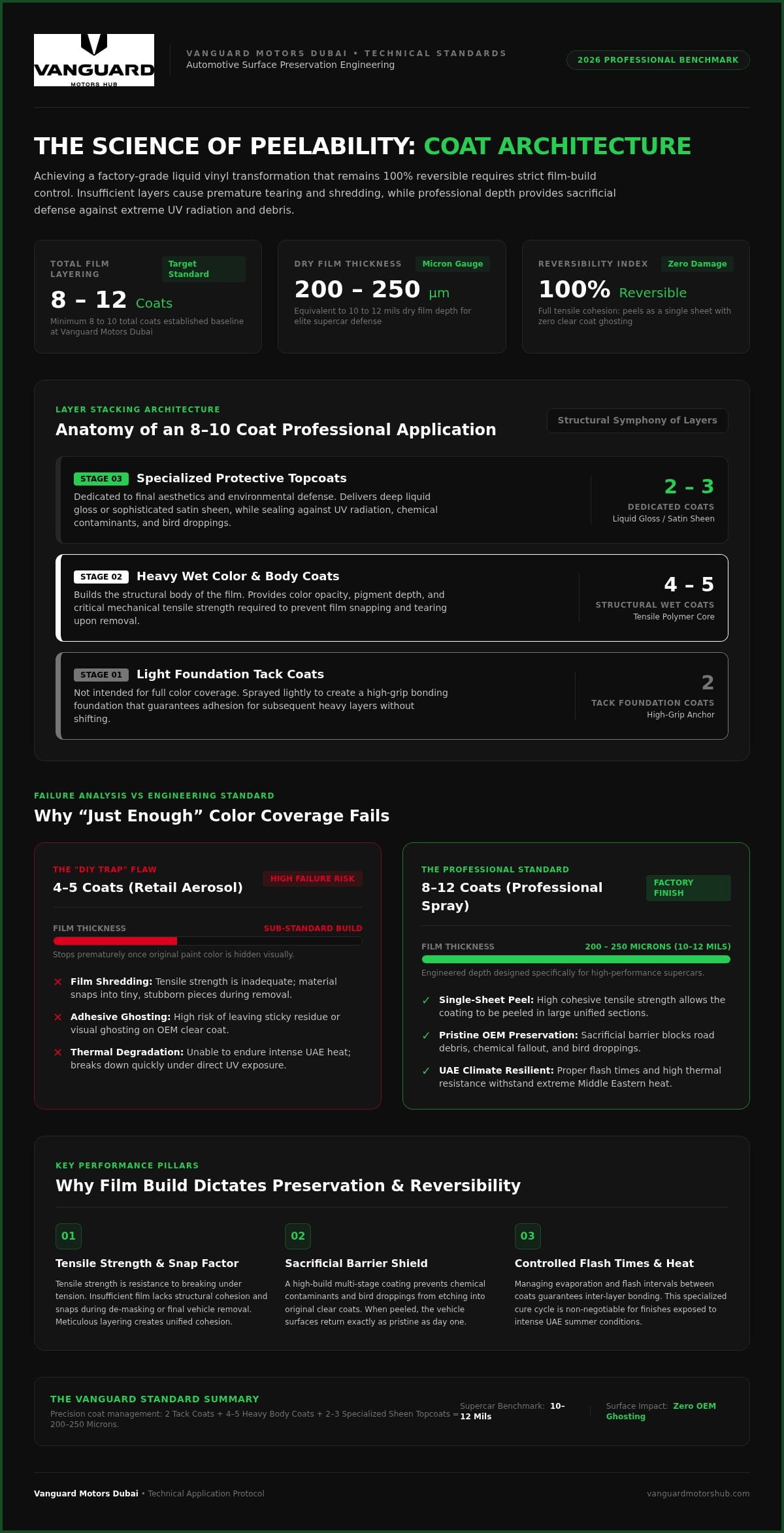
This 2026 professional guide promises to demystify the technical layering process so you can achieve effortless removal and maximum durability. We’ll detail the industry-standard 8 to 12 coat application process, explain why 200 to 250 microns of dry film thickness is the benchmark for elite protection, and highlight how professional liquid vinyl systems outperform basic DIY sprays in the intense heat of the UAE. You’ll gain a clear understanding of the professional application standards required to maintain the highest levels of excellence for your vehicle’s aesthetic and protective needs.
Key Takeaways
- Understand how building film tensile strength through multiple layers prevents the coating from snapping or tearing during the removal process.
- Discover why the professional standard for how many coats for a peelable paint job is 8 to 12 layers to ensure a durable, 250-micron protective shield.
- Learn the technical requirements for managing flash times and UV resistance to ensure your finish thrives in the high-heat conditions of the UAE.
- Master the three-stage stacking process of base foundation, pigment depth, and protective topcoats to achieve a factory-quality aesthetic.
- Distinguish between the limitations of entry-level aerosol methods and the precision of high-end professional spray systems for a truly reversible result.
The Science of Peelability: Why Coat Count is the Critical Factor
Peelable paint is more than a temporary aesthetic shift. It is a sophisticated liquid vinyl coating that, when applied with professional precision, cures into a durable and fully removable film. This technology allows for radical transformations while maintaining the absolute integrity of the factory finish. However, the success of this reversible process depends entirely on the thickness of the application. When determining how many coats for a peelable paint job are required, we must look beyond color coverage and focus on the mechanical properties of the material. Achieving the perfect balance of aesthetics and protection starts with knowing exactly how many coats for a peelable paint job will provide the necessary film build.
Tensile Strength and the ‘Snap’ Factor
The secret to a flawless removal lies in tensile strength. Tensile strength in automotive coatings is the resistance to breaking under tension. If a technician applies too few layers, the film lacks the structural cohesion needed to stay together as a single unit. This leads to “shredding,” where the material snaps into tiny, difficult to remove fragments during de-masking or end-of-life removal. Precision is non-negotiable. Thin coats invite failure. A professional build ensures the film acts as a single, unified sheet that peels away in large sections. This meticulous layering prevents adhesive residue or “ghosting” from being left behind on the clear coat, ensuring the original surface remains untouched.
Surface Preservation Through Thickness
Beyond the ease of removal, layer density dictates the level of protection your vehicle receives. In the harsh environment of the UAE, where UV radiation and airborne debris are constant threats, a thin coating offers little more than a temporary color change. By mirroring the complexity of automotive multi-stage coating processes, a high-build peelable application creates a robust sacrificial barrier. This dense layer prevents chemical contaminants and bird droppings from etching into the underlying surface. While peelable paint offers incredible versatility, those seeking the absolute pinnacle of impact resistance often look toward The Ultimate Shield: Why Paint Protection Film is the Standard for Excellence in 2026. Professional-grade thickness ensures that when the time comes to return the car to its original state, the OEM paint remains as pristine as the day it was first sprayed.
The Professional Standard: How Many Coats Do You Actually Need?
Achieving an elite finish requires a departure from the “good enough” mentality of retail aerosol kits. At Vanguard Motors Dubai, we establish a baseline of 8 to 10 total coats to ensure every vehicle meets our rigorous quality standards. Determining exactly how many coats for a peelable paint job are required depends on the complexity of the vehicle’s geometry and the desired level of protection. While entry-level products often suggest four or five layers, high-performance supercars demand a more substantial build. We target a finished thickness of 10 to 12 mils, which differentiates a professional liquid vinyl application from a standard temporary wrap. This specific depth provides the necessary volume to resist the high-heat conditions of the UAE while maintaining a flawless, factory-like appearance.
The Step-by-Step Layering Protocol
Our application process is a structured symphony of layers. It begins with two light tack coats. These initial passes aren’t meant for color; they create a high-grip foundation that ensures the subsequent layers bond perfectly to the surface. Following the tack stage, we apply four to five heavy wet coats. This is where the structural body of the film is built. These layers provide the opacity and the mechanical strength required to meet the tensile strength of thin polymer films standards. Finally, we finish with two to three specialized topcoats. These layers are dedicated to achieving the final sheen, whether it’s a deep liquid gloss or a sophisticated satin finish.
Why ‘Just Enough’ is Never Enough
The danger of the “DIY trap” is stopping once the original color is hidden. Most amateur applications conclude at four coats because the car looks finished. However, a four-coat application lacks the density to withstand rock chips or chemical etching. More importantly, it won’t peel in a single sheet. Professional application ensures uniform thickness across mirrors, vents, and recessed panels where material tends to thin out. By exceeding the standard coat count, we guarantee the longevity of the finish and the safety of your OEM paint. The professional standard for how many coats for a peelable paint job should always prioritize long-term removal over short-term savings. If you’re ready to elevate your vehicle’s protection with a precision-engineered finish, speak with our technical experts today to discuss your custom project.
Anatomy of a Professional Application: Base, Color, and Finish
A high-end peelable paint application is a sophisticated architectural build. It is never a single-stage spray. Instead, it involves a calculated sequence of functional layers designed to interact perfectly with one another. When considering how many coats for a peelable paint job are required, it is essential to look at the specific purpose of each stage. From the foundation to the final clear coat, each pass serves a distinct role in achieving that coveted factory-quality finish. At Vanguard, our multi-stage protocol ensures every square centimeter of your vehicle receives the meticulous attention it deserves.
Base Coats: The Foundation of Color Accuracy
The process begins with neutralizing the vehicle’s original identity. We utilize specialized grey or black base coats to create a uniform canvas. This step is critical because it ensures the final pigment pops with maximum vibrancy without interference from the underlying OEM paint. These base layers do more than just hide the original color. They establish the core volume of the film, which is vital for long-term peelability. For owners weighing their options between liquid and traditional vinyl, The 2026 Car Wrap Buying Guide: Transforming Luxury Performance Aesthetics provides a deeper look into how these technologies compare in the luxury sector.
The density of these initial passes is backed by extensive dry film thickness and coating durability research. This data confirms that multi-coat builds provide superior resistance to environmental degradation. By building a thick base foundation, we ensure the material maintains its structural integrity even after years of exposure to the elements. This foundation is the secret to a clean peel years down the road.
Finishing Layers: Matte, Satin, or High-Gloss
Once the foundation and color pigments are established, we move to the finishing stage. This is where the vehicle’s personality is truly defined. Whether you choose a deep liquid gloss or a stealthy satin, the top coat is the most technically demanding part of the process. These layers are infused with advanced UV-inhibitors specifically formulated for the intense solar radiation found in the UAE. Top coats are the primary defense against environmental oxidation. They seal the lower layers, providing a hard, scratch-resistant surface that can be maintained just like traditional paint.
Our Vanguard Premium Package takes this a step further by integrating high-solids clear coats that offer enhanced chemical resistance. Unlike DIY aerosol products that often lack a true protective clear, our professional systems provide a finish that can be polished and ceramic coated. This ensures that the question of how many coats for a peelable paint job always results in a finish that looks, feels, and performs like a permanent high-end paint job while remaining completely reversible.
Environmental Variables: Protecting Your Finish in High Heat
The UAE climate presents a unique set of challenges for any liquid vinyl system. High ambient temperatures don’t just affect the driver; they fundamentally alter the chemistry of the application process. When considering how many coats for a peelable paint job are necessary, one must also account for the atmospheric conditions during each pass. A professional result requires more than just high-quality material. It demands a climate-controlled environment where variables like humidity and heat are meticulously managed to ensure the coating cures into a stable, high-performance film. This is why professional spray booths are non-negotiable for supercars that require absolute perfection.
Flash Times and Curing in the Heat
Flash time is the critical interval between layers. In extreme heat, solvents can evaporate too quickly. This rapid evaporation often leads to a textured, sandpaper-like finish or, in severe cases, trapped gases that cause blistering. Professional technicians must adjust their spray technique to account for these national weather patterns. This often involves utilizing slower-evaporating reducers or increasing the volume of the spray to ensure a smooth, level surface. Without these adjustments, even the correct number of layers will fail to provide the protection your vehicle deserves. Precision in the booth is what separates a world-class finish from a temporary, low-quality fix.
UV Resistance and Color Longevity
Solar radiation is the primary enemy of color vibrancy. Premium liquid vinyl formulas must be infused with advanced UV-inhibitors to prevent the pigments from fading or becoming brittle under the desert sun. A thicker film build isn’t just for peelability. It also plays a vital role in dissipating thermal energy from the car’s surface. This added density protects the OEM clear coat from heat-induced degradation over time. For those who want to ensure their vehicle remains in showroom condition, maintaining the finish is just as important as the initial application. You can explore our deep-dive into Supercar Detailing: The 2026 Reference Guide to Meticulous Automotive Preservation for expert maintenance strategies.
Dust and fine sand in the UAE act as abrasive contaminants that can dull a finish. Regular, gentle cleaning is essential to preserve the luster of your peelable paint. Using pH-neutral soaps and avoiding high-pressure washes at close range will keep the edges secure and the surface smooth. Because the environment is so demanding, the question of how many coats for a peelable paint job is ultimately a question of long-term durability. If you want a finish engineered to withstand the elements while maintaining its elite aesthetic, consult with our technicians about a climate-hardened application for your luxury vehicle.
The Vanguard Standard: Why Professional Application Wins
Professional application is the bridge between a technical specification and a showroom result. While retail aerosol kits promise convenience, they lack the atomization and consistent pressure required for a luxury finish. A standard spray can cannot deliver the volume needed to reach the ideal dry film thickness without creating “striping” or uneven textures. At Vanguard, we utilize industrial HVLP turbine systems that atomize the liquid vinyl into a fine mist. This ensures that when we determine how many coats for a peelable paint job are required for your specific vehicle, each of those 10 layers is perfectly level and structurally sound. The result is a surface that is indistinguishable from high-end OEM paint.
Precision Engineering for Elite Vehicles
Supercars feature complex aerodynamics, including active grilles, recessed sensors, and intricate carbon fiber vents. A “garage job” often results in bridged edges or premature lifting near these high-airflow zones. Our studio-grade protocol involves hours of meticulous masking and surface decontamination before the first tack coat is even mixed. We treat every vehicle as a unique engineering challenge. This precision allows us to integrate peelable paint seamlessly with other elite enhancements, such as Brabus or Mansory kit installations. If your vehicle requires carbon fiber repair or a full car kit conversion, we coordinate the paint application to complement these high-performance upgrades, ensuring a cohesive aesthetic across every panel.
Choosing a professional application also means securing your investment with a reliable warranty. Unlike DIY projects where a mistake can lead to costly paint correction, our process is backed by the Vanguard commitment to excellence. We understand that for our clients, the ability to return a vehicle to its original state is just as important as the transformation itself. By adhering to the most stringent standards of how many coats for a peelable paint job, we guarantee a finish that is both durable and effortlessly reversible.
Your Next Transformation Starts Here
The value of professional layering extends beyond simple aesthetics. It provides the peace of mind that comes from knowing your vehicle’s original paint is encased in a precision-engineered shield. We’ve mastered the intersection of technical skill and creative expression to deliver results that thrive in the demanding UAE environment. Your vehicle’s next evolution is just a conversation away. Whether you’re looking for a bold color shift or the ultimate Vanguard Premium Package for holistic protection, our team is ready to guide you through the process. Connect with us on WhatsApp to book your bespoke consultation and experience the pinnacle of automotive customization.
Secure Your Vehicle’s Aesthetic Legacy
Mastering the technical nuances of liquid vinyl is the only way to ensure your investment remains protected and reversible. We’ve established that a meticulous 10-coat professional protocol is the gold standard for achieving the necessary tensile strength and depth. This approach guarantees that your finish won’t just look factory-quality; it will perform with elite durability against the intense UAE sun. Our high-heat resistant liquid vinyl formulas are engineered to maintain their integrity where standard applications often fail. Precision is our baseline, and every layer is a calculated step toward perfection.
Expertise in luxury and supercar finishes means we never compromise on the foundation. Knowing exactly how many coats for a peelable paint job are required allows our technicians to deliver a transformation that is as functional as it is beautiful. Your car deserves a shield that matches its high-performance DNA. Speak with our customization experts on WhatsApp for your bespoke quote and take the first step toward a flawless, reversible new look. We look forward to bringing your vision to life with the meticulous care it demands.
Frequently Asked Questions
Is 4 coats enough for a peelable paint job?
Four coats is insufficient for a professional result and often leads to structural failure. While DIY kits suggest thin applications, a professional standard requires 8 to 12 layers to build the necessary tensile strength. This ensures the film peels in a single sheet. Stopping at four coats leaves the material too thin to resist tearing. It also fails to provide the 200 to 250-micron thickness required to shield your vehicle from the harsh UAE environment.
Can I wash my car after a peelable paint application?
You can certainly wash your vehicle, but you must wait at least seven days for the coating to fully cure. We recommend hand washing with pH-neutral soaps to maintain the integrity of the finish. Avoid using high-pressure sprayers at close range, especially around the edges of panels. Automated car washes with spinning brushes should be avoided. These precautions help preserve the sheen and prevent premature lifting of the protective liquid vinyl layers.
How long does a professional peelable paint job last?
A professionally applied finish typically lasts between three and five years depending on maintenance and environmental exposure. Utilizing high-solids topcoats with UV-inhibitors significantly extends the lifespan in sunny climates. The longevity depends on how many coats for a peelable paint job were originally applied. Thicker applications resist thermal degradation better than thin ones. Regular detailing and avoiding abrasive chemicals will ensure your vehicle’s aesthetic transformation remains vibrant and secure for years.
Will peelable paint damage my original factory paint?
No, professionally applied peelable paint is specifically designed to preserve and protect your original OEM finish. It acts as a sacrificial barrier that shields the clear coat from bird droppings, chemical etching, and minor road debris. Because the material is non-polar, it doesn’t bond chemically to the factory paint. This ensures that when you choose to remove the film, the underlying surface appears exactly as it did before the application.
Can you apply peelable paint over a ceramic coating?
Applying peelable paint over an existing ceramic coating is not recommended because the low surface energy of the ceramic prevents proper adhesion. For a successful bond, the surface must be meticulously decontaminated and the ceramic layer often needs to be professionally removed or abraded. If the coating doesn’t adhere correctly, the peelable film will likely lift or bubble. Proper surface preparation is the foundation of our Vanguard Standard for every elite vehicle we service.
What happens if I don’t apply enough coats?
Failing to apply enough layers results in a shredding effect where the film breaks into tiny pieces during removal. This makes the process incredibly labor-intensive and increases the risk of leaving residue behind. Additionally, a thin application lacks the impact resistance needed to stop rock chips from reaching the factory paint. For those wondering how many coats for a peelable paint job are essential, the answer is always enough to achieve a unified, durable sheet.
Is peelable paint better than a vinyl wrap?
Peelable paint offers several advantages over traditional vinyl wraps, particularly for supercars with complex aerodynamic contours. Because it is sprayed on, there are no unsightly seams, relief cuts, or edges that can lift over time. It provides a truly paint-like finish that can be wet-sanded and polished. While vinyl is excellent for certain graphics, liquid vinyl provides superior coverage for intricate grilles and vents where sheet vinyl often fails to bond effectively.
How much does a professional peelable paint job cost?
The investment for a professional application varies based on the vehicle’s size, the complexity of the body lines, and the chosen finish. Factors such as the number of pigment stages and the addition of specialized high-gloss topcoats also influence the final value. Because every project is bespoke, we evaluate each car individually to determine the specific material requirements and labor hours. This ensures you receive a precision-engineered finish that meets our rigorous Vanguard quality standards.