
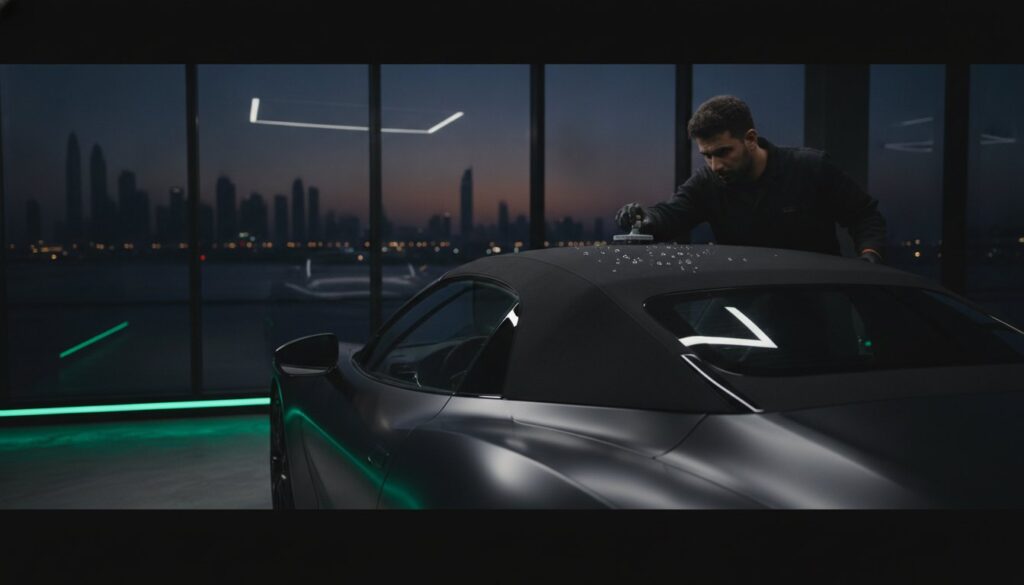
A luxury convertible’s soft top is a masterpiece of engineering, yet it remains the most vulnerable component of your high-performance vehicle. While the thrill of open-top driving is unmatched, the reality of maintaining that pristine aesthetic involves more than just a bucket of soapy water. You likely worry that harsh chemicals will degrade the fabric or that the relentless sun will cause permanent UV-induced fading. It’s a common struggle for owners who demand perfection but fear damaging the delicate material through improper care. Mastering how to clean a convertible soft top requires a blend of technical expertise and professional-grade chemistry.
This 2026 professional maintenance guide promises to transform your approach to vehicle care, providing you with the precision techniques used by elite detailers. You’ll learn how to effectively remove stubborn sand ingress while restoring the essential hydrophobic properties that protect your interior. We will preview the latest material-specific cleaners that comply with the newest VOC regulations, alongside the step-by-step rituals necessary for long-term preservation. By the end of this guide, you’ll have the confidence to maintain a showroom-quality finish that stands up to the most intense environmental stressors.
Key Takeaways
- Distinguish between high-end Mohair fabrics and vinyl surfaces to ensure you apply the correct preservation chemistry for your specific vehicle.
- Adopt the professional “dry-vacuum first” technique to safely remove abrasive sand and dust from deep within the fibers before applying moisture.
- Discover how to clean a convertible soft top using pH-neutral solutions and horsehair brushes that protect material integrity without causing fraying.
- Apply hydrophobic sealants and UV inhibitors to restore factory-grade water-beading performance and prevent color fading in intense climates.
- Integrate soft top care into your broader maintenance routine to preserve the long-term value and aesthetic excellence of your high-performance vehicle.
Understanding Convertible Top Materials: Fabric vs. Vinyl
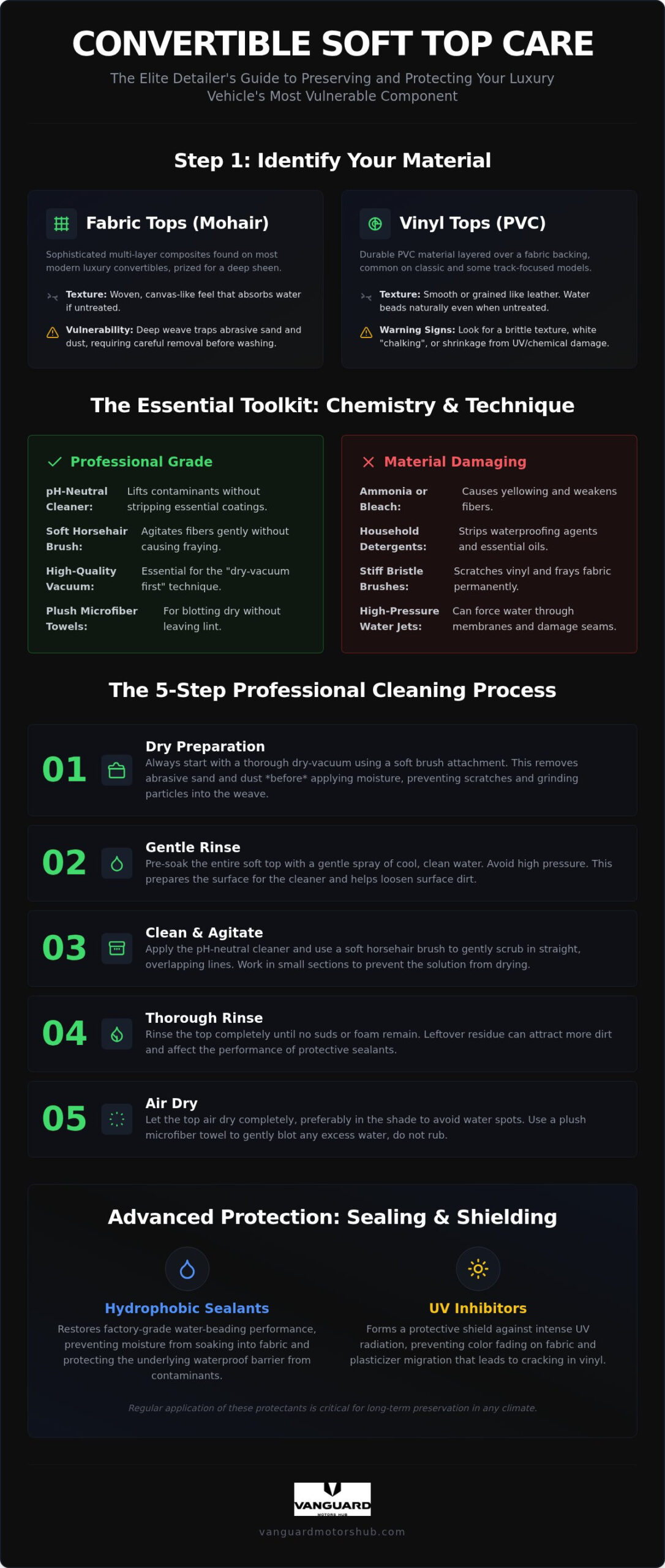
Before you learn how to clean a convertible soft top, you must identify what you’re actually touching. High-performance marques like Aston Martin and Porsche have transitioned almost exclusively to sophisticated fabric composites, yet many classic models and specific track-focused variants still utilize advanced vinyl. Misidentifying these Convertible top materials leads to the use of incompatible chemicals that can strip factory coatings or cause irreversible shrinkage. In high-heat climates, the stakes are even higher; intense UV radiation accelerates the degradation of fibers and polymers alike.
Material identification is the first commandment of elite detailing. If you apply a fabric-specific cleaner to a vinyl surface, you risk leaving a greasy residue that attracts dust. Conversely, using vinyl conditioners on high-end fabrics can clog the weave and destroy the roof’s ability to “breathe,” leading to mildew growth beneath the surface. Precision starts with knowing your substrate.
The Anatomy of a Luxury Fabric Top
Modern luxury tops are rarely a single layer of canvas. They feature a complex multi-layer construction, typically bonding an outer acrylic or polyester weave to an inner lining of cotton or polyester using a thin layer of butyl rubber. This rubber layer provides the primary waterproof barrier, but it’s also sensitive to harsh petroleum-based cleaners. Dirt and fine desert sand often become “locked” deep within the weave of high-end canvas, acting like sandpaper against the fibers every time the roof is retracted. Mohair is a premium goat-hair derivative used in elite automotive upholstery, prized for its deep sheen and exceptional durability.
Vinyl Soft Tops: Durability and Vulnerability
Vinyl tops are comprised of automotive-grade PVC (polyvinyl chloride) layered over a fabric backing. While they offer superior resistance to moisture and bird droppings, they are highly susceptible to “plasticizer migration.” This is a process where the chemicals that keep the vinyl flexible evaporate, especially when exposed to consistent high temperatures. Identifying a vinyl top is straightforward: the surface feels smooth or grained like leather and water will bead naturally even without treatment. To maintain this material, you must use pH-balanced solutions that don’t leach these vital oils out of the PVC. Watch for these warning signs in high-heat regions:
- Brittle Texture: A clear sign the vinyl is drying out and nearing the point of cracking.
- Chalking: White, powdery residue indicating the polymer bonds are breaking down under UV stress.
- Shrinkage: Visible tension around the seams or windows, often caused by improper chemical exposure.
Precision is the hallmark of luxury car detailing. Whether your vehicle features a modern “Stayfast” fabric or a classic vinyl finish, recognizing the structural differences is the only way to ensure long-term material preservation. Understanding these nuances allows you to select the correct tools and chemicals to safely execute the cleaning process without compromising the vehicle’s aesthetic or structural integrity.
The Essential Professional Toolkit for Soft Top Care
Precision detailing is as much about chemistry as it is about technique. When you’re learning how to clean a convertible soft top, your choice of equipment determines whether you’re preserving a masterpiece or accelerating its decline. High-performance fabrics require a toolkit that respects the delicate balance between effective agitation and material safety. Avoid the temptation of using household detergents; they often contain harsh degreasers that strip the vital oils from vinyl and the waterproofing agents from fabric weaves.
Chemical Engineering: Choosing Your Cleaners
Dedicated pH-neutral cleaners are the foundation of professional maintenance. These solutions utilize advanced surfactants to encapsulate and lift deep-seated sand, dust, and organic contaminants without altering the material’s pH balance. As highlighted in Ford’s official cleaning guide, using the correct automotive-grade products is essential to prevent staining or structural weakening. You must strictly avoid ammonia-based or bleach-heavy solutions. These chemicals are far too aggressive; they’ll yellow vinyl windows and cause fabric fibers to become brittle. Opt for biodegradable, non-toxic formulas that ensure the safety of your vehicle’s interior components and the environment.
Manual Tools for Precision Agitation
The brush is your primary instrument for restoring texture and removing debris. Soft-bristled horsehair brushes are non-negotiable for luxury fabric tops. Their natural fibers provide enough resistance to dislodge dirt without fraying the delicate acrylic weave. Stiff nylon brushes should be reserved exclusively for heavy-duty vinyl or specific spot treatments on stubborn stains. Before introducing moisture, always use a vacuum with a soft brush attachment to remove loose surface grit. This prevents you from grinding abrasive particles deeper into the fibers during the wet-wash phase. If you encounter a localized stain, employ the “Blotting Technique.” Press a clean cloth firmly against the area rather than rubbing it, which prevents the stain from spreading across the surface.
The final touch involves high-quality microfibers. For drying, Grams per Square Meter (GSM) is the metric of excellence. Select a towel with at least 600 GSM to ensure maximum water absorption with minimal friction. This level of density allows the towel to “pull” moisture from the weave, reducing the risk of water spots. While it’s tempting to use a pressure washer for speed, the high-PSI output can easily tear seams or force water past the rubber seals. Mastering how to clean a convertible soft top is a ritual of preservation that pays dividends in your vehicle’s aesthetic longevity. For owners who prefer a professional touch, our bespoke detailing services utilize these exact professional-grade tools to ensure your vehicle remains in showroom condition.
Step-by-Step: The Professional Cleaning Process
Executing a showroom-quality finish requires a transition from theory to disciplined action. For the elite enthusiast, mastering the sequence of how to clean a convertible soft top is essential to prevent the accumulation of environmental contaminants. The process is not a race. It is a meticulous ritual that ensures every fiber is treated with the precision your vehicle deserves. Start by positioning the car in a shaded, well-ventilated area to prevent cleaning solutions from evaporating too quickly on the surface.
The Pre-Cleaning Decontamination
Protection begins with the surrounding surfaces. Shield the paintwork and glass using high-quality masking film or ensure the body is thoroughly rinsed to prevent chemical runoff from causing streaks on your finish. Use low-pressure water to saturate the fabric, allowing the moisture to loosen surface grit without forcing it through the rubber seals or into the cabin. Before applying any liquid, you must address the “Dry-Vacuum First” rule. Use a soft brush attachment to vacuum along every seam and stitching line; these areas act as traps for abrasive dust and fine sand. Removing these particles while dry prevents them from turning into a destructive paste once the cleaner is applied.
Agitation and Deep Cleaning
Apply your pH-neutral cleaner in manageable sections to maintain total control over the drying time. This ensures the surfactants remain active throughout the agitation phase. Use linear strokes that follow the grain of the fabric rather than circular motions. Linear agitation is safer for the structural integrity of the weave and prevents the fraying often seen with amateur techniques. If you encounter stubborn organic stains like bird droppings, apply a concentrated spot treatment and let it dwell for two to three minutes before gently agitating. Rinse the entire top with a steady stream of low-pressure water until the runoff is completely clear. Any remaining soap residue can lead to spotting or interfere with the bonding of future protective sealants.
The Drying Phase: Avoiding Mold and Mildew
The final stage is perhaps the most critical for long-term health. You should never retract or fold a wet soft top into its storage compartment. Trapping moisture in a dark, unventilated space is a recipe for mold growth and permanent material staining. Allow the top to air dry naturally in a shaded area. Once the material is bone-dry, use a clean lint roller to lift any remaining fine particles or fibers. This creates a perfectly prepared surface for the application of hydrophobic shields and UV inhibitors.
Advanced Protection: Sealing and UV Shielding
Cleaning provides the canvas, but protection provides the longevity. While learning how to clean a convertible soft top is vital, the process is incomplete without the application of a high-performance sealant. In environments characterized by extreme heat and airborne abrasives, the factory-applied hydrophobic barrier degrades rapidly. Restoring this beading effect is not merely for aesthetics; it’s a critical defense mechanism that prevents moisture and contaminants from saturating the fibers and causing structural rot. Without this shield, your soft top becomes a sponge for environmental pollutants.
Hydrophobic Coating Application
Success in sealing depends entirely on preparation. You must ensure the fabric is 100% bone-dry before beginning. Any residual moisture trapped within the weave will prevent the sealant from bonding, leading to patchy protection and potential mildew. Professionals favor the application of two light, even coats rather than a single heavy, saturating layer. This technique ensures deep penetration into the fibers while maintaining a uniform finish. Patience is the non-negotiable factor here. Most high-end sealants require a curing time of 12 to 24 hours in a controlled, dust-free environment to achieve maximum durability. Rushing this stage often results in a compromised barrier that fails at the first sign of rain or high-pressure rinsing.
Combating the Elements: UV and Heat Defense
Intense thermal energy accelerates the breakdown of fabric waterproofing and makes fibers brittle. In high-UV regions, the common suggestion of sealing once a year is simply insufficient for high-performance vehicles. Professional detailing standards recommend treating a convertible top every six months to combat solar degradation effectively. These advanced UV inhibitors act as a sacrificial layer, absorbing radiation that would otherwise cause permanent color fading. Beyond protection, these coatings offer a significant secondary benefit: they make future maintenance significantly easier by preventing sand and dust from embedding in the weave. For optimal material health, always store your vehicle with the top up to maintain consistent tension on the fabric and seams.
Precision application is paramount to avoid contaminating adjacent surfaces. Take care to mask off windows and any existing paint protection film to prevent overspray from creating difficult-to-remove residues. You can test the integrity of your seal by misting a small amount of water onto the surface. If the water fails to bead and instead begins to “wet out” the fabric, your protection has failed. To ensure your vehicle receives this level of meticulous care, consult our protection specialists for a bespoke maintenance plan.
Long-Term Preservation Strategy for High-End Convertibles
A masterclass in how to clean a convertible soft top is only effective if it’s part of a broader, disciplined preservation strategy. For owners of high-performance vehicles, the roof isn’t an isolated component; it’s a vital element of the car’s structural and aesthetic identity. Maintaining this integrity requires a monthly schedule tailored to your driving frequency. If your vehicle is a daily driver in a high-heat climate, a monthly rinse and inspection are mandatory. For weekend cruisers, a bi-monthly deep clean usually suffices. This proactive approach ensures that environmental stressors don’t have the opportunity to cause permanent damage.
Total vehicle excellence is achieved through synergy. Your soft top’s health is inextricably linked to the standards set during supercar detailing. A pristine roof loses its impact if the surrounding paintwork is swirled or the interior leather is neglected. Conversely, a faded or stained top can single-handedly diminish the perceived value of a flawless machine. Protecting this investment is essential. A well-preserved soft top significantly bolsters resale value, signaling to future collectors that the vehicle has received meticulous, professional-grade care throughout its life.
Integrating Soft Top Care into Your Detailing Routine
Elite maintenance involves more than just fabric care. You must coordinate your cleaning rituals with other essential services, such as paint correction and interior leather restoration. During these sessions, take the time to monitor weather seals and mechanical hinges for signs of wear or lubrication loss. Dry, cracked seals lead to cabin leaks, while neglected hinges can cause alignment issues that strain the fabric weave. We recommend a professional inspection every six months to identify these subtle vulnerabilities before they necessitate a transition to cosmetic car repair. Professional intervention at this stage can prevent minor frays from becoming catastrophic tears.
The Vanguard Advantage for Luxury Preservation
While DIY maintenance is commendable, professional detailing centers achieve results that are simply impossible with home tools. Our specialists utilize advanced diagnostic equipment and bespoke chemical formulations designed for the world’s most exclusive marques. We offer comprehensive care packages that integrate soft top preservation with total vehicle protection, ensuring every square inch of your car meets our rigorous standards of excellence. You don’t have to manage these complexities alone. Elevate your vehicle’s protection and ensure its legacy by partnering with Vanguard Motors Dubai today.
Securing the Future of Your High-Performance Convertible
Maintaining a showroom-quality finish is a continuous commitment to excellence. By identifying your specific material and employing the “dry-vacuum first” rule, you prevent abrasive sand from compromising your vehicle’s integrity. We’ve established that precision agitation with horsehair brushes and the application of advanced UV inhibitors are non-negotiable for long-term preservation. Mastering how to clean a convertible soft top ensures that your vehicle remains a symbol of meticulous care and high-octane passion.
Vanguard Motors Dubai delivers expert luxury detailing for world-class marques, offering specialized protection solutions designed to withstand extreme climates. Our team provides meticulous attention to every automotive detail, ensuring your investment is shielded from solar degradation and environmental wear. Don’t leave your vehicle’s aesthetic health to chance. Preserve Your Supercar’s Excellence with Vanguard Motors. Your commitment to these professional standards will keep your convertible in peak condition for years to come.
Frequently Asked Questions
Can I take my convertible through an automatic car wash?
You should never take a luxury convertible through an automatic car wash. The aggressive mechanical brushes cause abrasive micro-tears in fabric fibers and scratch sensitive vinyl windows. Additionally, the high-pressure sprayers often force water past the delicate rubber seals, leading to interior moisture damage. For elite material preservation, hand washing using professional-grade techniques is the only way to ensure your vehicle’s soft top remains in showroom condition.
How often should I clean my soft top in a dusty climate?
In a dusty or sand-heavy climate, you should rinse your soft top every two weeks and perform a deep clean every month. Fine particles act like sandpaper within the fabric weave, accelerating wear every time the roof operates. Mastering how to clean a convertible soft top in these environments requires the “dry-vacuum first” rule to remove abrasive grit before it turns into a damaging paste during the wet-wash phase.
Will pressure washing my soft top cause it to leak?
Yes, pressure washing at high PSI settings can easily cause leaks and structural damage. High-velocity water streams can tear through the stitching or force their way under the weather stripping, saturating your vehicle’s luxury interior. We recommend using a standard garden hose with a low-pressure nozzle. This provides sufficient volume to rinse away surfactants without compromising the integrity of the multi-layer fabric or the mechanical seals.
What is the best way to remove bird droppings from a fabric top?
The most effective way to remove bird droppings is to address them immediately using a pH-neutral spot treatment. Apply the cleaner and allow it to dwell for two to three minutes to break down the acidic compounds. Gently blot the area with a clean microfiber towel rather than scrubbing, which prevents the contaminant from spreading deeper into the fibers. This precision approach protects the delicate weave from permanent chemical etching or staining.
How do I know if my soft top is made of fabric or vinyl?
You can identify your material by performing a simple water bead test on a clean surface. Apply a few drops of water; if they soak into the material, it’s a fabric composite like Mohair or “Stayfast” canvas. If the water beads up and the surface feels smooth or leather-like to the touch, it’s automotive-grade vinyl. Knowing this distinction is the first step in selecting the correct chemistry for preservation.
Can I use a steam cleaner on my convertible top?
Using a steam cleaner is generally discouraged because the intense heat can liquefy the butyl rubber bonding layer found in luxury fabric tops. This layer provides the primary waterproof barrier between the outer weave and the inner lining. Excessive heat also causes vinyl to shrink or warp, leading to fitment issues. Stick to cold or lukewarm water and dedicated cleaning solutions to maintain the structural integrity of your high-performance roof.
Why is my soft top fading even though I wash it regularly?
Fading is typically caused by cumulative UV radiation rather than a lack of cleanliness. Standard car soaps don’t contain the specialized UV inhibitors required to block the sun’s destructive rays in high-heat climates. Even if you wash the car weekly, the fibers will continue to lose their pigment and become brittle without a sacrificial protective layer. Regular application of a professional sealant is necessary to maintain that deep, factory-fresh color.
How long does a professional fabric sealant last?
A professional-grade fabric sealant typically provides peak protection for approximately six months in regions with high UV intensity. While some products claim year-long durability, the extreme thermal stress and abrasive sand found in the UAE necessitate more frequent applications. Monitoring the water-beading properties of your roof is the best way to determine when it’s time for a refresh. Consistent re-sealing is a core component of a meticulous maintenance strategy.