
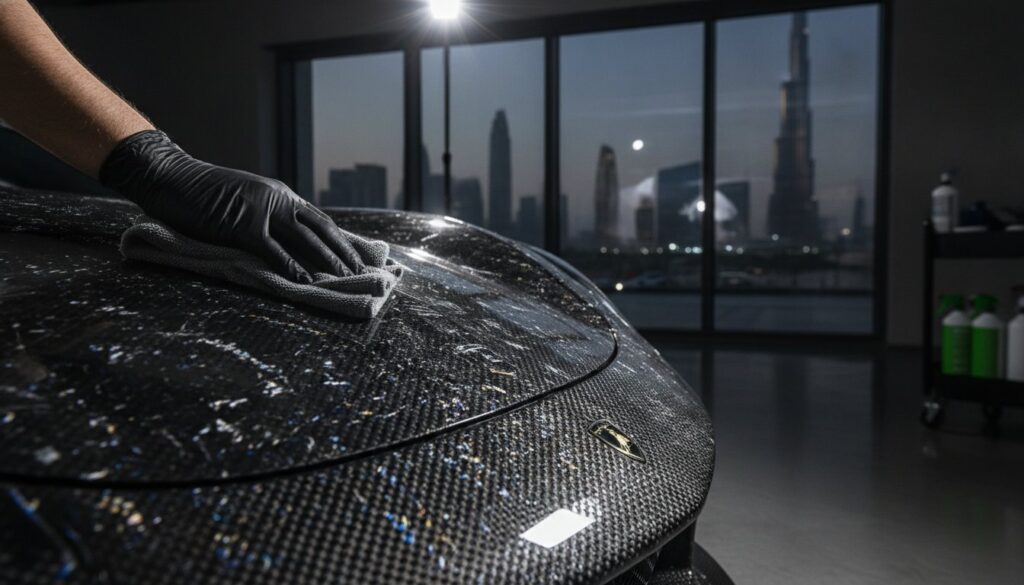
That mesmerizing, marbled aesthetic of forged carbon fiber isn’t just a design choice; it’s a high-performance investment that demands a level of care far beyond standard automotive detailing. In the intense heat of the UAE, where the sun can be as unforgiving as a track day, learning how to clean forged carbon fiber correctly is the difference between a showcase-ready finish and a clouded, oxidized disaster. One wrong chemical or a single abrasive stroke can compromise the expensive resin, turning your elite upgrade into a costly repair project.
We understand the pride you take in your vehicle’s appearance, especially when it’s equipped with premium kits from names like Mansory or Brabus. It’s natural to feel a sense of hesitation when approaching those complex composite surfaces. You want that deep, multi-dimensional luster to remain flawless, yet the fear of micro-scratching the clear coat or watching it yellow under extreme UV exposure is a constant concern for every serious enthusiast in the region.
This guide will show you how to master the art of preserving that brilliance using professional-grade techniques and elite protection strategies. We’ll explore the precise chemical-neutral protocols required for composites, the essential tools for achieving a swirl-free finish, and the advanced UV barriers needed to maintain structural integrity. From initial decontamination to the final application of protective films, you’re about to gain the confidence of a master detailer.
Key Takeaways
- Learn the fundamental differences between forged and woven composites to ensure your maintenance routine respects the unique vulnerability of the outer resin layer.
- Discover the exact professional sequence for how to clean forged carbon fiber safely, utilizing pH-neutral solutions and specific microfiber techniques to prevent micro-marring.
- Identify the specific threats posed by environmental contaminants like bird droppings and mineral deposits, and learn how to neutralize them before they cause permanent etching.
- Evaluate the effectiveness of different protection tiers, from ceramic coatings to high-performance PPF, for maintaining a long-term, showroom-quality gloss.
- Gain insight into professional restoration processes for elite Brabus and Mansory kits, including how to handle deep scratches and structural resin repairs.
Understanding Forged Carbon Fiber and Its Unique Maintenance Needs
Forged carbon fiber represents the pinnacle of composite engineering, blending high-octane aesthetics with structural rigidity. Unlike traditional carbon fiber, which relies on woven sheets of continuous fiber, forged composite is manufactured from a paste of chopped carbon fibers suspended in a specialized resin. This process creates a signature marbled look that is entirely unique to every part. While the material is incredibly strong, the epoxy resin that encapsulates the fibers is surprisingly delicate. This resin acts as your clear coat, and it’s the most vulnerable layer to environmental damage.
Maintaining this material in the United Arab Emirates presents specific challenges. The extreme UV radiation and intense desert heat can cause thermal expansion, where the resin and carbon fibers expand at different rates. If you don’t understand how to clean forged carbon fiber with precision, you risk accelerating the degradation of this expensive material. Improper techniques often lead to surface clouding, which is much more visible on a forged surface than on a traditional weave due to the way light reflects off the multi-directional fibers.
Forged vs. Woven Carbon Fiber: Cleaning Differences
When detailing a vehicle, you must distinguish between structural layers and aesthetic finishes. With woven carbon, the surface tension is relatively uniform across the parallel fibers. Forged composites, however, have a more complex surface topography at a microscopic level. Water and contaminants can behave unpredictably on these surfaces, often settling into micro-pores if the resin isn’t perfectly sealed. This increases the risk of “clouding,” where the resin loses its transparency and takes on a milky, opaque appearance that hides the intricate carbon patterns beneath.
The Chemistry of Safe Carbon Care
The golden rule for composite maintenance is absolute pH-neutrality. Epoxy resins are chemically sensitive; they don’t possess the same chemical resistance as modern automotive ceramic clear coats. Using heavy degreasers or high-alkaline detergents can strip the essential oils from the resin, leading to brittleness and premature yellowing. Alkaline cleaners aggressively attack the molecular bonds of the epoxy resin, leading to irreversible surface etching and loss of clarity. For owners of elite Brabus or Mansory kits, avoiding harsh car wash chemicals is the first step in preventing the need for expensive structural repairs.
A Step-by-Step Guide to Cleaning Forged Carbon Surfaces Safely
Excellence in maintenance requires a surgical approach to preparation. Forged carbon isn’t standard plastic; it’s a high-value composite where the resin layer is prone to micro-marring. Mastering how to clean forged carbon fiber begins with selecting the right arsenal. You’ll need high-GSM (grams per square meter) microfiber towels, a pH-neutral automotive shampoo, and a dedicated snow foam cannon. Understanding Carbon Fiber at a molecular level reveals its susceptibility to abrasive particles, making a touchless start non-negotiable for preserving that marbled brilliance.
The Pre-Wash Protocol
Lubrication is your primary defense against scratches. Start by applying a thick layer of pH-neutral snow foam to the entire surface. This encapsulates abrasive desert sand and grit, lifting them away from the delicate resin. Let the foam dwell for three to five minutes. In the UAE’s intense heat, you must work in the shade so the chemicals don’t dry on the surface. Rinse using a high-pressure nozzle in a top-down pattern, paying close attention to the intricate crevices found in Brabus or Mansory body kits where soap residue often hides.
Contact Wash and Drying
Once the loose grit is gone, use the two-bucket method. One bucket contains your wash solution, while the second is for rinsing your ultra-plush microfiber mitt. Use straight-line wiping motions only. Circular patterns create the dreaded “swirl” marks that are highly visible on marbled finishes. After washing, skip the drying towel if possible. Forced air is the superior choice for complex shapes. It removes moisture from deep recesses without any physical friction, preventing water spots from forming in the high-mineral water common in the region.
Complete your process with a final inspection under high-intensity LED lighting. This reveals any hidden micro-marring or mineral etching that could later lead to oxidation. If the process feels daunting or you’ve noticed existing defects, our team can provide a professional detailing consultation to restore that elite finish. Knowing how to clean forged carbon fiber is essential, but professional tools often provide the edge required for a perfect, showroom-ready result.
Removing Stubborn Contaminants: Water Spots, Bird Droppings, and Oxidation
Maintaining an elite vehicle in the UAE means facing aggressive environmental factors that standard detailing often fails to address. Forged carbon fiber is particularly sensitive to chemical etching. You must distinguish between organic contaminants, like bird droppings, and mineral-based issues, such as water spots. While a standard wash handles surface dust, these stubborn elements require a more clinical approach. Understanding how to clean forged carbon fiber when things get messy is the only way to avoid permanent resin damage.
Bird droppings are a primary threat because they contain concentrated uric acid. On a hot afternoon in Dubai or Abu Dhabi, this acid reacts with the heat-softened epoxy resin, etching into the surface in minutes. Mineral deposits from hard water are equally problematic. They leave behind calcium and magnesium “rings” that can’t be simply wiped away. Instead of reaching for household remedies like vinegar, which can weaken the resin topcoat over time, use a dedicated, pH-balanced mineral remover designed for delicate composites.
Dealing with Environmental Etching
If you discover dried organic debris, never attempt to scrub it off. Physical friction against the resin creates deep marring that ruins the marbled aesthetic. Use the “soak and lift” method. Place a microfiber towel saturated with a pH-neutral lubricant over the contaminant and let it sit for several minutes. This softens the debris, allowing it to be wiped away with zero pressure. Remember that heat-cycling, the constant expansion and contraction of the material in the sun, can pull these contaminants deeper into the resin pores if they aren’t neutralized quickly.
Restoring Clarity to Cloudy Carbon
Cloudiness or yellowing is a sign of UV-induced oxidation or chemical distress. When the resin loses its transparency, the multi-directional carbon fibers look dull rather than deep and holographic. Restoring this clarity requires precision. While manual polishing with a fine finishing compound is often safe, machine polishing carries significant risks. Excessive heat generated during high-speed machine polishing can reach the glass transition temperature of the resin, leading to permanent structural distortion or “burn” marks in the forged carbon matrix.
For owners of high-value Brabus or Mansory kits, restoration is often a job for experts. If a light hand-polish doesn’t bring back the shine, the oxidation may be deeper than the surface. In these cases, professional intervention at a specialized facility like Vanguard Motors is necessary to safely level the resin without compromising the structural integrity of the component. We specialize in identifying exactly when a surface can be saved and when it requires a technical carbon fiber repair.
Beyond Cleaning: Protecting Forged Carbon with PPF and Ceramic Coatings
Maintaining a pristine finish isn’t just about the wash; it’s about the barrier you build afterward. While mastering how to clean forged carbon fiber is the foundation of care, the UAE’s aggressive climate demands a more robust defense than simple automotive wax. Traditional waxes often fail at high temperatures, offering negligible protection against the sand-blasting effect of desert winds. To preserve the structural and aesthetic integrity of your composite components, you must employ a hierarchy of protection that includes high-grade ceramic coatings and Paint Protection Film (PPF).
At Vanguard Motors, we view protection as a tiered strategy. Ceramic coatings provide a hydrophobic layer that prevents contaminants from bonding to the resin, while PPF offers a physical shield against mechanical damage. For owners of elite Brabus or Mansory kits, combining these technologies is the only way to ensure the marbled brilliance of the forged pattern remains undistorted by environmental wear. This dual-layer approach transforms maintenance from a corrective chore into a simple, efficient routine.
The Case for PPF on Forged Carbon
Forged carbon splitters, lips, and side skirts are high-value targets for road debris. The Ultimate Shield: Why PPF is the Standard for Excellence highlights how advanced films provide the impact resistance necessary for these vulnerable areas. Modern PPF features self-healing properties; when exposed to the UAE sun, micro-scratches in the film vanish, leaving the underlying resin untouched. These films also contain potent UV inhibitors that stop the chemical reaction leading to resin yellowing. It’s a proactive investment that safeguards the resale value and visual impact of your vehicle.
Ceramic Coating as a Maintenance Aid
If PPF is the armor, ceramic coating is the slick finish that makes daily care effortless. A professional-grade coating reduces the surface energy of the forged composite, meaning water, dust, and oily road film simply slide off. This significantly simplifies how to clean forged carbon fiber, as you’ll find that a touchless pre-wash removes nearly all surface dirt. Beyond the practical benefits, ceramic coatings enhance the multi-dimensional depth of the carbon fragments, giving the marbled finish a “wet” look that standard polishing can’t replicate. We recommend a maintenance inspection every six months to ensure the coating’s hydrophobic properties remain at peak performance.
Don’t wait for the first rock chip or signs of oxidation to protect your investment. You can book your forged carbon protection service today to experience the peace of mind that comes with professional-grade shielding. Our specialists are ready to tailor a protection package that matches your driving style and aesthetic goals.
Professional Restoration and Custom Carbon Solutions at Vanguard Motors
Vanguard Motors stands as the definitive authority in the UAE for high-end composite care and elite customization. While understanding how to clean forged carbon fiber is a vital skill for any enthusiast, there are moments when the complexity of the material outpaces DIY methods. Deep resin scratches, structural cracks, or severe oxidation require more than just a pH-neutral soap. We provide specialized carbon fiber repair services that restore both the structural integrity and visual depth of your components, ensuring your vehicle remains a masterpiece of engineering.
Our facility is designed to handle the most prestigious names in the industry. We offer bespoke forged carbon installations for those looking to push the boundaries of automotive aesthetics. Whether you’re upgrading a standard fascia or seeking a complete vehicle transformation, our technicians apply a level of meticulous care to every fiber. For clients who demand convenience without compromising on quality, our mobile detailing van brings concierge-level carbon care directly to your doorstep in Dubai or across the Emirates. Precision is our standard, whether we’re performing a simple decontamination or a complex smart repair on a damaged splitter.
Elite Kit Preservation
Maintaining the intricate details of a Brabus Body Kit Installation Guide or a Mansory conversion requires an expert eye. These kits often feature complex aerodynamic shapes that trap contaminants in hard-to-reach areas. Our professional-grade decontamination and protection packages are specifically engineered for these elite tiers. We don’t just wash; we preserve the marbled finish through technical precision, ensuring that the intense UV exposure of the UAE doesn’t dull the high-gloss resin. This proactive approach is essential for anyone mastering how to clean forged carbon fiber at a professional level.
Secure Your Investment
Professional maintenance is a strategic financial decision. Replacing a single damaged forged carbon panel on a supercar can cost tens of thousands of Dirhams. In contrast, regular technical detailing and the application of premium PPF act as an insurance policy for your vehicle’s exterior. If you’ve already encountered damage, our team specializes in smart repairs and carbon cosmetic restoration. We bridge the gap between aesthetic excellence and mechanical durability. Now is the time to Consult with Vanguard Motors for expert carbon fiber care and ensure your high-performance investment stays protected against the elements.
Elevate Your Vehicle’s Aesthetic Longevity
Preserving the intricate, marbled depth of forged carbon is an ongoing commitment to precision. You’ve learned that the secret to how to clean forged carbon fiber lies in absolute pH neutrality and a touchless-first approach to decontamination. It’s not just about removing dust. It’s about safeguarding the delicate resin from the UAE’s intense UV rays and abrasive desert sands. Beyond the wash, a strategic hierarchy of protection, led by high-performance PPF and ceramic coatings, is what truly shields your investment from environmental degradation.
Vanguard Motors specializes in the meticulous maintenance of elite Mansory and Brabus kits. Our advanced facilities are equipped for everything from high-barrier PPF applications to complex structural and cosmetic carbon repairs. We provide the technical expertise required to keep your vehicle in showroom condition. Whether you need mobile detailing or a complete restoration, our team ensures every fiber reflects perfection. Book a Professional Carbon Fiber Detail via WhatsApp to secure the brilliance of your vehicle today. Your high-performance journey deserves a finish that never fades.
Frequently Asked Questions
Is forged carbon harder to clean than regular carbon fiber?
Forged carbon isn’t inherently harder to clean, but it’s far less forgiving of improper techniques. While the marbled pattern cleverly hides light dust, the multi-directional fiber structure makes resin clouding and micro-scratches more apparent under direct light. You must follow a clinical cleaning protocol to maintain the holographic depth that defines this elite material. Precision is essential to keep the surface looking as sharp as the day it was installed.
Can I use a pressure washer on forged carbon fiber parts?
Yes, you can use a pressure washer, provided you maintain a safe distance and use a wide-angle nozzle. Concentrated, high-pressure streams can potentially force moisture into microscopic resin voids or lift the edges of complex components. Always keep your equipment below 1,500 PSI and stay at least 30 centimeters away from the surface. This ensures you remove grit without risking the structural integrity of the composite’s finish.
What is the best soap for cleaning forged carbon fiber?
The gold standard is a high-lubricity, pH-neutral automotive shampoo that contains no added waxes or gloss enhancers. Mastering how to clean forged carbon fiber requires a solution that breaks down surface tension without leaving a cloudy film behind. You should strictly avoid alkaline detergents or heavy degreasers. These harsh chemicals aggressively attack the epoxy resin, eventually leading to surface brittleness and a permanent loss of clarity.
How do I remove scratches from forged carbon resin?
Light surface marring can often be corrected using a fine finishing compound and a soft foam applicator by hand. If you can feel a scratch with your fingernail, it likely requires professional wet-sanding and resin leveling. Because the resin layer is remarkably thin, aggressive machine polishing carries a high risk of burning through the clear coat. It’s always safer to seek an expert’s touch for deep cosmetic restoration to avoid irreparable damage.
Does forged carbon fiber turn yellow over time?
Exposure to the UAE’s intense UV radiation can cause the epoxy resin to oxidize and develop a yellow tint. This isn’t a failure of the carbon fibers but a chemical breakdown of the protective resin layer. Applying a premium Paint Protection Film (PPF) or a high-grade ceramic coating with advanced UV inhibitors is the most effective way to block this solar damage. These barriers ensure your composites remain crisp and colorless for years.
Can I apply ceramic coating to forged carbon fiber myself?
While DIY kits exist, professional application ensures a superior bond and a perfectly level finish. Forged carbon’s unique surface energy requires meticulous chemical decontamination before a coating can be applied. If you choose the DIY route, ensure the surface is entirely free of oils and old waxes. However, a professional application at a specialized facility provides a thicker, more durable protective layer that is essential for high-performance use.
Is PPF visible on the marbled pattern of forged carbon?
High-quality, optically clear PPF is virtually invisible and often enhances the visual depth of the forged fragments. It provides a deep, “wet” look that makes the marbled pattern pop while offering critical impact resistance against road debris. When installed with precision and tucked edges, the film disappears completely into the lines of the vehicle. You get the benefit of a total physical shield without any compromise to the aggressive aesthetic.
How often should I professionally detail my carbon fiber components?
We recommend a professional technical detail every six months to maintain the resin’s integrity. This schedule allows specialists to perform deep decontamination and assess the state of your protective barriers. It’s the most efficient way to address minor environmental etching before it becomes a permanent defect. Regular professional oversight ensures your Mansory or Brabus components retain their elite, showroom-quality luster despite the harsh environmental conditions of the region.