
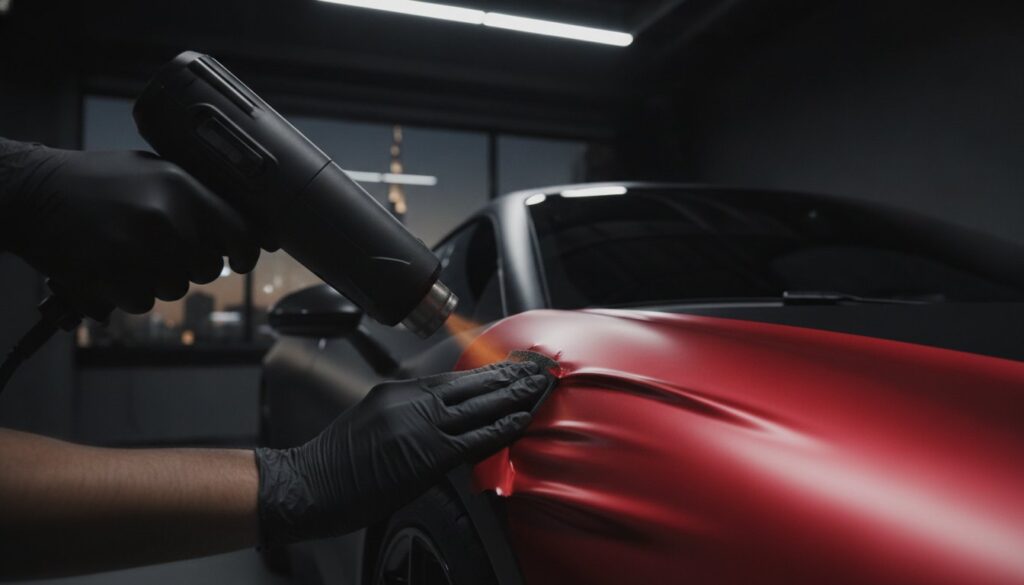
That slight lift on your door handle isn’t just an eyesore; it’s a structural warning that your vehicle’s aesthetic integrity is under siege. You invested in a premium finish to command attention, so watching an edge curl or a bubble form is deeply frustrating. Whether you’re researching how to fix peeling car wrap to save a custom project or simply want to prevent the damage from spreading, the fear of an amateur look is real. You want a solution that restores the factory-level perfection your car deserves.
This 2026 restoration guide provides the technical roadmap for restoring your vehicle’s exterior without compromising the underlying paint. We’ll master the precise techniques required to reactivate adhesives and seal edges against the elements. You’ll learn the exact sequence for a seamless repair, the critical role of modern adhesive promoters, and how to identify the tipping point where a localized fix requires professional intervention. We’re moving beyond temporary patches to achieve a result that is both invisible and enduring. It’s time to reclaim the flawless profile of your high-performance machine.
Key Takeaways
- Distinguish between edge tension from overstretching and bond failure caused by hidden surface contaminants like wax or ceramic coatings.
- Master the technical precision of how to fix peeling car wrap by utilizing surgical cleaning protocols and controlled heat to reactivate adhesive memory.
- Apply the Brittle Test and evaluate the contamination zone to determine if a localized repair is viable or if the vinyl has reached its end of life.
- Implement 2026 climate-proofing standards, including post-installation baking and ceramic-infused topcoats, to shield your vehicle from UV-induced failure.
- Discover why transitioning to high-grade Paint Protection Film or peelable paint offers superior durability and a seamless finish for complex body contours.
Diagnosing the Cause: Why Is Your Car Wrap Peeling?
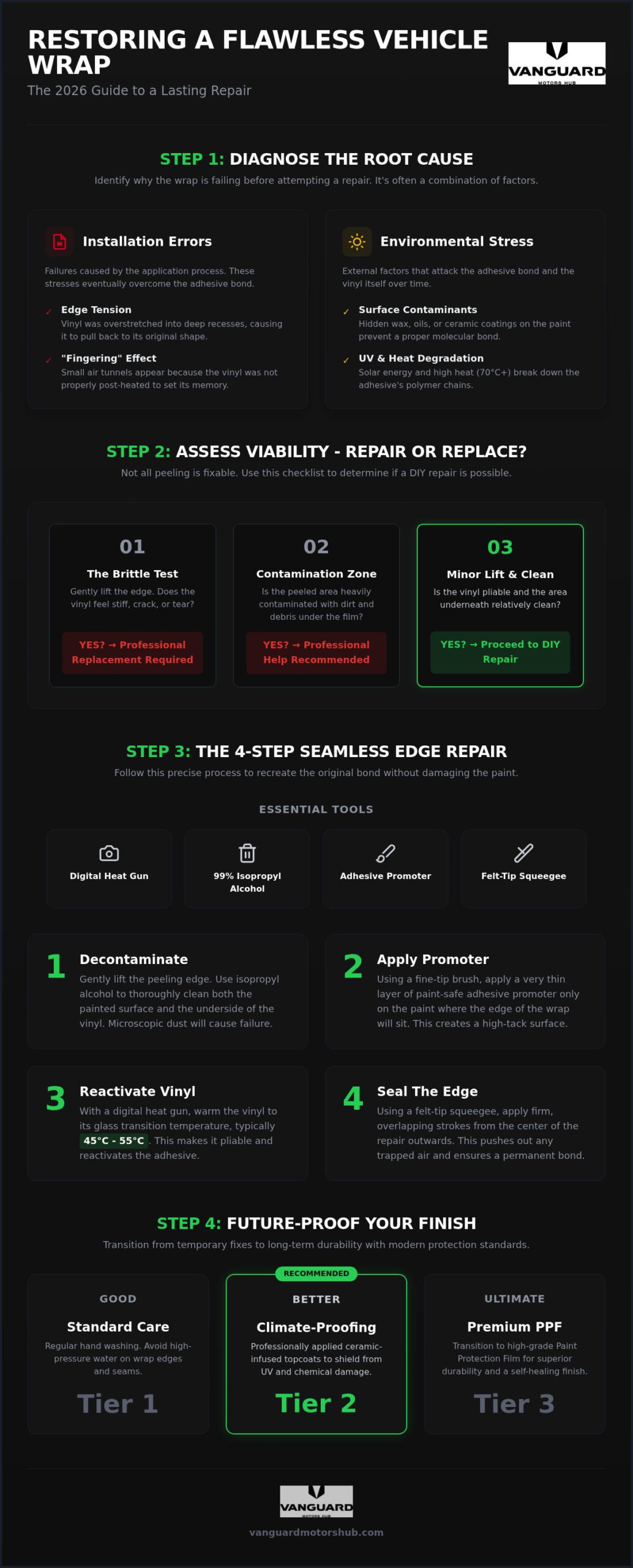
Identifying the root cause is the primary step in learning how to fix peeling car wrap effectively. It is rarely a single event that leads to failure. Usually, it’s a calculated combination of mechanical stress and chemical rejection. While a standard vehicle vinyl wrap is engineered for high-performance durability, its longevity depends entirely on the bond at the molecular level. If the surface wasn’t prepared with surgical precision, the adhesive is doomed. Residual wax or modern ceramic coatings act as a barrier, preventing the adhesive from “wetting out” the panel. This leads to systemic failure where the wrap eventually slides or lifts away from the bodywork.
You must also differentiate between physical impact and systemic degradation. A rock chip that tears the film is a localized trauma. Conversely, edges that curl inward across an entire door panel suggest a failure of the installation process or the material itself. In extreme climates, high-heat cycles accelerate this process. The constant expansion and contraction of the metal panels under the sun can fatigue the adhesive until it simply lets go.
Installation Errors vs. Environmental Stress
Precision is non-negotiable during the application phase. When an installer stretches the film beyond its engineered limits to fit deep recesses, they create “edge tension.” The vinyl has a natural memory; it wants to return to its original, flat shape. This tension eventually overcomes the adhesive bond, leading to inevitable lifting. You might also notice the “fingering” effect. These are small, vertical tunnels of air that manifest when a wrap wasn’t post-heated correctly. If the material didn’t reach its specific casting temperature during the final stage, it remains under constant stress until it pops.
The Science of Adhesive Failure
Adhesives are not invincible. Continuous UV radiation triggers a chemical breakdown, where solar energy severs the polymer chains within the glue. In 2026, we see this more frequently in high-heat regions where surface temperatures can exceed 70 degrees Celsius. Moisture ingress is the secondary culprit. High-pressure washes force water into tiny lifting points, creating a hydrostatic wedge that peels the film back further. Furthermore, certain finishes like matte or textured factory paints provide less surface area for the adhesive to grab. At Vanguard Motors Hub, we recognize that these complex surfaces require specialized bonding agents to prevent premature failure. Understanding these nuances ensures you don’t apply a temporary fix to a systemic problem.
Step-by-Step: How to Fix Minor Peeling Wrap Edges
Restoring a lifting edge requires more than just pushing the vinyl back into place. You must recreate the original bond without compromising the paint finish. When learning how to fix peeling car wrap, many enthusiasts mistakenly reach for household adhesives or superglue. This is a critical error. These substances chemically bond with the clear coat; they make future removal impossible without a full respray. Professional restoration is about chemistry and heat control. It requires a sterile environment and a steady hand to achieve a result that looks factory-fresh.
Essential Tools for a Professional Finish
A digital heat gun is your most vital asset. Unlike a standard hairdryer, it allows you to monitor the exact surface temperature of the film. You’ll also need 99% isopropyl alcohol to strip away oils and road film. Use a felt-tip squeegee to prevent micro-scratches on your luxury finish. Precision tools ensure the repair remains invisible to the naked eye. At Vanguard Motors Hub, we utilize these specific instruments to maintain the integrity of every high-performance vehicle we service.
The Re-Sealing Process
The success of your repair depends on the first thirty seconds of preparation. Follow these steps to ensure a permanent fix:
- Step 1: Decontaminate. Lift the edge gently. Clean the underside of the vinyl and the paint panel thoroughly. Even microscopic dust will cause the repair to fail within days.
- Step 2: Apply a paint-safe adhesive promoter. Use a fine-tip brush to apply this only where the wrap meets the edge. This creates a high-tack surface for the vinyl to grab.
- Step 3: Heat the material. Aim for the glass transition temperature, usually between 45°C and 55°C for most premium films. This restores the vinyl’s memory and makes it pliable.
- Step 4: Seal. Use firm, overlapping squeegee strokes. Always move from the center of the panel toward the edge to evacuate air.
Maintaining a flawless exterior is a continuous commitment. Referencing official vehicle wrap maintenance guidelines helps extend the intervals between these repairs. If the lifting is extensive or located near complex curves, it might be time for expert intervention. You can consult our technical team for a professional assessment of your vehicle’s condition. Precision is the difference between a repair and a patch. Don’t rush the heating phase. The vinyl needs to relax before it can truly bond again.
DIY vs. Professional Restoration: When to Stop
Knowing when to put down the heat gun is just as important as knowing how to fix peeling car wrap. For owners of high-performance vehicles, the stakes are significantly higher than a standard sedan. If you observe dirt, grit, or road salt trapped beneath the lifted film, your DIY window has closed. This is the contamination zone. Re-sealing debris against your paint creates an abrasive sandwich that will vibrate with engine harmonics; this eventually scours your clear coat and ruins the finish. Attempting to stick down a dirty edge is a temporary patch that invites long-term damage.
Perform the Brittle Test before applying heat to any lifting section. Gently lift the edge of the peel with a plastic tool. If the vinyl cracks or feels like dry parchment rather than flexible plastic, the plasticizers have evaporated. The material has reached the end of its life cycle. Attempting a repair on expired vinyl is a waste of resources. It will simply fail again at the next thermal cycle. This is especially critical on complex surfaces like those found on Brabus kit or Mansory kit conversions. These intricate aerodynamic components have sharp angles and deep recesses that demand maximum material elasticity. If the wrap is pulling here, it’s likely a sign of systemic failure.
The Risks of Improper DIY Repairs
Excessive heat is a common pitfall that leads to ghosting. This is a permanent discoloration of the paint caused by chemical migration when the film is over-temped. Using hardware-store adhesives is another dangerous shortcut. These glues often contain aggressive solvents that melt automotive clear coats, turning a minor wrap issue into a multi-thousand dollar respray. A poorly executed fix can also create moisture pockets. These traps invite oxidation and rust, hidden safely away from view until the damage becomes structural. Precision is the only barrier between a successful fix and a total disaster.
The Professional Advantage
Expert restoration utilizes tools and chemical agents unavailable to the average consumer. We employ industrial-grade primers and specialized edge-seal tapes that create a microscopic barrier against moisture ingress. Precision trimming allows us to hide the repair within panel gaps, ensuring the aesthetics remain uncompromised. Master technicians understand the specific tension limits of various film brands, allowing for a repair that lasts years rather than weeks. Discover the Vanguard Premium Package for holistic vehicle care that ensures your investment is protected by those who value both form and function.
Climate-Proofing: Preventing Wrap Failure in High Heat
Thermal stress is the most relentless adversary of any vehicle exterior. In regions where surface temperatures frequently exceed 70 degrees Celsius, the adhesive backing of a standard vinyl wrap faces constant molecular fatigue. Preventing future issues is far more efficient than searching for how to fix peeling car wrap after the damage is done. Success in these climates depends on advanced shielding and rigorous installation protocols. Ceramic-infused topcoats have become the 2026 industry standard for a reason. These coatings provide a critical UV barrier that prevents the sun from “cooking” the plasticizers out of the vinyl, keeping the material supple and bonded to the substrate.
Precision aftercare begins the moment the wrap is applied. Professional installers mandate a 24-hour “baking” period in a climate-controlled environment before the vehicle hits the road. This allows the pressure-sensitive adhesive to reach its maximum bond strength without the interference of fluctuating ambient temperatures. Choosing the right material is equally vital. High-performance films from top-tier manufacturers are engineered with higher heat-deflection ratings. Lower-grade alternatives often suffer from rapid adhesive outgassing in intense sun, leading to the unsightly bubbles and lifting discussed in previous sections.
Aftercare for High-Performance Wraps
Maintaining the hydrophobic properties of your wrap is essential for longevity. Use the “Two-Bucket” wash method to clean your vehicle; this minimizes the risk of mechanical abrasion. Avoid high-pressure wands at commercial car washes, as they can easily catch a microscopic lift and turn it into a major peel. Apply specialized wrap-sealants quarterly to maintain a protective layer against environmental contaminants. Regular inspections are your first line of defense. Catching a “micro-peel” early allows for a simple re-seal before the contamination zone expands beyond repair.
Advanced Protection Strategies
Small accents and “Chrome Delete” packages are notoriously prone to heat-related failure. These small strips of vinyl have limited surface area for adhesion and often sit on high-contact areas like window trim. For maximum durability, always insist on “wrapping around” edges rather than “flush cutting” to the panel line. This creates a mechanical bond that resists the natural tendency of the film to shrink when hot. While vinyl is versatile, owners seeking the ultimate in thermal endurance often find that Paint Protection Film offers superior heat resistance and structural stability in extreme environments.
Protecting your investment requires a proactive approach to maintenance. If you notice even the slightest deviation in your wrap’s finish, don’t wait for it to spread. You can book a professional climate-proofing inspection with our technical experts today. We specialize in fortifying luxury vehicles against the harshest environmental stressors.
The Ultimate Solution: Transitioning to Premium PPF
While learning how to fix peeling car wrap provides a temporary reprieve, it often reveals the inherent limitations of standard vinyl. Vinyl is typically a 3-4 mil aesthetic film designed primarily for color transformation. In contrast, high-grade Paint Protection Film (PPF) is an 8 mil shield engineered for impact resistance and extreme longevity. In high-UV environments where standard vinyl might struggle after 18 months, premium PPF maintains its structural integrity for years. Transitioning to PPF isn’t just an upgrade; it’s a strategic decision to preserve your vehicle’s resale value and aesthetic dominance.
For owners with complex aerodynamic modifications, peelable paint applications offer a seamless alternative. Traditional vinyl often struggles with the sharp angles and deep vents found on bespoke body kits. Peelable paint flows into these recesses; it provides a factory-finish look with the same removable benefits as a wrap. This ensures complete coverage without the risk of edge lift that often plagues manual installations. At Vanguard Motors Hub, we execute elite-level protection by integrating these advanced materials into our restoration workflows. We prioritize the molecular bond of the coating to ensure it withstands the high-velocity stress of supercar performance.
Bespoke Protection for Elite Vehicles
Tailoring protection for Brabus body kit installations requires an understanding of both form and function. Colored PPF combines the vibrant aesthetics of a wrap with the extreme durability of a protective film. This hybrid solution is the 2026 standard for supercars. We often restore carbon fiber components alongside wrap repairs, ensuring every surface meets our rigorous standards of excellence. Our technical experts specialize in maintaining the visual impact of your vehicle while providing a defense that vinyl simply cannot match. Precision is our baseline; transformation is our result.
Your Next Steps for Automotive Perfection
If your current finish is failing, a professional diagnostic is the only way to safeguard your paint. Our team evaluates the specific cause of the adhesive failure and the underlying paint condition to determine the most efficient path forward. The Vanguard approach combines meticulous detailing with advanced cosmetic repair to bring your vehicle back to showroom condition. We focus on long-term results, not just quick fixes. Our mobile detailing van can even provide maintenance services to ensure your new protection remains flawless. Consult with Vanguard Motors Hub for a precision assessment of your vehicle’s protection needs.
Reclaiming Your Vehicle’s Elite Profile
Mastering how to fix peeling car wrap is about more than aesthetics; it’s about preserving the structural integrity of your luxury vehicle’s exterior. By accurately diagnosing the cause of failure and applying surgical precision to minor repairs, you can halt degradation before it necessitates a full removal. You’ve learned that while localized heat and promoters offer a temporary fix, the transition to superior technology like colored PPF or peelable paint represents the ultimate standard for enduring perfection in 2026.
Vanguard Motors Hub stands as a national leader in PPF and peelable paint technology. We are specialists in Brabus and Mansory kit conversions, providing elite supercar detailing and cosmetic repair that restores every contour to its original glory. Our technical experts ensure that your high-performance machine doesn’t just look flawless, but stays protected against the most punishing environmental stressors. Don’t let a lifting edge compromise your automotive investment. Reclaim the bold, seamless finish that defines your lifestyle.
Secure Your Vehicle’s Aesthetic with Vanguard Motors Hub
Frequently Asked Questions
Can I use superglue to fix a peeling car wrap?
You should never use superglue or generic household adhesives to secure a lifting edge. These substances create a permanent chemical bond with your vehicle’s clear coat; this makes future removal impossible without stripping the paint. Professional restoration utilizes paint-safe adhesive promoters and controlled heat to reactivate the original bond without causing surface trauma or permanent discoloration.
How much does it cost to fix a peeling edge on a car wrap professionally?
Professional repair costs are determined by the complexity of the vehicle’s contours and the extent of the contamination. While minor edge sealing is a targeted service, extensive lifting on complex body kits or supercars may require more intensive labor. Consult a specialist for a precise diagnostic to understand the specific requirements for your vehicle’s restoration and aesthetic maintenance.
Will a peeling wrap damage my car’s original paint?
A peeling wrap does not inherently damage the paint, but the exposed adhesive can trap abrasive road debris and moisture. This creates a contamination zone where grit rubs against the clear coat during thermal expansion. If you are researching how to fix peeling car wrap, address the lift immediately to prevent these micro-scratches from becoming permanent paint defects that require a full respray.
Is it better to repair a peeling wrap or replace the entire panel?
Repair is viable if the vinyl passes the brittle test and the underside remains free of debris. If the material has lost its elasticity or dirt is visible beneath the film, replacing the panel is the only way to ensure a seamless finish. High-performance vehicles often benefit from a full panel replacement to maintain a consistent aesthetic and structural integrity across the entire body.
How do I stop my car wrap from peeling in extreme heat?
Climate-proofing involves applying ceramic-infused topcoats and ensuring all edges are mechanically wrapped around panel borders during installation. High-heat environments accelerate adhesive degradation. Regular inspections and the use of hydrophobic sealants keep the material supple. This prevents the shrinking that leads to edge tension and eventual failure in intense sun or high-humidity regions.
Can I wash my car if the wrap has started to peel at the edges?
You can wash your vehicle, but you must avoid using high-pressure water directly on the affected area. The force of a pressure washer can turn a minor lift into a major failure by driving water beneath the film. Use the two-bucket hand wash method. This allows you to clean around the peeling section with the precision required to avoid further lifting or moisture ingress.
Does a warranty usually cover peeling edges on a car wrap?
Most professional warranties cover lifting caused by installation errors or material defects within a specific timeframe. However, failures caused by environmental neglect, high-pressure wash damage, or extreme heat cycles are typically excluded. It’s essential to review your specific service agreement to understand the distinction between professional craftsmanship guarantees and maintenance-related issues.
What is the difference between vinyl peeling and PPF lifting?
Vinyl is a thinner aesthetic film that relies on pressure-sensitive adhesive, while Paint Protection Film is a much thicker urethane barrier. PPF lifting often occurs due to edge tension on complex curves, whereas vinyl peeling is frequently a result of adhesive breakdown or surface contamination. PPF offers superior structural stability, making it significantly less prone to the systemic failures common in standard vinyl wraps.