
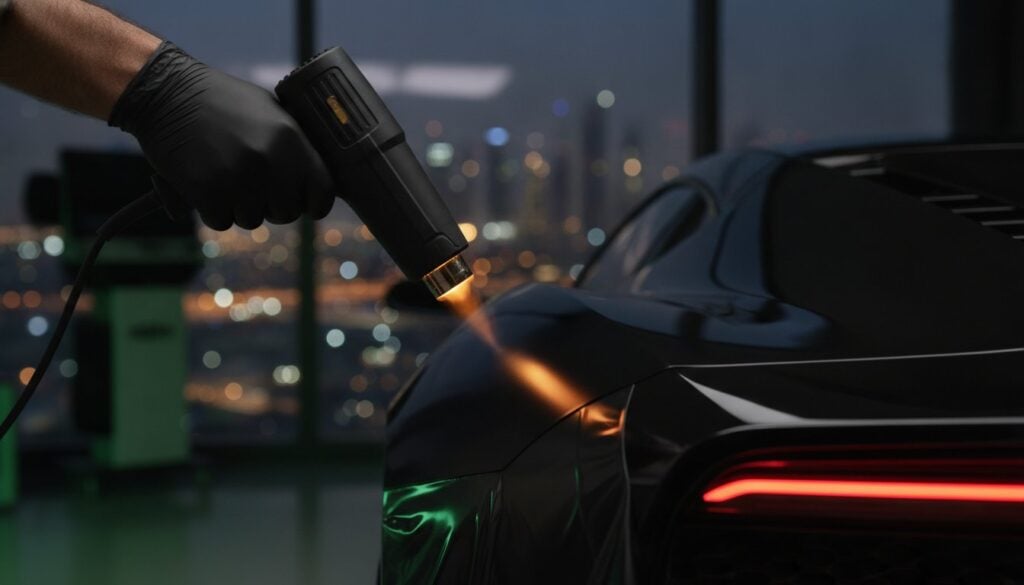
Edge lifting isn’t an inevitable part of the aging process; it’s a direct failure of surface energy management and precise thermal setting. When you’ve invested in a premium aesthetic to transform your vehicle, seeing a corner curl or a seam pull back is more than just a visual flaw. It represents a compromise on the elite quality your car deserves and often triggers the fear that you’ve wasted resources on a short-lived modification. Understanding how to prevent car wrap from lifting is essential for any owner who values meticulous care and high-performance results. We understand the frustration of sorting through conflicting maintenance advice while watching your vehicle’s finish lose its edge.
This 2026 professional guide provides the technical protocols and maintenance rhythms used by elite detailing centers to ensure total film security. You’ll gain the confidence that comes with a permanent-looking finish and a clear roadmap for long-term durability. We’ll explore the critical science of post-heating, the role of advanced edge sealants, and the precise washing techniques required to keep your wrap flawless for years to come. Whether you’re protecting a supercar or a custom conversion, these precision techniques ensure your investment remains as sharp as the day it was installed.
Key Takeaways
- Understand why chemical decontamination and surface purity are the non-negotiable foundations for a bond that lasts five years or more.
- Master the “glassing” technique and precise edge-tucking depths to learn exactly how to prevent car wrap from lifting at vulnerable points.
- Identify the critical 90°C (194°F) post-heating threshold required to reset the film’s memory and lock it into complex contours.
- Implement a professional maintenance roadmap that prioritizes pH-neutral care and avoids petroleum-based cleaners to protect adhesive integrity.
- Ensure a permanent-looking finish by aligning installation protocols with the scientific principles of high-energy surface bonding.
The Mechanics of Adhesion: Why Car Wraps Lift
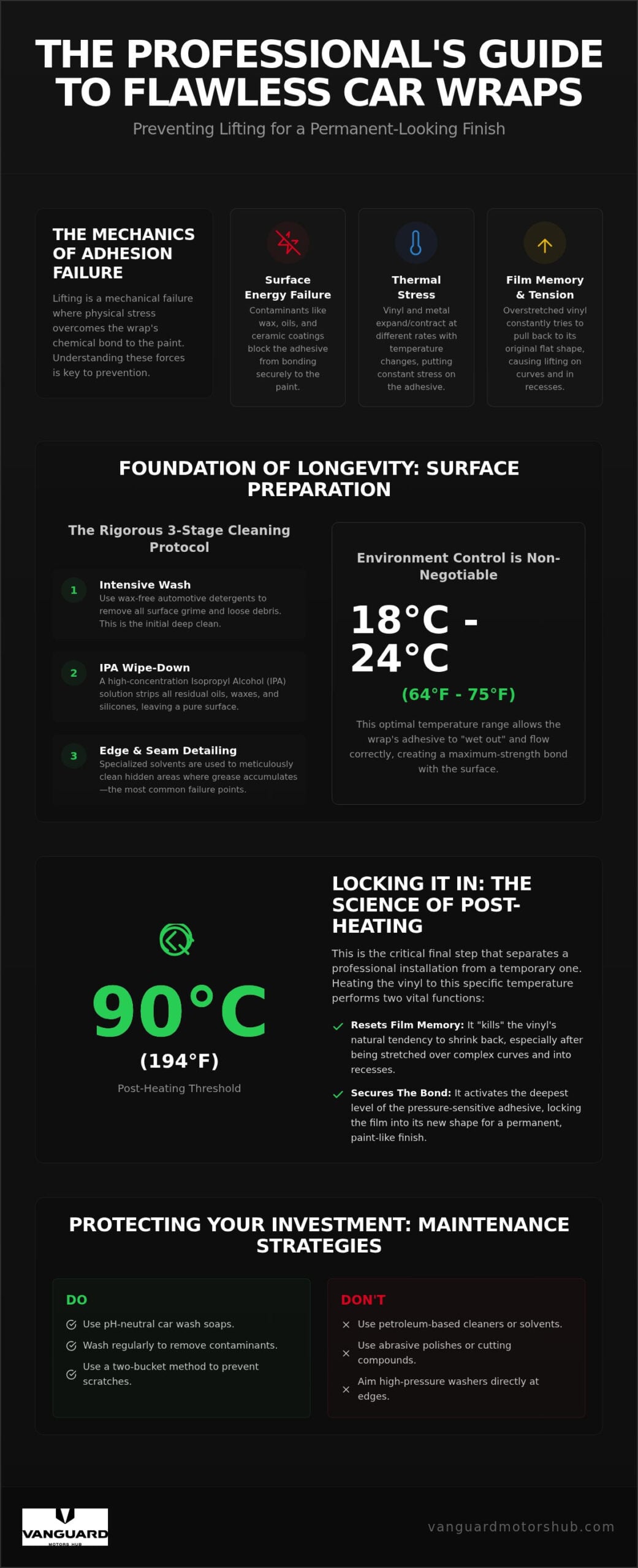
Lifting is the mechanical failure of the pressure-sensitive adhesive (PSA). It happens when the physical stress on the film overcomes the chemical bond to the paint. Mastering the science of surface energy is the first step in learning how to prevent car wrap from lifting effectively. High-energy surfaces like automotive clear coats are designed to bond aggressively with the low-energy polymers found in a Vehicle vinyl wrap. If the paint is contaminated by wax or oils, the surface energy drops, and the adhesive cannot find a secure purchase.
Environmental triggers accelerate this process. Extreme temperature fluctuations cause the vinyl and the metal substrate to expand and contract at different rates. This thermal cycling puts constant pressure on the adhesive layer. When combined with improper installation, such as leaving “fingers” or ridges at the edges, these forces create entry points for moisture and debris. Once the seal is broken, the failure cascades across the panel.
Adhesive Bond vs. Physical Tension
Initial tack is the immediate “grab” you feel during installation, but it isn’t the final bond strength. High-end adhesives require time and pressure to reach their maximum security. Edges are the primary failure point because they bear the brunt of structural memory. If a technician overstretches the film to reach a deep recess, they compromise the adhesive’s molecular structure. This creates a state of perpetual tension where the film is constantly fighting to pull back toward its original state. Understanding these forces is vital when deciding how to prevent car wrap from lifting on complex body lines.
Material Quality and Lifespan
Not all films are created equal. Cast vinyl is the gold standard for performance because it is manufactured in a relaxed state, meaning it has almost zero inherent shrinkage. Cheap calendered films are rolled into shape, making them prone to pulling back as they age. Premium colored sticker wraps utilize advanced cast technology to resist these mechanical stresses. Film memory refers to the inherent physical tendency of vinyl to return to its original flat shape after being heated or stretched. Using high-quality materials ensures this memory doesn’t work against the longevity of your modification.
Pre-Installation Protocols: The Foundation of Longevity
Surface purity determines the next five years of your vehicle’s aesthetic. If the substrate isn’t chemically inert, the pressure-sensitive adhesive will eventually fail. Achieving the “white glove” standard requires more than a simple rinse. It demands a systematic removal of iron deposits, industrial fallout, and microscopic debris that settle into the clear coat’s pores. These contaminants create a physical barrier between the paint and the film, leading to premature failure. If you are researching how to prevent car wrap from lifting, your focus must start with the surface itself.
Hidden contaminants like legacy waxes, polymer sealants, and ceramic coatings are the most common culprits for edge failure. These products are engineered to repel substances, which is exactly what they do to your wrap’s adhesive. Mechanical cleaning through a clay bar treatment is essential to achieve a mirror-smooth bond. This process ensures the film adheres to the paint rather than a layer of grit or wax. Adhering to industry standards for vehicle wrap installation guarantees that every microscopic obstacle is eliminated before the first panel is laid.
The 3-Stage Cleaning Process
A professional-grade installation follows a rigorous 3-stage protocol to ensure chemical purity. Stage 1 involves an intensive wash using wax-free automotive detergents to remove surface grime. Stage 2 utilizes a high-concentration Isopropyl Alcohol (IPA) wipe-down. This strips all residual oils and ensures the paint is completely “dry” of chemical additives. Stage 3 focuses on edge-specific detailing. Specialized solvent cleaners are used in wheel wells, door handles, and seams where grease tends to accumulate, as these are the most frequent sites for lifting.
Surface Temperature and Environment Control
A climate-controlled facility is non-negotiable for elite results. The ideal temperature range for installation is between 18°C and 24°C. This specific window allows for optimal adhesive flow, ensuring the PSA “wets out” across the surface correctly. If the environment is too cold, the adhesive becomes brittle and fails to bond. Conversely, excessive heat can cause the film to overstretch during positioning. Managing humidity is equally critical to prevent moisture entrapment, which can lead to bubbling or long-term adhesive degradation. For those seeking a flawless execution, speak with a technical expert to ensure your vehicle meets these environmental requirements.
Advanced Application Techniques to Eliminate Peeling
Precision in the application stage is what separates a temporary modification from a permanent-looking finish. Mastering how to prevent car wrap from lifting requires an elite understanding of film tension and surface dynamics. “Glassing” is the fundamental technique here. It involves stretching the film across a panel until it is completely flat and wrinkle-free before the adhesive even touches the substrate. This ensures zero tension is built into the main surface area, allowing the film to rest in a relaxed state. For specific technical data on film stretching and handling, 3M’s official installation guide provides the industrial benchmarks for professional results.
Adhesion promoters serve as a strategic insurance policy for high-stress perimeters. Apply them only to critical points like deep wheel arches and the underside of side skirts. Never use these chemicals on large, flat panels; this makes future removal nearly impossible and can damage the clear coat. When handling complex curves, modern technicians prefer cold stretching. By distributing the tension while the film is at room temperature, you avoid the thinning and adhesive distortion that occurs with excessive heat. Heat should be used sparingly to “relax” the film into its final position once it has been meticulously fed into the contour.
Tension Management in Deep Recesses
Bridging is the primary cause of failure in door handles and bumper channels. This happens when the film is stretched across a gap rather than being fed into it. If you want to master how to prevent car wrap from lifting in deep recesses, you must prioritize material feeding over stretching. To ensure a secure bond, you must carefully guide the material into the recess, allowing the adhesive to make contact without being under pull-back stress. Precision cutting is equally vital. Leaving an extra 3 to 5mm of material for a secure tuck prevents the edge from shrinking back and exposing the paint underneath. This level of detail is a core component of the 2026 car wrap buying guide for those seeking elite-tier protection.
Edge Sealing and Finishing
The “tuck and roll” method is the gold standard for fender and door edges. By wrapping the film slightly around the panel edge and rolling it onto the back surface, you create a mechanical lock that wind and water cannot penetrate. In high-exposure areas like the front lip or wheel wells, edge sealer pens provide a liquid laminate that further secures the film’s perimeter. These advanced finishing techniques ensure that your vehicle’s aesthetic remains flawless even under high-speed driving conditions. Meticulous care at the edges is the final barrier against the elements.
Post-Heating and Curing: The Critical Final Steps
Post-heating is the definitive stage where physics meets chemistry. It’s the only way to kill the film’s inherent memory and ensure it remains permanently conformed to its new shape. For most high-performance cast films, 90°C (194°F) is the precise magic number. Reaching this specific threshold is fundamental to how to prevent car wrap from lifting because it physically resets the molecular structure of the vinyl. If you fail to hit this temperature, the material will eventually attempt to return to its original flat form, pulling away from the complex curves of your vehicle.
Standard heat guns often provide inconsistent surface heat that fails to penetrate the adhesive layer. Elite centers utilize infrared technology to achieve deep-tissue heating. This ensures a uniform bond across the entire substrate rather than just the top layer of the film. Once the heating is complete, a 24-hour “dwell” period is non-negotiable. Taking the car for a high-speed drive or exposing it to heavy rain immediately can ruin even the most precise installation. The adhesive requires this window to fully wet out and achieve its maximum bond strength.
The Post-Heating Checklist
A meticulous technician never guesses; they verify. Using an infrared thermometer is the only way to guarantee that every perimeter has reached the required 90°C. This process involves scanning high-tension areas like side mirrors and deep bumper recesses twice to ensure no cold spots remain. During this phase, technicians monitor for “re-lift.” If a corner curls under the heat, it’s a sign of improper tension or contamination. This is the last chance to fix a bond before the chemical structure sets permanently.
Curing in High-Heat Environments
The national climate plays a massive role in how the adhesive behaves during the initial 48-hour cure time. High ambient temperatures can accelerate the bond, but they also increase the risk of edge failure if the post-heating wasn’t perfect. Avoid parking in direct sunlight immediately after installation. Intense UV exposure can cause the film to expand before the adhesive has fully cured, leading to bubbles or edge pull-back. A professional supercar detailing inspection after the first week is highly recommended to verify the integrity of the bond. To ensure your vehicle receives this level of technical care, book a precision post-installation check today.
Professional Maintenance Strategies for Wrapped Vehicles
Maintenance is the final, critical pillar in the lifecycle of a high-end modification. While the installation sets the stage, your daily care routine determines how to prevent car wrap from lifting over the long term. The most vital directive is the “No Pressure” rule. When using a pressure washer, maintain a minimum distance of 30 centimeters from the surface and avoid directing the spray at a 90 degree angle toward any seam. High velocity water can easily penetrate the edge of the film, creating a pocket that eventually leads to total adhesive failure. This mechanical stress is the most common cause of avoidable damage.
Chemical compatibility is equally paramount. Petroleum based cleaners and harsh carnauba waxes are engineered for paint, but they can be catastrophic for vinyl. These substances often contain solvents that migrate through the film and dissolve the pressure sensitive adhesive. Instead, utilize wrap specific sealants that provide a sacrificial layer against intense UV radiation. In high heat environments, UV rays dry out the plasticizers in the film. This makes the material brittle and far more likely to pull back from the substrate as it loses its flexibility.
The Safe Washing Protocol
A two bucket hand washing method using pH neutral soaps is the only way to ensure surface purity without risking damage. Automatic car washes with abrasive brushes are the primary enemy of wrap edges. They apply mechanical force that can snag and lift the film in a single cycle. For drying, an air blower is the preferred tool for professional results. If you must use towels, choose high gsm microfiber and pat the surface dry. Never drag the fabric across the edges. This prevents the microscopic snagging that precedes a major lift.
Long-Term Preservation and Inspections
Ongoing maintenance is simplified through the Vanguard Premium Package, which provides a structured approach to automotive preservation. We recommend a professional edge inspection every six months to identify microscopic lifting before it becomes a visible flaw. Early detection allows for minor heat corrections that can save the entire panel. For those seeking ultimate security in high impact areas like the front bumper, an overlay of paint protection film can be applied over the wrap. This dual layer approach provides a physical barrier that locks the colored film in place while defending against rock chips.
Preserving the Edge of Automotive Excellence
Mastery over surface energy and thermal setting is what separates a short-lived modification from a lasting transformation. You’ve learned that surface purity is the non-negotiable foundation and that hitting the 90°C post-heating threshold is the only way to reset the film’s memory. By implementing a professional maintenance roadmap that prioritizes pH-neutral care, you ensure your investment remains flawless despite the challenges of high-heat environments. Understanding how to prevent car wrap from lifting isn’t just about technical skill; it’s about a commitment to meticulous care at every stage of the vehicle’s life.
As a national leader in premium automotive protection, Vanguard Motors Dubai combines specialized supercar detailing expertise with advanced infrared curing technology to lock in elite results. We understand that your vehicle is a statement of performance and precision. Don’t leave your aesthetic to chance when you can achieve a permanent-looking finish through expert engineering. Secure your vehicle’s aesthetic with Vanguard’s elite wrapping services and drive with the confidence that your wrap is as secure as it is stunning. Your journey toward a flawless finish starts with the right technical partner.
Frequently Asked Questions
How long should a car wrap last before it starts lifting?
A professionally installed wrap using premium cast vinyl typically lasts five to seven years before showing signs of edge failure. Longevity depends heavily on the initial surface energy management and the environmental conditions the vehicle faces. Regular inspections are vital to catch microscopic lifting before it compromises the entire panel. Maintaining a consistent cleaning schedule with approved products ensures the adhesive remains secure throughout its intended lifespan.
Can I fix a wrap that has already started peeling at the edges?
Minor edge lifting can often be corrected if you act before contaminants reach the adhesive layer. Technicians use precision heat to reactivate the bond and may apply a specialized edge sealer to lock the film down. If dirt has already migrated under the vinyl, the only professional solution is a surgical trim and re-seal. Learning how to prevent car wrap from lifting through early detection saves you from the cost of full panel replacement.
Does heat make car wraps peel faster?
Ambient environmental heat can accelerate the drying of plasticizers, but technical post-heating is actually the primary defense against peeling. Raising the film temperature to exactly 90°C (194°F) during installation kills the material’s memory. This process ensures the vinyl stays conformed to deep recesses rather than pulling back. Without this critical thermal step, the wrap is far more likely to fail when exposed to the national summer climate.
Is it safe to use a pressure washer on a wrapped car?
You can safely use a pressure washer provided you maintain a distance of at least 30 centimeters from the vehicle. Directing the spray at a sharp angle toward a seam is the fastest way to trigger a lift. Keep the nozzle moving and avoid high-pressure settings on delicate areas like door handles or fender edges. Hand washing remains the gold standard for those prioritizing the long-term integrity of their automotive modification.
What is an adhesion promoter and do I need it?
An adhesion promoter is a chemical primer that increases the surface energy of the substrate in high-tension areas. It’s essential for complex curves and deep recesses where the film is under constant mechanical stress. While you don’t need it on large flat panels, it’s a critical tool for securing the perimeter of wheel wells and bumpers. This strategic application is a proven method for how to prevent car wrap from lifting in vulnerable spots.
How do I know if my wrap was post-heated correctly?
You can identify correct post-heating by inspecting the deepest contours and recesses for “fingers” or material pull-back after the first 24 hours. A correctly cured wrap looks like factory paint and shows no signs of tension at the edges. Professionals verify this during installation by using infrared thermometers to ensure every high-stress point reached the required thermal threshold. If the film remains perfectly flat in deep channels, the curing was successful.
Will ceramic coating prevent my wrap from lifting?
Ceramic coating provides an excellent sacrificial layer that defends against UV radiation and chemical stains, which indirectly supports wrap longevity. By keeping the vinyl supple and preventing it from becoming brittle, it reduces the risk of the material cracking or shrinking. However, it won’t compensate for a poor initial bond or improper edge-tucking. It’s a preservation tool that works best when applied over a technically perfect installation.
What is the best way to clean the edges of a wrapped car?
The safest way to clean wrap edges is by using a two-bucket hand wash method with pH-neutral automotive soap. Avoid using traditional towels that can snag on the film’s perimeter; instead, use a dedicated air blower or a high-GSM microfiber cloth to pat the area dry. This prevents the mechanical snagging that often leads to a major peel. Meticulous care at the seams ensures the adhesive seal remains intact for years.