
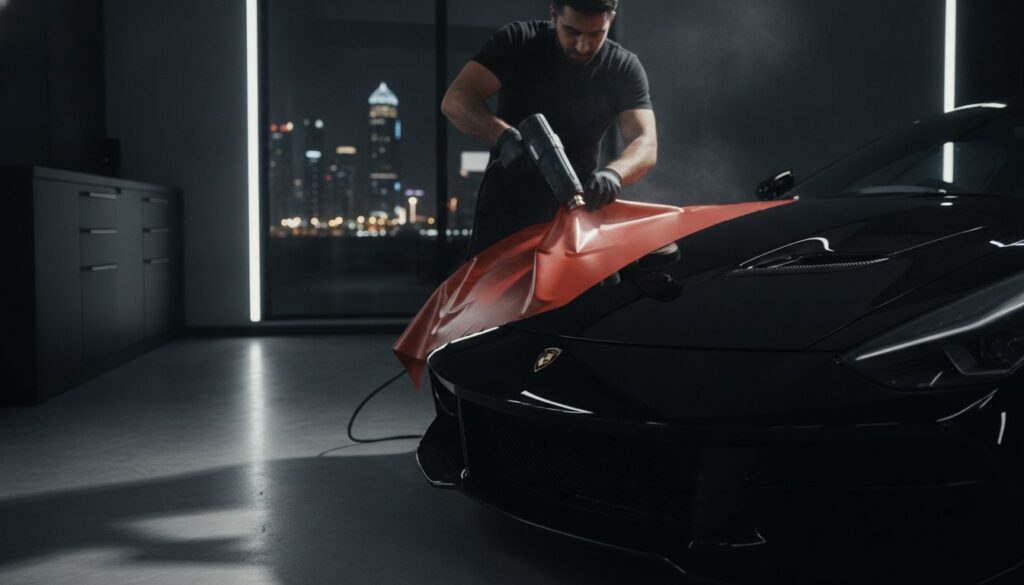
Stripping a vehicle’s skin isn’t a task of brute force; it’s a high-stakes exercise in thermal precision and chemical mastery. You’ve likely felt that surge of anxiety when considering removing car wrap without damaging paint, especially if that vinyl has been baking under the sun for years or sits atop a delicate, repainted panel. It’s a valid concern. A single wrong move can transform a simple aesthetic refresh into a costly paint correction.
We understand that your vehicle’s integrity is non-negotiable. This professional guide will teach you how to master the precise heat levels and specialized tools required to safely strip vinyl while preserving your factory finish. We’ll preview the latest 2026 industry standards, including navigating new state reporting requirements in regions like Indiana and New York, and utilizing the newest pH-neutral chemical solutions. You’ll learn exactly when the DIY approach works and when the complexity of sun-baked, brittle film requires the intervention of a specialist to ensure a residue-free result.
Key Takeaways
- Understand the complex bond between pressure-sensitive adhesives and your vehicle’s surface to prevent UV-baked vinyl from fusing with the paint.
- Discover why precision thermal control and steam are the ultimate tools for removing car wrap without damaging paint, ensuring the film remains pliable rather than brittle.
- Learn how to execute a professional “pull test” to evaluate the bond strength of your clear coat before beginning the removal process.
- Follow a meticulous, step-by-step methodology to identify the optimal lift points and maintain the correct removal angles to avoid adhesive residue.
- Recognize the necessity of paint correction and subsequent protection, such as Paint Protection Film (PPF), to restore your vehicle to a showroom-ready Vanguard Standard.
The Science of Vinyl Adhesion: Why Wraps Damage Paint
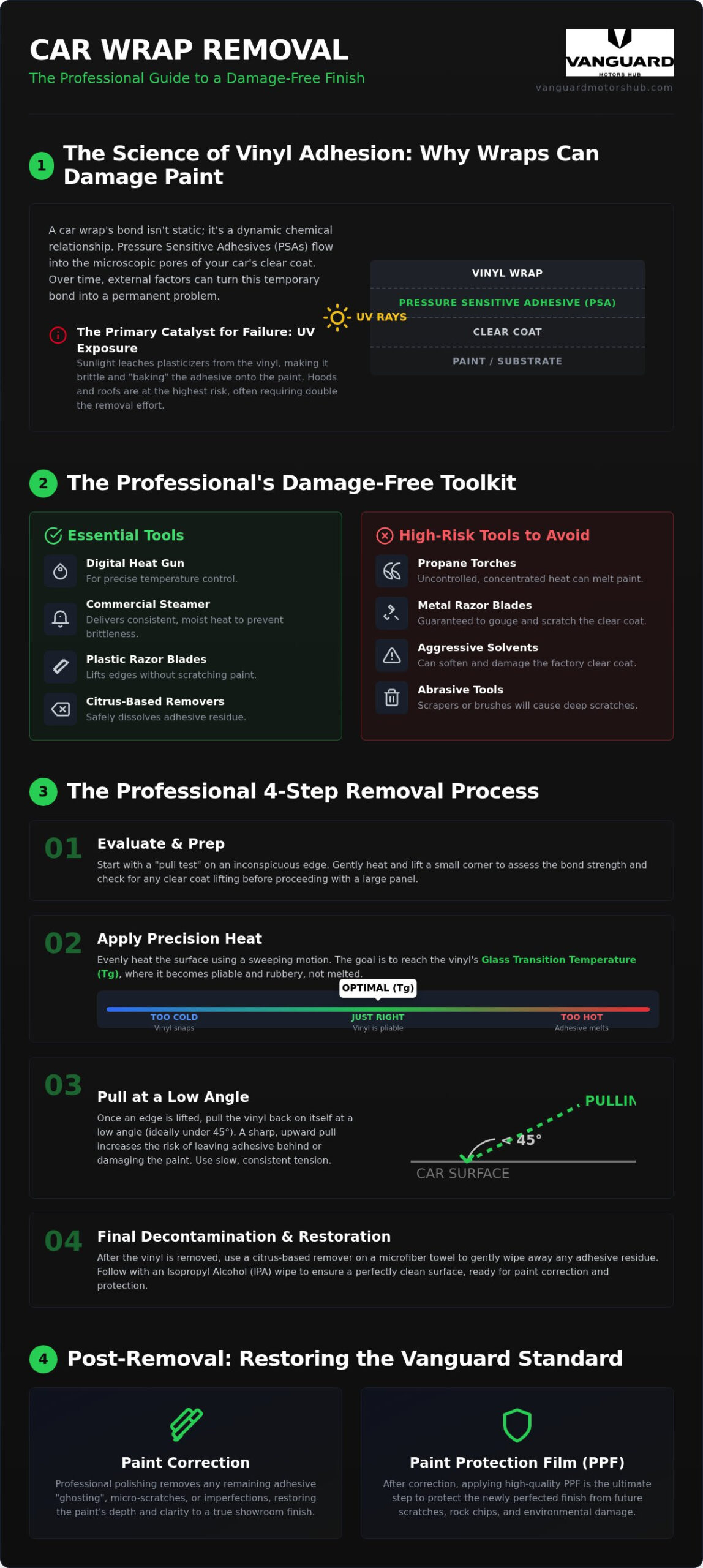
Successful vehicle transformation relies on a chemical relationship that most owners never see. At the heart of every high-end vinyl application is a layer of Pressure Sensitive Adhesive (PSA). Unlike traditional glues that harden as they dry, PSAs remain in a permanent, high-viscosity liquid state. They don’t bond by drying; they bond by flowing into the microscopic textures of your vehicle’s surface. Understanding The Science of Vinyl Adhesion is the first step toward removing car wrap without damaging paint, as it reveals that the bond is dynamic rather than static.
By 2026, vinyl technology has shifted toward more sophisticated cast films that utilize low-initial-tack adhesives. These modern materials are designed to be repositionable during installation and cleaner during removal. However, even the most advanced 2026 films are subject to the laws of physics. The most critical concept for a technician is the Glass Transition Temperature (Tg). This is the specific thermal point where the vinyl shifts from a hard, brittle state to a flexible, rubbery one. If you pull the film below this temperature, it snaps and leaves adhesive behind. If you exceed it, the vinyl overstretches and the adhesive can melt into the paint’s pores, creating a permanent bond.
How UV Exposure Alters Vinyl Chemistry
Time and the sun are the primary catalysts for removal failure. Vinyl is infused with plasticizers, which are chemical agents that keep the film pliable. Over a lifespan of three to five years, UV radiation gradually leaches these plasticizers out of the material. When this happens, the vinyl becomes “baked-in” and loses its structural integrity. You’ll recognize this failure by specific visual indicators: the film might turn a matte grey, develop fine cracks like shattered glass, or begin lifting aggressively at the edges. Sun-baked horizontal surfaces, specifically hoods and roofs, often require twice the removal effort because they absorb the highest concentration of solar energy, effectively fusing the adhesive to the clear coat.
The Clear Coat Risk Factor
The condition of your paint before the wrap was applied dictates the difficulty of its exit. Even factory paint has a texture known as “orange peel,” which provides microscopic anchors for the adhesive. If the paint was previously corrected or has micro-scratches, the adhesive has even more surface area to grip. This risk is amplified on plastic bumpers compared to metal panels. Plastic is a thermal insulator; it holds heat longer and can warp if a heat gun is used too aggressively. In extreme cases, “ghosting” occurs. This is a phenomenon where pigments from the vinyl migrate into the clear coat, leaving a faint silhouette of the previous design even after the film is gone. Professional standards, like those maintained at Vanguard Motors, prioritize identifying these risks before the first corner is ever lifted.
Professional Tools Required for Damage-Free Removal
Professional grade removal is a game of millimeters and degrees. While amateur forums often suggest hair dryers, these household tools lack the consistent thermal output required for high-performance cast vinyl. Achieving the goal of removing car wrap without damaging paint demands an industrial heat gun with digital temperature readouts. Precision control is the only way to avoid the catastrophic overheating of clear coats or the warping of delicate plastic trim. A professional-grade removal kit typically costs between $50 and $150 for high-quality tools and materials, a small investment compared to the cost of a full respray.
Propane torches are often used by high-volume shops, but they represent an unnecessary risk for supercars and luxury vehicles. The flame is too concentrated and difficult to modulate. Instead, elite technicians increasingly turn to commercial steamers. Steam provides a dual-action benefit: it delivers consistent heat while the moisture prevents the vinyl from becoming brittle and snapping into thousands of tiny shards. This is particularly effective for 2026-era high-opacity films that tend to be denser and more prone to shattering than previous generations.
Your mechanical toolkit must be strictly non-marring. Plastic razor blades and “Lil’ Grippers” allow you to lift edges without the risk of gouging the substrate. For the stubborn adhesive left behind, the chemical arsenal usually includes citrus-based solutions or high-purity Isopropyl Alcohol (IPA) blends for final surface decontamination. Professional detailers at Vanguard Motors rely on these specialized tools to ensure the underlying paint remains as pristine as the day it was covered. These instruments are essential for removing car wrap without damaging paint when dealing with legacy adhesives or sun-baked panels.
Heat Management Strategies
Maintaining a surface temperature between 50°C and 70°C is the gold standard for optimal elasticity. Below this range, the vinyl remains rigid and prone to tearing; above it, you risk burning the film or damaging modern ADAS sensors embedded in bumpers. Infrared thermometers are no longer optional; they’re essential for protecting the complex electronics housed within the fascia of modern luxury vehicles. Dwell time refers to the critical duration heat must be applied to the vinyl surface to allow the thermal energy to radiate through the film and soften the underlying adhesive bond.
Surface-Safe Chemical Solvents
Adhesive removers fall into two categories: citrus-based and solvent-based. Citrus-based options are generally safer for the environment and the operator, though they require a longer “soak and scrape” period to break down cured adhesives. Solvent-based chemicals work faster but demand caution near rubber seals and glass. Always mask off sensitive trim to prevent chemical runoff from staining or degrading non-painted surfaces. If you’re unsure about the thermal limits of your specific paint finish, it’s safer to consult with a technical expert before proceeding.
Evaluating Your Vehicle’s Risk Profile
Before the first corner of vinyl is lifted, a professional technician performs a rigorous audit of the substrate. The success of removing car wrap without damaging paint is dictated by the history of the surface beneath the film. While factory finishes are engineered for durability, the reality of the secondary market often involves hidden repairs or aftermarket aesthetics. Identifying these variables early prevents a routine removal from escalating into a full panel respray. Current 2026 industry data suggests that professional removal for exotics and supercars typically ranges from $600 to $1,500, a cost that reflects the meticulous care required for high-value paintwork.
The age of the installation is your most significant indicator of risk. High-quality cast vinyl has a lifespan of five to eight years. However, once a wrap surpasses the five-year mark, the removal complexity spikes. Research indicates that “baked-in” wraps can incur a 50% to 100% surcharge due to brittle film and cured adhesives. You must also distinguish between premium cast vinyl and cheaper calendered alternatives. Calendered vinyl uses high-tack, aggressive adhesives that are far more likely to bond permanently to the clear coat, making damage-free removal nearly impossible for an amateur.
To verify the bond strength of your paint, perform a “Pull Test” on an inconspicuous area, such as the inside of a door jamb or under the rocker panel. If the clear coat shows any sign of separation or “clouding” during a test pull, the paint’s structural integrity is compromised. This is especially common on vehicles that have undergone significant transformations, such as the installation of a Brabus kit or Mansory kit, where aftermarket paintwork may have been applied to match the new body lines.
The Danger of Repainted Panels
Aftermarket resprays are the primary cause of paint lifting. Unlike factory paint, which is “oven-cured” at extreme temperatures during the manufacturing process, most body shop repairs are air-dried or cured with infrared lamps. This results in a softer finish with a weaker bond to the primer. Professional detailers use digital paint depth gauges to identify these resprayed zones. If a panel shows a thickness significantly higher than the factory average, it indicates filler or a respray. Special caution is mandatory for carbon fiber components, as the resin can be more porous than metal, allowing adhesive to anchor deeper into the surface.
When to Abort DIY and Seek Professionals
Recognizing the limits of your equipment is vital. If the vinyl exhibits “delamination,” where the colored top layer separates from the adhesive backing, stop immediately. This leaves a thick, hardened layer of glue that requires specialized chemical softeners to dissolve without scratching the paint. Large-scale cracking is another red flag. When vinyl shatters into tiny shards instead of pulling in sheets, the labor time triples and the risk of paint gouging increases. For supercar owners, the economic calculation is simple. The cost of a professional removal is a fraction of the price of a high-end respray. If you see signs of clear coat failure or brittle film, defer to the experts at Vanguard Motors to ensure your investment remains protected.
Step-by-Step: The Professional Removal Process
Executing a flawless exit strategy for your vehicle’s vinyl requires more than just patience; it demands a rhythmic synergy between heat and tension. The process of removing car wrap without damaging paint begins with a comprehensive decontamination wash. Even microscopic grains of desert sand trapped at the edges of the film can act as an abrasive, scratching the clear coat as the vinyl is peeled back. Once the surface is clinical, identify the “sweet spot” for the initial lift. This is typically a corner or a hidden seam where the vinyl is tucked behind a panel. Use a plastic non-marring tool to gently release the edge without making contact with the underlying paintwork.
The core of the removal is the constant heat loop. Unlike the installation phase where heat is used for stretching, removal heat is used for release. You must maintain a dynamic motion with your heat gun or steamer, warming the area approximately six inches ahead of your pull. This ensures the adhesive reaches its glass transition temperature before it’s subjected to tension. If the vinyl feels resistant or “snaps,” you’ve allowed the material to cool. Constant monitoring with an infrared thermometer ensures you stay within the safe 50°C to 70°C window, protecting sensitive electronics and plastic trim from thermal stress.
The 45-Degree Pull Technique
Physics dictates the safety of your clear coat. Amateur removals often involve pulling the vinyl at a 90-degree angle, which exerts maximum vertical stress on the paint’s bond to the primer. Professional technicians utilize a 45-degree pull, folding the film back over itself. This technique shears the adhesive bond laterally, which is significantly safer for the substrate. Fast pulls cause the adhesive to “shock” and separate from the vinyl carrier, while slow, deliberate tension allows the bond to release cleanly from the clear coat. This steady pace is the secret to removing car wrap without damaging paint while minimizing the need for heavy chemical cleanup later.
Eliminating Adhesive Residue and Ghosting
Even with perfect technique, some adhesive transfer is inevitable, particularly on vehicles that have endured high UV exposure. For heavy deposits, saturate a microfiber pad with a citrus-based remover and allow it to dwell for sixty seconds before wiping. Stubborn residue on edges can be managed with a rubber eraser wheel, provided it’s used at low RPMs to avoid heat build-up. The most complex challenge is “ghosting,” where pigments from the wrap have migrated into the clear coat. This creates a visible silhouette of the previous design that no chemical can wash away. Addressing this requires a light stage-one paint correction to level the clear coat and restore the “Vanguard Standard” of clarity. If you’re facing brittle, sun-baked film that shatters upon contact, schedule a professional consultation to prevent permanent surface damage.
Post-Removal: Restoring the Vanguard Standard
The final strip of vinyl marks the beginning of your vehicle’s true restoration. While the primary objective of removing car wrap without damaging paint has been achieved, the surface revealed is often in a vulnerable, transitional state. After years shielded from the elements, your factory clear coat is essentially “naked.” It lacks the sacrificial layers of wax, sealant, or ceramic coating that usually defend against environmental fallout. Additionally, the paint has been deprived of oxygen and moisture, which can leave the finish looking dull or “thirsty” once the adhesive is fully neutralized.
This stage is critical because your paint is now more susceptible to UV radiation and oxidation than ever before. The contrast between the protected panels and any exposed trim can be jarring. At Vanguard Motors, we view the removal process as a blank canvas for a superior level of aesthetic excellence. Transitioning from a temporary aesthetic like a colored wrap to a long-term solution like Paint Protection Film (PPF) is the standard for owners who demand both transformation and preservation. This shift ensures that the pristine surface you’ve worked so hard to uncover remains protected for the next decade.
Paint Correction and Detailing
Even with the most meticulous 45-degree pull technique, microscopic marring is a common byproduct of the removal process. These tiny imperfections occur when the adhesive bond is broken or when cleaning away residual “ghosting” silhouettes. A professional stage-one or stage-two paint correction is essential to level the clear coat and restore that deep, mirror-like luster. This isn’t merely about aesthetics; it’s about preparing the surface for its next layer of protection. For owners of high-performance vehicles, our guide on Supercar Detailing outlines the precision required to achieve a flawless finish that meets elite showroom standards. This process removes the last traces of chemical removers and ensures the paint is clinically clean.
Upgrading to Permanent Protection
By 2026, the automotive industry has shifted away from traditional vinyl as a primary protection method. While wraps offer color flexibility, they lack the impact resistance and self-healing properties of modern films. Upgrading to a high-performance PPF is the superior choice for daily drivers and track-focused machines alike. Unlike vinyl, which can become brittle after five years, premium PPF utilizes advanced elastomeric polymers that heal themselves from swirl marks and light scratches when exposed to heat. You can even opt for Colored PPF, which provides the vibrant hue of a traditional wrap with the heavy-duty thickness of a protective shield. This dual-purpose technology represents the pinnacle of 2026 vehicle care.
The Vanguard Premium Package offers a holistic approach to this transition. It integrates professional removal, multi-stage paint correction, and the application of bespoke protection layers. This isn’t just about removing car wrap without damaging paint; it’s about elevating your vehicle’s value and appearance beyond its original factory state. Whether you’re returning to a classic aesthetic or preparing for a new bespoke conversion, the post-removal phase is where your car’s next chapter truly begins.
Precision Protection for Your Vehicle’s Next Chapter
Mastering the art of removing car wrap without damaging paint requires more than just high-end tools; it requires an expert eye for the subtle nuances of clear coat health and adhesive chemistry. You’ve learned that success hinges on precise thermal control and a rigorous evaluation of your vehicle’s paint history. Whether you’re dealing with sun-baked film or a delicate respray, the margin for error is razor-thin. Choosing a professional path ensures that your factory finish remains a pristine asset rather than a liability.
At Vanguard Motors, we specialize in luxury and supercar care, operating out of a state-of-the-art facility designed for precision detailing. Our certified PPF and wrap installers treat every panel with the meticulous attention it deserves, ensuring a seamless transition to your next aesthetic upgrade. Don’t risk the integrity of your investment with amateur techniques or aggressive chemicals. Book Your Professional Wrap Removal at Vanguard Motors today. Your vehicle is ready for its transformation, and we’re here to ensure it’s executed to the highest standards of excellence.
Expert Insights: Frequently Asked Questions
Will removing a car wrap damage my factory paint?
High-quality factory paint is rarely damaged by professional removal techniques. Modern vinyl is engineered to bond to the clear coat without integrating into it. However, the risk increases if the wrap remains on the vehicle beyond its recommended five to eight-year lifespan. Over time, the adhesive can cure and harden, potentially leading to clear coat delamination if the film is pulled without sufficient heat or precision.
How much does it cost to have a car wrap professionally removed?
Professional removal costs vary significantly based on the vehicle’s size, the age of the vinyl, and the current condition of the adhesive. Older wraps that have become brittle or “baked-in” require substantially more labor and specialized chemical treatment, which influences the final investment. It’s best to request a physical inspection to receive an accurate assessment tailored to your vehicle’s specific risk profile and surface condition.
Can I use a pressure washer to help remove the vinyl?
Using a pressure washer is a dangerous and ineffective method for removing car wrap without damaging paint. The high-pressure water stream can easily catch a lifted edge and tear the vinyl or, in severe cases, blast the clear coat directly off the panel. You should stick to controlled heat sources like industrial heat guns or commercial steamers to soften the adhesive bond safely and consistently.
What is the best chemical to remove wrap adhesive residue?
Citrus-based adhesive removers are the professional standard for safe and effective residue elimination. These solutions are formulated to break down the chemical bond of pressure-sensitive adhesives without softening or staining the underlying clear coat. For the final stage of surface decontamination, a high-purity Isopropyl Alcohol (IPA) blend ensures the paint is clinical and ready for a fresh application of protection or a final polish.
How long does it take to remove a full vehicle wrap?
A standard removal typically requires between three and four hours if the vinyl’s structural integrity remains intact. If the wrap is aged, brittle, or has begun to crack into shards, the process can extend into multiple days of meticulous labor. The complexity of the vehicle’s body lines and the presence of bespoke body kits also play a significant role in determining the total timeframe for a clean exit.
What should I do if the paint starts lifting during removal?
Stop the removal process immediately if you detect any signs of paint separation or clear coat clouding. This is a critical indicator that the bond between the paint and the primer is weaker than the adhesive’s grip, often seen on repainted panels. Professional intervention is mandatory at this stage to utilize specialized chemical softeners that can release the film’s bond without further compromising the vehicle’s finish.
Is it necessary to polish the car after the wrap is removed?
A light paint correction or professional polish is highly recommended to restore a mirror-like finish. Even the most careful removal can leave behind microscopic marring or “ghosting” silhouettes where pigments have migrated into the clear coat. Polishing levels the surface and prepares the paint for its next layer of defense, such as Paint Protection Film (PPF), ensuring the result meets the highest aesthetic standards.
How can I tell if my wrap is too old to remove safely by myself?
Visual indicators like deep cracking, a matte-grey discoloration, or the vinyl shattering into tiny fragments suggest the film is “baked-in.” If the installation has surpassed the five-year mark, it has likely lost the plasticizers that maintain its flexibility. At this stage, removing car wrap without damaging paint becomes a high-risk technical task that requires professional-grade steam equipment and chemical mastery to prevent permanent surface damage.