
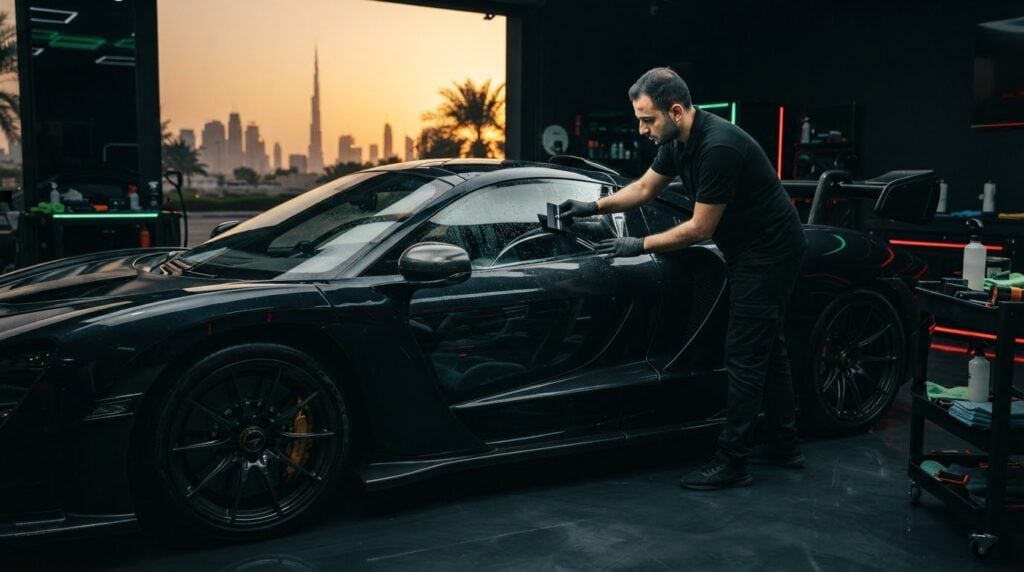
A darker tint can look more substantial without delivering better heat control. Choosing IR ceramic automotive window film for your car is less about shade alone and more about verified performance, clear visibility, and a precise fit.
It’s reasonable to expect ceramic film to improve cabin comfort, but “ceramic” describes a category, not a guaranteed level of performance. Films differ in how they handle infrared heat, how much visible light they transmit, and how clearly you can see through them. The right choice balances those details with your driving needs and the vehicle’s glass.
This 2026 buying guide explains what infrared-focused ceramic film is designed to do and which specifications deserve a closer look. You’ll learn why visible light transmission (VLT) doesn’t tell the whole story, how to compare product data without relying on broad marketing claims, and what to ask about film identity, suitability, and installation before you commit. Practical comfort matters, but so does preserving confident visibility. Treat the film and installation as one considered decision, and ask an installer to clarify the details rather than assuming every ceramic option performs alike.
Key Takeaways
- IR ceramic automotive window film is designed to address infrared heat, but the word “ceramic” alone doesn’t confirm how a particular film performs.
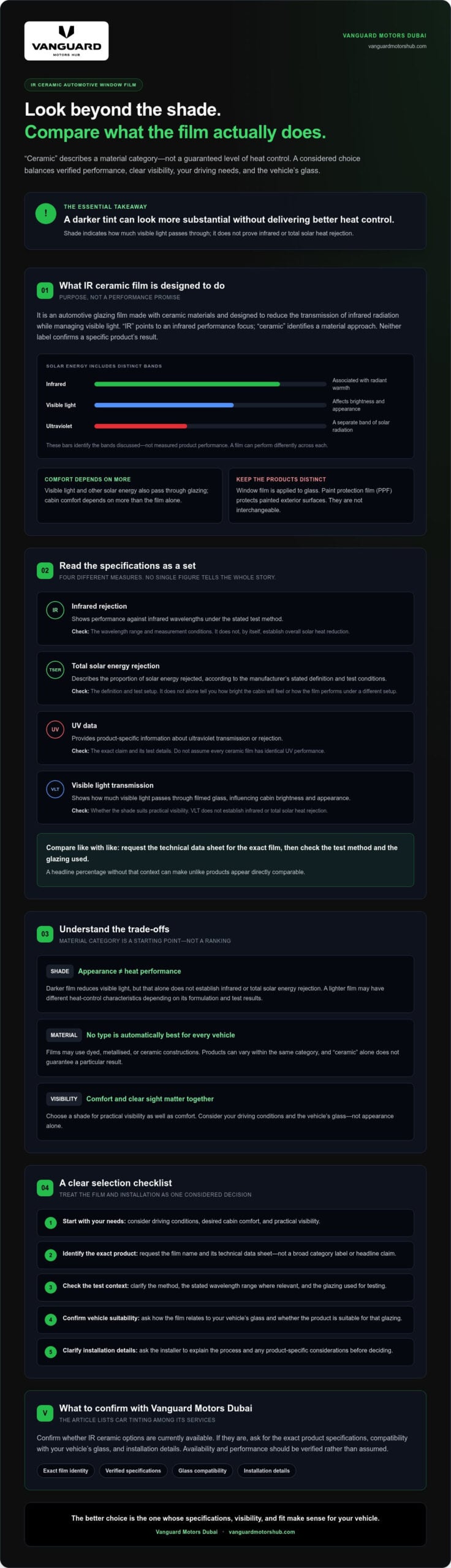
- Compare infrared rejection, total solar energy rejection, UV data, and visible light transmission to understand what each specification can and can’t tell you.
- Choose a shade for practical visibility as well as comfort. Darker film doesn’t automatically mean stronger heat rejection.
- Before selecting a film, consider your driving conditions and vehicle glass, then ask for verified product specifications and compatibility details.
- Vanguard Motors Dubai lists car tinting among its services. Confirm whether IR ceramic options are currently available and ask about their specifications and installation details.
What Is IR Ceramic Automotive Window Film & Its Purpose?
IR ceramic automotive window film is an automotive glazing film made with ceramic materials and designed to reduce the transmission of infrared radiation while managing visible light. “Tinted film” describes appearance or the broad category of film applied to glass. “Ceramic” identifies a material approach, while “IR” points to a performance focus. Neither label confirms how much heat a specific product rejects.
IR means infrared radiation, an invisible part of solar energy associated with the warmth you feel in a sunlit cabin. It’s only one contributor to vehicle heat. Visible light and other solar energy also pass through glazing, and cabin comfort depends on more than the film alone. For an overview of film materials and common technologies, see Window film.
How Does Ceramic Window Film Address Infrared Heat?
Ceramic materials in a film can be formulated to affect how solar energy passes through glass. The precise composition and design vary, so there isn’t one universal mechanism or performance level shared by every ceramic film. Ask for product-specific test information rather than treating the material label as proof of a particular result.
Solar radiation includes distinct bands. Infrared relates to radiant warmth, ultraviolet is a separate band associated with sun exposure, and visible light is the portion you see. A film may perform differently across each. A claim focused on infrared rejection, for example, doesn’t by itself describe UV performance, visible light transmission, or the overall reduction in solar energy entering the vehicle.
IR Ceramic Film Versus Conventional Window Tint
Conventional tint is a broad category, not a single material or performance standard. Films may use different approaches, including dyed, metallised, or ceramic constructions, and products within the same category can also vary. Ceramic options are often considered for heat-control goals alongside a chosen level of visibility, but no material type is automatically best for every driver or vehicle.
Shade isn’t a reliable shortcut. A darker film reduces visible light, but that alone doesn’t establish how effectively it addresses infrared or total solar energy. A lighter option may have different heat-control characteristics, depending on its formulation and test results. Compare products using data measured under stated test conditions, and check that figures refer to the same glazing setup before drawing conclusions.
Keep the purpose clear: automotive window film is applied to glass, while paint protection film (PPF) is designed to protect painted exterior surfaces. They serve different parts of the vehicle and aren’t interchangeable. For IR ceramic automotive window film, use the category as a starting point, then verify the specific film’s technical data and suitability for your vehicle’s glazing.
How to Compare IR Ceramic Automotive Window Film Specifications
Product claims are useful only when you know what was measured and how. For a meaningful comparison, request the technical data sheet for the exact film being considered, then check its test method and the glazing used in the test. A headline percentage without that context can make unlike products appear directly comparable.
What Do IR Rejection, TSER, UV Data, and VLT Mean?
| Specification | What it tells you | What it doesn’t tell you alone |
|---|---|---|
| Infrared rejection | How the film performs against infrared wavelengths under the stated test method. | Overall solar heat reduction, unless the claim clearly defines its wavelength range and measurement conditions. |
| Total solar energy rejection (TSER) | The proportion of solar energy rejected, based on the manufacturer’s stated definition and test conditions. | How bright the cabin will feel or how the film performs under a different test setup. |
| UV data | Product-specific information about ultraviolet transmission or rejection. | Identical UV performance across all ceramic films. Confirm the exact claim and test details. |
| Visible light transmission (VLT) | How much visible light passes through the filmed glass, influencing cabin brightness and appearance. | Infrared or total solar heat rejection. A darker appearance does not prove stronger heat control. |
No single performance figure represents total film performance: infrared rejection, TSER, UV data, and VLT describe different properties. Consider them together with the test conditions.
How to Read Film Data Without Being Misled
Check the exact product reference, the glass type used in testing, the test conditions, and whether figures describe the film alone or film combined with glazing. Compare like with like. If two sheets use different wavelength ranges or methods, their headline values may not be directly comparable. Treat broad claims such as “maximum heat rejection” as prompts to request evidence, not as a substitute for it.
Vehicle comfort also depends on factors beyond a film specification. A discussion of NREL research on vehicle cooling provides context for considering solar-control film alongside cabin cooling performance, rather than judging by one number.
For IR ceramic automotive window film, ask to see the manufacturer’s technical data sheet and confirm that the quoted figures apply to the option proposed for your vehicle. Vanguard lists car tinting among its services, but its current IR ceramic film availability and specifications should be verified. You can ask about current film options and vehicle suitability before deciding.
Does Ceramic Automatically Mean Better? Comparing Film Trade-Offs
No. “Ceramic” describes a material category, not a guaranteed level of performance. Films within a category can differ in formulation, visible appearance, test results, and suitability for a particular vehicle. A premium-sounding label can help identify what to ask about, but it can’t replace product documentation or a considered comparison of your priorities.
There’s no universal winner. One driver may put cabin comfort first; another may care more about daylight, privacy, appearance, or staying within a set budget. The right choice balances these goals against verified film performance and the vehicle’s glazing.
Ceramic, Carbon, and Dyed Films: What Should Buyers Compare?
Ceramic, carbon, and dyed refer broadly to film construction or material approaches. The names aren’t standardized performance grades, and products carrying the same label may not share the same specifications. Compare the exact film reference, manufacturer data, intended shade, and suitability for your vehicle rather than assuming a category name proves superior results.
| Film category | Potential consideration | What to verify |
|---|---|---|
| Ceramic | May be considered by buyers prioritizing solar-control performance alongside a chosen appearance. | Product-specific test data, VLT options, and compatibility. Category alone doesn’t establish results. |
| Carbon | Another material category to compare for appearance and stated performance. | Construction details and verified performance figures. Don’t infer them from the label. |
| Dyed | May suit buyers whose priorities include a particular tinted look. | Documented heat-control and UV data, plus the appearance and visibility of the exact option. |
Product-level data unavailable here: without a named film and its technical documentation, no category can be assigned a reliable performance ranking. Ask the installer to show the data for the options actually being considered.
Will a Darker Film Always Keep the Cabin Cooler?
No. Visible darkness and measured solar performance aren’t interchangeable. A darker shade changes how much visible light enters and can provide a stronger sense of privacy, but it doesn’t, by itself, tell you how the film performs against solar energy. Check the specific option’s VLT data and performance documentation.
Think through real driving conditions. A shade that suits a privacy or appearance preference may reduce cabin brightness and affect visibility, particularly when driving at night. Consider your comfort, passengers, parking conditions, and confidence behind the wheel. Before choosing, confirm that the selected film and shade suit your vehicle’s glazing and meet applicable requirements. Choose based on verified data and practical visibility, not the darkest look or the most persuasive category label.
How to Choose IR Ceramic Window Film for Your Vehicle
Choose film around the way you use your vehicle, not a label alone. Start with this checklist, then ask the installer to document the proposed option and work scope.
- Assess your driving conditions and priorities. Consider regular travel times, direct sun exposure, cabin comfort, privacy, appearance, and how much daylight you want to retain.
- Identify the glass surfaces. List the windows you want filmed, including whether you’re considering the windscreen, side windows, or rear glass. Ask about compatibility with your vehicle’s glazing and any existing glass features.
- Review film specifications. Request the exact film reference and manufacturer data sheet. Compare the stated infrared, total solar energy, UV, and VLT information, checking that test conditions are clear and relevant.
- Confirm shade options and visibility. Review the available VLT choices and consider how each may affect cabin brightness, privacy, and your confidence when driving, including at night.
- Check applicable requirements. Before choosing a shade, verify current UAE vehicle-glazing and tint requirements with an appropriate official source or knowledgeable installer. Don’t assume a film is suitable based only on its performance claims.
- Get the scope in writing. Confirm the selected film, included glass surfaces, preparation, installation details, aftercare guidance, and any documented warranty terms before approving the work.
Questions to Ask Before Selecting a Film
Be specific: “Which exact film reference will be installed, and can I review its manufacturer data sheet?” Ask which test figures apply to your vehicle’s glass and the planned installation configuration. Confirm which windows are included and what shade options are available. Clear answers make comparisons practical and help prevent a quotation for one configuration being mistaken for another.
What to Confirm About Installation and Aftercare
Ask how the vehicle and glass are prepared, what curing guidance applies, and how to clean the film afterward. Confirm any warranty terms in writing, including what they cover, rather than relying on an informal assurance. Agree on how visible defects or concerns should be raised and reviewed after completion.
Window film is applied to glass; paint protection film is designed for painted exterior surfaces. For a closer look at that separate form of protection, read the paint protection film guide.
Vanguard lists car tinting among its services, but current IR ceramic film availability and specifications should be confirmed before you decide. Ask Vanguard about current film options and vehicle suitability.
Professional IR Ceramic Film Installation: What to Expect from Vanguard
Choosing IR ceramic automotive window film involves more than selecting a shade. A considered installation decision starts with understanding your vehicle’s glass, your priorities, and the verified details of the film being proposed. A professional discussion should help you assess those factors before you approve any work.
Vanguard lists car tinting among its services, but the supplied information doesn’t confirm whether IR ceramic film is currently available. Confirm availability, film brands, technical data, and installation details directly. You can also explore Vanguard’s automotive services, including its broader protection and customization work.
What a Film Consultation Should Clarify
Explain whether comfort, visibility, privacy, or appearance matters most to you. The installer should identify options that align with those priorities, then show the exact product reference and manufacturer documentation for the film under consideration. Ask which performance figures apply to your vehicle’s glass and proposed setup. Before approval, get the selected film, included windows, and installation scope recorded clearly.
Written details matter. Confirm preparation steps, aftercare instructions, and any warranty terms that apply. If a warranty is offered, review its documented coverage and conditions rather than relying on a general verbal assurance.
How to Evaluate the Installation
Before work begins, confirm which glass surfaces are included and how the vehicle and windows will be prepared. After installation, review the finish in good light. Look for consistent coverage and neat edges, and ask the installer to explain any visible marks or concerns. Also confirm the film’s curing guidance and when the glass can be cleaned, following the instructions provided for that specific product.
A clear scope and product documentation make it easier to understand what was installed and how to care for it. They also give you a practical basis for raising questions if the finished work differs from what was agreed.
How to Take the Next Step with Confidence
When you enquire, share your vehicle details, the windows you’re considering, and your preferred balance of cabin comfort, visibility, privacy, and appearance. Ask Vanguard to confirm whether IR ceramic film is currently available and, if so, to provide the relevant product data and installation scope before you book. Don’t assume a specific film or result is offered until those details are verified.
Ask Vanguard about window film options.
Make Your Film Choice with Confidence
The right IR ceramic automotive window film choice starts with your priorities, not the word “ceramic.” Compare product-specific infrared, total solar energy, UV, and VLT data, then consider how the selected shade balances cabin comfort with clear, practical visibility. Confirm the film suits your vehicle’s glazing and review the installation scope and aftercare details before approving the work.
Vanguard lists car tinting among its services, alongside broader automotive protection, customization, and detailing work. Current IR ceramic film availability, product options, and technical specifications should be confirmed directly before you make a decision. Ask for the exact film reference and supporting documentation so you can assess what’s proposed for your vehicle with clarity.
Ask Vanguard about current window-film options and share your vehicle details and preferred balance of comfort, visibility, and appearance. With the relevant product information and scope confirmed, you can decide whether the option fits your needs.
Frequently Asked Questions
Is IR ceramic automotive window film worth it?
It can be worth considering if its documented performance matches your comfort priorities and visibility preferences. Value depends on the exact film, your expectations, and the suitability of the installation, not simply on the ceramic label. Compare product-specific data, including relevant heat-rejection measures and visible light transmission, and ask how those figures were tested. No film guarantees the same experience for every vehicle or driver.
Does ceramic window film block infrared heat?
IR-focused ceramic films are designed to manage the transmission of infrared radiation, but results vary by film formulation and test method. Check the manufacturer’s data sheet for the exact product, including the stated measurement conditions and the glazing used for testing. A “ceramic” or “IR” category label doesn’t establish a specific level of heat rejection, so request documentation before comparing options or drawing conclusions about expected cabin comfort.
Is ceramic window tint better than regular tint?
“Better” depends on the specific products and what matters most to you. Ceramic describes a material category, while measurable performance, visible light transmission, appearance, and suitability depend on the individual film. Compare like-for-like specifications and test conditions rather than assuming every ceramic option outperforms every dyed, carbon, or other alternative. Consider your comfort, preferred shade, visibility needs, and vehicle glazing before deciding which film best fits your priorities.
Does darker car window film reject more heat?
Not necessarily. Visible darkness and heat-rejection performance are separate considerations. Visible light transmission (VLT) indicates how much visible light passes through the filmed glass, while other product data describes aspects of solar performance. Review the exact film’s documentation rather than judging by shade alone. Also consider how the selected VLT affects your visibility and appearance preferences, and check current requirements that apply to your vehicle’s glazing before installation.
Can IR ceramic film affect visibility at night?
It can influence perceived visibility, depending partly on the film’s VLT, where it’s installed, the vehicle’s glass, and your driving conditions. Before choosing a shade, review it in relation to the windows being filmed and consider how you use the vehicle after dark. Ask for the precise VLT information and assess whether the appearance feels comfortable for your needs. No film can be assumed unnoticeable or suitable for every driver.
How do I choose a reliable automotive window-film installer?
Ask for the exact film reference, current manufacturer data sheet, and a written scope identifying the glass surfaces included. Confirm how the vehicle and glass will be prepared, along with installation details, aftercare instructions, and any written warranty terms offered. Compare the clarity and specificity of the answers. Vanguard lists car tinting among its services, but confirm whether IR ceramic film is currently available and request its documentation before making a decision.
Is IR ceramic window film the same as paint protection film?
No. Automotive window film is applied to glazing, while paint protection film (PPF) is intended for painted exterior surfaces. Their purposes and installation areas differ, so one doesn’t replace the other. If you’re considering exterior paint protection, explore Vanguard’s paint protection film guide. For window film, check the exact product specifications and suitability for your vehicle’s glass.