
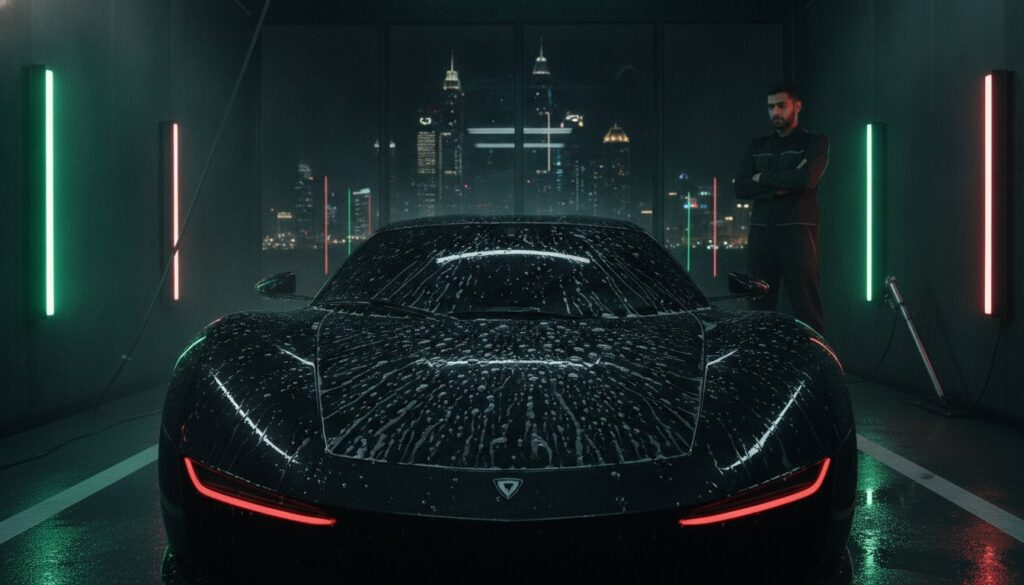
You have invested thousands in a precision-engineered shield to preserve your vehicle’s showroom brilliance, yet one convenient decision at the local wash bay could silently compromise that investment. The question isn’t just about avoiding scratches; it’s about whether a touchless car wash safe for PPF is a reality or a high-pressure gamble. While these systems eliminate the mechanical friction of abrasive brushes, they replace them with a cocktail of aggressive chemicals and concentrated water jets that demand a deeper technical understanding to master.
We recognize the pressure of maintaining a world-class finish when your schedule doesn’t allow for a three-hour professional detailing session. It’s a common struggle to balance time-efficiency with the meticulous care your car deserves. This 2026 guide breaks down the chemical interactions and physical stresses these systems exert on your protective film. You will discover the definitive professional protocol for automated washing, learn how to identify facilities using safe pH-neutral solutions, and gain a clear checklist to ensure your PPF remains flawless for years to come. We provide the technical clarity you need to protect your asset without sacrificing your most valuable resource: time.
Key Takeaways
- Identify why a touchless car wash safe for PPF is the preferred automated solution for maintaining surface integrity without the risks of mechanical friction.
- Master the technical thresholds for water pressure and chemical pH levels to prevent edge lifting and top-coat degradation.
- Implement the Vanguard Protocol to verify facility standards and execute a pre-rinse strategy that preserves your film’s self-healing properties.
- Explore how Vanguard Motors’ mobile detailing van provides a concierge-level alternative that eliminates the compromises of commercial wash bays.
- Evaluate the long-term ROI of professional maintenance versus the high cost of premature film replacement caused by improper care.
The Touchless Car Wash and PPF: A Safe Partnership?
A touchless car wash utilizes high-pressure water jets and specialized chemical surfactants to emulsify surface contaminants without physical contact. Unlike traditional systems, there are no spinning brushes or abrasive cloths. For enthusiasts who have invested in Paint protection film (PPF), this method represents a technical compromise between convenience and professional detailing. It eliminates the threat of physical impact, yet it introduces chemical variables that require careful scrutiny. This section serves as the technical foundation for understanding the partnership between film and fluid. At Vanguard Motors Dubai, we maintain that a touchless car wash safe for PPF is achievable, provided the facility adheres to specific pressure and pH standards.
Why Touchless is Preferred Over Friction Washes
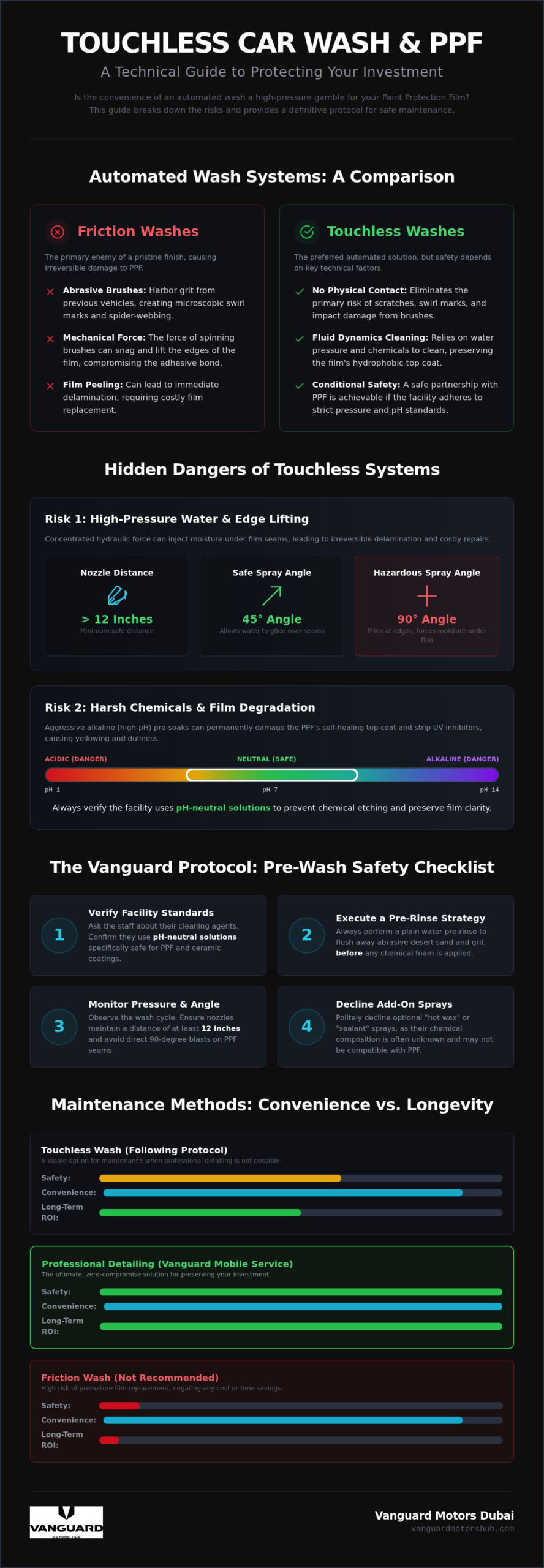
Friction-based automatic washes are the primary enemy of a pristine finish. Abrasive brushes often harbor grit from previous vehicles, creating microscopic swirl marks and spider-webbing across the film surface. More critically, the mechanical force of these brushes can snag the edges of the film. This leads to immediate lifting or peeling, which compromises the bond between the adhesive and the paint. Touchless systems circumvent these physical risks. By relying on fluid dynamics rather than mechanical contact, they help maintain the hydrophobic properties of the film. This ensures water and contaminants continue to bead off the surface as intended, preserving the aesthetic clarity of your vehicle throughout its lifecycle.
The 2026 Standard for Film-Safe Washing
In 2026, the industry standard has shifted toward advanced aliphatic polyurethane films. These materials offer superior resistance to yellowing and environmental stressors, but they aren’t invincible. Modern films feature a self-healing top-coat that can be sensitive to aggressive degreasers. These coatings are designed to recover from light abrasions through thermal expansion, but chemical etching can permanently dull this reactive layer. Determining if a touchless car wash safe for PPF is truly compatible with your vehicle’s protection requires looking beyond the lack of brushes. In the UAE’s high-heat environment, abrasive desert sand often settles in tight gaps. A rinse-first protocol is mandatory to flush these particulates before any chemical application. High-pressure jets must be angled correctly to avoid forcing moisture under the seams. Understanding the balance between chemical cleaning power and film integrity is the hallmark of elite vehicle maintenance at Vanguard Motors Dubai.
Technical Risks: High-Pressure Water and Harsh Chemicals
High-pressure jets serve as the primary cleaning mechanism in any touchless system. While they eliminate the risk of brush-induced scratches, they introduce a concentrated hydraulic force that can be detrimental to film seams. If you’re questioning whether a touchless car wash safe for PPF is a universal standard, the reality depends heavily on equipment calibration. Excessive PSI settings can “inject” moisture directly under the film edges, leading to delamination that’s often irreversible and costly to repair.
The Physics of Edge Lifting
Maintaining a minimum distance of 12 inches between the spray nozzle and the vehicle surface is a non-negotiable safety protocol. Direct 90-degree blasts at the seams are hazardous because they maximize the impact force on the adhesive bond. A 45-degree angle is significantly safer, allowing water to glide over the film rather than prying at the boundary. Hydrostatic lifting is the primary mechanical threat to PPF edges, occurring when pressurized water penetrates the film-to-paint interface and forces the adhesive to detach.
Chemical Surfactants and Film Clarity
The chemical profile of the cleaning agents used is just as critical as the water pressure. Many automated bays utilize high-pH pre-soaks to dissolve road grime rapidly without manual agitation. These aggressive alkaline solutions can disrupt the delicate cross-linking of self-healing polymers in your Vanguard Motors Dubai installation. Over time, this chemical stress reduces the film’s ability to heal and can strip away the UV inhibitors designed to prevent yellowing. Stripping these inhibitors accelerates the aging process, leading to a brittle texture that can crack under the intense national sun. This erosion often manifests as a loss of optical clarity or a dulling of the high-gloss finish.
Environmental factors within the wash bay also play a role. Some facilities employ “hot” water settings to boost cleaning efficiency, which can soften the polyurethane and increase its vulnerability to pressure. These temperatures can sometimes exceed the thermal stability of the adhesive, causing the film to shift or “creep” during the cycle. Additionally, recycled water systems without elite filtration may circulate fine particulates. These microscopic solids act like liquid sandpaper, eroding the film’s surface during the high-pressure rinse cycle. If you’re concerned about the integrity of your current film, speak with our technical experts to evaluate your vehicle’s protection. Verifying that a facility uses pH-neutral soaps is a vital step in ensuring a touchless car wash safe for PPF.
Comparing Maintenance Methods: Convenience vs. Longevity
Choosing a maintenance strategy requires balancing the immediate convenience of automation with the long-term integrity of your protection. While a touchless car wash safe for PPF offers a rapid solution, it sits lower on the safety spectrum than manual methods. Understanding where each method falls in the hierarchy allows you to make informed decisions that preserve your vehicle’s aesthetic value. Neglecting this balance often leads to premature film degradation that far outweighs the time saved at a budget wash bay.
The Hierarchy of Cleaning
- Tier 1: Professional Hand Wash. This remains the Vanguard Motors Dubai gold standard. It utilizes specialized techniques and controlled environments to ensure zero contamination and total safety for your film.
- Tier 2: DIY Two-Bucket Method. A reliable choice for enthusiasts using pH-neutral lubricants and premium microfiber mitts to prevent any surface marring.
- Tier 3: High-Quality Touchless Wash. This is acceptable for intermittent use when time is limited. It’s only a touchless car wash safe for PPF if the facility uses calibrated pressure and verified chemicals.
- Tier 4: Friction/Brush Automatic Wash. These systems must be avoided entirely. The mechanical force and recycled grit will cause catastrophic film failure and surface scratching.
The “UAE Thermal Factor” introduces extreme environmental stress that complicates these choices. Across the nation, surface temperatures on a dark vehicle can exceed 70°C during peak daylight. When aggressive chemical surfactants are applied to a hot surface, their reactivity increases exponentially. This dwell time can cause permanent etching or “clouding” of the polyurethane. Professional detailing at Vanguard Motors Dubai mitigates this by controlling the environment, ensuring decontamination happens at optimal temperatures. This precision care is essential for maintaining the clarity of high-end aliphatic films.
Analyzing the “Cost per Wash” versus the “Cost of Replacement” is a vital calculation for any owner. A cheap automated cycle might seem efficient, but replacing a single panel of damaged film can be a significant expense. Routine professional care acts as an insurance policy for your PPF warranty, ensuring the adhesive and top-coat remain within manufacturer specifications. Investing in quality maintenance today prevents the high price of restoration tomorrow.
The Role of Ceramic Coatings over PPF
Adding a ceramic top-layer provides a sacrificial chemical shield that enhances your film’s durability. It increases the hydrophobic properties of the surface, making it much harder for grime and minerals to bond. This extra layer creates a barrier against the aggressive surfactants found in many automated bays, making a coated film significantly safer in a touchless environment. For a deeper analysis of how these technologies work together to protect your asset, consult our PPF vs Ceramic Coating guide. This combination represents the pinnacle of modern vehicle preservation.
The Vanguard Protocol for Safe PPF Maintenance
Ensuring a touchless car wash safe for PPF requires transitioning from passive observation to active oversight. While automated systems offer speed, they lack the intuition of a master detailer. Our established protocol provides a technical framework to mitigate the risks of high-pressure water and aggressive chemistry. By following these steps, you maintain the integrity of your investment without compromising your schedule.
- Step 1: Low-Pressure Pre-Rinse. Always begin by flushing the surface with low-pressure water. This removes abrasive desert sand and surface grit that could otherwise be driven into the film’s pores by high-velocity jets.
- Step 2: Chemical Verification. Confirm that the facility utilizes pH-neutral surfactants. Avoid “heavy-duty” alkaline soaps that can compromise the film’s self-healing top-coat over time.
- Step 3: Edge and Sensor Protection. Explicitly direct the operator to keep high-pressure nozzles at a safe distance from film seams and sensitive parking sensors. This prevents the hydrostatic lifting discussed in previous sections.
- Step 4: Controlled Drying. Utilize a dedicated drying aid or a premium, high-GSM microfiber towel to remove moisture. This prevents mineral deposits from forming water spots on the film’s surface.
- Step 5: Hydrophobic Boosting. Apply a specialized film sealant or booster every 3-4 washes. This replenishes the sacrificial layer and ensures water continues to bead off effortlessly.
How to Spot a Safe Touchless Facility
A premium facility is defined by its equipment and water quality. Look for systems offering a “Spot-Free Rinse,” which indicates the use of Reverse Osmosis (RO) water. This technology strips minerals that cause permanent etching on polyurethane surfaces. Prioritize bays with “Touch-Free” air drying systems to eliminate any physical contact. Additionally, avoid automated tire shine applicators. These systems often sling caustic oils onto the lower side panels, which can lead to premature yellowing of the film edges.
Post-Wash Inspection Checklist
Conduct a meticulous walk-around immediately after the cycle concludes. Inspect every seam for signs of bubbling or moisture ingress. Look for chemical etching, which appears as dull, localized patches that persist after drying. If you notice a lifting edge, don’t attempt a DIY fix. It’s vital to book a professional inspection and repair immediately. Early intervention prevents dirt from contaminating the adhesive and ensures the longevity of your coverage.
Professional Preservation at Vanguard Motors
Professional maintenance is the definitive way to secure your PPF investment. While we have established the parameters for a touchless car wash safe for PPF, automated systems cannot replicate the meticulous scrutiny of a technical specialist. Vanguard Motors offers bespoke detailing services designed to elevate vehicle preservation into an art form. Our approach combines technical expertise with a high-octane passion for automotive excellence. We don’t just wash cars; we transform and protect them.
The Vanguard Premium Package represents our most comprehensive offering for elite owners. It provides holistic interior and exterior protection, ensuring every surface of your vehicle is shielded against the harsh UAE climate. This package isn’t just a maintenance service. It’s a commitment to maintaining your vehicle’s showroom brilliance through advanced chemical decontamination and film reinforcement. It ensures your protection remains within manufacturer warranty specifications while maintaining peak aesthetic impact.
Concierge Detailing: The Touchless Alternative
Our Mobile Detailing Van brings concierge-level care directly to your private residence or office. This service eliminates the need to gamble with the unknown variables of commercial wash bays. We utilize deionized water systems and premium, pH-balanced lubricants to ensure a flawless finish. Unlike a standard touchless car wash safe for PPF, our mobile units allow for a hands-on inspection during every stage of the process. We identify potential film issues before they escalate into costly delamination. It’s the ultimate solution for owners who value their time as much as their vehicle’s integrity. Our vans are fully equipped with 2026-spec detailing technology to provide a studio-quality result in any environment.
Restoring Film Integrity
Even the best-maintained films can encounter road hazards or environmental stress. Vanguard Motors specializes in restoring film integrity through precision edge trimming and professional re-sealing techniques. If a seam has begun to lift due to improper high-pressure washing at an automated facility, our technicians can often salvage the installation. Beyond film care, we provide expert carbon fiber repair and leather restoration to ensure a total vehicle refresh. This integrated approach addresses every detail of your vehicle’s presentation, from the depth of the paint to the texture of the cabin. We ensure your car remains a testament to elite quality and meticulous care.
Trust your vehicle to the visionary leaders in supercar detailing. We understand the intersection of technical skill and creative expression. Our team is dedicated to maintaining the highest standards of excellence in every project. Contact us today to experience the future of professional automotive preservation.
Master the Future of Vehicle Preservation
Maintaining a flawless finish in 2026 requires more than just avoiding abrasive brushes. You now understand the technical balance required to keep a touchless car wash safe for PPF, specifically regarding pH-neutral chemistry and hydraulic pressure angles. While automated systems offer speed, they don’t provide the meticulous inspection necessary to catch edge lifting before it becomes a failure. True preservation relies on professional oversight and specialized maintenance protocols that adapt to the UAE’s extreme environment.
As specialists in supercar and luxury vehicle protection, Vanguard Motors provides the ultimate alternative to commercial wash bays. Our advanced mobile detailing units are available nationally, bringing expert PPF maintenance and repair protocols directly to your residence. We ensure your protective film remains a crystal-clear shield that doesn’t just survive but thrives. Don’t settle for “safe enough” when you can achieve perfection. Take the guesswork out of your maintenance routine and give your vehicle the elite care it deserves.
Secure Your Investment with Vanguard’s Professional Detailing Services
Frequently Asked Questions
Will a touchless car wash void my PPF warranty?
Using a touchless car wash safe for PPF won’t typically void your warranty, provided the facility operates within the film manufacturer’s pressure and chemical guidelines. Most 2026 warranties require you to avoid aggressive alkaline soaps and excessive water pressure at the seams. If a wash causes edge lifting due to mechanical error, the manufacturer may deny coverage. We recommend reviewing your specific warranty documentation or consulting with our specialists to ensure your maintenance routine stays compliant.
How long should I wait to wash my car after PPF installation?
You should wait at least seven days before performing any wash after a new installation. This period is vital for the adhesive to cure and bond securely to your vehicle’s paintwork. Washing too early can introduce moisture under the film, leading to premature delamination or bubbling. In our national climate, keeping the car in a controlled environment during this first week ensures the long-term integrity of your Vanguard Premium Package installation.
Can the high-pressure air dryers in a car wash lift PPF edges?
High-pressure air dryers can potentially lift film edges if they’re directed at a compromised seam or a tight gap. While these systems are safer than physical towels, the concentrated force of a 2026-spec air blower can exploit minor adhesive weaknesses. A professional touchless car wash safe for PPF utilizes calibrated air arrays to minimize this risk. If you notice any movement at the edges, immediate professional attention is required to re-seal the boundary.
What is the best soap to use for washing a car with PPF?
The best soap for maintaining your protective film is a dedicated, pH-neutral car shampoo free of aggressive degreasers. Avoid “wash and wax” products unless they are explicitly labeled as safe for aliphatic polyurethane films. These neutral soaps provide the necessary lubrication to lift dirt without disrupting the self-healing top-coat. For the best results, we utilize premium lubricants that preserve the hydrophobic properties of your film while ensuring a residue-free finish.
Are the waxes used in touchless car washes safe for matte PPF?
Waxes used in automated bays are generally unsafe for matte PPF because they contain gloss-enhancing agents. These chemicals can cause the matte surface to appear blotchy or develop an uneven sheen that ruins the flat aesthetic. If your vehicle features a matte or satin finish, you must verify that the wash cycle doesn’t include a standard wax application. We provide specialized matte-safe maintenance through our mobile detailing van to preserve that specific texture.
How often should I have my PPF professionally detailed?
We recommend a professional detailing session every three to six months to maintain the film’s clarity and performance. Regular professional care involves deep decontamination and the application of specialized sealants that a standard wash can’t provide. These intervals ensure the self-healing properties of your film remain active and effective. Our Vanguard Premium Package is designed to offer this high-level maintenance, keeping your vehicle in peak condition regardless of environmental stressors.
What should I do if a touchless wash stains my paint protection film?
If you notice staining or clouding after a wash, don’t attempt to scrub the area with abrasive tools. These marks are often caused by aggressive chemicals drying on the surface, which requires professional chemical decontamination to remove safely. Attempting a DIY fix can permanently mar the film’s top-coat. Contact us immediately for a technical assessment. Our specialists can often restore the film’s optical clarity using dedicated restoration protocols that avoid the need for full replacement.