
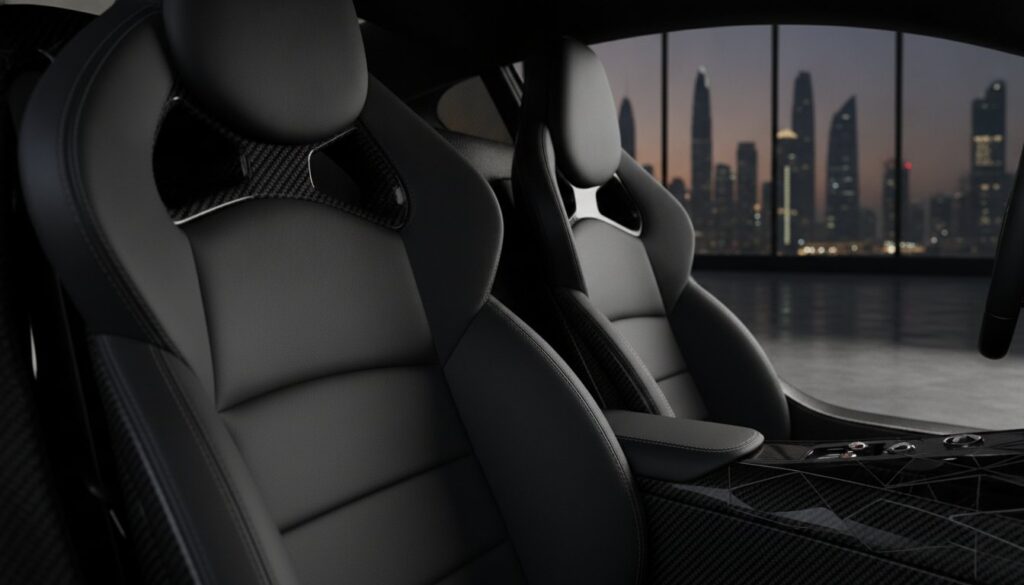
What if the most expensive way to refresh your cockpit is actually the one that costs you the most in resale value? Many owners believe that when performance seat bolsters wear thin or extreme heat turns supple hides into brittle parchment, the only solution is to rip it all out and start over. It’s a common misconception that total reupholstery is the gold standard for excellence. For an elite vehicle, the original factory grain is a signature of its heritage that’s nearly impossible to replicate perfectly with aftermarket kits.
This guide reveals why professional luxury car leather restoration is the superior choice for maintaining the soul of your vehicle. You’ll discover how to defend your interior against the 30% tensile strength loss typical of untreated leather while meeting the strict 2026 VOC standards for a cabin that’s as healthy as it is beautiful. We’ll explore the technical precision behind molecular-level repairs, the impact of new ISO 11092:2026 breathability standards, and why preserving your original material is the ultimate power move for long-term durability. Learn to achieve a seamless factory-spec finish that keeps your investment in peak condition while outperforming the longevity of standard replacements.
Key Takeaways
- Preserving original factory hides is the most effective way to protect the heritage and resale value of your elite vehicle.
- Professional luxury car leather restoration utilizes advanced flexible polymers to reverse structural damage caused by intense UV exposure and thermal expansion.
- Effective restoration goes beyond surface aesthetics, focusing on deep decontamination and fibre stabilisation to ensure long-term durability.
- Look for specialists who use high-precision spectrophotometry for exact pigment matching and have a proven portfolio with exotic marques.
- Combining interior restoration with bespoke body kit conversions creates a unified, high-performance aesthetic that exceeds factory standards.
Defining Luxury Car Leather Restoration: Why Preservation Beats Replacement
True luxury is found in the details that others overlook. While many believe that a worn interior requires a complete overhaul, the reality of elite vehicle maintenance is far more nuanced. Luxury car leather restoration is not a simple cleaning; it is a sophisticated, scientific process that repairs the hide’s structural integrity and restores surface pigments to their original glory. Choosing preservation over replacement isn’t just about cost. It’s about maintaining the DNA of your vehicle and respecting the craftsmanship that went into its initial creation.
Restoration vs. Reupholstery: Making the Right Choice
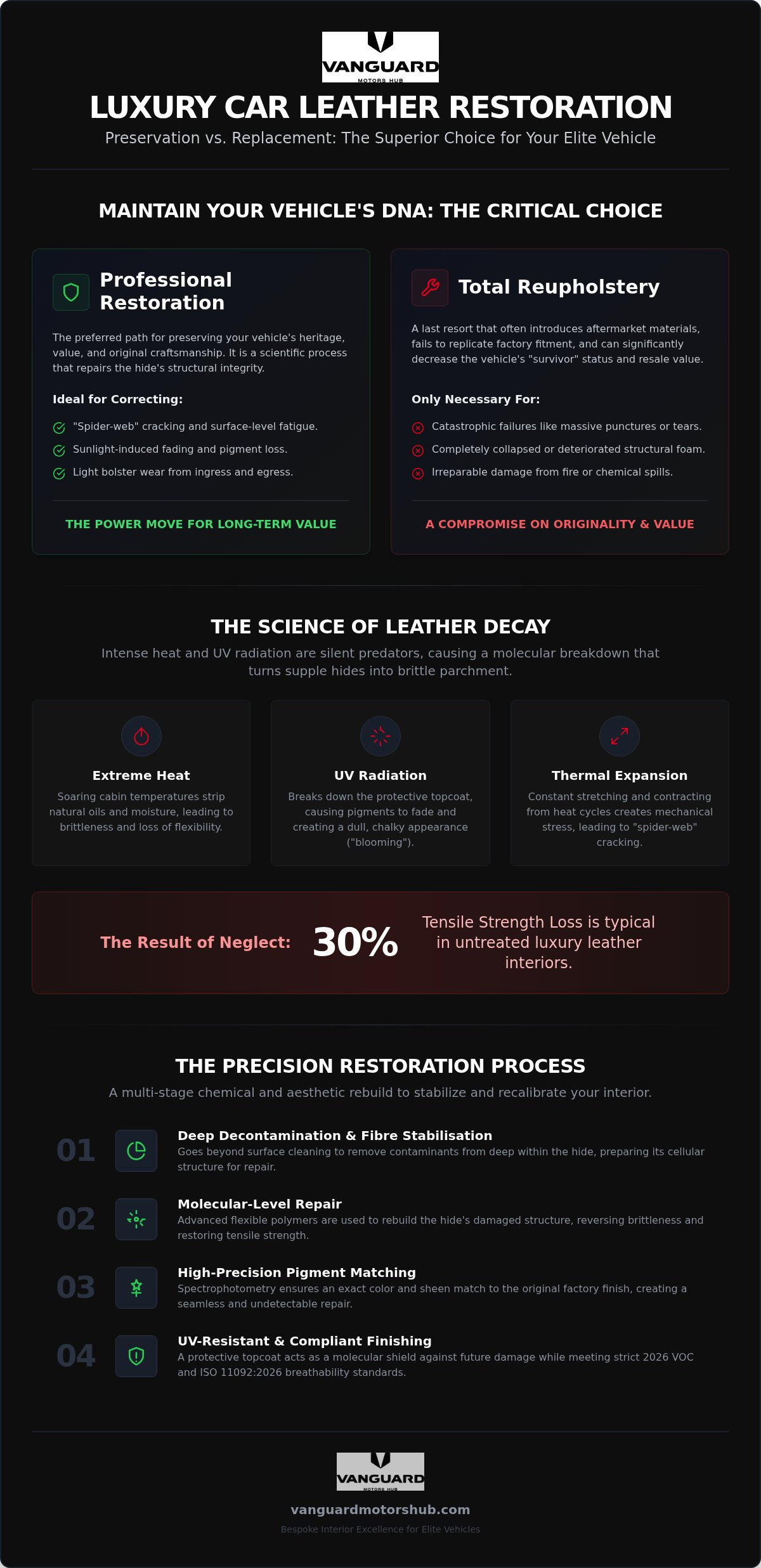
Restoration is almost always the preferred path when dealing with surface-level fatigue. It retains the original fitment and tension that aftermarket kits often fail to replicate. Consider these factors when deciding between the two approaches:
- Restoration is ideal for “spider-web” cracking, sunlight-induced fading, or light bolster wear.
- Reupholstery is necessary only for catastrophic failures, such as collapsed structural foam or massive punctures.
Restoration allows you to keep the premium hides selected by the manufacturer. Reupholstery often introduces lower-grade materials that lack the same tactile response and prestige. By opting for a bespoke repair, you ensure that the texture and grain remain consistent across the entire cabin, avoiding the patchy look of partial replacement.
The Value of Originality in Elite Vehicles
For limited-run models and supercars, the “Heritage Factor” is a massive driver of market value. Collectors look for “survivor” status. An original interior in pristine condition can significantly boost auction figures compared to a car with an aftermarket re-trim. Beyond the financial implications, there is the sensory experience. High-grade Nappa or Connolly leathers possess a unique scent and feel that matures over time. Leather restoration is a multi-stage chemical and aesthetic rebuild that stabilises the hide’s cellular structure while meticulously recalibrating its surface finish.
Understanding the science of leather decay is essential for long-term ownership. Extreme heat and UV exposure strip the natural oils from the material, leading to brittleness. By choosing luxury car leather restoration, you are opting for a sustainable solution. It reduces the environmental impact associated with sourcing new hides and processing chemicals. It is a precision-led approach that aligns perfectly with a high-performance lifestyle, ensuring your vehicle remains an icon of excellence for years to come.
The High-Heat Challenge: The Science of Leather Decay
Intense sunlight is a silent predator for premium cabins. Inside a parked vehicle, temperatures can soar far beyond ambient levels, turning a climate-controlled sanctuary into a dry kiln. This extreme environment triggers a chemical transition where supple hides lose their essential moisture and natural oils. Over time, the leather undergoes a molecular breakdown, transforming from a soft, responsive surface into something resembling brittle parchment. Standard conditioners often fail here because they merely sit on the surface, unable to penetrate the dehydrated grain or survive the next heat cycle.
Thermal expansion and contraction play a significant role in this destruction. As the cabin heats up, the leather fibres stretch. As it cools, they tighten. This constant mechanical stress, combined with the loss of internal lubrication, creates the “spider-web” cracking often seen on dashboards and seat bolsters. Without professional luxury car leather restoration, these microscopic fractures eventually deepen into structural tears that no simple cream can fix.
UV Radiation: The Silent Killer of Interior Pigments
Solar energy targets the leather’s protective topcoat with surgical precision. UV radiation breaks down the chemical bonds of the finish, leading to a dull, chalky appearance known as “blooming.” Darker interiors, such as Black, Navy, or Charcoal, are particularly vulnerable. These shades absorb more thermal energy, which accelerates the evaporation of internal lipids. Professional restoration involves more than just recolouring. It requires the application of advanced, UV-resistant finishes that act as a molecular shield against future solar damage.
Structural Integrity: Beyond Surface Scratches
While heat is a primary factor, human elements accelerate the decay. Sweat and skin oils are acidic; they seep into the pores of the leather and break down the protein fibres from the inside out. This leads to “bolster sag” in performance seats, where the material loses its elastic memory and begins to bag or wrinkle. Data from Titan Coatings indicates that untreated leather can lose up to 30% of its tensile strength after just two years of direct sun exposure. This loss of strength makes the material far more likely to rip under the weight of a passenger.
Maintaining the structural health of your interior requires a proactive approach. For those looking to implement a high-level maintenance schedule, our reference guide to supercar detailing provides the framework for elite preservation. However, if the damage has already manifested as cracks or fading, a technical intervention is necessary. You can consult with our restoration specialists to evaluate the current state of your vehicle’s interior and develop a bespoke recovery plan that restores both form and function.
The Precision Restoration Process: A Step-by-Step Guide
Precision restoration is a multi-stage technical rebuild that goes far beyond the capabilities of a standard detailing shop. It requires a deep understanding of leather chemistry and a meticulous eye for detail to ensure the result is indistinguishable from the factory floor. When executing a luxury car leather restoration, we treat the interior as a high-performance component, using materials that meet the rigorous 2026 VOC standards while maintaining the hide’s natural tactile response. This isn’t just about covering up wear; it’s about restoring the structural integrity of the material itself.
Phase 1: Decontamination and Preparation
The foundation of any elite restoration is a clean substrate. We use specialised pH-balanced cleaners to gently lift years of embedded oils, sweat, and environmental pollutants without stripping the leather’s essential moisture. This process opens the pores of the grain, creating the ideal surface for new pigments to bond at a molecular level. Silicon-based cleaners must be avoided at all costs because they leave behind a residual film that prevents dyes from adhering, leading to premature peeling and “fish-eyes” in the final finish. Every square inch is hand-prepped to ensure the grain remains crisp and defined.
Phase 2: Precision Repair and Pigment Matching
Once prepped, we address structural damage like scuffs, tears, or bolster wear. We use advanced “liquid leather” technology and flexible polymers that mimic the natural movement of the hide. This ensures the repair won’t crack or delaminate under the pressure of daily use. Pigment matching is where technical skill meets creative expression. We don’t just rely on factory colour codes; we account for natural aging and patina to create a bespoke synthesis that blends perfectly with the rest of the cabin. To ensure long-term comfort, we verify the material’s breathability against ISO 11092:2026 standards, keeping the seating surface cool and responsive.
Phase 3: Protection and Final Conditioning
The final stage involves sealing the restoration with a high-performance topcoat. This layer provides essential resistance against UV rays and abrasion while locking in the new pigments. We carefully calibrate the sheen to match the original factory finish, whether that’s a sophisticated deep matte or a subtle satin glow. For owners pursuing a total vehicle transformation, this interior work often serves as the cornerstone of a broader cosmetic car repair strategy. A final inspection ensures grain consistency and a seamless transition between repaired areas and original surfaces, leaving the cockpit in a state of “OEM+” excellence.
Evaluating a Restoration Specialist: What to Look For
Selecting a partner for luxury car leather restoration requires more than a casual search for the nearest detailing center. You’re entrusting a high-value asset to a technician’s technical skill. A credible specialist must demonstrate a portfolio rich with exotic marques like Ferrari, Lamborghini, and Bentley. These vehicles use specific hide treatments that react differently to chemical interventions. Specialists aren’t mere cleaners; they function as technical artisans. Look for a facility that maintains surgical standards. A dust-free environment is mandatory for dye application to prevent surface contamination that compromises the bond between the pigment and the grain.
Assessing Technical Expertise and Tooling
Technical precision is the hallmark of elite service. Ask whether the facility uses water-based or solvent-based dyes. Modern luxury leathers are treated with water-based finishes at the factory to meet global VOC regulations. Using solvent-based alternatives can lead to material stiffness or chemical rejection. You must also distinguish between a “cover-up” and a true restoration. A cover-up merely masks damage with heavy fillers and paint; a restoration rebuilds the surface at a molecular level. In modern performance cockpits, leather often meets structural accents. If your interior features damaged weave, ensure your specialist understands carbon fibre car parts repair to maintain a cohesive aesthetic throughout the cabin.
Understanding Material Compatibility
Every manufacturer has a signature. The Cuoio leather in a Ferrari feels distinct from the semi-aniline hides found in a Bentley. A specialist should be able to replicate complex factory stitching and laser-perforation patterns with absolute accuracy. This level of detail is why “one-size-fits-all” repair kits are dangerous for elite vehicles. These generic solutions lack the flexibility and heat resistance required for high-performance use. Consider these specific criteria during your evaluation:
- Pigment Matching: Does the shop use spectrophotometry technology or rely on “eye-balling” the colour?
- Chemical Standards: Are the products compliant with 2026 VOC restrictions (≤50 µg/m³)?
- Longevity: Is there a clear warranty against delamination or fading in high-heat environments?
Spectrophotometry is essential because it analyzes the light reflection of your specific hide. It creates a dye that accounts for years of unique patina, ensuring a perfect blend that manual mixing cannot achieve. High-heat climates demand specific warranty guarantees. Ensure the work is backed by a longevity promise that covers UV-induced peeling. If you’re ready to elevate your interior to its original glory, speak with our master technicians today to schedule a detailed assessment of your vehicle.
The Vanguard Motors Dubai Standard: Bespoke Interior Excellence
Vanguard Motors Dubai sets a new benchmark for luxury car leather restoration by adopting an “OEM+” philosophy. We don’t just return a vehicle to its original state; we improve its resilience. For owners of elite vehicles featuring bespoke Brabus or Mansory kits, the interior must match the aggressive perfection of the exterior. A high-performance body kit conversion is incomplete if the cockpit shows signs of fatigue. We treat the cabin as a sanctuary of mechanical and aesthetic excellence, ensuring every hide meets the highest standards of durability and tactile prestige.
Our commitment to precision extends to our concierge-level service. We understand that supercar owners value their time as much as their assets. Our mobile detailing van provides a sophisticated solution for those who require expert intervention without the logistical burden of vehicle transport. This proactive and efficient approach allows us to deliver high-end results across the nation, maintaining the highest standards of professional care in a mobile environment.
Bespoke Pigment Synthesis
The heart of our restoration process is our advanced pigment synthesis lab. We don’t settle for “close enough” when matching factory shades. By analyzing the specific molecular composition of your vehicle’s leather, we replicate even discontinued colours for classic and modern-classic marques. This technical precision ensures that the “hand-feel” of the leather remains soft, buttery, and luxurious post-restoration. We avoid the stiff, plastic-like texture associated with amateur repairs. Every project is finished with aerospace-grade UV inhibitors. These coatings are engineered to withstand punishing thermal cycles, keeping the grain supple and vibrant even under intense solar loads.
Integration with the Vanguard Premium Package
True automotive excellence requires a holistic strategy. For owners who demand total vehicle preservation, we integrate interior restoration into the Vanguard Premium Package. This comprehensive service tier pairs our interior expertise with advanced exterior protection, such as Paint Protection Film (PPF) and ceramic coatings. It’s the ultimate solution for maintaining both the heritage and the resale value of your investment. By addressing the vehicle as a singular masterpiece, we ensure that the transition between the exterior’s gloss and the interior’s matte finish is seamless and cohesive.
Your vehicle deserves a cabin that reflects its high-performance DNA. Don’t let faded bolsters or sun-damaged leather diminish the experience of an elite drive. Visit the Vanguard Motors Dubai Homepage to explore our full range of services and book a consultation with our restoration experts. It’s time to restore your cabin’s glory and secure the long-term excellence of your vehicle’s interior.
Secure Your Cabin’s Legacy
Choosing luxury car leather restoration is a strategic decision for any discerning collector. It moves beyond simple aesthetics to protect the very soul of the vehicle’s cockpit. By prioritising original materials over aftermarket replacements, you ensure that the car’s heritage remains uncompromised while meeting the rigorous environmental and durability standards of 2026. Scientific preservation is the only way to reverse the molecular decay caused by intense heat while maintaining the unique tactile response of high-grade hides.
At Vanguard Motors Dubai, we bridge the gap between technical innovation and artisanal skill. Our mastery of Brabus and Mansory interior standards, combined with our advanced UV-resistant pigment technology, guarantees a finish that often outperforms factory durability. With our premium mobile detailing service available nationwide, maintaining your interior’s excellence is both efficient and uncompromising. Take the final step in total vehicle preservation and ensure your cabin remains a masterpiece of comfort and performance.
Book Your Bespoke Leather Consultation at Vanguard Motors Dubai
Frequently Asked Questions
Is leather restoration permanent, or will it peel over time?
Professional restoration is a permanent chemical bond rather than a temporary surface coating. When the hide is correctly decontaminated and the pores are opened, the new pigments integrate into the cellular structure of the material. Peeling only occurs when amateur “cover-up” kits are used or if silicon-based cleaners prevent proper adhesion. Our process ensures the finish remains flexible and durable, even under the mechanical stress of daily driving in high-performance cockpits.
Can you restore perforated leather seats without blocking the holes?
Restoring perforated leather requires a high level of technical precision to maintain the functionality of ventilated or heated seats. We use specialized airbrushing techniques and precision tools to apply thin, even layers of pigment that don’t bridge the perforations. This ensures that the airflow remains unrestricted while the surface aesthetics are fully revived. It’s a delicate balance of protection and performance that preserves the original engineering of your luxury interior.
How long does a full luxury car leather restoration take?
A comprehensive luxury car leather restoration typically requires between two and five days to complete. This timeline allows for the meticulous multi-stage decontamination process, structural fibre stabilisation, and the necessary curing times for advanced flexible polymers. We don’t rush the application of UV-resistant topcoats, as proper bonding is essential for longevity. Every project follows a structured workflow to ensure the result meets our rigorous “OEM+” standards of excellence.
Will restoration fix the “new car smell” or remove bad odours?
Restoration is highly effective at eliminating unpleasant odours by removing the biological contaminants trapped within the leather’s pores. Years of embedded skin oils and bacteria are lifted during the deep decontamination phase, which neutralizes the source of the smell. While the process won’t perfectly replicate a factory “new car smell” through chemicals alone, the clean, refreshed hides and premium pigments create a sophisticated, neutral aroma that defines a well-maintained luxury cabin.
Can you match the specific matte finish of a Lamborghini or Ferrari interior?
Matching the specific matte or satin sheen of marques like Lamborghini, Ferrari, or Bentley is a core part of our expertise. We utilize high-precision spectrophotometry to analyze the light reflection of the original material and custom-mix our topcoats accordingly. This ensures the restored sections are indistinguishable from the factory finish. Whether your interior features a deep matte Nero or a subtle satin Crema, the final result will maintain absolute visual consistency across all surfaces.
Is it possible to restore leather that has been cracked by the sun?
Sun-cracked leather can be restored provided the underlying hide hasn’t reached a state of total structural failure. We use advanced flexible polymers to fill “spider-web” cracks and stabilise the surrounding fibres, preventing the damage from spreading. This technical rebuild returns the surface to a smooth, supple state while reinforcing its tensile strength. For vehicles with extensive UV damage, luxury car leather restoration is the most effective way to salvage original factory materials before they become irreparable.
How do I maintain restored leather in a high-heat climate?
Maintaining your interior in a high-heat climate requires a proactive protection strategy. You should apply a high-grade, UV-resistant conditioner every three to six months to prevent the natural oils from evaporating. It’s vital to avoid cheap, silicone-based products that can trap heat and lead to surface cracking. For maximum convenience, our mobile detailing van offers concierge-level maintenance programs that keep your restored hides in peak condition without requiring you to visit a service center.
What is the cost difference between restoration and full reupholstery?
Restoration is generally a more efficient and cost-effective alternative to full reupholstery for luxury vehicles. While reupholstery involves a major investment in new hides and intensive labor to strip the interior, restoration focuses on reviving the existing factory material. This path is often preferred by collectors because it maintains the vehicle’s original heritage and “survivor” status. The decision depends on the damage level, but restoration provides a superior balance of value preservation and aesthetic excellence.