
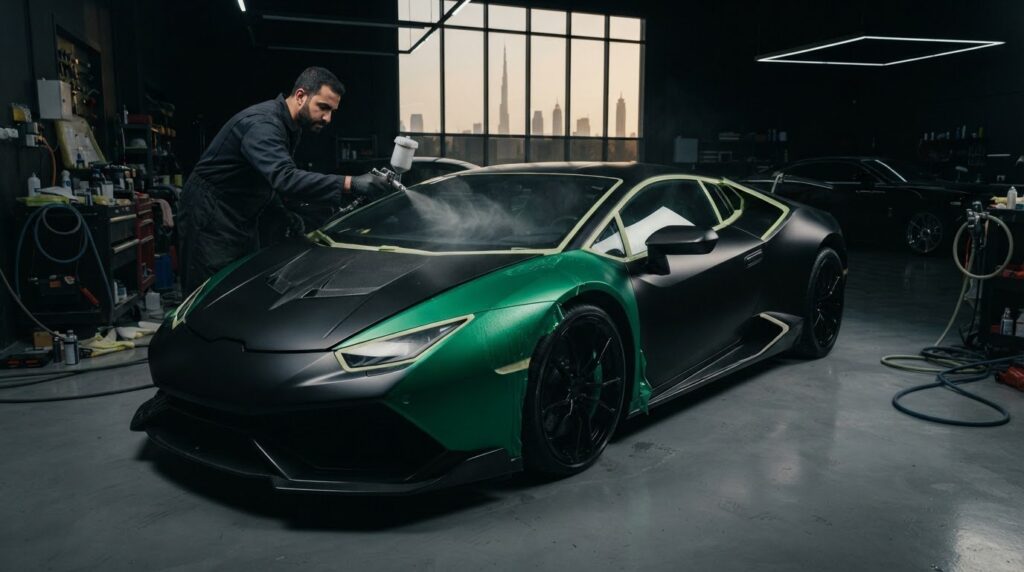
A bold new colour can be temporary without feeling like a compromise, but the result depends on more than colour choice. A professional peelable paint application starts with assessing the vehicle’s existing finish, planning the coverage, and following the selected coating system’s instructions. Those early decisions can affect both the appearance and the removal process. If you’re weighing peelable paint against a vinyl wrap or Paint Protection Film (PPF), it helps to understand what each option is intended to do.
This guide walks through the main stages, from vehicle assessment and preparation to application, aftercare, and removal planning. It also explains how peelable paint’s appearance-led purpose differs from a wrap’s and PPF’s, so you can match the approach to your goals. Vanguard Motors Dubai offers peelable paint applications alongside coloured sticker wraps and PPF installation. Read on to plan the right coverage, prepare a useful project brief, and set realistic expectations for the finish.
Key Takeaways
- A peelable finish is intended to be removable, but removal depends on the coating system and the vehicle’s condition.
- A professional peelable paint application begins with reviewing the existing paintwork, repairs, trim, and intended coverage.
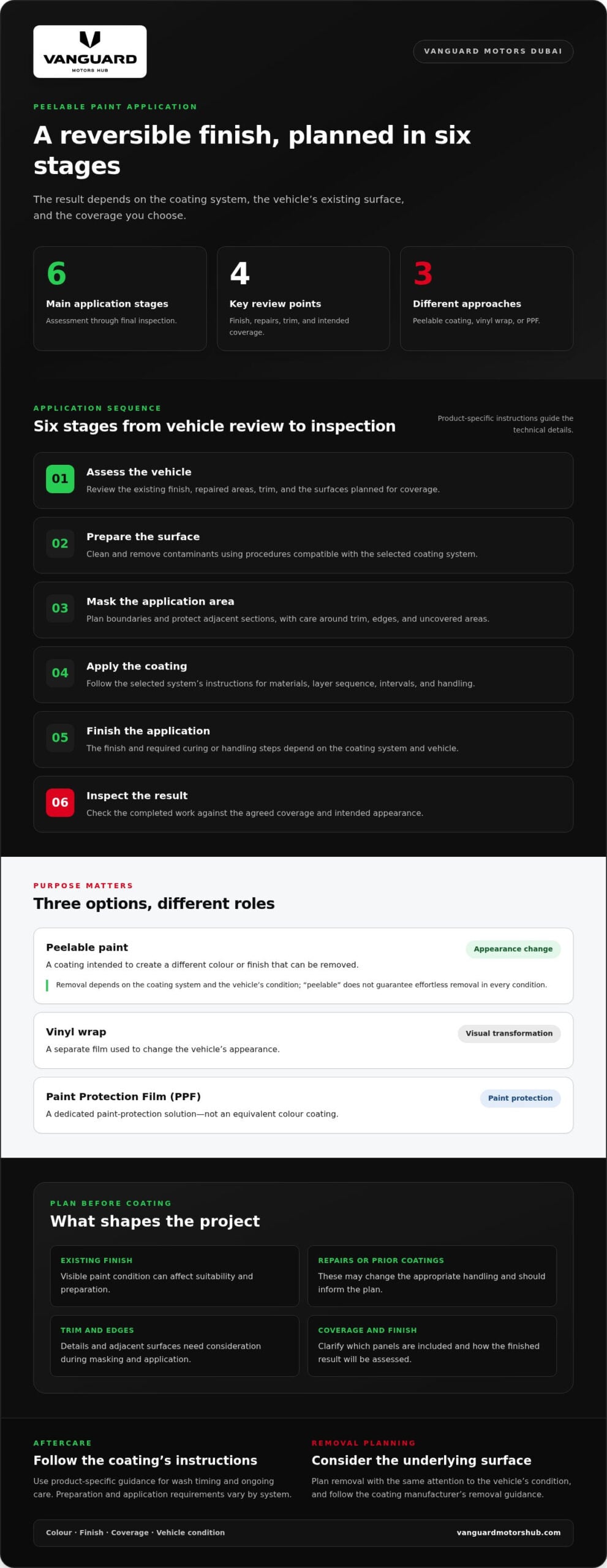
- The main stages are assessment, preparation, masking, application, finishing, and inspection. Technical details vary by coating system.
- Use the coating’s specific instructions for wash timing and ongoing care, and plan removal with the same attention to the underlying surface.
- Deciding on colour, finish, coverage, and your priorities helps shape a colour-change project around your vehicle.
What Is Peelable Paint Application, and What Does It Change?
A peelable paint application adds a coating to a vehicle to create a different colour or finish that is intended to be removable. The coating system determines which surfaces it suits, how it should be applied, and how removal should be handled. “Peelable” describes the intended removal method. It does not mean the coating will come away effortlessly in every condition.
This option can appeal to owners who want a new look without committing to a conventional permanent repaint. You might be planning a full colour transformation or a more limited change to selected areas. In either case, the result depends on the coating system, the condition of the existing surface, and the quality of the application. Before choosing a finish, decide which panels you want changed and whether the goal is primarily visual customisation or paint protection.
A reversible finish changes appearance; Paint Protection Film is a dedicated paint-protection solution. Peelable coatings may be discussed in the broader context of temporary surface protection, but that general category doesn’t mean an automotive peelable finish provides the same function as PPF.
How Does Peelable Paint Differ from a Permanent Repaint?
A conventional repaint is intended to become the vehicle’s new paint finish. Peelable paint is chosen for a change that is intended to be reversible. That difference is about the project’s purpose, not just the colour. Neither the final appearance nor the ease of removal should be assumed in advance. The coating system and existing surface condition influence the result, while the manufacturer’s guidance should determine compatibility, care, and removal procedures.
Is Peelable Paint the Same as a Car Wrap or PPF?
No. Peelable paint is a coating applied to the vehicle, while a vinyl wrap uses a separate film to change its appearance. Both can support a visual transformation, but their materials and application methods differ. PPF has a distinct paint-protection role and shouldn’t be treated as an equivalent colour coating. To compare appearance-focused options, explore the 2026 car wrap buying guide. Vanguard Motors offers peelable paint applications, coloured sticker wraps, and PPF installation, with each option serving a different goal.
How to Prepare a Vehicle for Peelable Paint Application
A successful peelable paint application starts before any coating is applied. The existing finish, prior repairs, trim, and intended coverage all inform the preparation plan. An assessment helps identify surfaces that may need special handling and whether visible damage or previous coatings could affect suitability. It also helps set realistic expectations: the condition of the existing paint matters, and a description alone cannot replace an in-person review.
Preparation involves more than washing away visible dirt. Dust, residue, and other surface contaminants can interfere with an even finish. Cleaning and contaminant removal should be planned as part of the application, using procedures compatible with the selected coating system. The work should account for the actual condition of the panels rather than treating every vehicle as identical.
What Is Checked Before the Application Begins?
The initial review considers the vehicle as it is. The applicator assesses visible paint condition, repaired areas, trim, and edges or details that may need careful treatment. Failing paint, existing damage, or a previous coating can change the appropriate preparation, so these findings should inform the plan rather than be overlooked.
Coverage and finish matter, too. A full-vehicle transformation and a limited application involve different boundaries and preparation decisions. Clarify which surfaces are included, where masking may be needed, and how the finished result will be assessed. Before the assessment, make a simple list of the panels you want covered and note any known repairs or previous coatings. Vanguard Motors tailors its peelable paint applications to the vehicle and intended transformation.
Why Cleanliness and Controlled Conditions Matter
Dust or residue on a surface may affect how the coating lies or become visible in the finished appearance. Masking and workspace control help manage the application area and protect adjacent sections. The exact approach depends on the vehicle and coating system, particularly around trim, edges, and areas outside the agreed coverage.
There is no single temperature range or preparation sequence that applies to every product. The coating manufacturer’s instructions should guide surface preparation, application conditions, compatibility, and required handling steps. Don’t substitute a familiar cleaner or procedure without confirming that it suits the selected system. Product-specific guidance takes priority.
If you’re considering a colour change, share your vehicle and desired coverage through a WhatsApp discussion about peelable paint. A clear brief helps frame the assessment around your goals.
Peelable Paint Application: The Main Stages from Coating to Finish
A professional peelable paint application follows a defined sequence, but technical details are not universal. The coating system and vehicle determine the appropriate materials, equipment, layer sequence, intervals, and curing requirements. The stages below outline what to expect without prescribing settings that may not suit a particular product.
- Assess the vehicle. Review the existing finish, repaired areas, trim, and intended coverage. This establishes the application scope and identifies surfaces that may need special handling.
- Prepare the surface. Clean the vehicle and address surface contaminants in line with the selected coating system’s requirements. Preparation should reflect the condition of the vehicle and its panels.
- Mask surrounding areas. Protect components and adjacent surfaces that aren’t included in the transformation. Plan masking boundaries around the vehicle’s features and agreed coverage.
- Apply the coating. Aim for controlled, even application across the intended areas. The number of layers, equipment, flash times, and application sequence must follow the selected product’s technical guidance.
- Finish and allow for curing. Complete the specified finishing steps and follow the system’s handling and curing instructions before treating the vehicle as ready for normal use.
- Inspect the result. Review visible consistency and edges, then identify any areas that need attention before handover. The final appearance reflects the preparation, application, coating characteristics, and underlying surface.
From Masking to Applying the Coating
Masking helps define clean boundaries and keep coating away from excluded components. During application, the aim is a consistent finish across the selected panels, including areas where contours or edges make coverage more demanding. No universal layer count or waiting interval applies. Every application step must follow the coating manufacturer’s technical instructions. The product’s layer sequence and intervals should be followed, not guessed.
Finishing, Inspection, and Handover
Inspection provides an opportunity to assess visible uniformity and address concerns before the vehicle is handed back. Handling limits and curing guidance vary by coating system, so the owner should receive clear instructions on what to avoid and when normal care can resume. The intended goal is a consistent finish, but the result depends on the product, substrate, preparation, and execution.
Understanding these stages makes the project easier to plan. It also shows why product guidance matters throughout, from selecting a coating system to handling the vehicle after application.
How to Care for Peelable Paint and Plan for Removal
After a peelable paint application, follow the instructions for the specific coating rather than relying on assumptions about ordinary automotive paint. Washing schedules, suitable cleaning methods, and handling guidance can differ between systems. Keep the product instructions available so anyone caring for the vehicle can follow the same requirements.
A removable finish can offer flexibility if you want to refresh the vehicle’s appearance without choosing a conventional repaint. That flexibility has limits: a peelable coating doesn’t provide universal protection, and its appearance and eventual removal depend on the product, application, vehicle surface, and condition over time. If your priority is protecting the underlying paint, explore the separate role of Paint Protection Film.
What Should Owners Know About Cleaning and Everyday Care?
Follow the coating manufacturer’s washing and maintenance instructions, including guidance on when washing can begin and which methods are suitable. Don’t assume that a cleaner, tool, or routine intended for another finish is appropriate. If a contaminant lands on the coating, use the response recommended for that system. Careful maintenance supports the intended appearance, but it can’t guarantee a particular lifespan or level of protection.
Can Peelable Paint Be Removed Without Affecting Original Paint?
Removal may be possible, but a damage-free outcome shouldn’t be assumed. Ease and results can depend on the coating’s condition, how it was applied, the state of the underlying paint, and the removal method. Existing damage, failing paint, or previous repairs may complicate the process. Follow the manufacturer’s removal instructions, and assess the vehicle for relevant surface concerns before work begins.
Plan for removal as a separate stage rather than simply pulling at an edge. Keep a record of the coating system and its care guidance. An aged or damaged coating may need a more considered approach than one in good condition. An assessment is a prudent step when the vehicle’s history or the coating’s condition is uncertain.
To discuss care or removal planning for your vehicle’s finish, message Vanguard Motors on WhatsApp.
Choosing Professional Peelable Paint Application for Your Vehicle
Start with a clear goal. Before discussing a peelable paint application, decide what you want to change and how you want the vehicle to look. A defined brief makes it easier to plan around the car, the desired finish, and your expectations. It also helps separate an appearance change from a paint-protection objective.
- Colour: Identify the direction you want, whether it’s a subtle shift or a more distinctive transformation.
- Finish: Describe the visual character you’re aiming for, such as a refined or more expressive look.
- Coverage: Decide whether you want the change across the whole vehicle or on selected areas.
- Vehicle condition: Share relevant details about the existing finish, repairs, or previous coatings so they can inform the assessment.
When Does Peelable Paint Fit Your Customisation Goals?
Peelable paint may suit owners seeking a visual change through a coating intended for removal, rather than a conventional repaint. Its purpose is appearance-led, and the result and removal depend on the coating system and vehicle condition. If your primary goal is dedicated paint protection, PPF is a separate consideration. Be clear about your priorities so the finish, coverage, and expectations can be considered together.
Plan Your Peelable Paint Project with Vanguard Motors
Vanguard Motors provides peelable paint applications as an automotive customisation service, tailoring the project to the vehicle and intended finish. The process begins with assessing the vehicle and clarifying coverage, then moves through preparation and application. Product-specific care guidance informs aftercare. A vehicle-specific plan helps align the work with your goals and the coating system’s requirements.
Bring your preferred colour direction, finish, coverage, and any relevant details about the vehicle’s paintwork to the conversation. These details create a practical starting brief and keep the project focused on the transformation you want.
Discuss your peelable paint project to explore the right direction for your vehicle.
Choose the Finish That Fits Your Vision
A successful colour transformation starts with clear priorities. Define the colour, finish, and coverage you want, then consider the vehicle’s existing surface and the coating’s care and removal requirements. A professional peelable paint application depends on careful preparation and product-specific instructions. Its removable intent shouldn’t be mistaken for guaranteed effortless removal.
Vanguard Motors offers peelable paint applications for owners seeking an appearance change, alongside coloured sticker wraps and Paint Protection Film installation for distinct customisation and protection goals. These options serve different purposes, so match the approach to your objective.
Ready to plan your vehicle’s next look? Discuss your peelable paint project with Vanguard Motors, including your preferred finish, coverage, and vehicle details.
Frequently Asked Questions
What is peelable paint application?
A peelable paint application adds a coating intended to create a removable colour or finish on a vehicle. It can suit owners who want to change the car’s appearance without committing to a conventional repaint. “Peelable” describes the coating’s intended removal, not a guarantee that it will come away easily or without affecting the underlying finish in every condition. Compatibility and care depend on the selected coating system.
How is peelable paint applied to a car?
Professional application typically involves assessing the vehicle, preparing its surfaces, masking areas outside the agreed coverage, applying the coating, then finishing and inspecting the result. The layer sequence, equipment, intervals between coats, and curing requirements depend on the product. The manufacturer’s technical instructions should guide each step. Vehicle condition and intended coverage also inform the process, so the same procedure shouldn’t be assumed for every car.
Can peelable paint be applied over a car’s original paint?
It may be suitable for application over original paint, but compatibility depends on the coating system and the condition of the factory finish. Assess the paint for visible damage, failing areas, previous repairs, or other coatings that could affect preparation and adhesion. Follow the selected product’s compatibility and surface-preparation instructions. A vehicle-specific assessment is more reliable than assuming every original finish is ready for coating.
Does peelable paint protect a car from scratches and stone chips?
Peelable paint is primarily an appearance-changing coating and shouldn’t be treated as equivalent to a dedicated paint-protection solution. Its protective performance against scratches, stone chips, or other damage depends on the specific product and isn’t universal. If paint protection is your priority, Paint Protection Film (PPF) is a distinct option designed for that purpose. Choose based on whether your main goal is a colour change, paint protection, or both.
How do you care for a car after peelable paint application?
Follow the coating manufacturer’s instructions for wash timing, cleaning methods, and ongoing maintenance. Don’t assume that products or techniques suitable for conventional paint are appropriate for every peelable finish. If the vehicle gets contaminated, follow the coating’s guidance for addressing it. Keep the care instructions available, especially if someone else washes or maintains the vehicle.
Can peelable paint be removed without damaging the original paint?
Damage-free removal can’t be guaranteed. The result depends on the coating, how it was applied, its condition, the removal method, and the state of the underlying paint. Existing damage, previous repairs, or failing paint may affect removal. Follow the manufacturer’s removal guidance, and consider an assessment before removing an aged or damaged coating. Don’t assume the finish will peel away easily simply because it was designed to be removable.
How is peelable paint different from a vinyl wrap?
Peelable paint is a coating applied to the vehicle, while a vinyl wrap uses film to change its appearance. Both can support a colour transformation, but they use different materials and application methods. Their suitability depends on the vehicle, desired finish, coverage, and product characteristics. Vanguard Motors offers both peelable paint applications and coloured sticker wraps, allowing owners to consider distinct approaches to customising a vehicle’s appearance.
Is peelable paint suitable for every car?
No single coating can be assumed to suit every vehicle or surface. Existing paint condition, repaired panels, previous coatings, trim, and the chosen product’s compatibility requirements can all affect suitability. A professional assessment helps identify relevant surface considerations and define the application scope. Vanguard Motors provides peelable paint applications tailored to the vehicle and intended finish, with preparation and care guided by the selected coating system.