
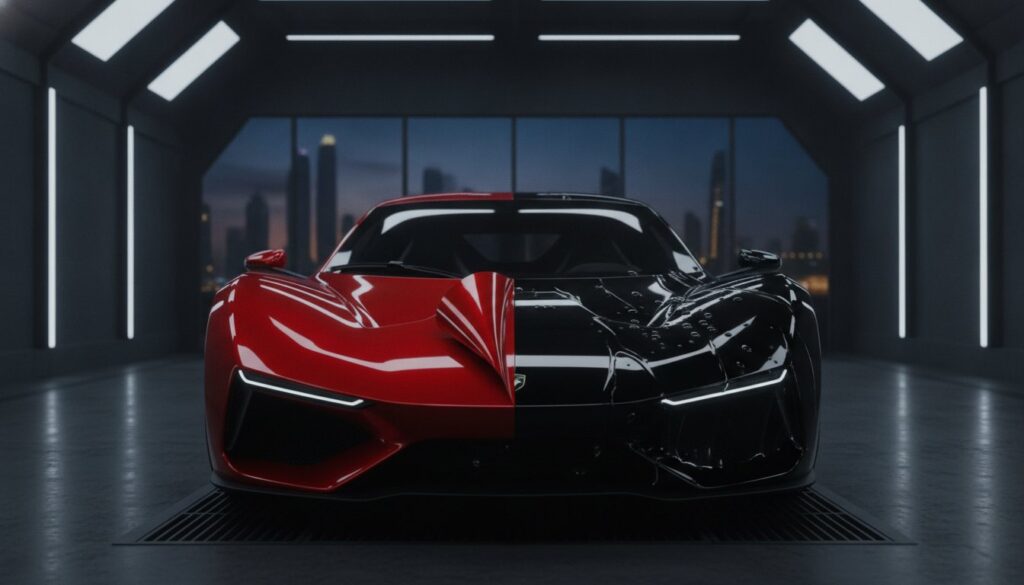
What if you could shield your supercar from the abrasive sands of the UAE desert while simultaneously transforming its color, all without the permanence of a traditional respray? You’ve invested heavily in a high-performance machine; the thought of sandblasting damage during a high-speed drive is enough to keep any enthusiast awake. You demand the highest level of protection, yet you’re likely tired of the visible edges and potential yellowing that often plague standard films. Understanding the nuances of peelable paint vs ppf is now essential for owners of elite marques who refuse to compromise on a factory-like finish.
We’ve designed this guide to help you choose the perfect shield for your vehicle’s aesthetics and its long-term resale value. Whether you’re looking to preserve a rare paint code or want a bold new look that peels away when it’s time to sell, the right choice depends on your specific lifestyle. We will compare the seamless, sprayable precision of modern coatings against the rugged impact resistance of high-end films, ensuring your investment remains flawless in the 2026 market.
Key Takeaways
- Master the technical distinctions between TPU-based Paint Protection Film and advanced liquid membranes to ensure your vehicle receives the precise tier of defense it requires.
- Evaluate high-velocity impact resistance and self-healing capabilities to determine which technology best survives the abrasive sand and intense heat of the UAE.
- Analyze the visual trade-offs in the peelable paint vs ppf debate to choose between a seamless, edge-free color change and the ultra-clear preservation of your original factory finish.
- Identify the ideal protection strategy for your specific driving profile, whether you prioritize maximum rock chip resistance or complex geometry coverage for high-end Brabus or Mansory kits.
- Learn how both solutions safeguard your investment’s resale value through effortless, damage-free removal and professional-grade maintenance protocols.
Defining the Contenders: What Are Peelable Paint and PPF?
The standard for protecting a high-end asset has evolved beyond simple waxes and brittle vinyl wraps. In 2026, the elite automotive scene demands protection that is both invisible and invincible. This demand has led to a technological standoff between two primary heavyweights: traditional film and advanced liquid coatings. While both serve to preserve the pristine condition of your vehicle, their chemical composition and application methods offer distinct advantages for different driving styles. Understanding the nuances of peelable paint vs ppf is the first step in future-proofing your supercar’s exterior against harsh environmental conditions.
Luxury owners are increasingly moving away from traditional vinyl for several key reasons:
- Impact Resistance: Vinyl is thin and easily punctured by common road debris.
- Aesthetic Depth: Modern film and liquid coatings mimic the orange-peel-free finish of a factory clear coat.
- Longevity: Advanced polymers resist the yellowing and cracking caused by intense UV exposure.
The lines between these technologies have blurred as liquid coatings now offer the thickness of films, while films have become more conformable than ever before. It’s no longer just about choosing a brand; it’s about choosing the right chemistry for your car’s specific geometry.
The Anatomy of Modern PPF
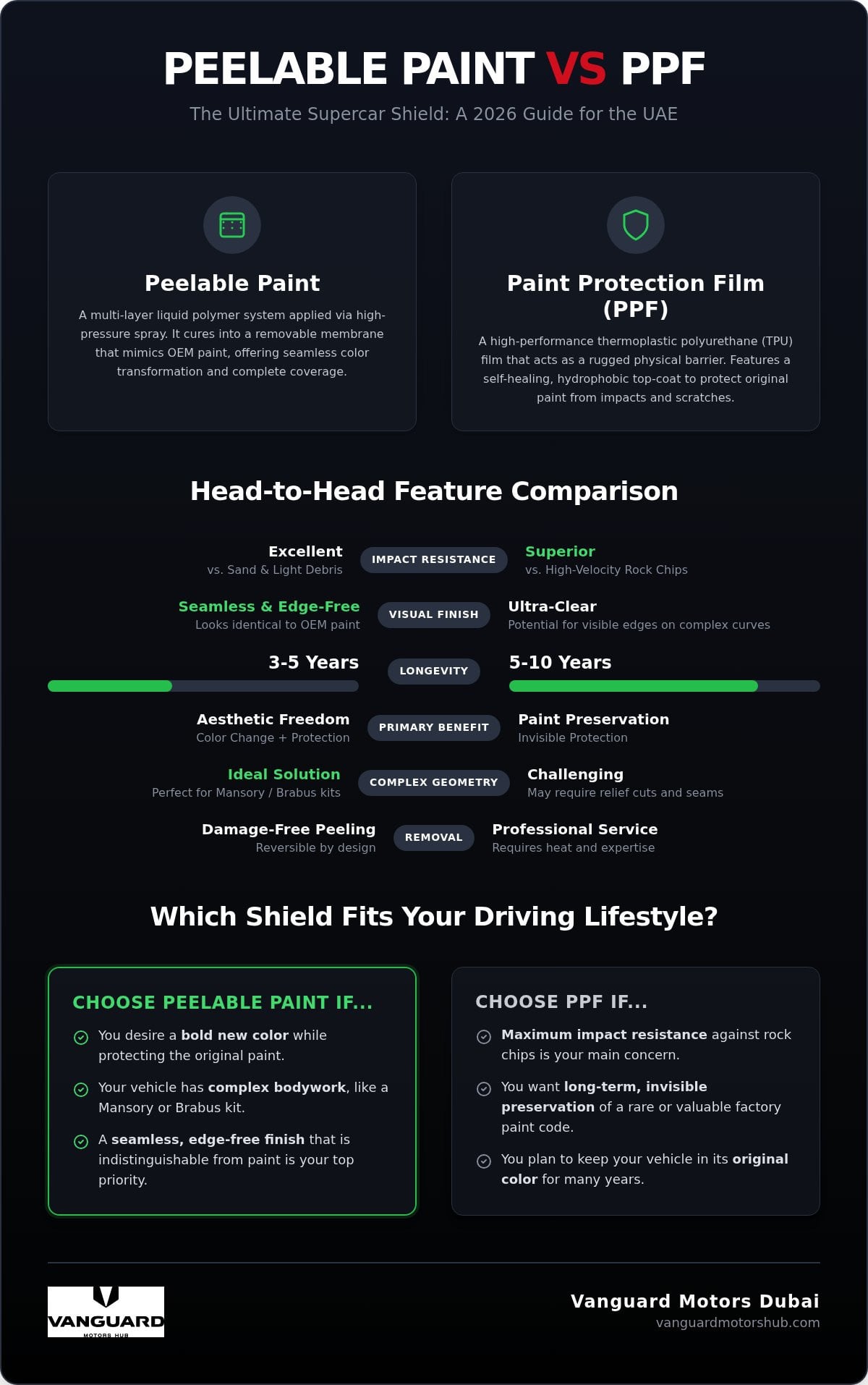
Paint Protection Film (PPF) is a high-performance thermoplastic polyurethane (TPU) layer. It acts as a rugged physical barrier against the environment. Modern films utilize a sophisticated top-coat technology that is both hydrophobic and self-healing. When minor swirl marks or scratches occur, the application of heat, such as intense afternoon sun, causes the TPU to return to its original, smooth state. For supercar protection, the industry has settled on a thickness of 8-10 mils as the ideal specification. This provides enough mass to stop high-velocity rock chips without distorting the clarity of the underlying paint. A critical component is the adhesive layer, which must remain stable for years without bonding permanently to the clear coat.
The Science of Peelable Paint
Peelable paint represents a massive leap forward from the early days of rubberized DIY coatings. Today’s professional-grade polymers are applied via a high-pressure spray system, much like a factory respray. This liquid application allows the protection to reach deep into complex geometries, such as the intricate carbon fiber vents found on a Mansory or Brabus kit. Vanguard Motors Dubai utilizes a multi-layer system: a specialized bonding base, a high-pigment color layer, and a durable clear coat. Once cured, these layers bond into a removable membrane that looks and feels identical to OEM paint. In the peelable paint vs ppf comparison, this spray-on method eliminates the visible edges and relief cuts often associated with film, providing a truly seamless transformation that protects every millimeter of the substrate.
Protection Performance: Impact Resistance and Durability Compared
Driving on the E11 at cruising speeds exposes your vehicle to a relentless barrage of fine desert sand and gravel. This sandblasting effect can dull a factory finish in months. When evaluating peelable paint vs ppf, the primary concern is energy dispersion. Paint Protection Film (PPF) relies on its high-density thermoplastic polyurethane (TPU) structure to act as a shock absorber. It catches the kinetic energy of a stone chip and spreads it across the film’s surface, preventing the impact from reaching the paint. In contrast, advanced liquid coatings utilize a patented peelable paint technology that builds protection through multiple sacrificial layers. While PPF is the undisputed king of heavy impact resistance, a high-build peelable paint system offers comparable defense against the daily wear of sand and light debris.
Durability is a major factor for UAE collectors. High-quality PPF typically offers a lifespan of 5 to 10 years, making it a long-term investment for those who plan to keep their vehicle in its original color. Peelable paint generally serves a shorter window of 3 to 5 years. This shorter cycle isn’t necessarily a drawback; it’s an advantage for owners who enjoy seasonal aesthetic transformations. Both systems provide excellent chemical resistance against bird droppings and fuel spills, which can etch unprotected clear coats in the intense heat.
Defeating the Elements: Heat and Sandblasting
The TPU film in PPF is engineered to remain flexible, allowing it to absorb energy from high-speed sand impact without tearing. Peelable paint counters environmental threats with specialized UV-blocking clear coats that prevent the underlying color from fading under the harsh Arabian sun. Thermal stability in the UAE context refers to a coating’s ability to maintain its structural integrity and adhesion even when surface temperatures exceed 60°C during peak summer months. If you’re unsure which technology suits your driving habits, you can consult our technical team for a personalized recommendation.
Self-Healing and Surface Maintenance
Modern PPF contains elastomeric polymers that possess a “memory.” When heat is applied, the molecules rearrange to their original state, effectively erasing swirl marks. Peelable paint offers a different maintenance advantage: it can be polished and buffed just like factory paint. This means you can maintain a mirror-like shine throughout its life. Both solutions feature hydrophobic properties that repel water and dust, making your weekly maintenance washes significantly more efficient. In the peelable paint vs ppf debate, the choice often comes down to whether you prefer the self-healing convenience of film or the traditional detailing flexibility of a sprayed coating.
Visual Mastery: Aesthetic Freedom vs. Invisible Preservation
Aesthetics often dictate the final decision when choosing between high-end protection systems. For many collectors, the ultimate goal is to keep the vehicle looking exactly as it did when it rolled off the assembly line. This is where the debate of peelable paint vs ppf becomes a matter of visual philosophy. Paint Protection Film is engineered for optical clarity. It allows the depth of a metallic flake or the specific hue of a bespoke paint to shine through without distortion. An expert resource explains what paint protection film is and how its thickness provides a literal shield while remaining virtually undetectable to the naked eye.
Peelable paint offers a different kind of visual mastery. While PPF is a pre-cut or bulk-fit sheet, peelable paint is a liquid membrane. This fundamental difference allows for a level of customization that traditional films cannot match. You aren’t limited to clear or basic colors. You can achieve a factory-quality finish in almost any shade, including complex pearls and satins. Unlike vinyl wraps, which often lack the orange-peel-free texture of automotive paint, these liquid systems provide a depth and luster that is indistinguishable from a permanent respray.
The Edge-Free Aesthetic of Peelable Paint
The most significant visual advantage of liquid application is the absence of visible seams. Even the most precise PPF installation can occasionally reveal the “PPF line” where the film terminates near a panel gap or fender edge. Peelable paint eliminates this entirely. Because it’s sprayed, it wraps seamlessly around complex vents, grilles, and emblems. This is particularly vital for vehicles featuring aggressive aerodynamic enhancements. If your supercar has undergone a conversion with Brabus or Mansory kits, the intricate carbon fiber geometries and sharp angles are best served by a spray-on system that leaves no relief cuts or lifting edges.
Preserving the Factory Look with PPF
If you’re deeply satisfied with your vehicle’s original color, PPF remains the gold standard for preservation. High-gloss films enhance the existing shine, while specialized matte films can transform a gloss finish into a sophisticated satin look without altering the underlying pigment. This allows you to follow the trend of frozen or matte finishes while keeping the option to revert to gloss for resale. For those who demand the pinnacle of film technology, The Ultimate Shield: Why Paint Protection Film is the Standard for Excellence in 2026 provides deeper insights into why this remains a preferred choice for purists. In the peelable paint vs ppf comparison, PPF wins on pure transparency, ensuring your car’s original character is never obscured.
The Long Game: Maintenance, Longevity, and Removal Logistics
Your investment in a supercar deserves more than a “set it and forget it” mentality. In the UAE, the high-velocity sand and relentless humidity act as abrasive agents that test the limits of any polymer. The decision between peelable paint vs ppf often hinges on what happens at the end of the protection’s lifecycle. While both technologies aim to keep the underlying factory clear coat in showroom condition, their decommissioning processes and maintenance requirements follow different paths. For limited-edition models where “original paint” status is a prerequisite for high resale value, understanding these logistics is vital for long-term equity preservation.
A cost-benefit analysis over a five-year ownership cycle reveals a strategic split. PPF offers a longer functional life, often spanning the entire five years without needing replacement. Peelable paint might require a refresh during that same period, but it provides the opportunity to update the vehicle’s aesthetic to match current trends. Both solutions significantly bolster resale value by preventing the inevitable stone chips that would otherwise necessitate a value-diminishing respray.
Removal and Paint Safety
Professional removal is non-negotiable for preserving the integrity of your vehicle’s exterior. PPF relies on specialized heat induction to soften the adhesive layer, ensuring it pulls away without leaving stubborn residue. Peelable paint is designed to be stripped manually in large, clean sheets. While some industrial standards cite a 15-month “peelability” window as the floor, premium automotive-grade polymers are engineered to remain elastic for years. This prevents the coating from “bonding” or becoming brittle under the intense Arabian sun, which is a common fear for owners of high-value assets. If you’re ready to ensure your vehicle’s paint remains pristine under its shield, book a professional inspection with our technical team today.
Maintenance Requirements for Elite Finishes
Maintaining a flawless finish requires discipline. PPF is sensitive to high-pressure washers, which can catch the edges of the film and cause lifting or “fingering” if the nozzle is held too close. Peelable paint is more resilient to pressure since it lacks these edges, but it requires pH-neutral shampoos to maintain its luster. Both surfaces benefit from specialized sealants that replenish the UV inhibitors in the material. Applying a high-grade ceramic coating over your chosen protection layer adds an essential hydrophobic barrier that simplifies cleaning and shields the material from chemical etching. Your choice in the peelable paint vs ppf debate should ultimately align with how often you plan to detail your vehicle and your desired interval for aesthetic updates.
Strategic Selection: Which Shield Fits Your Driving Lifestyle?
Choosing the right defense for your vehicle is a tactical decision that should align with your long-term ownership goals. If you are a high-mileage driver whose primary concern is the abrasive sand on the E11, Paint Protection Film is the definitive choice for its decade-long durability. Conversely, if you view your supercar as a dynamic expression of style, peelable paint offers high-level protection with the freedom to execute a flawless color change. This comparison of peelable paint vs ppf ultimately comes down to whether you prioritize the ruggedness of a physical film or the seamless adaptability of a liquid membrane.
Many elite owners in the UAE are now opting for a hybrid strategy to maximize both aesthetics and safety. This involves applying heavy-duty PPF to high-impact zones like the front bumper and hood, while using color-matched peelable paint for the doors and rear panels. It’s a zero-compromise shield that addresses the specific vulnerabilities of a vehicle without leaving visible film edges on the most prominent surfaces.
Protecting Bespoke Conversions
When your vehicle features aggressive aerodynamic modifications, the selection criteria shifts. Mansory and Brabus kits often include complex carbon fiber geometries that are notoriously difficult to wrap with traditional film. The spray-on precision of peelable paint ensures every intricate vent and fin is encapsulated in a protective skin without obscuring the carbon weave. This method provides total coverage where pre-cut film templates often fall short. You can reach out to our team for a bespoke protection consultation to determine the best fit for your specific kit.
The Vanguard Verdict
Vanguard Motors Dubai is the premier destination for both applications, offering a level of technical mastery that goes beyond standard installation. Our process integrates Luxury Car Detailing as a fundamental prep step, ensuring the surface is surgically clean for maximum adhesion and optical clarity. With national coverage across the UAE, we provide the meticulous care required for the world’s most exclusive marques. Our expertise in complex kit conversions makes us the visionary leader in automotive preservation. Contact us via WhatsApp for elite vehicle protection and secure your supercar’s legacy today.
Elevate Your Automotive Standard
Your supercar represents a significant investment, and its preservation is a tactical priority. Choosing between peelable paint vs ppf is not just about defense; it’s about defining your vehicle’s future identity. Whether you opt for the permanent clarity of high-grade film or the seamless, transformative power of a spray-on membrane, the goal is to drive with total confidence across the Emirates. You’ve seen how these technologies handle the elements, and now it’s time to apply that knowledge to your specific machine.
Vanguard Motors Dubai delivers this confidence through a fusion of technical skill and elite luxury car detailing standards. As experts in complex Brabus and Mansory kit conversions, we understand that high-end protection must be as precise as the engineering it covers. With national UAE coverage, we ensure that every supercar receives a world-class finish that honors its design and maintains its market value. Don’t leave your paint to chance when professional-grade innovation is just a message away.
Secure your vehicle’s future-WhatsApp Vanguard Motors Dubai now
Your journey toward a perfectly protected supercar starts with a single strategic decision. Let’s make it a bold one.
Frequently Asked Questions
Is peelable paint as durable as PPF for rock chip protection?
PPF remains the gold standard for heavy impact resistance due to its thick, energy-absorbing TPU layer. While advanced liquid coatings provide significant defense through multiple sacrificial layers, they are primarily optimized for sandblasting and light gravel. If your driving involves frequent high-velocity highway stints, the physical density of film offers unmatched security. Peelable paint is an excellent alternative for those prioritizing a seamless look with high-level daily protection.
Will peelable paint damage my car’s original factory paint?
Professional-grade peelable paint is specifically designed to be non-invasive. It creates a stable bond with the factory clear coat without causing chemical etching or permanent adhesion. When the time comes for removal, the membrane strips away cleanly, leaving the original paint in the exact condition it was in before application. This makes it a safe, reversible choice for preserving the resale value of rare or limited-edition supercars.
Can you polish peelable paint like a regular car?
One of the greatest advantages of liquid coatings is their ability to be polished just like factory paint. You can use standard orbital buffers and fine polishes to remove light swirl marks and restore depth to the finish. This flexibility is a significant upgrade over traditional vinyl, which can be easily damaged by mechanical polishing. It ensures your vehicle maintains a professional, high-gloss shine throughout the coating’s entire lifespan.
How long does PPF last compared to peelable paint in the UAE?
In the harsh UAE climate, high-quality PPF usually offers a lifespan of 5 to 10 years. Peelable paint generally serves a shorter window of 3 to 5 years before a refresh is recommended. When evaluating peelable paint vs ppf, consider your ownership cycle. PPF is ideal for long-term consistency, while the shorter lifecycle of peelable paint appeals to owners who enjoy changing their vehicle’s aesthetic every few seasons.
Can I apply ceramic coating over both PPF and peelable paint?
Ceramic coating acts as a superior topper for both protection systems. It adds a slick, hydrophobic layer that repels dust and water, making maintenance washes much easier in the desert environment. By sealing the pores of the film or liquid membrane, ceramic coatings also provide an additional shield against chemical contaminants and bird droppings. This combination ensures your vehicle stays cleaner for longer while maximizing the durability of the underlying protection.
Is peelable paint more expensive than a traditional vinyl wrap?
Peelable paint typically commands a premium over traditional vinyl wraps because it’s a more labor-intensive, multi-stage process. The application requires a clean-room environment and expert spray technicians to achieve a factory-quality finish. While the initial cost is higher, the value is found in the seamless appearance and the lack of visible edges. It’s an investment in a level of aesthetic precision that simple sticker wraps cannot replicate.
What happens if a part of the PPF or peelable paint gets scratched?
Minor scratches on PPF can often be healed by exposing the film to sunlight or warm water. If the damage is deeper, a single panel of film can be replaced without affecting the rest of the car. Peelable paint offers similar repairability; a damaged panel can be stripped and resprayed to match the existing finish perfectly. This panel-by-panel approach ensures you don’t have to redo the entire car for a single mishap.
Can I change the color of my car using PPF?
Colored PPF has become a popular option for those who want protection and a new look simultaneously. However, color choices in film are still relatively limited compared to the infinite palette of liquid coatings. In the peelable paint vs ppf debate for customization, peelable paint is the clear winner for bespoke requests. It allows for exact color matching of rare OEM shades or completely custom pearls and metallic finishes.