
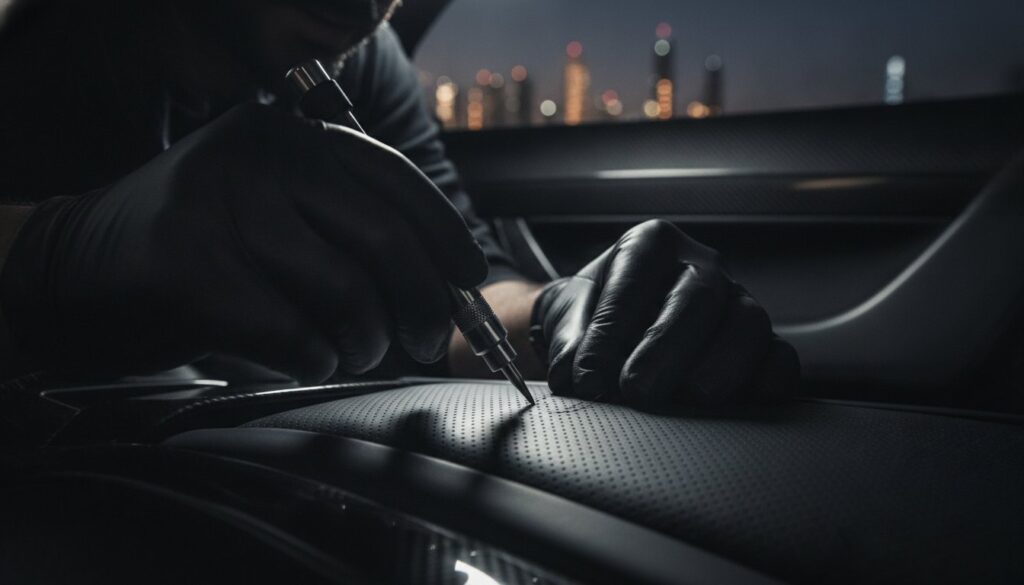
The most difficult aspect of luxury interior maintenance isn’t fixing the leather; it’s respecting the empty space between the pores. A single drop of the wrong adhesive can transform a ventilated supercar seat into a permanent, unsightly blemish that compromises your vehicle’s resale value. You know that the breathability and aesthetic precision of your cabin are non-negotiable hallmarks of elite engineering, making professional perforated leather seat repair a necessity rather than an option. Attempting a standard fix on these specialized surfaces often results in clogged holes and visible patches that never quite match the factory grain.
This 2026 guide empowers you to master the technical nuances of bespoke restoration, ensuring your work preserves both the original texture and the vital airflow of your ventilated seats. We will explore the specialized tools, sub-patching techniques, and precision perforation methods required to achieve a seamless, factory-level finish. From structural integrity to aesthetic perfection, you’ll discover how to maintain the elite standards your high-performance vehicle demands.
Key Takeaways
- Preserve the critical functionality of ventilated and heated seats by understanding the delicate architecture and purpose of perforated leather.
- Master the technical steps of perforated leather seat repair, including structural sub-patching and precision pore clearing for a seamless result.
- Avoid the common pitfalls of standard DIY kits, such as clogged ventilation holes and mismatched grain patterns that diminish your vehicle’s resale value.
- Implement advanced maintenance strategies to protect interior leather from UV-induced shrinkage and heat damage without compromising material breathability.
- Evaluate the benefits of localized restoration versus full panel replacement when integrating repairs with bespoke luxury cabin upgrades.
The Anatomy of Perforated Leather: Why Repair is a Challenge
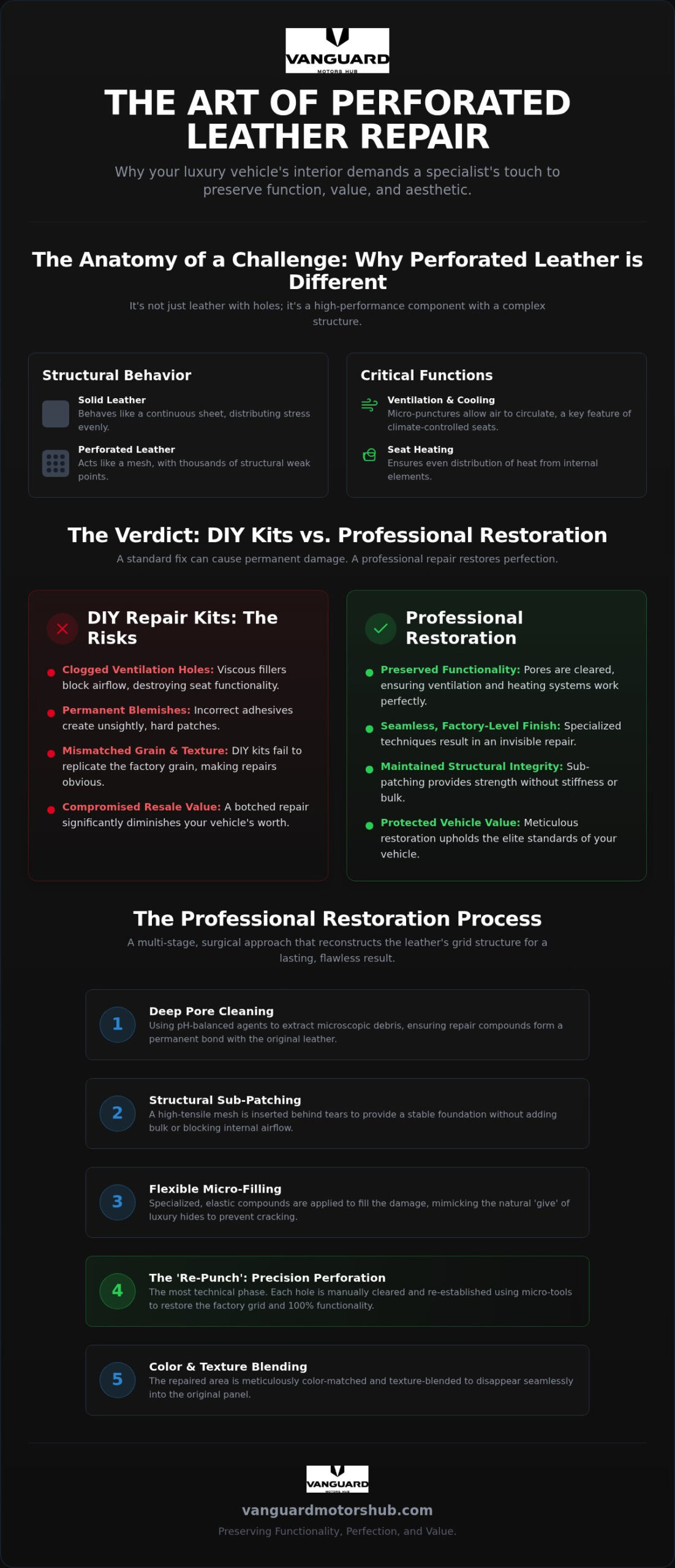
Perforated leather isn’t just an aesthetic choice; it’s a high-performance component. In luxury vehicles, these micro-punctures serve critical roles in ventilation, seat heating, and acoustic dampening within the cabin. Understanding The Anatomy of Perforated Leather is essential for any successful restoration. Unlike solid hides, the grid pattern introduces thousands of structural weak points that react uniquely to environmental stress. This complex architecture means that any damage affects more than just the surface appearance.
Damage often manifests as punctures from sharp objects, ‘stretched’ holes caused by passenger weight, or surface abrasions that dull the factory finish. In high-heat environments like the UAE, thermal expansion and humidity cause the leather to shrink or warp around these perforations. This constant tension distorts the original grid. It makes a standard fix nearly impossible for the untrained hand. When the structural integrity of the hide is compromised, the seat’s functional benefits begin to decline rapidly.
Most generic repair kits rely on heavy, viscous fillers. These materials fail because they ‘ghost’ the perforation pattern. They clog the holes and create a flat, plastic-like patch that stands out against the surrounding texture. Professional perforated leather seat repair requires a precise touch. The goal is to fill the tear while keeping the surrounding pores open and functional. This maintains the seat’s structural integrity and its ability to breathe, ensuring the cabin remains comfortable and the vehicle retains its premium value.
Perforated vs. Solid Leather Repair
Solid leather behaves like a continuous sheet under tension. Perforated leather behaves more like a mesh. This difference means any repair must account for multidirectional pull. Grain replication is exceptionally difficult on a porous surface because the texture is frequently interrupted by the hole pattern. We utilize specific flexible resins that mirror the hide’s natural elasticity. These resins ensure the repair doesn’t crack as the seat heats or cools during use, providing a durable bond that moves with the driver.
Identifying Damage Severity
Not all damage requires the same intervention. Surface scuffs might only need a meticulous color restoration that avoids clogging the pores. However, full-thickness tears demand structural sub-patching with high-tensile mesh. This technique prevents the tear from spreading without blocking the seat’s internal airflow. You must also consider chemical damage. Spills like coffee or harsh cleaning agents often seep through the holes. They attack the underlying foam, which can lead to odors or structural degradation if not addressed immediately.
The Professional Restoration Process: Restoring the Grid
Excellence in perforated leather seat repair requires more than just a surface patch; it demands a surgical approach to the material’s geometry. The professional restoration process is a multi-stage discipline that prioritizes the seat’s function as much as its form. This isn’t a simple cover-up. It is a methodical reconstruction of the leather’s grid structure designed to withstand the rigors of daily use.
The process begins with deep cleaning the pores. Technicians extract microscopic debris and body oils using pH-balanced agents to ensure repair compounds bond permanently. Following this, structural sub-patching addresses larger tears. A high-tensile mesh is inserted behind the hide to provide a stable foundation without adding bulk or stiffness. We then apply micro-filling using specialized flexible compounds that mimic the natural ‘give’ of luxury hides. The most technical phase is the ‘re-punch,’ where the perforation pattern is manually re-established. Finally, color matching and texture blending ensure the repaired area disappears into the original panel, returning the seat to its factory-correct state.
The Art of the Re-Punch
Restoring the grid requires a steady hand and specialized tools. We use micro-awls and precision needles to clear any filled holes before the compound cures. This process isn’t just about aesthetics; it ensures that your seat’s ventilation and heating systems remain 100% functional. Maintaining the exact geometric alignment of the factory grid is what separates a professional perforated leather seat repair from a botched DIY attempt. If you’re concerned about preserving your cabin’s airflow, you can consult our interior specialists for a precision assessment.
Advanced Material Matching
Luxury cabins often feature Nappa or semi-aniline leathers, each with a distinct sheen and tactile response. Our process involves matching the specific luster of these high-end materials using synthetic or natural leather compounds designed for high-traffic areas. We focus on durability to ensure the repair doesn’t ‘crust’ or become brittle over time, especially in fluctuating climates. By using heat-stable resins, Vanguard ensures the seat remains supple and the repair remains invisible for years to come.
Professional Restoration vs. DIY Kits: The Luxury Verdict
The allure of a quick fix often leads owners toward hardware-store vinyl kits. These products are designed for general utility, not the exacting tolerances of a high-performance cabin. Using a generic kit for perforated leather seat repair often results in a “clogged hole” look that screams of neglect. This aesthetic failure is usually permanent, as removing inferior fillers without damaging the surrounding hide is exceptionally difficult. When you are dealing with a luxury interior, the margin for error is non-existent.
Professional resins are engineered to bond at a molecular level with the hide’s fibers. They outlast generic vinyl fillers because they are designed to handle the extreme thermal cycles common in high-performance cabins. While a hardware-store kit might look acceptable for a short period, it will quickly crack or peel under the stress of daily entry and exit. High-end automotive leather requires a repair medium that remains as supple as the original material, maintaining its elasticity across thousands of miles.
Your supercar’s resale value hinges on the pristine condition of its interior. Collectors and high-end dealerships view interior flaws as signs of broader mechanical neglect. A visible patch or a section of non-functional ventilation can strip significant value from a vehicle’s appraisal. Investing in professional restoration is a strategic move to protect your asset’s market position. It ensures that every detail, down to the last perforation, remains factory-correct and fully operational.
DIY enthusiasts often reach for heat guns to cure fillers. This is a dangerous gamble in a modern luxury vehicle. Ventilated seats house delicate sensors, weight scales, and heating elements that can melt or short-circuit under localized high heat. A professional technician uses controlled thermal application and specialized cooling blocks to protect these sensitive electronic components, ensuring the seat’s safety systems remain uncompromised.
When to Walk Away from DIY
If damage is larger than a small coin, structural integrity is likely compromised. You need professional tension-balancing tools to prevent the hide from warping during the curing process. Hand-mixing pigments to match faded or multi-tonal leather is another common pitfall. Without a digital color-matching system, the resulting patch will never truly disappear. Most importantly, if your seats feature internal cooling or heating, the risk to internal electronics makes a DIY attempt a high-stakes liability.
The Vanguard Professional Standard
Our cosmetic car repair approach treats every restoration like a surgical procedure. We prioritize the preservation of original materials over simple replacements, maintaining the soul of your vehicle’s interior. This meticulous care is a core component of our bespoke car conversions, where we integrate leather restoration with total cabin refreshes. We apply medical-grade precision to every pore, ensuring the final finish meets the highest standards of luxury automotive excellence.
Maintaining Perforated Leather in Extreme Climates
Extreme heat and high UV indices accelerate the degradation of luxury cabins. In regions like the UAE, the intense thermal energy causes leather fibers to lose moisture rapidly. Perforated hide is particularly vulnerable because the edges of every hole are exposed to the air, effectively doubling the surface area susceptible to dehydration. Without consistent protection, the leather around these pores begins to shrink and pull. This leads to the “stretched” look that eventually requires professional perforated leather seat repair.
Maintaining the suppleness of these surfaces requires a specialized approach. Standard conditioners often contain thick waxes or heavy oils that settle into the perforations. This creates a sticky residue that traps dust and eventually blocks the airflow of your ventilated seats. Instead, use light, water-based conditioners that penetrate the hide without leaving a surface film. We recommend a professional detailing schedule every three to six months to ensure the interior remains in showroom condition. The global automotive interior fabric market is currently growing at a 5.6% CAGR as of late 2026, reflecting a heightened focus on cabin preservation among elite owners.
Heat Protection Strategies
Prevention is the most effective tool in your restoration arsenal. High-quality window tinting acts as a primary shield, filtering out up to 99% of harmful UV rays that cause pigment fading and fiber contraction. Because perforated leather doesn’t have the continuous structural surface of solid hide, it “breathes” out its natural oils much faster. Using a pH-balanced cleaner designed for semi-aniline leather ensures you remove contaminants without stripping away the essential lipids that keep the seat flexible. This proactive care significantly reduces the frequency of necessary cosmetic repairs.
Cleaning Mistakes to Avoid
- Never spray liquid cleaners directly: Liquids will travel through the holes and saturate the underlying foam. This leads to internal mold growth and potential electronic failure in heated seat elements.
- Avoid creamy conditioners: Thick pastes will inevitably clog the ventilation grid, creating an unsightly white residue that is difficult to extract without specialized tools.
- Use compressed air: Periodically use low-pressure compressed air to blow out dust from the pores, ensuring your ventilation system remains efficient and the leather stays clear.
If a spill does occur, blot the area immediately with a lint-free microfiber cloth. Rubbing the surface will only push the liquid deeper into the perforations and the seat’s internal cooling fans. For a comprehensive deep clean that protects your investment, book a precision interior detailing session with our expert team.
Bespoke Interior Solutions: Beyond Simple Repair
Deciding between localized perforated leather seat repair and a full panel replacement depends on the extent of fiber fatigue across the hide. If the material has lost its structural memory or the grain has flattened significantly, a localized fix might only serve as a temporary solution. We analyze the tension and grid alignment of the entire seat to determine the most durable path forward. For owners undergoing Brabus or Mansory kit conversions, we often recommend full panel integration. This ensures the cabin’s aesthetic matches the aggressive, high-performance nature of the exterior modifications.
Customization is a hallmark of the 2026 luxury market. We don’t just restore; we innovate. This includes the capability to customize perforation patterns to create a unique cabin environment that reflects your personal style. Our commitment to ‘invisible’ restoration means that whether we’re fixing a single puncture or re-skinning a bolster, the transition between new and original materials is undetectable. This level of precision is essential for maintaining the prestige and market value of high-end automotive brands.
Total Cabin Transformation
A pristine seat looks out of place next to a scratched dashboard or a worn steering wheel. True restoration involves a holistic approach to the vehicle’s interior. We frequently combine our leather expertise with carbon fiber interior trim repair to create a cohesive, high-octane atmosphere. Restoring steering wheels and dash panels to the same quality as your seats ensures every touchpoint feels factory-new. Meticulous detailing acts as the final seal, preserving these materials against the harsh environmental factors common in elite automotive circles.
Next Steps for Your Vehicle
Every supercar requires a tailored maintenance strategy. Consulting with a Vanguard technician allows for a bespoke assessment of your interior’s health and structural integrity. If your schedule is demanding, our mobile detailing van can provide initial evaluations at your location. This ensures you receive expert advice without disrupting your routine. Whether you need a minor perforated leather seat repair or a complete interior overhaul, our team is ready to deliver elite results. Contact Vanguard Motors for your bespoke leather restoration today and experience the intersection of technical skill and creative expression.
Secure Your Cabin’s Legacy of Excellence
Your vehicle’s interior is a high-performance environment where every microscopic detail dictates the driving experience. Mastering the technical nuances of perforated leather seat repair ensures that your ventilated seats remain functional while maintaining the factory-correct aesthetic that defines elite engineering. We’ve detailed the surgical precision required for the re-punch and the critical role of UV protection in preserving your hide’s structural integrity against extreme climate stress.
Vanguard Motors positions itself as an authoritative expert in precision cosmetic restoration for elite automotive brands. Our technicians bring the same meticulous care found in our Brabus and Mansory bespoke conversions to every leather pore, specializing in supercar and luxury vehicle detailing that exceeds showroom standards. Don’t let a minor tear or clogged perforation compromise your asset’s resale value or cabin comfort.
Take the proactive step toward a seamless, factory-level finish today. Restore Your Luxury Interior with Vanguard Motors and experience the transformation your vehicle deserves. Excellence isn’t just a goal; it’s our standard.
Frequently Asked Questions
Can I use a standard leather repair kit on perforated seats?
Standard kits are generally not suitable for perforated leather seat repair because the viscous fillers permanently block the ventilation holes. This results in a flat, unsightly patch that contradicts the factory design. Professional restoration uses specialized resins and precision tools to keep each pore clear. Choosing a professional service ensures the hide remains breathable and the aesthetic integrity of your luxury cabin is preserved without the risk of a botched DIY attempt.
Will the ventilation still work after the seat is repaired?
Yes, your ventilation and heating systems will remain fully functional if the repair is handled by a technician using precision re-punching methods. This process involves manually clearing every perforation before the restoration compounds fully cure. By maintaining the original grid pattern, airflow remains unobstructed. This technical attention to detail is vital for luxury vehicles equipped with high-performance climate-controlled seating systems that rely on consistent air movement through the hide.
How long does a professional perforated leather repair take?
The duration of a restoration depends on the severity of the damage and the size of the affected area. Most localized repairs are completed within four to six hours, while extensive grid reconstruction may require a full day. Our mobile detailing van can often conduct initial assessments to provide a more accurate timeline. This efficiency ensures your vehicle spends less time in the service center and more time on the road.
Is it possible to repair a tear that goes through multiple holes?
Repairing full-thickness tears that span multiple perforations is possible through advanced sub-patching. Technicians insert a high-tensile mesh behind the leather to provide structural support without adding bulk. Once the foundation is secure, the technician meticulously reconstructs the surface and re-establishes the hole pattern. This method restores the seat’s structural integrity while ensuring the repair remains invisible to the naked eye, even under the close scrutiny of a professional valuation.
Does perforated leather repair smell or leave a residue?
Professional-grade resins and colorants are engineered to be low-odor and leave no sticky residue once cured. Unlike hardware-store kits that may off-gas for days, elite restoration materials bond at a molecular level and stabilize quickly. This ensures your cabin maintains its premium scent and tactile feel immediately after the service. The final finish is dry to the touch and mirrors the original texture of the Nappa or semi-aniline leather.
How much does it cost to restore perforated leather compared to replacement?
Restoring a single spot on a luxury seat is typically 60% to 85% more cost-effective than a full panel replacement or dealership seat swap. While complex grid work requires more labor than solid leather fixes, the savings remain substantial compared to the high cost of sourcing original factory hides. This makes professional restoration a strategic investment for owners looking to maintain their vehicle’s resale value without the expense of total reupholstery.
Can I change the color of my perforated leather during repair?
You can certainly opt for a color change as part of a broader interior customization project. Vanguard Motors offers comprehensive color change services, including interior leather restoration, to match your specific vision. Whether you are integrating a perforated leather seat repair with a Brabus or Mansory kit conversion or simply refreshing a faded cabin, our technicians mix high-register pigments to ensure a uniform and durable finish across all surfaces.
How do I prevent my perforated seats from cracking in the heat?
Preventing heat-induced cracking requires a combination of UV protection and proper hydration. High-quality window tinting is your first line of defense, filtering out the rays that cause leather fibers to shrink. Additionally, using light, pH-balanced conditioners prevents the hide from drying out without clogging the ventilation pores. Regular professional detailing every few months ensures the leather remains supple and resistant to the intense thermal cycles common in high-heat environments.