
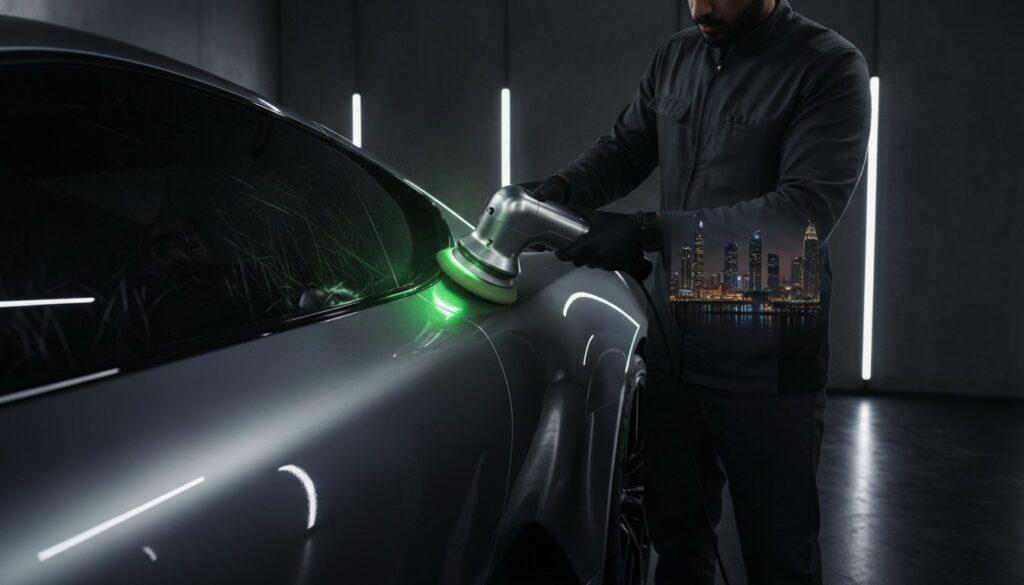
What if the “quick fix” you’re applying to your supercar is actually accelerating its depreciation? You’ve likely felt that sharp sting of anxiety upon discovering a fresh blemish on your door panel. It’s more than just an eyesore; it’s a direct hit to your vehicle’s prestige and a constant reminder of the fragility of factory clear coats. Many owners reach for a retail-grade kit, only to find these temporary solutions leave the finish looking dull or result in permanent “burn” marks. Expert car scratch removal isn’t about hiding damage; it’s about surgical restoration that preserves the soul of your vehicle’s aesthetics.
We’ll help you master the art of identifying, repairing, and preventing paint defects with professional-grade techniques designed for high-end preservation. This guide explores the transition from traditional buffing to 2026’s elite standards, including graphene-infused nano-fillers that maintain factory paint thickness. You’ll gain a comprehensive understanding of how to achieve a mirror-like finish while integrating advanced protection like self-healing Paint Protection Film (PPF) to ensure your investment remains immaculate for years to come.
Key Takeaways
- Master the “fingernail test” to accurately diagnose the depth of paint damage before attempting any technical restoration.
- Understand why professional car scratch removal requires surgical precision to level the clear coat without compromising the structural integrity of your factory finish.
- Recognize the limitations of retail-grade touch-up pens and the significant risks of “burning” paint through improper DIY abrasive techniques.
- Learn how to integrate elite protection strategies like self-healing PPF to transform a temporary repair into a permanent shield against future marring.
- Discover the efficiency of mobile detailing assessments for maintaining the showroom prestige of luxury and supercars on your own schedule.
Assessing the Damage: Identifying Types of Car Scratches
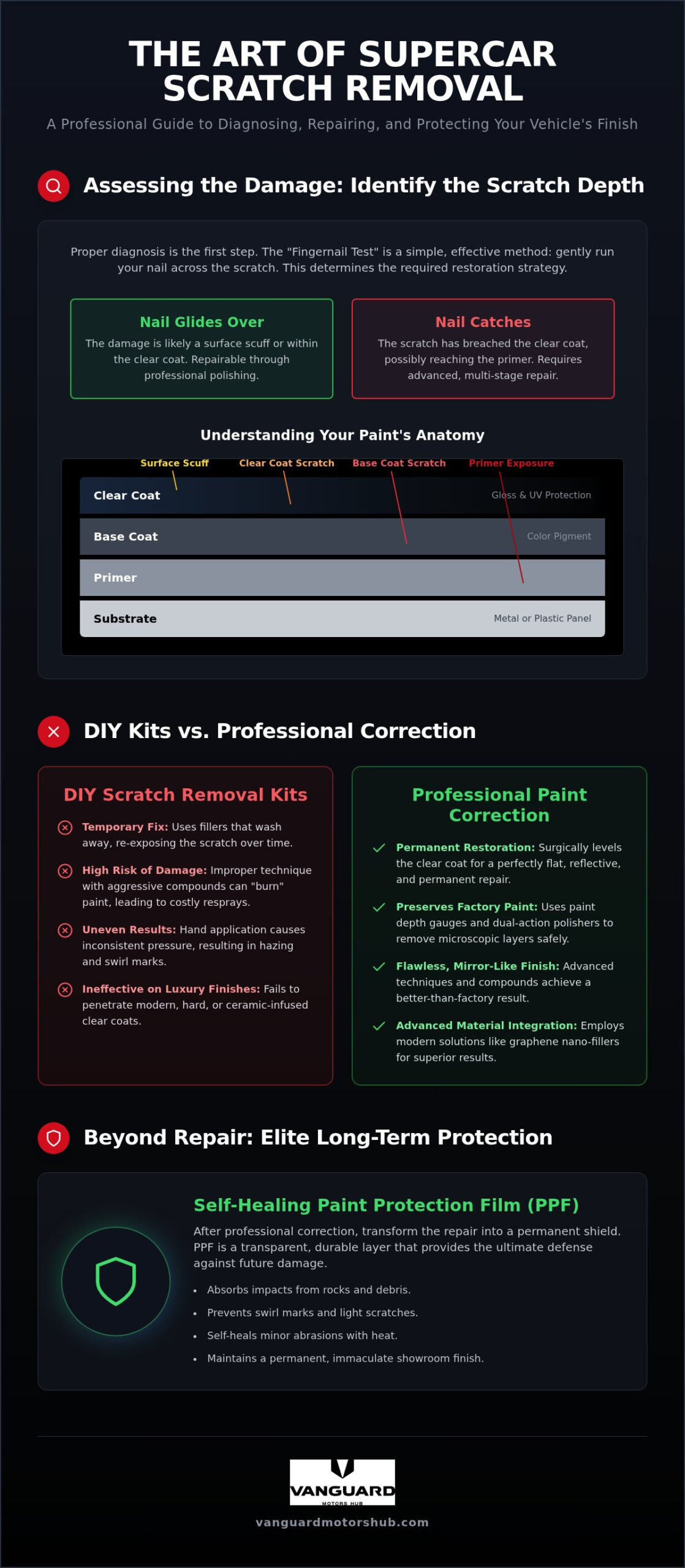
Precision begins with a clinical diagnosis. Before any tools touch the surface, you must understand the microscopic architecture of your vehicle’s finish. Modern automotive paint is a multi-layered system consisting of a primer for corrosion resistance, a base coat for pigment, and a clear coat for depth. Misidentifying a scratch’s depth leads to failed repairs or, worse, permanent damage to the factory finish. Professional car scratch removal starts with the “fingernail test.” Gently run your nail across the blemish. If your nail glides over without resistance, you’re likely dealing with a surface scuff. If it catches, the damage has breached the clear coat, requiring a more technical intervention.
Identifying the exact layer affected dictates the entire restoration strategy. You wouldn’t use the same technique for a light swirl as you would for a key mark that exposes metal. Understanding these distinctions is the difference between a mirror-like finish and a botched DIY job.
- Surface Scuffs: These are often paint transfers or light abrasions that sit on top of the clear coat.
- Clear Coat Scratches: Grooves that stay within the top resin layer, often appearing as white lines.
- Base Coat Scratches: Damage that removes the color, showing a different shade or “flat” appearance.
- Primer/Substrate Scratches: The most severe level where you can see the grey primer, bare metal, or black plastic.
The Clear Coat Layer: Your First Line of Defense
The clear coat is the transparent, protective resin that provides gloss and UV resistance. It’s the thickest layer of the paint system, yet it remains vulnerable to environmental fallout and mechanical abrasion. Light refraction plays a deceptive role here. When a scratch disrupts the smooth surface of the clear coat, light scatters, making the mark appear visible regardless of the paint color beneath. Factory clear coats are often thinner and harder than aftermarket resprays, meaning there’s less margin for error during leveling. If you’re unsure of the remaining thickness, a mobile detailing van equipped with a paint depth gauge can provide a definitive on-site assessment.
Deep Scratches and Primer Exposure
When a scratch penetrates the color layer to reveal the primer, usually a dull grey or black, the risk profile shifts from aesthetic to structural. Primer exposure invites oxidation and eventual rust, especially on steel panels. These deep gouges cannot be polished away because there’s no material left to level. You’ll know you’ve reached the substrate if you see bare metal or the raw plastic of a bumper. At this stage, car scratch removal requires a surgical approach to rebuild the paint’s integrity rather than just refining its surface. This level of damage demands professional intervention to ensure the repair is permanent and invisible.
DIY Scratch Removal Kits vs. Professional Paint Correction
The market is saturated with “miracle” solutions promising instant results for a fraction of the cost. For a discerning owner, these retail-grade kits often represent a significant risk to the vehicle’s long-term value. Most scratch pens are merely temporary fillers. They use a clear resin to mask the groove, which eventually shrinks or washes away, leaving the original damage exposed. In contrast, professional car scratch removal involves a permanent leveling of the surrounding clear coat to create a perfectly flat, reflective surface. Using generic abrasive compounds by hand often leads to “hazing” or “swirl marks” because the pressure is uneven and the grit is too aggressive for modern finishes.
A botched DIY attempt carries a high hidden cost. If you accidentally “burn” through the clear coat by over-polishing, the only solution is a full panel respray. Professionals use dual-action polishers that distribute heat evenly, preventing the localized friction that ruins paint. This technical precision ensures that only the necessary microscopic layers are removed, preserving the integrity of the factory finish. If you’re unsure about the severity of a mark, you should speak with a specialist at Vanguard Motors Dubai for a professional assessment before taking any risks.
Why DIY Kits Often Fail on Luxury Paint
Modern high-end vehicles often feature ceramic-infused or extremely hard clear coats designed for durability. Retail kits aren’t formulated to tackle these resilient surfaces, often resulting in ineffective results or marring. Universal color pens rarely match the complex metallic flakes and multi-stage pigments found on luxury marques. Furthermore, using high-grit sandpaper without a digital paint depth gauge is a recipe for disaster, as you’re essentially working blind against a layer thinner than a post-it note.
The Precision of Professional Paint Correction
True restoration requires an environment that reveals every imperfection. Professionals utilize high-CRI LED lighting arrays to simulate different sunlight conditions, exposing deep scratches that a standard garage light would miss. Every correction starts with a paint depth measurement to determine exactly how much clear coat remains. This data-driven approach is a core part of Cosmetic Car Repair in 2026, ensuring that the aesthetic transformation never comes at the expense of the vehicle’s structural protection.
The Professional Scratch Removal Process: Step-by-Step
Restoring a high-performance finish requires more than a simple buff and shine. It’s a surgical procedure that demands a controlled environment and an uncompromising eye for detail. While amateur attempts often focus on masking damage, elite car scratch removal is a permanent restoration of the paint’s structural clarity. This process follows a rigorous sequence designed to preserve as much factory clear coat as possible while achieving a flawless, mirror-like reflection. Every step is purposeful, moving from aggressive decontamination to microscopic refinement.
Stage 1: Surface Preparation and Decontamination
A standard wash is never enough. Even a seemingly clean car harbors bonded contaminants like industrial fallout, iron particles, and road tar. If these aren’t removed, they’ll be picked up by the polishing pad, causing new scratches during the correction phase. Professionals use chemical decontaminants to dissolve iron deposits before using a clay bar to lift remaining grit, ensuring a “naked” paint surface. Before the machines start, all rubber trim, plastic moldings, and emblems are meticulously taped off to prevent abrasive damage or unsightly compound staining.
Stage 2: The Leveling and Compounding Phase
This is where the transformation happens. Selecting the right pad and compound combination is critical, as the hardness of clear coats varies significantly between manufacturers. A technician must “work” the abrasive product until it breaks down into finer particles, ensuring maximum clarity without leaving heavy haze. Leveling involves wearing down the surrounding clear coat to the depth of the scratch floor. This creates a perfectly flat surface that allows light to reflect uniformly rather than scattering into the groove of a scratch. It’s a high-stakes balance between removing the defect and maintaining the paint’s long-term durability.
Stage 3: Finishing and Final Inspection
The heavy compounding stage often leaves a slight “haze” or microscopic marring. To rectify this, a final stage of jewelers polish is used to refine the finish to its maximum depth and gloss. Between passes, the surface is wiped down with Isopropyl Alcohol (IPA) to strip away any polishing oils. This ensures the scratch is truly gone, not just temporarily filled. The final inspection occurs under high-intensity “sunlight” lamps that reveal imperfections invisible to the naked eye. This level of precision is why many owners choose the Vanguard Premium Package for holistic vehicle preservation. Only when the surface shows total clarity under every lighting angle is the restoration considered complete.
Beyond Repair: Long-Term Protection Strategies
Restoration is only the first phase of automotive excellence. Once the surgical process of car scratch removal is complete, your paint is in its most beautiful yet vulnerable state. The clear coat is perfectly level; however, it lacks a sacrificial barrier to defend against the environment. In the intense climate of the UAE, leaving a corrected surface unprotected is a high-stakes gamble. High temperatures and abrasive sand can degrade a “naked” finish in weeks. To lock in that mirror-like clarity, you must transition from restoration to advanced protection.
Ceramic coatings provide a chemical bond that adds a layer of measurable hardness to the surface. This shield resists light marring and chemical etching from bird droppings or industrial fallout. While coatings protect against chemistry, Paint Protection Film (PPF) protects against physics. It’s a thick, transparent urethane barrier that absorbs the kinetic energy of road debris. This physical shield prevents rock chips and deep gouges that would otherwise necessitate another round of car scratch removal. Integrating these layers is the hallmark of the Vanguard Premium Package, providing a holistic defense for supercars and luxury SUVs alike.
Self-Healing PPF: The Future of Scratch Prevention
Modern protection films have evolved into intelligent materials. The heat-activated polymers in high-end PPF allow the film to “heal” itself almost instantly. If the surface sustains light swirl marks or abrasions, simply parking the vehicle in the sun or applying warm water triggers the film to return to its original, smooth state. This technology is why many consider the ultimate shield: why paint protection film is the standard for excellence in high-performance vehicle care. It ensures that the pristine finish achieved during correction remains permanent despite the rigors of daily driving.
Protecting Your Paint from the Elements
Extreme UV radiation is a silent killer for automotive finishes. Without protection, the clear coat undergoes photo-oxidation, leading to “chalking” and eventual failure. Modern coatings and films incorporate potent UV inhibitors that block these harmful rays. Additionally, these surfaces are highly hydrophobic. Water and contaminants bead off instantly, which significantly reduces the friction required during maintenance. Safer washing means fewer “wash-induced” scratches over time. For more on preserving your finish, consult our 2026 premium automotive detailing checklist for elite owners. If you’re ready to secure your vehicle’s resale value and aesthetic brilliance, book a consultation with our protection specialists today.
Elite Cosmetic Restoration with Vanguard Motors Dubai
Vanguard Motors Dubai doesn’t just fix paint; we restore the emotional connection between a driver and their machine. Our approach to car scratch removal blends mechanical precision with a high-octane passion for automotive aesthetics. We understand that a supercar isn’t just a vehicle; it’s a masterpiece of engineering and design. This philosophy drives us to deliver bespoke repair solutions that cater specifically to the unique requirements of high-performance marques and luxury SUVs. Whether it’s a bespoke matte finish or a multi-stage metallic pearl, our technicians treat every panel with surgical care to ensure a flawless result that exceeds factory expectations.
Efficiency is a core pillar of our service model. We recognize that for luxury car owners, time is the most valuable asset. That’s why we’ve deployed our Mobile Detailing Van to provide professional on-site assessments across the UAE. This mobile unit allows us to diagnose the depth of paint damage and suggest the most effective restoration path without requiring you to disrupt your schedule. For those seeking a total transformation, we integrate our car scratch removal services into the Vanguard Premium Package. This holistic offering ensures your vehicle moves seamlessly from technical correction to long-term preservation, maintaining its prestige and market value.
Why National Car Owners Trust Vanguard Motors Dubai
Our expertise extends far beyond standard automotive finishes. We specialize in the intricate repair of delicate carbon fiber components and exotic paint technologies that traditional body shops often lack the equipment to handle. This technical mastery is essential for vehicles featuring Brabus or Mansory kit conversions, where the margin for error is non-existent. As the automotive landscape evolves, owners of platforms undergoing bespoke Chinese car modification builds are increasingly seeking the same level of precision paint correction and protection that supercar owners demand. We prioritize maintaining factory warranty standards, ensuring that our professional repairs uphold the structural and legal integrity of your vehicle. Our team is deeply committed to preserving the high-end standards that UAE collectors and enthusiasts demand, treating every project as a visionary intersection of skill and expression.
Start Your Vehicle Transformation
The journey toward a flawless finish begins with a definitive diagnosis. Our team utilizes digital depth gauges and high-CRI lighting to provide an honest, data-driven assessment of your paint’s condition. Once the correction is complete, we guide you through the transition to full-body protection, ensuring your car’s newly restored perfection is locked in permanently. Don’t let minor imperfections diminish your driving experience or your vehicle’s resale value. Consult with the Vanguard Motors Dubai team today to restore your vehicle’s perfection.
Secure Your Vehicle’s Aesthetic Legacy
Your vehicle’s finish is a statement of prestige that deserves more than a surface-level cover-up. We’ve explored how identifying the precise depth of damage and utilizing surgical leveling techniques can permanently erase imperfections. True excellence in car scratch removal isn’t just about the repair; it’s about the integration of advanced self-healing PPF technology to ensure those results endure. This holistic approach transforms a simple correction into a long-term preservation strategy that maintains factory integrity and showroom brilliance.
As specialists in supercar detailing, Vanguard Motors Dubai provides the technical mastery required for the world’s most exclusive marques and finishes. Whether you require an on-site assessment via our mobile detailing service or a comprehensive restoration, the goal remains the same: absolute perfection. Don’t let minor defects compromise your investment’s value or its visual impact. Take the first step toward a flawless, mirror-like finish today. Your car is a masterpiece, and it’s time it looked the part again.
Restore your vehicle’s mirror finish with Vanguard Motors Dubai and experience the elite standard of care your car deserves.
Frequently Asked Questions
Is it possible to remove deep scratches that go through the paint?
Deep scratches that penetrate the clear coat and base coat require a more intensive restoration process than standard polishing. While surface-level marks are leveled through clear-coat correction, deep gouges reaching the primer or metal necessitate a surgical application of touch-up paint followed by wet-sanding. This method rebuilds the paint structure layer by layer to ensure a seamless match. Professionals use these advanced techniques to prevent oxidation and restore the panel’s factory-fresh appearance.
How much does professional car scratch removal cost in 2026?
Industry standards for 2026 dictate that costs depend on the depth of the damage and the complexity of the paint system. Surface-level clear-coat restoration is more accessible than deep paint repairs that require panel respraying. Factors such as metallic pigments, matte finishes, and the presence of carbon fiber components also influence the final investment. For a precise quote, an on-site assessment with a digital paint depth gauge is the professional standard for luxury vehicles.
Can I use a scratch removal pen on my luxury car?
Using a retail-grade scratch removal pen on a luxury vehicle is highly discouraged. These products are temporary resin fillers that don’t provide a permanent bond or a true color match for exotic paint finishes. They often leave a visible “scar” or hazy residue that degrades the vehicle’s aesthetic value. For supercars and high-end SUVs, a permanent leveling of the clear coat or a bespoke paint repair is the only way to maintain prestige.
How long does the paint correction process take?
The duration of the correction process depends entirely on the severity of the imperfections. A Small to Medium Area Repair Technology (SMART) fix for a localized mark can often be completed in 2 to 4 hours. However, a comprehensive multi-stage paint correction for an entire panel or vehicle can take a full working day or longer. This time is necessary for meticulous decontamination, leveling, and finishing to ensure a mirror-like factory result.
Will car scratch removal affect my car’s resale value?
Professional car scratch removal significantly enhances your vehicle’s resale value by preserving its aesthetic integrity and preventing long-term corrosion. Buyers of high-performance vehicles prioritize a flawless factory finish; a visible blemish or a botched DIY repair can lead to substantial price deductions. By choosing elite restoration services, you ensure the vehicle remains in showroom condition. This is a critical factor for any discerning collector or future owner looking to maintain their investment’s worth.
What is the difference between a scuff and a scratch?
The primary difference lies in whether material has been added to or removed from the surface. A scuff is usually a paint transfer where another object’s material has rubbed onto your clear coat. These can often be removed through chemical decontamination. A scratch is a physical groove or channel cut into the paint layers. Understanding this distinction is vital for selecting the correct car scratch removal technique, as scuffs require cleaning while scratches require leveling.
Does ceramic coating prevent future scratches?
Ceramic coatings provide a sacrificial layer of hardness that resists light marring and swirl marks caused by improper washing. However, they aren’t designed to stop deeper scratches or high-velocity rock chips. While the coating increases the surface’s chemical resistance and hydrophobic properties, it’s not a physical armor. For maximum impact resistance, combining a ceramic coating with Paint Protection Film (PPF) is the recommended elite standard for luxury vehicle preservation.
Can self-healing PPF actually fix itself after a scratch?
Yes, self-healing Paint Protection Film utilizes advanced heat-activated polymers to “heal” light surface abrasions. When the film sustains minor swirl marks or scratches, the application of heat from the sun or warm water triggers the material to return to its original, smooth state. This technology ensures that the film remains crystal clear for years. It’s an essential innovation for owners who want to maintain a pristine finish without constant corrective maintenance.