
The moment you drive your new vehicle off the lot, its pristine factory finish is already under siege. Most owners believe the first wash marks the beginning of their maintenance journey, but the reality is much more urgent. Protecting a new car from day one is the only way to lock in that showroom perfection before the first rock chip or environmental contaminant leaves a permanent mark. You’ve likely felt that immediate anxiety on the highway or felt skeptical about the low-quality protection packages offered by dealerships. It’s a valid concern for anyone who views their vehicle as a high-performance investment rather than a mere utility.
This 2026 Elite Preservation Guide will show you why the first 24 hours of ownership are the most critical for your vehicle’s long-term value. We’ll cut through the noise to explain the technical differences between wax, ceramic coatings, and professional Paint Protection Film (PPF). You’ll discover how a sophisticated shielding strategy provides total peace of mind and ensures your car remains easier to maintain for years to come. By the end of this guide, you’ll have a clear roadmap to achieving the ultimate standard of automotive excellence.
Key Takeaways
- Learn why the Day One Window is the only time to secure your vehicle’s clear coat before environmental contaminants bond to the surface.
- Understand the technical limitations of standard dealership protection packages and why professional-grade shielding is required for true durability.
- Discover the elite benefits of Paint Protection Film and Peelable Paint when protecting a new car from day one to ensure maximum resale value.
- Master the multi-stage decontamination process and critical inspection techniques used by Vanguard Motors to prepare surfaces for a flawless finish.
- Explore essential maintenance protocols, such as the two-bucket wash method, to preserve the self-healing properties of high-end protection layers.
The New Car Paradox: Why ‘Factory Fresh’ Isn’t Protected
The odometer might read zero, but your vehicle’s paint has already traveled thousands of kilometers through hostile environments. From the factory floor to the shipping container, every panel is exposed to industrial fallout and rail dust. These microscopic metallic particles embed themselves into the clear coat before you ever take delivery. This creates the “Day One Window,” a brief period where the surface is technically clean but chemically vulnerable. If you miss this window, contaminants bond permanently to the finish. This makes protecting a new car from day one a necessity for anyone serious about long-term value.
Even high-end marques suffer from delivery defects. Protective transport films often leave adhesive ghosting, while storage in shipyard lots exposes the finish to salt air and acidic rain. When a car is “prepped” at the dealership, it’s often subjected to a rushed, high-volume wash that introduces swirl marks and light marring. A deep dive into modern automotive paint systems reveals that factory finishes are designed for aesthetics, not armor. They are remarkably thin and surprisingly soft, making them an easy target for environmental degradation.
Debunking the ‘Pre-Protected’ Myth
Dealership protection packages are frequently just temporary sealants applied by high-volume staff. They lack the chemical complexity and physical thickness of professional Paint Protection Film (PPF) or advanced peelable paint. A standard handover wash merely hides defects under silicone fillers; it doesn’t remove the bonded iron filings that a professional decontamination process targets. Without elite shielding, a single week of exposure to bird droppings or tree sap can cause permanent etching. These acids eat through the clear coat rapidly, leaving scars that no amount of washing can remove.
The Cost of Procrastination
Delaying protection creates a “paint correction tax.” After just 1,000 km of driving, the impact of road debris and fine particulates necessitates hours of labor-intensive machine polishing to restore a level surface. By investing in protection immediately, you bypass these corrective costs entirely. Documented care from the first day also significantly bolsters resale value, as it proves the underlying paint remains in absolute factory condition. Day One Protection is the ultimate insurance for automotive aesthetics. Vanguard Motors Dubai specializes in these high-stakes first hours, ensuring your investment is shielded the moment it touches the road. We recommend the Vanguard Premium Package as the ultimate new-car solution for those visiting Vanguard Motors Dubai.
Environmental Threat Profile: The Science of Paint Degradation
The environment isn’t just a backdrop for your drive; it’s a relentless abrasive force that begins attacking your vehicle the moment it leaves the showroom. In high-heat regions, the climate acts as a slow-motion chemical reaction, degrading the clear coat through intense physical and thermal stress. Understanding these specific mechanisms is the first step in protecting a new car from day one. From UV-induced oxidation to the relentless impact of airborne particulates, your vehicle’s factory finish is remarkably fragile against the elements.
UV Radiation and Color Fading
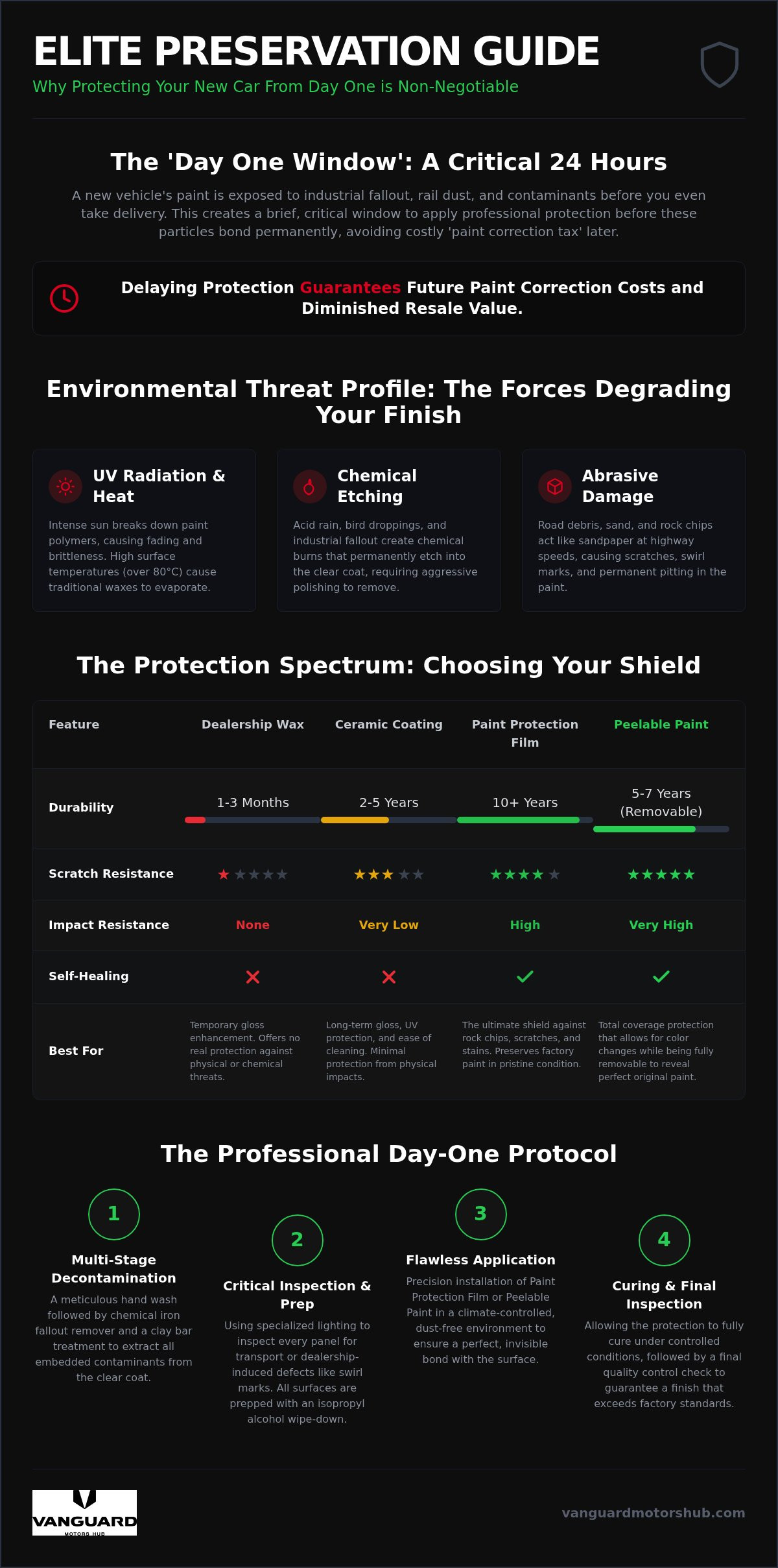
As of 2026, solar intensity levels have reached record highs, accelerating the breakdown of paint polymers at an alarming rate. UV radiation doesn’t just fade the pigment; it causes the clear coat to become brittle and lose its structural integrity. Dark-colored luxury vehicles are particularly vulnerable, acting as heat sinks that can reach surface temperatures exceeding 80°C. At these extremes, traditional waxes and organic sealants evaporate or liquefy within days. When choosing your shield, it’s vital to select materials capable of withstanding these thermal loads without structural failure.
Thermal shock adds another layer of complexity. Moving a vehicle from intense external heat into a climate-controlled garage causes rapid expansion and contraction of the paint layers. Over time, this cycle leads to micro-fractures in the finish. Simultaneously, industrial fallout from national manufacturing zones introduces acidic metallic particles. When moisture hits these contaminants, they create localized chemical reactions that etch deep into the clear coat. These are not simple stains; they’re chemical burns that require aggressive correction to remove.
Abrasive Contaminants and Sand
At highway speeds, fine sand and dust particulates transform into a high-velocity abrasive. This ‘Sandblasting Effect’ is most aggressive on the vehicle’s leading edges, such as the hood, front bumper, and side mirrors. Unlike a large rock that causes a visible chip, these micro-particulates cause micro-pitting. This process slowly erodes the gloss of the clear coat, leaving the surface feeling rough and looking dull. High-end protection strategies focus on increasing hydrophobicity and surface slickness. By reducing the friction coefficient, these shields allow abrasive dust to slide off the surface rather than digging into the paint.
Maintaining a pristine aesthetic requires more than just occasional cleaning. It demands a proactive defense against the unique environmental challenges your vehicle faces every day. If you’re ready to secure your vehicle’s future, speak with our technical experts about a tailored preservation strategy for your new investment.
The Protection Spectrum: Choosing Your Shield
Effective defense is never a one-size-fits-all solution. Protecting a new car from day one requires a nuanced understanding of how different materials interact with your vehicle’s surfaces. While a ceramic coating offers exceptional chemical resistance, it lacks the structural mass to stop physical impacts. Conversely, high-impact zones like the front bumper and hood demand a physical barrier capable of absorbing energy. The elite standard of preservation at Vanguard Motors Dubai involves layering these technologies to create a comprehensive shield that addresses every environmental threat identified in our earlier analysis.
Paint Protection Film (PPF): The Ultimate Barrier
Modern Paint Protection Film (PPF) is a sophisticated Thermoplastic Polyurethane (TPU) layer that acts as a sacrificial skin for your vehicle. Its most impressive feature is its self-healing capability. When exposed to heat from the sun or warm water, the top layer of the film flows back into its original state, effectively erasing swirl marks and light scratches automatically. This ensures your finish remains flawless without constant polishing. Owners typically choose between a ‘Bikini Cut’, which covers the front-facing high-impact zones, or a ‘Full Body’ application for total security. For a deeper look into this technology, read The Ultimate Shield: Why Paint Protection Film is the Standard for Excellence.
Ceramic Coatings and Peelable Paint
Ceramic coatings serve as a hydrophobic ‘easy-clean’ layer that bonds chemically to the paint or PPF. This creates a surface so slick that water, bird droppings, and industrial fallout struggle to adhere. While ceramic is an excellent choice for side panels and roofs, it works best when paired with more substantial defenses. Peelable paint has emerged as the preferred choice for owners seeking both bespoke aesthetics and OEM-level protection. Unlike traditional wraps, peelable paint is applied in a professional booth, providing a seamless finish that is significantly thicker than standard clear coats. It allows for complete color customization while remaining fully reversible, protecting the factory paint underneath from UV damage and minor abrasions.
The standard of excellence at Vanguard Motors Dubai involves a multi-layered approach. By combining PPF on high-impact areas with a ceramic coating across the entire exterior, or opting for a full peelable paint transformation, we create the Vanguard Premium Package. This holistic strategy ensures that every centimeter of your vehicle is prepared for the road. It isn’t just about aesthetics; it’s about engineering a durable barrier that maintains the vehicle’s integrity from the moment it leaves our facility. This level of meticulous care is what separates a standard detail from an elite preservation strategy.
The Professional Day-One Protocol: A Step-by-Step Guide
Execution is the bridge between premium materials and high-performance results. While we’ve identified the environmental threats and material options, the actual process of protecting a new car from day one requires a surgical level of precision on the shop floor. At Vanguard Motors Dubai, we don’t just apply a product; we execute a five-stage technical workflow designed to ensure the underlying paint is as perfect as the shield protecting it. This protocol eliminates the variables that lead to premature failure in standard detailing packages.
- Step 1: Multi-stage Chemical Decontamination. We strip away the iron filings, rail dust, and transit adhesives that accumulate during the vehicle’s journey from the factory.
- Step 2: Microscopic Paint Inspection. Technicians use high-lumen lighting and digital depth gauges to map the clear coat and identify any factory inconsistencies.
- Step 3: Precision Paint Correction. We remove the light marring and “factory swirls” introduced during dealership preparation to ensure the surface is optically clear.
- Step 4: Clean-Room Application. The chosen protection medium, such as PPF or peelable paint, is applied in a climate-controlled environment to prevent dust intrusion.
- Step 5: Controlled Curing Phase. The vehicle undergoes a final cure and quality control check to ensure every edge is secured and every layer is bonded.
Why Inspection is Non-Negotiable
A common mistake is assuming that factory-fresh paint is ready for a permanent shield. If you apply a long-term film over a defect, you’re effectively fossilizing that flaw into the finish. Professional detailers at Vanguard Motors Dubai look for “smart repairs” often performed at ports or dealerships to hide minor transit scuffs. These repairs often use low-quality fillers that must be identified and leveled before any protection is applied. This meticulous standard is a core pillar of Supercar Detailing: The 2026 Reference Guide.
Preparing the Surface for Bonding
True protection depends on the science of surface tension. Even after a thorough wash, residual paraffin waxes and shipping oils can remain on the clear coat, preventing PPF or ceramic coatings from bonding at a molecular level. We utilize specialized solvent wipes to strip the surface to its barest form. This ensures the protection layer becomes an extension of the vehicle’s bodywork rather than a temporary skin. If you’re ready to see this level of technical care applied to your vehicle, speak with our technical team about your day-one preservation strategy.
Maintaining the Shield: Life After Protection
Installing an elite shield is only the first half of the preservation equation. The success of protecting a new car from day one relies heavily on the maintenance protocols followed in the months and years that follow. While professional-grade Paint Protection Film (PPF) and ceramic coatings offer immense durability, they require specific care to function at their peak. A meticulous maintenance routine ensures that the self-healing properties of the film remain active and the hydrophobic surface of the coating continues to repel contaminants effectively.
The Golden Rules of Washing
Automatic car washes are the absolute enemy of high-end protection. The mechanical brushes and abrasive recycled water are designed for speed, not precision. They introduce micro-marring that can eventually dull even the toughest ceramic layers. Instead, we mandate a touchless or professional hand-wash approach. The “Two-Bucket Method” remains the industry standard. By using one bucket for pH-neutral soap and a second for rinsing the wash mitt, you prevent trapped grit from being dragged across the finish. This simple discipline preserves the optical clarity of your clear coat for the long term.
Environmental emergencies require immediate tactical responses. Bird droppings, tree sap, and industrial fallout are highly acidic and can etch into a coating if left to bake in the sun. We recommend keeping a dedicated detail spray and a clean microfiber towel in the vehicle for “spot cleaning” these hazards the moment they appear. This proactive habit prevents chemical burns from penetrating the protective barrier, keeping the underlying factory paint in showroom condition.
Professional Concierge Care
Consistency is the hallmark of elite automotive care. Maintaining the Vanguard Premium finish is simplified through our mobile detailing van services. This allows our technicians to perform expert maintenance at your location, using the exact chemical agents and techniques required for your specific protection package. We also recommend scheduling “top-up” inspections every twelve months. During these checks, we evaluate the health of the PPF and apply “boosters” to the ceramic layers to ensure the water-beading performance never falters. This annual health check is vital for spotting early signs of wear or edge lifting before they become significant issues. To ensure your vehicle receives the professional attention it deserves, secure your investment at Vanguard Motors and experience the pinnacle of automotive preservation.
Secure the Future of Your Automotive Investment
The ‘Day One Window’ represents a critical opportunity to lock in factory perfection before contaminants take hold. By choosing professional-grade shielding over subpar dealership packages, you ensure your vehicle remains a masterpiece of form and function. Protecting a new car from day one is more than a maintenance choice; it’s a strategic preservation of your asset’s value. Your journey from the showroom should be the start of a long-term legacy, not the beginning of environmental degradation.
Vanguard Motors specializes in the meticulous care required for luxury and supercars. Whether you require professional PPF installation, advanced peelable paint, or our comprehensive Vanguard Premium Package, our technical precision remains unmatched. We provide the elite defense your vehicle deserves so you can focus on the thrill of the drive. Take the first step toward total peace of mind and showroom longevity today.
Secure Your New Car’s Future with Vanguard Motors Hub
Frequently Asked Questions
Is it worth getting PPF on a brand new car?
Absolutely. Paint Protection Film (PPF) is the gold standard for maintaining a vehicle’s physical integrity. Unlike chemical coatings, PPF provides a thick, energy-absorbing layer that stops stone chips and road debris from reaching the paint. By protecting a new car from day one, you ensure the factory finish remains pristine under a self-healing barrier. This investment pays for itself by eliminating the need for future paint correction or expensive resprays.
Can I apply ceramic coating myself on a new car?
While consumer-grade kits exist, they lack the chemical complexity and longevity of professional applications. Professional ceramic coatings require a sterile environment and multi-stage decontamination to bond correctly. DIY attempts often result in high spots, hazing, or sealing in contaminants that were already on the surface. For a luxury vehicle, a professional application ensures a flawless finish and a much higher level of chemical resistance against industrial environmental fallout.
Does dealership paint protection actually work?
Most dealership packages rely on low-cost sealants applied quickly by high-volume staff. These products rarely offer more than a few months of protection and lack the durability of dedicated ceramic coatings or PPF. Additionally, dealerships often skip the critical decontamination and inspection steps required for a proper bond. Choosing a specialist like Vanguard Motors ensures you receive a high-performance shield rather than a temporary cosmetic filler that washes away after a few months.
How soon after buying a car should I get it protected?
You should seek protection within the first 24 hours of ownership. The “Day One Window” is vital because every kilometer driven increases the risk of rock chips and environmental etching. Ideally, your vehicle should be transported directly from the showroom to a professional facility. protecting a new car from day one prevents contaminants from bonding to the clear coat, ensuring the protection layer is applied to a truly perfect surface before damage occurs.
Will protecting my car from day one improve its resale value?
Yes, documented professional protection significantly bolsters resale value. When you go to sell, having a factory-perfect finish preserved under PPF or peelable paint proves the vehicle has been meticulously maintained. Buyers in the luxury and supercar market prioritize “original paint” status. By preventing swirl marks and UV damage from the start, you maintain the aesthetic appeal that commands a premium price in the secondary market when the time comes to upgrade.
What happens if I don’t protect my car’s paint in a high-heat climate?
Intense UV radiation and extreme temperatures cause rapid clear coat oxidation. Without a protective shield, the paint polymers break down, leading to color fading and eventual clear coat failure. In high-heat environments, the surface can also suffer from thermal shock when moving between temperature extremes. This leads to micro-fractures in the finish. Additionally, industrial fallout and acidic rain will etch into the unprotected surface much faster under intense heat and humidity.
Can I wash my car immediately after getting PPF or a coating?
You must wait at least seven days before performing a full wash. Both PPF adhesives and ceramic coatings require a curing period to bond fully with the surface. Exposing the vehicle to high-pressure water or harsh chemicals too early can interfere with this process. After the initial week, we recommend using the two-bucket method with pH-neutral soaps to maintain the integrity of the shield and preserve its hydrophobic properties for the long term.
Is peelable paint better than a traditional vinyl wrap for new cars?
Peelable paint is superior to vinyl wraps for both long-term protection and aesthetics. It is applied in a spray booth just like OEM paint, resulting in a seamless finish without the edges or seams found in vinyl. It is significantly thicker, providing better impact resistance against road debris. While vinyl is primarily for color change, peelable paint acts as a heavy-duty armor that remains fully reversible, making it the premier choice for bespoke customization.