
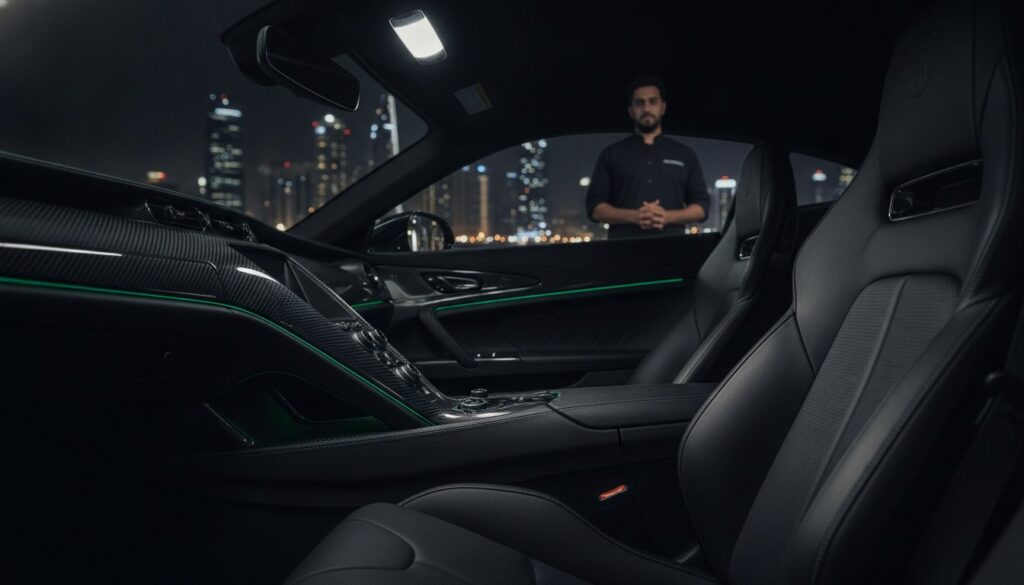
Your car’s interior isn’t just worn out; it’s starving for a molecular recalibration that no off-the-shelf “magic” cream can provide. We understand the frustration of watching the intense UAE sun strip the vibrancy from your cabin, leaving behind a dull, brittle shadow of what was once a masterpiece of automotive craft. You want to reclaim that elite “new car” atmosphere, but the fear of a patchy, plastic-like DIY disaster often keeps the keys in your pocket. Restoring faded car leather seats is not about masking the damage; it’s about a professional-grade transformation that respects the original engineering of the hide.
This guide promises to reveal the precise techniques and high-performance standards required to return your upholstery to its original factory brilliance. You’ll learn why true restoration requires chemical precision to ensure new pigments bond at a molecular level for a seamless, durable finish. We will walk through the professional prep work, OEM color matching, and the long-term protection strategies essential for maintaining a supple, factory-fresh interior in our demanding national climate. Get ready to move beyond temporary fixes and experience the definitive roadmap to interior excellence.
Key Takeaways
- Identify the scientific triggers of leather degradation, including UV-induced photo-degradation and plasticiser migration, to better protect your vehicle’s interior.
- Explore the technical precision required when restoring faded car leather seats to ensure a durable and supple result that mirrors OEM standards.
- Differentiate between high-register professional pigments and restrictive DIY kits that often lead to patchy finishes and clogged leather pores.
- Implement the essential “clean before condition” protocol to maintain the molecular bond of your restored leather and prevent future fading.
- Recognize the value of elite cosmetic repair in maintaining the aesthetic excellence and market value of high-performance luxury marques.
Why Car Leather Fades: The Science of Interior Degradation
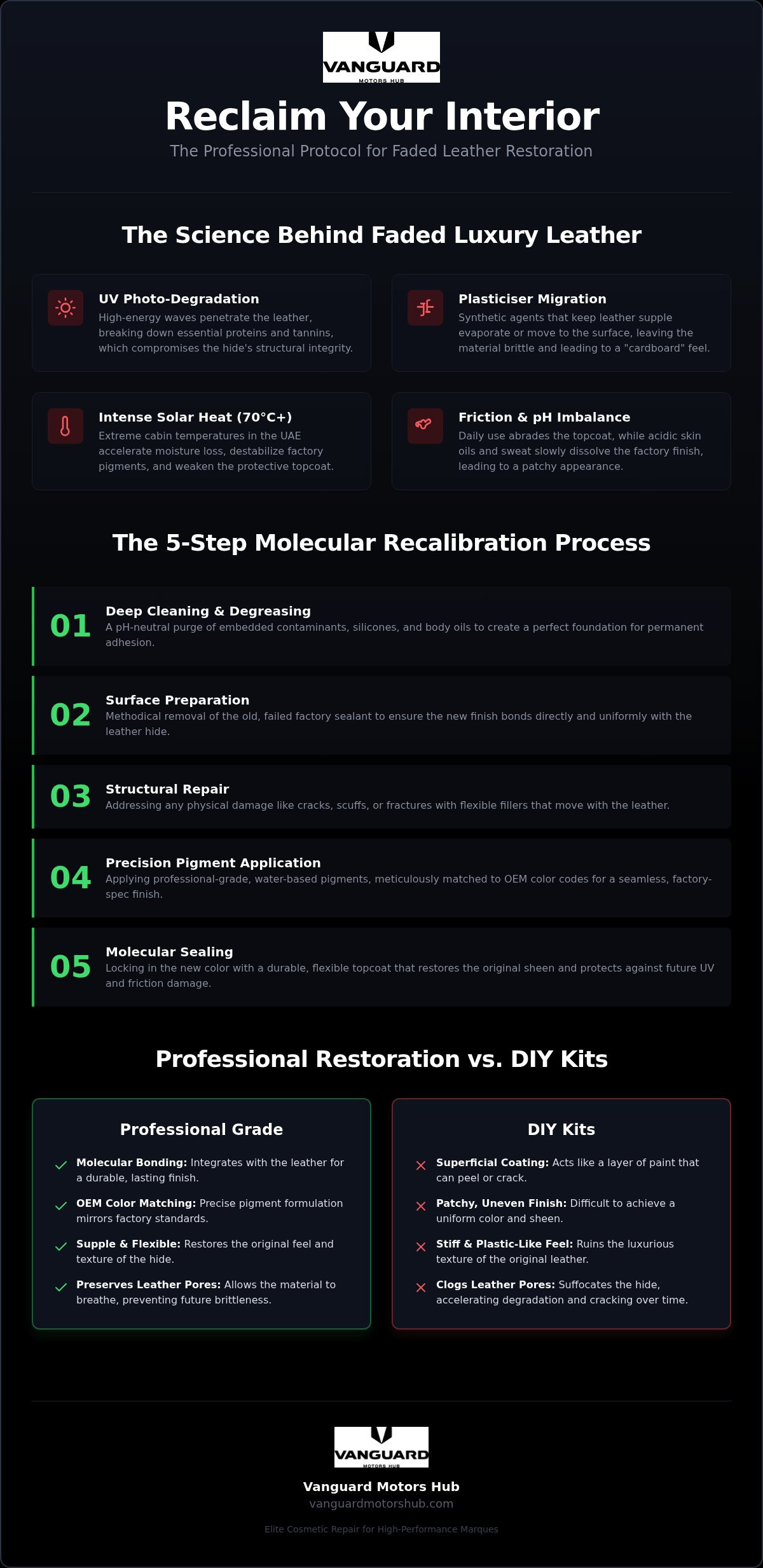
Leather in a high-performance cabin remains a complex bio-material even after the tanning process. In the UAE, this material is under constant siege. UV-induced photo-degradation is the primary culprit. These high-energy waves penetrate the surface, breaking down the tannins and proteins that provide structural integrity. The Science of Leather Degradation reveals that this process isn’t just cosmetic; it is a fundamental chemical change at a molecular level. When owners consider restoring faded car leather seats, they’re often fighting against “plasticiser migration.” This occurs when the synthetic agents added during manufacturing to keep the hide supple begin to evaporate or move toward the surface. This migration leaves the leather brittle, leading to the dreaded “cardboard” feel and eventual surface fractures.
The Impact of Intense Solar Radiation
The UAE sun provides a dual-threat of UV rays and infrared heat. Inside a parked vehicle in Dubai or Abu Dhabi, cabin temperatures can easily exceed 70°C within an hour. This extreme thermal load causes leather pores to expand aggressively, which accelerates moisture loss and destabilizes the factory pigments. As the heat rises, the bond between the leather fibers and the protective topcoat weakens. This is especially true for premium grades like Nappa or Semi-Aniline. While these hides offer an elite, buttery feel, they possess thinner protective layers to preserve their natural texture. This lack of heavy shielding makes them significantly more vulnerable to rapid fading than standard corrected-grain leathers found in entry-level vehicles.
Friction and pH Imbalance
Beyond the sun, daily use introduces mechanical wear that accelerates the breakdown of factory sealants. Microscopic dust and grit settle into seat bolsters, acting like fine-grit sandpaper every time you enter or exit the vehicle. This friction physically abrades the topcoat, exposing the porous hide beneath to further damage. Human interaction adds a chemical layer to this degradation. Sweat and skin oils are naturally acidic, which shifts the pH balance of the leather surface away from its neutral state. This imbalance slowly dissolves the aqueous finishes used by modern manufacturers, leading to a patchy appearance. Understanding these variables is the first step in restoring faded car leather seats to a standard that matches the original craftsmanship of a Ferrari or Lamborghini interior. Professional cosmetic repair at Vanguard Motors Dubai focuses on neutralizing these acidic residues before any new pigment is applied.
The Professional 5-Step Process for Restoring Faded Leather
Excellence in restoring faded car leather seats requires a clinical protocol that prioritizes substrate integrity over cosmetic coverage. We treat every seat as a technical surface that must be systematically deconstructed before it can be rebuilt. True restoration is an intensive five-step process: deep-tissue cleaning, surface stripping, structural repair, precision pigment application, and molecular sealing. This methodical approach ensures that the new finish isn’t just a superficial layer but an integrated part of the hide that can withstand the UAE’s environmental pressures. By focusing on the structural foundation, we guarantee a result that looks, feels, and performs like a factory-new interior.
Meticulous Cleaning and Degreasing
The restoration begins with an aggressive purge of embedded contaminants. We utilize pH-neutral aqueous cleaners that lift dirt without causing the leather fibers to swell or distort. A significant challenge in this phase is the removal of silicone-based dressings and body oils from previous years of use. Surface tension adjustment is the critical chemical process of modifying the leather’s surface energy to ensure that new pigments bond uniformly rather than bead on the surface. By clearing the grain at a microscopic level, we create the perfect foundation for permanent adhesion. For a professional assessment of your interior’s condition, you can connect with Vanguard Motors Dubai via WhatsApp to discuss your specific vehicle requirements.
Precision Color Matching and Application
Matching the unique palettes of high-performance marques like Ferrari, Lamborghini, or Bentley requires a sophisticated understanding of pigment chemistry. We avoid “off-the-shelf” dyes, opting instead for high-register pigments applied via HVLP airbrushing in multiple translucent layers. This technique builds depth and restores vibrant saturation without clogging the leather’s natural pores. This layering ensures the “hand-feel” remains soft and supple, avoiding the sticky, plastic-like texture common in amateur repairs. We finish by recreating the exact OEM sheen, whether it’s a matte Nappa luster or a soft satin glow, and applying a high-performance sealant. This final shield protects your restoring faded car leather seats project from the abrasive effects of dust and the chemical breakdown caused by human contact, ensuring the results mirror the original factory craftsmanship.
Professional Restoration vs. DIY Leather Kits
The marketplace is saturated with “all-in-one” kits promising factory results for a fraction of the professional cost. However, the technical reality of restoring faded car leather seats involves a level of chemical complexity that consumer products simply cannot replicate. DIY kits often rely on heavy, solvent-based binders and thick pigments designed to mask damage rather than integrate with the hide. This approach leads to “pore clogging,” where the leather’s natural ability to breathe is neutralized. The result is a surface that feels more like synthetic vinyl than elite automotive upholstery, losing the characteristic scent and suppleness that define high-end marques.
Professional restoration utilizes aqueous, high-register pigments that bond at a molecular level without suffocating the grain. These pigments are translucent and applied in micro-layers to preserve the original texture. While a DIY sealer might offer an initial shine, it lacks the cross-linking chemistry required to survive the 70°C cabin temperatures common in the UAE. Professional-grade topcoats are engineered to expand and contract with the leather, preventing the premature cracking and peeling that inevitably plague amateur attempts.
The Risk of Permanent Damage
A significant danger of amateur restoration is the lack of precision application tools. Applying pigment with a sponge or brush creates an uneven thickness that eventually fractures under the mechanical stress of daily use. We utilize HVLP (High Volume Low Pressure) systems to atomize pigments, ensuring a finish that is indistinguishable from the factory. Without this level of equipment, you risk permanent surface damage that is difficult and costly to reverse. Attempting a quick fix on a Nappa or semi-aniline interior often results in a sticky finish that attracts dust and grit, further accelerating the degradation of the leather fibers.
Cost vs. Value Architecture
The perceived savings of a DIY kit often vanish when you consider the impact on vehicle resale value. For owners of supercars and luxury SUVs, a patchy or “plasticized” interior is a major red flag for potential buyers. Stripping a failed DIY attempt is a labor-intensive process that can cost significantly more than a professional restoration performed correctly the first time. Choosing expert intervention is an investment in preserving the “Original Equipment” status of your vehicle. At Vanguard Motors Dubai, our Luxury Car Detailing services are designed to work in synergy with restoration, ensuring that every square inch of your cabin reflects the elite standards of a showroom-fresh vehicle.
Post-Restoration Care: Maintaining the Factory Finish
Completing the process of restoring faded car leather seats is a significant milestone, but the longevity of that factory finish depends on a disciplined maintenance protocol. The “Golden Rule” of leather care is simple: always clean before you condition. Applying a conditioner over a surface that hasn’t been thoroughly decontaminated simply traps abrasive dust and oils against the hide. This creates a grinding paste that prematurely wears down the new protective topcoat. For the high-performance interiors common in the UAE, we recommend a light cleaning every four weeks and a deep conditioning treatment every quarter to counteract the dehydrating effects of the local climate.
Selecting the right products is vital for preserving the supple feel of your restored interior. You should prioritize water-based conditioners over traditional oil-based “creams.” Modern automotive leather is finished with an aqueous topcoat that oil-based products cannot penetrate. Instead of hydrating the hide, oils sit on the surface, attracting grit and creating a greasy sheen that ruins the OEM matte look. Water-based solutions are engineered to permeate the molecular structure of the leather, maintaining its elasticity without compromising the bond of the restoration pigments. This technical choice ensures your seats remain soft and resilient rather than becoming slick and artificial.
The Power of Modern Leather Coatings
For the ultimate level of preservation, we recommend applying a ceramic-based leather coating immediately after restoration. These coatings create a hydrophobic barrier that prevents liquids and contaminants from soaking into the grain. This is particularly effective at preventing dye transfer from dark denim or leather belts onto lighter upholstery. A 9H interior coating acts as a sacrificial layer that absorbs and dissipates high-energy UV radiation before it can reach the underlying pigment. By creating this invisible shield, you significantly extend the intervals between necessary maintenance sessions and ensure the vibrancy of the color remains locked in.
Environmental Protection Strategies
While chemical protection is essential, physical defense remains your first line of resistance. High-quality window tinting and the consistent use of custom-fit sunshades can reduce interior temperatures by up to 20°C during peak daylight hours. We also advise “parking logic”: always seeking shaded bays or orienting the vehicle to minimize direct sun exposure on the dashboard and front bolsters. This holistic approach to vehicle care is what separates elite owners from the rest. Just as The Ultimate Shield: Why Paint Protection Film is the Standard for Excellence protects your exterior, these interior strategies ensure your restoring faded car leather seats project remains a long-term success. If you’re ready to secure your vehicle’s interior with a professional coating, you can book an interior protection consultation via WhatsApp today.
Vanguard Motors: Elite Interior Restoration and Customization
At Vanguard Motors Dubai, we view the cabin as the soul of the driving experience. Restoring faded car leather seats is not merely a service; it’s a meticulous restoration of the manufacturer’s original vision. We specialize in the complex requirements of high-performance marques, including Ferrari, Lamborghini, and Mercedes-Benz. Our technicians understand that a supercar interior requires a level of precision that standard upholstery shops simply cannot provide. We combine advanced chemical engineering with artisan craftsmanship to ensure every stitch and grain meets the highest standards of automotive excellence. Our goal is to return your vehicle to its factory-fresh state, ensuring the interior reflects the same power and prestige as the engine under the hood.
Bespoke Solutions for Discerning Owners
Our laboratory-grade color matching system allows us to recreate rare and vintage interior palettes with absolute accuracy. Whether you’re maintaining a classic aesthetic or integrating restoration with Brabus Body Kit Installations, our team ensures a cohesive visual identity across the entire vehicle. We utilize only the highest grade of automotive chemicals, specifically chosen for their durability in the intense UAE heat. This commitment to quality ensures that the transformation isn’t just beautiful on the day of delivery, but remains resilient for years to come. We don’t believe in universal fixes. Each project receives a tailored chemical profile based on the specific leather grade and existing condition of the hide.
Experience the Vanguard Standard
The Vanguard Premium Package represents our most holistic approach to vehicle preservation. By combining restoring faded car leather seats with elite exterior protection, we create a total-car shield that maintains your asset’s value and performance. There is a seamless transition from our interior cosmetic repair to our professional PPF application, providing a comprehensive solution for owners who demand nothing less than perfection. Our proactive and efficient workflow mirrors the pace of a high-end service center, ensuring your vehicle is returned to you in showroom condition with minimal downtime. We fuse technical skill with creative expression to deliver results that fuel excitement and command respect on the road.
Your journey toward a transformed interior begins with a technical consultation. Consult with our experts on WhatsApp for your leather restoration needs and discover the impact of professional precision.
Reclaim Your Vehicle’s Elite Interior Status
The journey from a sun-bleached cabin to a factory-fresh masterpiece requires more than just cosmetic masks; it demands a deep understanding of molecular bonding and technical precision. We’ve explored how the intense UAE climate accelerates leather degradation and why the professional 5-step restoration protocol is the only way to achieve a durable, OEM-standard finish. By choosing high-register pigments over restrictive DIY kits, you ensure your interior remains supple and breathable. This technical recalibration preserves the “new car” feel while providing a robust shield against future environmental stress.
Vanguard Motors Hub stands as a visionary leader in automotive transformation. As specialists in Brabus and Mansory kit conversions, we bring the same level of meticulous care to restoring faded car leather seats as we do to supercar detailing and protection. Our comprehensive national service coverage ensures that premium vehicle owners across the Emirates have access to elite craftsmanship and industry-specific expertise. It’s time to move beyond temporary fixes and invest in a transformation that commands respect and maintains long-term asset value.
Connect with Vanguard Motors on WhatsApp for a Bespoke Restoration Quote
Your vehicle is a reflection of your standards. Let’s return it to its peak aesthetic potential today.
Frequently Asked Questions
How long does a professional car leather restoration last?
A professional restoration typically lasts between three to five years, though this timeframe depends heavily on your maintenance routine and UV exposure levels. In the intense UAE climate, applying a ceramic-based interior coating can significantly extend this durability. Regular cleaning prevents abrasive grit from wearing down the new topcoat. This ensures your investment in restoring faded car leather seats remains vibrant and resilient against the daily rigors of high-performance driving.
Can very deep cracks or holes in leather seats be repaired?
Yes, we can successfully repair deep cracks and punctures using specialized flexible fillers and structural sub-patches. Our technicians utilize high-register compounds that mimic the natural elasticity of the hide. Once we apply the pigment, these repairs become virtually invisible to the naked eye. This process is a core component of our cosmetic repair suite, allowing us to salvage original upholstery that might otherwise require a full and costly replacement.
Is leather restoration better than replacing the entire seat cover?
Restoration is often superior because it preserves the original factory hide and ensures a perfect fit that aftermarket covers cannot match. Replacing covers can lead to inconsistencies in grain texture or “hand-feel,” especially in luxury marques. By restoring faded car leather seats, you maintain the vehicle’s “Original Equipment” status. This approach is not only more sustainable but also more effective at preserving the long-term resale value of your supercar.
How much does it cost to restore faded leather car seats?
The investment for restoration varies based on the vehicle’s interior size, the specific leather grade, and the extent of the degradation. Because every high-performance cabin has unique requirements, we provide bespoke quotes following a technical assessment. Factors like the presence of Nappa leather or the need for structural repairs will influence the final scope. Owners should contact us directly to receive an accurate estimate tailored to their specific automotive requirements.
Will the restored leather smell like new leather again?
You’ll notice a significant return of that characteristic “new car” aroma after the restoration process is complete. We achieve this by removing deep-seated bacteria and old, oxidized oils that cause stale odors. The fresh pigments and water-based conditioners we use carry a subtle, clean scent that mirrors the original factory environment. It’s a sensory transformation that completes the aesthetic rejuvenation of your cabin, making it feel truly showroom-fresh.
Can you change the color of the leather seats during restoration?
Absolutely, we can execute a complete color transformation as part of the restoration process. This is a popular choice for owners looking to customize their cabin or update a dated interior palette. We use high-performance airbrushing techniques to ensure the new color bonds perfectly while maintaining the leather’s natural texture. Whether you want a subtle shift or a bold new aesthetic, our color matching experts can realize your specific vision.
How soon can I drive my car after the leather has been restored?
You can typically drive your vehicle 24 hours after the final topcoat is applied, though full molecular bonding takes longer. We recommend avoiding heavy use or sliding across the bolsters for the first 48 to 72 hours. This waiting period allows the protective sealants to cure completely and reach their maximum hardness. Proper curing is essential for ensuring the restoration remains durable against the friction and heat encountered on UAE roads.
Does leather restoration affect the heated or cooled seat functions?
Professional restoration doesn’t interfere with heated or cooled seat functions when performed correctly. We apply pigments in thin, translucent layers using HVLP sprayers to ensure the leather’s natural pores remain open. This precision ensures that airflow for ventilated seats and heat transfer for heating elements remain fully operational. Unlike heavy-handed DIY kits that can clog these vital openings, our technical approach preserves the full functionality of your luxury cabin.