
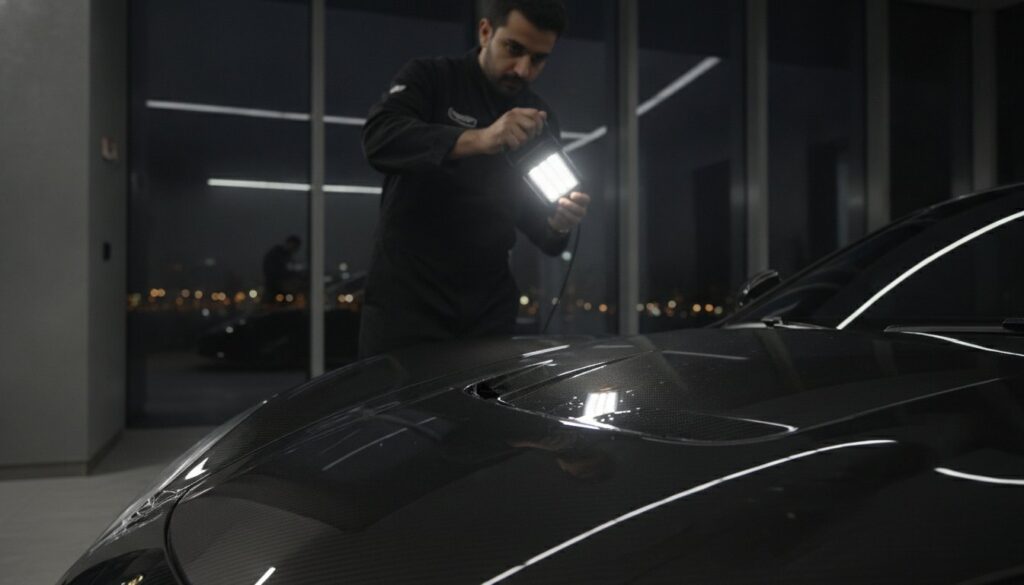
Precision is invisible; if you can see your paint protection film, the installation has already failed the elite standard. You didn’t invest in a high-performance vehicle to have its aesthetic compromised by sloppy workmanship or corner-cutting techniques. Identifying the early signs of a bad PPF installation is the only way to prevent permanent damage to your factory clear coat. It’s the difference between a seamless, self-healing shield and a frustrating eyesore that devalues your asset.
We understand that your car is more than transportation; it’s a statement of excellence and a significant investment. You deserve the peace of mind that comes with a flawless application that stands up to heat and sand. This 2026 Elite Quality Checklist reveals the critical red flags, from hidden razor marks to lifting edges, that separate a master-level finish from a dangerous amateur job. We’ll show you exactly what to look for to ensure your vehicle remains protected and pristine for years to come.
Key Takeaways
- Learn why a truly professional PPF application should be undetectable and how to distinguish between custom hand-cut finishes and standard pre-cut kits.
- Master the visual checklist to identify the critical signs of a bad PPF installation, including lifting edges, trapped debris, and permanent silvering.
- Discover the hidden structural dangers of sub-par work, such as irreversible razor marks on your factory paint and the risk of clear coat delamination.
- Understand how intense UV exposure and sand ingress can turn minor application flaws into significant paint damage over time in harsh environments.
- Evaluate the necessity of a comprehensive pre-install inspection and paint correction to ensure long-term durability and aesthetic perfection for your vehicle.
The Anatomy of a Flawless Install vs. Shop-Grade Failures
A professional installation of Paint Protection Film is more than a service; it’s a vanishing act. The “Invisible Shield” philosophy dictates that the film should enhance, not obscure, the vehicle’s factory lines. If you can easily spot where the film begins or ends, you’re already seeing the first signs of a bad PPF installation. True excellence lies in the details that most owners never notice. It’s about maintaining the integrity of the design while providing a layer of defense that remains hidden from view.
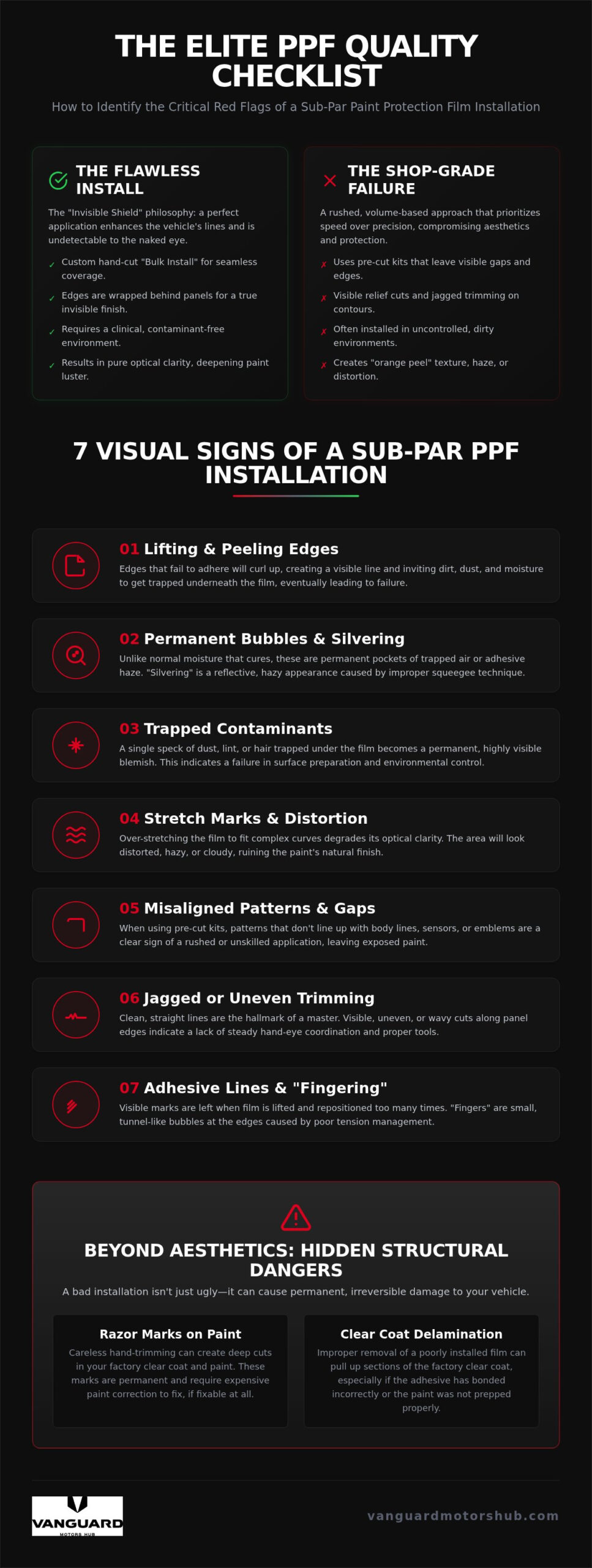
The industry often debates the merits of “Bulk Installs” versus “Pre-cut Kits.” High-end boutiques like Vanguard Motors often lean toward a bulk approach for complex curves. This involves using a larger sheet of film and hand-trimming it for a custom fit. Pre-cut kits use software templates that are safer for inexperienced installers but often leave exposed edges or visible gaps around sensors. A bulk install, when executed by a master, offers total coverage that looks like a second skin rather than a stuck-on sticker.
Achieving a mirror-like finish requires hours of surface decontamination before the film even touches the paint. Any microscopic speck of dust trapped underneath becomes a permanent blemish. Once applied, the first 48 hours are the most critical. This is the curing phase where the adhesive bonds to the clear coat. Any lifting or bubbling during this window usually indicates a failure in prep work or poor environmental control. Precision is non-negotiable during this stage.
The Goal: Optical Clarity and Edge Precision
High-quality film should deepen the paint’s luster rather than dulling it. A sub-par application often results in an “orange peel” texture that ruins the factory finish. Precision is also found in the edges. Edge wrapping involves tucking the film behind panels for a seamless look, whereas edge stopping leaves the film just short of the panel line. Visible relief cuts, those small triangular snips in the film, are dead giveaways of a rushed technician who couldn’t handle a complex contour.
Identifying the ‘Cheap Install’ Mindset
Volume-based shops prioritize speed over meticulous care. You’ll see this in mobile installs performed in driveways or open garages. These uncontrolled environments are magnets for contamination. Silvering is the result of trapped moisture or improper squeegee pressure that creates a hazy, reflective appearance at stretch points. Avoid shops that treat a supercar like a commodity. Elite protection requires a clinical environment and a patient, expert hand to ensure long-term durability.
The Visual Checklist: 7 Signs Your PPF Installation is Sub-Par
Inspecting your vehicle after a service requires a keen eye for technical detail. While some minor moisture bubbles are normal during the initial curing phase, the most obvious signs of a bad PPF installation appear as permanent defects that compromise both protection and style. Before you drive away, you should know how to choose a repair shop that understands the high stakes of elite automotive care. A sub-par application often reveals itself through several key indicators that suggest a lack of professional precision.
- Lifting and Peeling: Edges that fail to adhere properly will eventually curl; this invites dirt and moisture to settle underneath the film.
- Permanent Bubbles: Unlike temporary “gassing out” moisture, air bubbles or “silvering” indicate trapped air or improper squeegee technique.
- Trapped Contaminants: A single speck of dust, lint, or hair becomes a high-visibility blemish once the adhesive sets.
- Stretch Marks and Distortion: Overworked film loses its optical clarity; it appears distorted, cloudy, or hazy around aggressive curves.
- Misaligned Patterns: Patterns that don’t line up symmetrically across the vehicle’s centerline suggest a rushed or unskilled technician.
- Jagged Trimming: Visible, uneven cuts along the panel lines indicate a lack of steady hand-eye coordination.
- Adhesive Lines: Visible marks where the film was lifted and repositioned too many times during the install.
The ‘Fingering’ Effect and Edge Failure
“Fingers” are small, tunnel-like bubbles that creep in from the edges of a panel. They’re a clear indication of poor heat management or excessive tension during the application. If these aren’t addressed immediately, they become a “sand trap” for road debris. Even worse, a pressure washer can easily catch a lifted edge, stripping the film or even damaging the paint underneath. For owners seeking a total solution, the Vanguard Premium Package ensures every edge is meticulously tucked and sealed for long-term durability.
Seams, Gaps, and Poor Coverage
While some complex aerodynamic elements require seams, they should be nearly invisible to the untrained eye. A common way to check quality is the “Penny Test.” If the gap between the film and the panel edge is wider than the thickness of a penny, the coverage is insufficient. This lack of precision is especially critical on high-end modifications. A sloppy application can completely ruin the aggressive, sophisticated aesthetic of a Mansory kit or other bespoke conversions. If your current film looks less than perfect, you might want to consult with a master technician to discuss corrective options and restore your car’s elite finish.
Beyond Aesthetics: The Structural Risks of Bad Application
Aesthetics are often the primary concern for owners, but the structural integrity of your vehicle’s factory finish is what truly matters. Sub-par applications go deeper than surface-level bubbles; they can cause permanent, irreversible damage to the underlying paintwork. One of the most terrifying signs of a bad PPF installation is the presence of razor marks. These occur when a technician lacks the skill to use the “Score and Snap” technique. In this professional method, the blade only penetrates halfway through the film. This allows the installer to snap the remaining material without the metal ever touching the clear coat. If a blade touches your paint, the protective barrier has already become a liability.
Modern luxury vehicles are equipped with Advanced Driver Assistance Systems (ADAS). Sensors and cameras are frequently embedded in bumpers and mirrors. A technician who isn’t meticulous might trim the film directly over these sensors, causing signal interference or total system failure. This isn’t just a visual flaw; it’s a safety hazard. If your car’s parking sensors or collision avoidance systems begin acting up post-install, it’s one of the more technical signs of a bad PPF installation. Proper trimming around these components requires a level of precision that volume-focused shops often ignore.
The Permanent Damage of Razor Scoring
Razor scoring is often a hidden defect that remains invisible until the film is removed years later. You might discover deep gouges that have reached the metal, creating a breeding ground for rust. These score lines often hide in panel gaps where the film was trimmed. Relief cuts are intentional, strategic incisions made in high-tension areas like bumpers to allow the film to conform to complex curves without lifting. Without these precise cuts, the film will eventually pull back, exposing the paint to the very elements you sought to avoid.
Adhesion Failure and Chemical Staining
The chemistry behind the application is as vital as the film itself. Some shops use low-grade slip solutions or improper adhesive promoters to speed up the process. This often results in “tiger stripes,” which are visible streaks of distorted adhesive under the film. While many owners blame the film for yellowing, it’s frequently the result of trapped chemical residue or poor surface decontamination. Understanding the ultimate shield: why paint protection film is the standard for excellence helps owners appreciate the complex preparation required for a successful bond. Improper removal of low-grade adhesives can even lead to clear coat delamination, stripping the factory paint right off the panel.
The National Environmental Stress Test: Why Quality Matters in 2026
In regions defined by extreme climates, the environment acts as a relentless auditor of technical skill. A mediocre application might appear acceptable under the soft lights of a showroom, but the intense national sun and abrasive sand will quickly expose the signs of a bad PPF installation. Quality matters because the advanced film technology of 2026 is only as effective as the precision of its application. When the mercury rises, the margin for error disappears, and sub-par workmanship transforms from a minor annoyance into a significant financial risk.
UV degradation is a primary threat to inferior films. Installations that lack proper edge sealing or use low-grade adhesives fail rapidly under high UV indexes. Thermal expansion further complicates the issue. As vehicle panels heat up to 60°C or more, poorly tensioned film begins to warp or pull away from complex contours. While high-end films feature self-healing properties that utilize heat to repair minor swirls, this technology requires a perfectly stable foundation. If the underlying bond is weak, the same heat that should heal the film will instead accelerate its destruction.
Combating Sand and Dust Infiltration
Edge wrapping is the only acceptable standard for vehicles driven in sandy or dusty environments. A 1mm lifted edge is more than a visual flaw; it’s a functional failure that creates a “sand trap.” Micro-grit works its way under the film, where it becomes trapped and acts like sandpaper against your factory paint. This is why a sterile, clean-room environment is mandatory for every install. Any dust particles trapped during the initial application become entry points for further infiltration, eventually leading to large-scale adhesion failure that leaves your paint vulnerable to the elements.
Heat Resistance and Adhesive Stability
Low-grade films often turn brittle and yellow when subjected to consistent 40°C+ temperatures. Professional master installers utilize a specialized post-heating process to “lock” the film’s memory at the edges, which prevents future shrinkage or lifting. This step is often skipped by high-volume shops looking to increase turnover. If you’re concerned that your current protection isn’t up to the task, consulting with Vanguard Motors for climate-engineered protection is the best way to ensure your vehicle remains pristine. To secure your vehicle’s future against the harsh climate, speak with our elite technicians today about a professional audit of your current film.
The Vanguard Standard: Demanding Professional Precision
Excellence is never an accident; it’s the result of a clinical, calculated process. To avoid the signs of a bad PPF installation, your journey must begin with a rigorous pre-install inspection. At Vanguard Motors, we believe that you cannot protect what isn’t already perfect. This is why a multi-stage paint correction is mandatory before any film is applied. Skipping this step is a definitive red flag, as the film’s adhesive will highlight rather than hide existing paint defects. Whether your vehicle requires a precision-cut template or a fully custom hand-wrap depends on the complexity of its lines, but the goal remains a seamless, undetectable finish.
The “Vanguard Handover” is our final seal of quality. We don’t just hand you the keys and move to the next project. Instead, we perform a detailed walkthrough of every panel, edge, and tucked corner to ensure the result meets our elite standards. We also provide comprehensive post-care education. Learning how to properly wash and maintain your film is the only way to ensure it lasts for a decade. This proactive approach ensures your vehicle remains a masterpiece of form and function long after the initial application.
The Clean Room Requirement
A shop’s environment tells you everything you need to know about their technical standards. High-intensity lighting and medical-grade air filtration are essential to prevent the contamination issues we’ve outlined. When vetting an installer, ask to see their current projects, such as complex Brabus body kit installations. Finished photos on social media are easy to curate. Seeing a work-in-progress allows you to inspect the cleanliness of the workspace and the meticulous nature of the technicians’ movements first-hand.
Warranty and Long-Term Support
A true professional’s commitment doesn’t end when the car leaves the bay. A real manufacturer-backed warranty should cover yellowing, cracking, and adhesive failure, but the shop’s own support is equally vital. Any installer that won’t schedule a “check-up” appointment two weeks after the application is a significant red flag. This follow-up is necessary to inspect for any minor lifting or silvering as the film fully cures in the national climate. If you demand a flawless, invisible shield for your high-performance vehicle, protect your investment with Vanguard Motors today.
Elevate Your Standard of Protection
Your vehicle is a masterpiece of engineering that deserves a defense system of equal caliber. We’ve explored how identifying the signs of a bad PPF installation, from subtle silvering to catastrophic razor scoring, is vital for preserving both aesthetics and resale value. True protection is defined by what you don’t see; tucked edges, optical clarity, and a bond that survives the harshest national heat. It’s a technical discipline where there is no room for compromise.
As specialists in luxury and supercar protection, Vanguard Motors utilizes Red Dot standard quality control and climate-tested film technology to ensure your investment remains flawless. Don’t leave your paintwork to chance or allow sub-par craftsmanship to devalue your asset. Our master technicians provide the meticulous care required to achieve a factory-plus finish that stands the test of time and terrain.
Book your elite PPF inspection at Vanguard Motors today. Let’s ensure your vehicle’s first line of defense is as impressive as the machine it protects.
Frequently Asked Questions
Can air bubbles in PPF go away on their own?
Small moisture bubbles, often called water blisters, typically evaporate through the film’s pores within two to three weeks as the adhesive cures. However, air bubbles or pockets containing dust particles will never disappear on their own. These are permanent defects that indicate a failure in the application process or poor environment control. If bubbles remain after 21 days, they are likely trapped air or contaminants rather than harmless moisture.
How can I tell if an installer cut my car’s paint?
Inspect the panel gaps and edges using a high-intensity detailing light to look for fine, straight score lines in the clear coat. These razor marks are often hidden under the film’s edge and may only become visible if dirt settles into the groove or when the film is eventually removed. Professional master installers use a “score and snap” technique to ensure the metal blade never makes contact with your vehicle’s factory finish.
Is it normal to see seams on a professional PPF job?
While a seamless “invisible” finish is the elite standard, certain complex aerodynamic components or oversized panels may require a strategic seam. These should be placed discretely along natural body lines to remain nearly undetectable to the untrained eye. Excessive, overlapping, or poorly aligned seams are common signs of a bad PPF installation, as they suggest the technician prioritized speed over a high-precision, custom-wrapped finish.
What should I do if my PPF edges start lifting?
Contact your installer immediately to have the edge trimmed or resealed before dirt and sand begin to collect underneath. You must avoid using a pressure washer near the affected area, as the high-pressure stream can easily catch the lifted edge and strip the film or damage the paint. Prompt attention prevents “sand traps” from forming, which can lead to permanent scratching of the clear coat beneath the film.
How long does it take for PPF to fully cure in high heat?
Initial bonding occurs quickly in temperatures above 40°C, but the film requires seven to fourteen days to cure completely and reach its full protective strength. During this window, the moisture used during application is still evaporating through the film’s surface. It’s essential to keep the vehicle out of automated car washes and avoid high-pressure cleaning during this period to ensure the adhesive bond remains undisturbed and secure.
Does a bad PPF installation ruin the car’s resale value?
A botched job is one of the most obvious signs of a bad PPF installation that can actually decrease your vehicle’s market value by hiding or causing permanent paint damage. Prospective buyers of luxury and supercars perform rigorous inspections; they view lifting edges or razor marks as liabilities rather than protection. A flawless, professionally applied shield preserves the factory finish, potentially maintaining the vehicle’s resale value by up to 15%.
Why does my PPF look cloudy or have a ‘silver’ appearance?
This phenomenon, known as “silvering,” is usually caused by the installer overstretching the film during application or using improper squeegee pressure. It creates microscopic pockets of trapped air or tension marks that ruin the film’s optical clarity and create a hazy, reflective look. Once silvering occurs, it cannot be fixed through curing or heating; the affected panel must usually be stripped and re-applied by a more skilled technician.
Can I wash my car immediately after a PPF installation?
You should wait at least seven full days before washing your vehicle to allow the adhesive to set properly. Introducing soaps, high-pressure water, or mechanical friction too early can lift the edges and prevent the film from bonding securely to the paintwork. When you do perform the first wash, use a pH-neutral shampoo and a soft microfiber mitt to maintain the film’s self-healing top coat and ensure long-term durability.