
What if the very ritual meant to preserve your vehicle’s brilliance is actually the catalyst for its aesthetic decline? It is a sharp, painful irony to invest in a professional wash only to discover fresh, spider-web scratches dancing across your hood. Mastering elite swirl mark prevention tips is the only way to escape this cycle of frustration and the constant anxiety of ruining expensive factory paint or bespoke custom wraps.
We believe that meticulous care shouldn’t be a gamble. This professional guide delivers the engineered solutions and advanced techniques used by top-tier detailers to keep your finish in showroom condition. You will learn how to identify the specific tools that prevent friction damage and gain access to a definitive checklist for safe, zero-contact washing. We also explore why proactive investments, such as self-healing Paint Protection Film (PPF) or utilizing a specialized Mobile Detailing Van for controlled environments, are the only ways to ensure long-term, high-octane results. From understanding 2026 microfiber standards to identifying ceramic-infused protection, it is time to elevate your maintenance to a professional level of precision.
Key Takeaways
- Understand the anatomy of clear coat failure and how microscopic scratches refract light to create the dreaded spider-web effect.
- Implement the professional five step checklist for zero-contact quality, integrating essential swirl mark prevention tips like the two-bucket system.
- Upgrade your maintenance arsenal with 1200+ GSM microfiber towels while retiring damaging, old-school tools like the chamois.
- Manage environmental variables by controlling surface temperatures and static charges to prevent chemical spotting during the wash process.
- Explore engineered solutions like self-healing Paint Protection Film (PPF) to provide a permanent, sacrificial barrier for your factory paint.
The Anatomy of a Swirl: Why Traditional Washing Fails
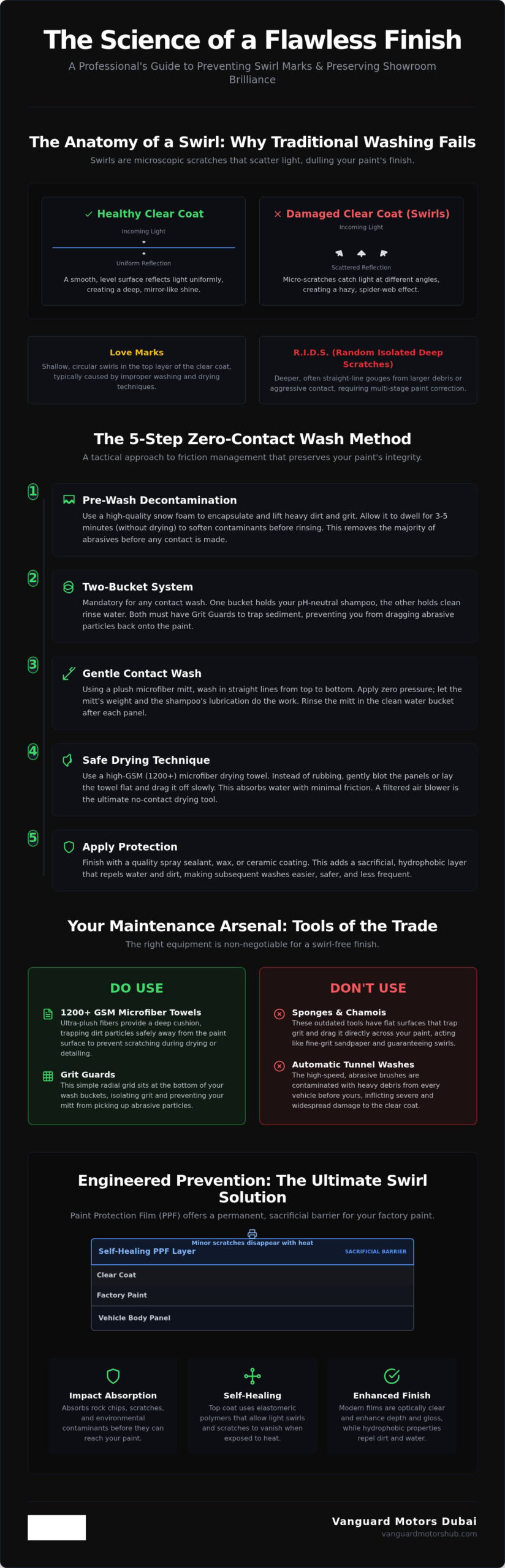
Swirl marks are not a cosmetic choice; they are microscopic failures in maintenance logic. These imperfections are essentially shallow scratches etched into your vehicle’s clear coat. When light hits these jagged valleys, it scatters in every direction, creating the hazy, dull appearance that plagues even the most expensive supercars. Understanding the vulnerability of the clear coat is the first step in mastering swirl mark prevention tips. This thin, protective layer is surprisingly delicate, often measuring less than the thickness of a post-it note. It’s the only thing standing between environmental contaminants and your factory paint, yet it’s compromised with startling ease.
The primary catalyst for this damage is cross-contamination during the contact phase. When you use a sponge or mitt that has already trapped grit from the lower rocker panels, you’re effectively sanding your paint. We categorize this damage into two tiers to help owners assess the severity of their finish:
- Love Marks: Shallow, circular swirls usually caused by improper washing or drying techniques. These are generally found in the top layer of the clear coat.
- RIDS (Random Isolated Deep Scratches): Deeper gouges that often run in straight lines. These are usually caused by larger debris or aggressive contact and often require multi-stage paint correction to remove.
The Physics of Friction and Paint
Dirt particles are jagged, crystalline structures. Under the pressure of a hand or an automated brush, these particles act as industrial abrasives. Without sufficient lubrication to encapsulate and lift the debris, surface-to-surface contact is inevitable. This is why “automatic” tunnel washes are the primary enemy of a pristine finish. Their high-speed brushes retain the grit from every vehicle that passed through before you, hammering it into your delicate clear coat at high velocity. Professional luxury car detailing prioritizes chemical lubrication over physical force to maintain surface integrity.
Light Refraction and the ‘Spider-Web’ Effect
Swirls often remain invisible in the shade, only revealing their presence under direct sunlight or high-output LED inspection lamps. This “spider-web” effect is a result of light reflecting off the edges of the scratches. Distinguishing these from holographic marring is vital; while swirls are random, holograms are usually the result of poor machine polishing techniques. True restoration requires leveling the clear coat, effectively removing the peaks and valleys to create a perfectly flat, mirror-like surface that allows light to pass through and reflect with absolute clarity.
The Professional Detailing Checklist: 5 Steps to Zero-Contact Quality
Preserving a flawless finish requires more than just water and soap; it demands a tactical approach to friction management. The “Zero-Contact” philosophy aims to remove as much debris as possible before a wash mitt ever touches the surface. By following these swirl mark prevention tips, you transform a risky chore into a precise preservation ritual. The goal is simple. Minimize mechanical abrasion at every stage. Every movement across the paint must be calculated and lubricated to ensure the integrity of the clear coat remains uncompromised.
Advanced Pre-Wash Techniques
The pre-wash is your first line of defense. Utilizing a high-quality snow foam allows surfactants to encapsulate dirt and lift it away from the clear coat. Dwell time is critical. Allow the foam to sit for three to five minutes without drying; this softens traffic film and road grit. When rinsing, keep your pressure washer at a safe distance to avoid forcing particles into the paint. This chemical-first approach ensures that when you finally make contact, the surface is already significantly cleaner, reducing the risk of dragging contaminants across the panels.
Mastering the Two-Bucket Method
When contact is unavoidable, the two-bucket system is mandatory. One bucket contains your pH-neutral shampoo, while the second is filled with pure water for rinsing your mitt. Both must be equipped with Grit Guards to trap sediment at the bottom. This prevents you from re-introducing abrasive particles to the paint. Always use a “no-pressure” rule. Let the weight of the microfiber mitt do the work. If you find this level of precision daunting, our mobile detailing van provides a controlled, professional environment for this meticulous level of care.
Beyond the buckets, follow a strict top-down logic. Start with the roof and glass, moving to the hood and trunk, and finishing with the lower rocker panels. This ensures that the dirtiest parts of the vehicle are handled last, preventing the upward migration of heavy grit. Before the final rinse, consider a chemical iron remover to dissolve metallic fallout that standard soaps cannot touch. Finally, conclude with an air blower or a 1200+ GSM microfiber towel. Traditional chamois cloths are obsolete; they trap dirt and drag it across the surface, undoing your hard work in seconds. Modern drying requires either air or ultra-plush fibers to maintain a mirror-like finish.
Essential Tools for Swirl-Free Maintenance
Superior results are impossible without engineered hardware. While technique provides the foundation, the tools you choose dictate whether your finish remains flawless or suffers from cumulative marring. Implementing these swirl mark prevention tips requires a shift from consumer-grade equipment to professional-tier instruments. The traditional chamois is a relic that belongs in the past. Its flat, non-porous surface lacks the capillary action of modern fibers, meaning any trapped grit is dragged directly across the paint. Modern detailing demands tools that encapsulate debris rather than pushing it.
Technical experts now distinguish between synthetic and natural lambswool wash mitts based on the specific paint type. Natural lambswool offers unparalleled lubrication and can hold massive amounts of soapy water, yet it requires intensive cleaning after every use. High-quality synthetic mitts are often preferred for their durability and consistent fiber structure. Regardless of the material, the goal remains the same: use a tool with a deep pile that pulls contaminants away from the clear coat. Furthermore, incorporating a deionized water filtration system is a game-changer. By removing minerals like calcium and magnesium, you eliminate the risk of hard water spotting, which often leads to aggressive, scratch-inducing scrubbing.
High-GSM Microfiber Selection
In 2026, 1200+ GSM (Grams per Square Meter) is the absolute benchmark for drying towels. These ultra-plush fibers provide a massive surface area to absorb water without requiring physical pressure. Always opt for “edgeless” designs. Stitched borders are often made from harder polyesters that can cause fine scratches on soft clear coats. Maintenance is equally vital; never use fabric softeners or high heat when washing your towels. Softeners coat the fibers in a waxy residue that kills absorbency and leads to streaking. We recommend color-coding your arsenal: one color for wheels and exhaust, another for glass, and a dedicated set for the most sensitive paint panels.
Touchless Drying Solutions
The safest way to dry a vehicle is to never touch it at all. High-velocity, heated air blowers are the gold standard for super car detailing. These machines blast water out of intricate grilles, lug nut holes, and mirror housings where towels cannot reach. This prevents “run-off” streaks that often appear minutes after you’ve finished drying. Using compressed air or dedicated blowers ensures that you aren’t dragging a towel over areas that might still harbor hidden grit. It’s an efficient, surgical approach that guarantees a swirl-free finish while saving significant time during the maintenance cycle.
Environmental Mitigation: Protecting Paint in High-Performance Conditions
Excellence in automotive preservation is as much about environmental control as it is about chemical selection. While many owners focus solely on their wash technique, the ambient conditions frequently dictate the outcome. Ignoring surface temperature or airborne particulates can render even the best swirl mark prevention tips ineffective. High-performance finishes require a stable environment where variables like heat and dust are neutralized before the first drop of water hits the panel.
Heat-Induced Paint Vulnerability
Washing a vehicle under direct sunlight or while the engine is hot is a recipe for disaster. Extreme heat causes the clear coat to soften slightly, increasing its vulnerability to physical marring. High temperatures also lead to rapid chemical evaporation. When soap dries on a hot surface, it can cause “soap etching,” leaving behind mineral deposits and chemical stains that often require aggressive polishing to remove. Optimal maintenance should occur in the early morning or within climate-controlled bays where the surface remains cool to the touch.
Mitigating Airborne Contaminants
In dry or arid environments, static charge turns your vehicle into a magnet for fine dust. This creates a “sandpaper effect” during the contact wash; if you drag a mitt over a layer of dry dust, you’re essentially scouring the clear coat. For light dust removal between deep cleans, specialized rinseless washes with high lubricity are essential. This level of environmental awareness is a cornerstone of Supercar Detailing, where every variable is managed to prevent microscopic damage.
The most effective way to eliminate environmental risk is through a controlled workshop environment. For owners who cannot transport their vehicles to a facility, our specialized mobile detailing van brings a professional, swirl-free workspace directly to your location. This mobile solution ensures your vehicle receives meticulous care without exposure to harsh outdoor elements. By prioritizing environmental mitigation, you ensure your investment remains in showroom condition regardless of the external climate.
Engineered Prevention: Why PPF is the Ultimate Swirl Solution
While meticulous washing techniques significantly reduce the risk of marring, engineered barriers offer the only absolute guarantee against clear coat degradation. Paint Protection Film (PPF) represents the pinnacle of automotive preservation. It shifts the focus from managing friction to eliminating its consequences entirely. By installing a high-grade thermoplastic urethane layer, you create a sacrificial shield that absorbs the impact of debris and the friction of maintenance. It is the most robust of all swirl mark prevention tips because it removes the factory paint from the equation.
The true revolution lies in self-healing technology. Modern films are engineered with elastomeric polymers that possess a “memory” of their original, flat state. When surface swirls or light scratches occur on the film, applying heat from the sun or warm water triggers a reaction that allows the material to flow back into its uniform shape. This effectively erases the damage. You no longer have to fear the occasional wash day error; the film corrects itself, maintaining a mirror-like finish without the need for abrasive polishing. Additionally, 2026-standard films are often ceramic-infused, providing hydrophobic properties that make the wash process 50% faster by preventing dirt from bonding to the surface.
PPF vs. Ceramic Coating for Swirl Prevention
It is vital to distinguish between chemical and physical protection. A ceramic coating is an excellent chemical shield that provides gloss and UV protection, but it is only a few microns thick. It cannot stop physical abrasion. In contrast, professional-grade PPF is typically 8 to 10 mils thick, providing a substantial physical cushion. While a coating helps with ease of cleaning, only PPF offers the structural integrity needed to resist RIDS and heavy swirling. For those seeking the gold standard, The Ultimate Shield: Why PPF is the Standard for Excellence explains how this technology has become non-negotiable for high-value assets.
The Long-Term ROI of Professional Protection
Investing in engineered protection delivers a significant return through the elimination of annual paint correction costs. Traditional maintenance often requires periodic machine polishing to remove the inevitable “love marks” that accumulate over time. Each polishing session thins your clear coat, eventually leading to permanent failure. PPF preserves the full thickness of your factory paint, ensuring the vehicle’s integrity remains documented and intact. This preservation of the original finish is a primary driver of resale value in the supercar market. To secure your vehicle’s future, discover the Vanguard Premium Package for complete automotive preservation and experience the peace of mind that comes with invisible, high-performance protection.
Mastering the Future of Flawless Finishes
Preserving a showroom finish in 2026 requires a transition from basic cleaning to engineered preservation. You now understand that a mirror-like surface is built on zero-contact washing logic and the deployment of high-GSM microfiber technology. While mastering these swirl mark prevention tips significantly reduces clear coat damage, the ultimate security lies in physical barriers. Self-healing Paint Protection Film (PPF) doesn’t just protect; it restores itself, ensuring your vehicle remains a pristine asset regardless of the environment or maintenance cycle.
Vanguard Motor Hub stands as the definitive authority in meticulous automotive preservation. As leading national experts in self-healing PPF technology and specialists in Brabus and Mansory bespoke conversions, we understand the nuances of high-performance aesthetics. Our team provides meticulous luxury detailing for elite automotive collections, ensuring every curve reflects absolute perfection. It’s time to stop reacting to paint damage and start preventing it with professional precision. Your vehicle deserves a standard of care that matches its engineering.
Secure Your Vehicle’s Future with Vanguard Motors Hub
Frequently Asked Questions
Do ceramic coatings prevent swirl marks entirely?
No, ceramic coatings are not a physical barrier against mechanical abrasion. While they provide exceptional UV protection and chemical resistance, a coating is only a few microns thick. It cannot stop the friction damage caused by improper washing or grit. For genuine impact resistance and absolute protection, you must utilize Paint Protection Film (PPF), which offers the physical thickness required to absorb and neutralize surface contact.
Can I use a pressure washer to clean my supercar safely?
You can safely use a pressure washer if you follow professional protocols. Maintain a distance of at least 30 to 45 centimeters from the panels and use a wide fan nozzle rather than a concentrated jet. This tool is essential for an effective pre-wash, as it removes heavy grit before you make physical contact. It’s a cornerstone of modern swirl mark prevention tips for high-performance finishes.
How often should I wash my car to prevent swirl build-up?
We recommend a meticulous wash every seven to ten days to prevent the accumulation of abrasive road film. Frequent, gentle cleaning is far safer than waiting for heavy dirt to build up, which often requires more aggressive agitation to remove. Regular maintenance ensures that contaminants don’t have the opportunity to bond deeply with the clear coat, making the “Zero-Contact” philosophy much easier to execute successfully.
What is the best type of wash mitt for preventing scratches?
The gold standard for elite detailing is a high-pile microfiber mitt or a natural lambswool mitt. These materials are engineered to encapsulate dirt particles within their long fibers, pulling the grit away from the paint surface rather than dragging it across the clear coat. Always ensure your mitt is thoroughly rinsed in your dedicated rinse bucket after every pass to maintain its safety and effectiveness.
Are automatic ‘touchless’ car washes safe for luxury paint?
Touchless washes are safer than traditional brush systems, but they aren’t without risk. These systems rely on high-alkaline chemicals and aggressive surfactants to compensate for the lack of physical contact. These harsh chemicals can strip your waxes, sealants, or even degrade ceramic coatings over time. For a bespoke vehicle, a hand wash using the two-bucket method remains the only way to guarantee a swirl-free result.
How does self-healing PPF actually fix swirl marks?
Self-healing film utilizes advanced elastomeric polymers that possess a “memory” of their original state. When the surface is marred by light swirls or scratches, the application of heat from the sun or warm water causes these polymers to flow back into their uniform, flat configuration. This process effectively erases the damage without the need for abrasive polishing, keeping the film looking brand new for years.
Is it possible to remove swirl marks without professional polishing?
It is not possible to permanently remove swirls without machine polishing. Swirls are physical defects etched into the clear coat, and they require the surrounding paint to be leveled to the depth of the scratch. While some “glaze” products can temporarily fill these gaps to hide the damage, the imperfections will reappear as soon as the fillers wash away. True restoration requires a professional correction process.
Why do swirl marks appear more prominently on black cars?
Black paint absorbs the majority of the light spectrum, which creates a high-contrast background for surface imperfections. When light hits the jagged edges of a swirl mark, it scatters and reflects back as a bright white line. This high contrast makes the “spider-web” effect much more visible on dark, non-metallic colors than on silver or white finishes, where the light scattering is naturally camouflaged.