
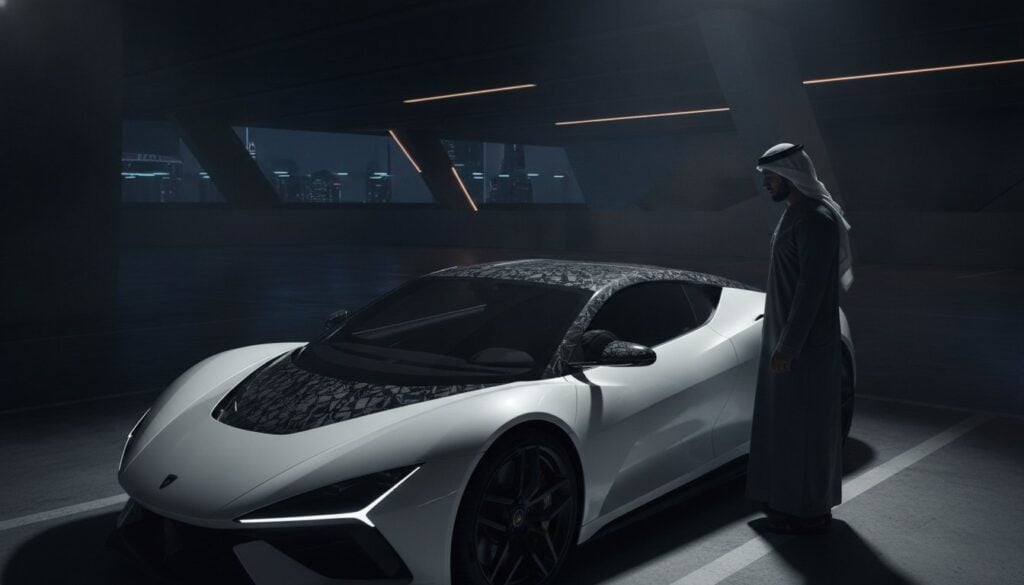
A car roof wrap is no longer just a simple color change; it’s a precision architectural tool used to redefine your vehicle’s silhouette. When exploring modern car roof wrap designs, you’re looking for more than just a new shade; you’re seeking a way to lower the visual profile and enhance the car’s natural stance. You’ve likely admired the aggressive look of a high-end supercar but hesitated to modify your own for fear of a tacky finish or the risk of vinyl peeling in the extreme national heat. It’s a common dilemma for owners who demand elite quality and refuse to settle for anything less than a factory-standard appearance.
By selecting the right materials, you can achieve a sophisticated contrast that mimics a premium panoramic glass roof while providing essential UV protection for your original paintwork. This guide identifies the elite textures and high-performance finishes set to dominate the 2026 automotive scene. We’ll explore how precision-engineered materials like forged carbon and deep satin films can transform your car’s aesthetic through sophisticated contrast. From matching the perfect finish to your existing paint to ensuring a durable, heat-resistant bond, we provide the technical expertise you need to elevate your vehicle’s silhouette with confidence.
Key Takeaways
- Understand how architectural wrapping techniques can visually lower your car’s profile and create a sophisticated floating roof silhouette.
- Explore the leading 2026 car roof wrap designs, featuring organic forged carbon patterns and minimalist satin finishes that emphasize natural body lines.
- Learn to choose between high-gloss finishes for a luxury panoramic look and matte textures for an aggressive, performance-oriented aesthetic.
- Discover the strategic design principles used to streamline bulky SUVs or highlight the aerodynamic features of high-end supercars.
- Gain insight into the professional installation standards, including edge-tucking and paint correction, required for a seamless and durable result.
The Architectural Impact of Car Roof Wrap Designs
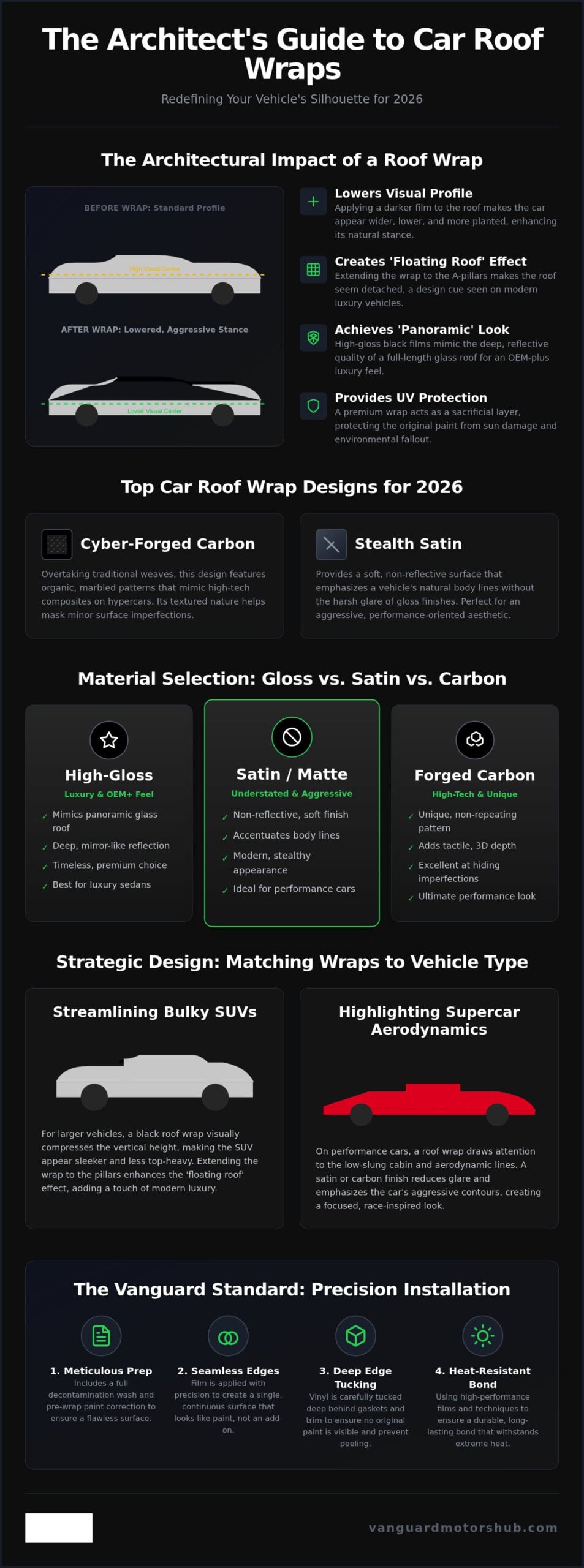
A vehicle’s silhouette isn’t fixed by the factory. Advanced car roof wrap designs act as a precision tool to manipulate proportions and enhance a car’s stance. By applying a darker film to the highest surface of the car, you effectively lower its visual center of gravity. This makes the vehicle appear wider and more planted. Since the history of vehicle wraps began, the industry has evolved from simple color changes to complex architectural enhancements that redefine how we perceive automotive volume.
High-contrast pairings are the foundation of modern aesthetics. Pairing a pearl white or silver body with a deep black roof creates a striking visual break. When you extend this wrap to the pillars, you achieve the ‘Floating Roof’ effect. This technique makes the roof appear detached from the primary body, a design cue often seen on modern luxury SUVs and performance hatchbacks. Beyond the style, these wraps serve a vital protective function. The roof is the most sun-exposed panel; a premium wrap from Vanguard Motors provides a sacrificial layer that protects the original paint from UV degradation and environmental fallout.
Defining the ‘Panoramic’ Look
High-gloss black remains the gold standard for luxury sedans. These finishes are designed to mimic the deep, reflective quality of a full-length glass roof. Achieving an ‘OEM-plus’ look requires meticulous precision. Professionals focus on seamless edges and deep ‘tucking’ to ensure no original paint peeks through. When executed correctly, the transition between the windshield and the roof becomes nearly invisible. This creates a sleek, continuous surface that elevates the car’s premium feel without looking aftermarket.
Beyond Color: The Rise of Textured Designs
Modern enthusiasts are moving past simple solids toward multidimensional surfaces. Satin and brushed metallic effects offer a sophisticated alternative to high-gloss, emphasizing the car’s natural lines without the glare. We’re seeing a surge in 3D textures that add tactile depth to the vehicle’s top surface. Architectural wrapping is the strategic use of vinyl to alter vehicle proportions. These designs allow for a ‘stealth’ upgrade that rewards close inspection while maintaining an understated profile from a distance. Whether it’s a subtle brushed effect or a bold satin finish, these textures provide a level of customization that paint alone cannot easily achieve.
Top Car Roof Wrap Designs for 2026
The aesthetic landscape for 2026 favors understated elegance over aggressive graphics. While older trends relied on loud patterns like digital camo or national flags, modern car roof wrap designs focus on material depth and structural integration. We’re seeing a massive move toward Cyber-Forged Carbon. This isn’t your standard 2×2 twill weave. It features organic, marbled patterns that mimic the high-tech composite materials found on modern hypercars.
Another dominant trend is Stealth Satin. These finishes provide a soft, non-reflective surface that emphasizes a vehicle’s natural character lines without the harsh glare of traditional gloss. For those seeking a truly custom silhouette, Two-Tone Precision is key. This involves extending the roof wrap down the A-pillars and integrating the color into the hood or trunk lines. For a touch of mystery, Color-Flip Accents offer subtle iridescent finishes. These shifts only reveal themselves under direct sunlight, providing a hidden layer of detail that rewards the discerning observer.
The Forged Carbon Revolution
Forged carbon has officially overtaken traditional weaves as the preferred choice for high-performance looks. The appeal lies in its unique, non-repeating pattern. It offers a sophisticated, technical look that aligns perfectly with modern luxury aesthetics. Beyond the visual appeal, the textured nature of these films is excellent at masking minor surface imperfections that might be visible under a flat gloss film. To ensure your entire vehicle matches this elite standard, consider pairing a new roof with carbon fiber car parts repair to restore structural and aesthetic harmony to your existing components. Understanding the science of vinyl wrap materials reveals why these multi-layered films provide superior durability against the elements compared to basic economy vinyls.
Minimalist High-Gloss Aesthetics
The Piano Black finish remains a timeless choice for achieving a mirror-like reflection on the roof. This design is specifically engineered to simulate a panoramic glass roof, providing a deep, liquid-like shine that complements any factory paint. When you combine a precision-laid gloss roof with a comprehensive car wrap, the result is a total bespoke transformation. Solid, high-gloss designs often outlast complex patterns in terms of style longevity. They don’t fatigue the eye and maintain their premium appeal year after year. If you’re ready to redefine your car’s presence, you can consult our design experts to find the perfect finish for your specific model.
Material Selection: Gloss vs. Matte vs. Carbon Fiber
Selecting the right material is the most critical decision in finalizing your car roof wrap designs. High-gloss finishes remain the premier choice for owners seeking a factory-luxury aesthetic. These films simulate the depth of a panoramic glass roof with remarkable accuracy, creating a seamless visual transition from the windshield to the rear glass. Conversely, matte and satin finishes cater to ‘stealth’ builds. They absorb light rather than reflecting it, which emphasizes a car’s aggressive muscularity and performance lines. For those demanding the pinnacle of technical style, 5D and 6D carbon fiber wraps provide realistic depth and a high-gloss topcoat that mimics genuine lacquered carbon components found on elite supercars.
Performance in Extreme Heat
National temperatures demand high-performance vinyl designed for thermal stability. Gloss black materials naturally absorb more thermal energy than lighter textured wraps. This can lead to adhesive fatigue or bubbling if inferior products are used. Premium 2026-spec roof vinyls incorporate advanced ‘self-healing’ properties. This technology allows minor surface swirls and light scratches to disappear when exposed to direct sunlight, keeping the roof looking pristine without manual correction. Maintenance is non-negotiable for longevity. To prevent UV fading and material cracking, consistent application of ceramic-based sealants is required. This is particularly true for textured finishes, which have a larger surface area and can trap environmental contaminants more easily than smooth gloss films.
Choosing Your Texture
Texture adds a tactile dimension that flat paint simply cannot replicate. Brushed metal designs offer a sophisticated industrial aesthetic, providing a unique metallic grain that looks exceptional on modern European sedans and grand tourers. We strongly recommend 3D or 4D carbon fiber over flat printed patterns. The embossed texture interacts with light to create genuine depth, making it nearly indistinguishable from real carbon fiber at a distance. Be aware that high-gloss materials are less forgiving than their textured counterparts. They show every smudge, fingerprint, and water spot, requiring more meticulous supercar detailing to maintain that signature mirror finish. Balancing the visual impact with your willingness to perform upkeep is the key to a successful transformation.
Strategic Design: Matching Wraps to Your Vehicle Type
A premium aesthetic depends on how well a design complements the specific geometry of your car. Not every style suits every chassis. When considering car roof wrap designs, you must evaluate the existing body lines and the visual weight of the vehicle. For luxury sedans, a high-gloss black roof remains the definitive executive upgrade. It creates a continuous, elongated profile that makes the car look lower and more substantial. Supercars, on the other hand, benefit from material-driven designs. Using forged or twill carbon fiber accents the aerodynamic sculpting of the roof, signaling high-performance intent without overwhelming the factory paint. Hatchbacks and coupes offer the most room for experimentation, where bold contrast and pillar wraps can completely redefine the car’s personality.
The SUV Silhouette Transformation
Large vehicles often suffer from a bulky, top-heavy appearance. A strategic roof wrap can effectively “slice” the visual height of an SUV, creating a much sleeker top line. By wrapping the roof and the rear spoiler together, you extend the visual length of the car, giving it a more streamlined, athletic stance. Precision is mandatory when handling hardware like roof rails and shark fin antennas. These components must be meticulously integrated or wrapped separately to ensure a seamless finish that doesn’t betray the original paint color. For owners looking for a complete aesthetic overhaul, combining these wraps with bespoke car conversion kits allows for a total transformation that mimics exclusive factory-special editions.
Coupe and Sports Car Dynamics
Coupes and sports cars feature some of the most complex rooflines in the automotive world. Many high-end models incorporate unique architectural elements like “bubble” roofs or “double-hump” designs. Satin finishes are particularly effective here. They catch the light at the edges of the humps, highlighting the car’s curves with a sophisticated, non-reflective glow. You can also integrate the roof design with hood stripes or side accents for a cohesive, track-inspired look. Beyond the aesthetics, a premium wrap acts as a sacrificial layer of protection during high-speed track sessions. It shields your roof from rubber streaks, track debris, and sun damage while you’re pushing the limits. If you’re ready to find the perfect visual balance for your car, message our design specialists now for a personalized consultation.
The Vanguard Standard: Precision Roof Wrap Installation
Even the most visionary car roof wrap designs are only as good as their execution. A premium wrap should be indistinguishable from a factory finish. This level of quality is achieved through advanced techniques like deep edge-wrapping and ‘tucking.’ By extending the vinyl beyond the visible panel and securing it behind trim pieces, we ensure a zero-visible-seam finish. This meticulous attention to detail prevents the original paint from peeking through at the corners, maintaining the architectural integrity of the vehicle’s silhouette. It’s the difference between a modification that looks added-on and a transformation that feels integrated into the car’s DNA.
Preparation and Surface Integrity
Success begins long before the first piece of vinyl is laid. We perform a comprehensive decontamination process, including a full clay bar treatment, to remove microscopic pollutants and industrial fallout. Any surface defect, no matter how small, will be magnified under a high-gloss or satin wrap. Handling complex curves and shark fin antennas requires technical mastery to avoid unsightly relief cuts. These intricate areas are wrapped in a temperature-controlled environment to ensure the adhesive bonds perfectly, preventing the material from shrinking or warping over time. This controlled setting is vital for ensuring the longevity of the wrap against national weather extremes.
Long-Term Care and Warranty
Professional installation is the primary defense against ‘fingering’ and edge lifting, common issues in DIY or lower-tier applications. Our precision-engineered bond is designed to withstand extreme national heat without compromising its hold. To maintain the wrap’s gloss and UV protection, we recommend using pH-neutral cleaning products specifically formulated for automotive vinyl. Avoid abrasive brushes or high-pressure jets at close range, as these can fatigue the edges. One of the greatest advantages of a high-end wrap is its reversibility. When it’s time for a new look or you decide to sell, the material can be removed cleanly, revealing the pristine factory paint preserved underneath.
The Vanguard approach combines aesthetic vision with technical mastery to deliver a result that exceeds expectations. We don’t just apply vinyl; we redefine your vehicle’s stance through precision engineering and meticulous care. Our team understands the intersection of form and function, ensuring every installation mirrors the quality of the world’s finest automotive manufacturers. If you’re ready to explore custom car roof wrap designs tailored specifically to your vehicle’s unique silhouette, you can book a professional consultation at Vanguard Motors today.
Redefine Your Vehicle’s Presence
A precision-engineered roof wrap is the ultimate architectural tool for the modern automotive enthusiast. By selecting the right materials, such as premium forged carbon or high-gloss films, you don’t just change a color; you manipulate your car’s silhouette to create a lower, more aggressive stance. We’ve explored how these car roof wrap designs provide essential UV protection while delivering a sophisticated ‘floating roof’ or ‘panoramic’ aesthetic that rivals exclusive factory-limited editions. Whether you’re streamlining a luxury SUV or accentuating the aerodynamic lines of a supercar, the final result depends entirely on technical mastery and surface integrity.
Vanguard Motors brings a legacy of expertise in luxury and supercar customization to every project. Our commitment to elite quality ensures that your investment is backed by a national durability warranty and the highest standards of precision installation. Don’t settle for anything less than a mirror-like finish or a perfectly bonded texture that stands up to the most extreme national heat. It’s time to transform your vehicle into a visionary statement of form and function. Design Your Custom Roof Wrap with Vanguard Motors Today and experience the intersection of high-octane passion and professional care.
Frequently Asked Questions
How long does a car roof wrap typically last in the national heat?
High-quality vinyl typically lasts between three and five years under extreme national conditions if maintained correctly. Premium 2026-spec films are specifically engineered with enhanced UV resistance to combat thermal degradation and adhesive fatigue. Professional installation is vital to ensure the material doesn’t lift or bubble at the edges. Regular application of ceramic-based sealants will further extend the lifespan of the film by providing a sacrificial barrier against environmental fallout.
Will a roof wrap damage my car’s original paint?
A professionally applied wrap won’t damage your car’s original paint. In fact, it acts as a protective shield against UV rays, bird droppings, and minor road debris. As long as the factory paint was in good condition before application, the vinyl can be removed cleanly without leaving permanent residue or stripping the clear coat. This makes it an ideal solution for preserving the vehicle’s resale value while customizing its appearance.
Can I wrap a roof that has a sunroof or a shark fin antenna?
Yes, expert installers can seamlessly integrate sunroofs and shark fin antennas into your car roof wrap designs. For sunroofs, the material is precision-cut along the seals to maintain full functionality and a leak-proof finish. Shark fin antennas are typically removed and wrapped separately or replaced with a matching cover. This meticulous approach ensures a cohesive, factory-standard look that avoids the unsightly relief cuts often seen in lower-quality DIY installations.
How much does a professional roof wrap design cost?
The investment for a professional roof wrap varies based on vehicle dimensions, the complexity of the roofline, and the material selected. Forged carbon and 6D high-gloss films typically involve different material costs compared to standard matte or satin options. Factors such as the removal of roof rails or specialized decontamination also influence the final quote. We recommend a consultation to evaluate your vehicle’s specific needs and provide an accurate assessment for your project.
Is it better to get a gloss black or a carbon fiber roof wrap?
Choosing between gloss black and carbon fiber depends on your style goals. Gloss black is the premier choice for simulating a panoramic glass roof, offering a sleek, executive appearance for luxury sedans. Carbon fiber, particularly the newer forged patterns, provides a high-performance, technical aesthetic that suits supercars and sports builds. Both materials offer excellent UV protection, though high-gloss finishes require more frequent detailing to keep the mirror-like surface free of visible smudges.
How do I maintain and clean my roof wrap to prevent fading?
To prevent fading and maintain a pristine finish, you should clean your wrap with pH-neutral automotive shampoos. Avoid abrasive brushes or high-pressure car washes, as these can fatigue the edges and scratch the film. We recommend applying a dedicated wrap sealant or a ceramic coating to bolster UV resistance and repel environmental contaminants. Regular maintenance is especially important for textured finishes, which can trap dust and debris more easily than smooth gloss surfaces.
Can a roof wrap be ceramic coated for extra protection?
Ceramic coating is an excellent addition to any roof wrap. It creates a hydrophobic layer that repels water and prevents dirt from bonding to the surface. Most importantly, it significantly enhances the UV protection of your car roof wrap designs, which is crucial for maintaining color depth in high-temperature climates. This extra layer makes routine cleaning much easier and ensures that your chosen finish, whether matte or gloss, remains vibrant for years to come.
What is the difference between a vinyl roof wrap and peelable paint?
Vinyl wraps are adhesive-backed films that offer a wide variety of textures, including 3D carbon fiber and brushed metals. Peelable paint applications are spray-on coatings that provide a seamless, paint-like finish without any visible edges or seams. While both are fully reversible and protect the original paintwork, vinyl is often preferred for specific architectural designs, whereas peelable paint is ideal for owners seeking a finish that is indistinguishable from a factory spray job.