
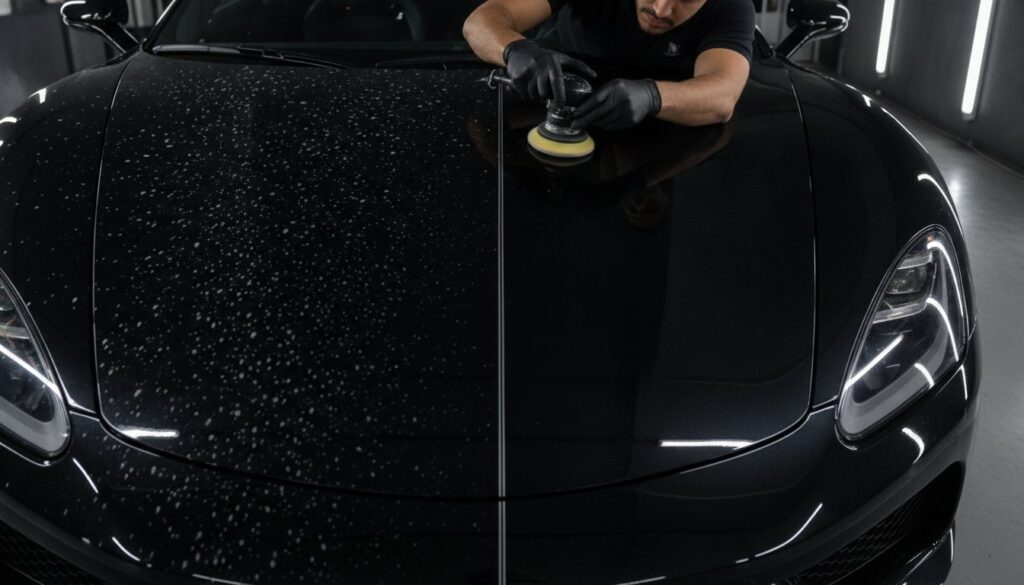
That pristine, mirror-like reflection you meticulously perfected can be decimated by a single afternoon under a rogue sprinkler or a light sun-shower. It’s a common source of frustration for owners who demand excellence; you spend hours detailing only to find stubborn, chalky rings that refuse to budge. You aren’t alone in the fear that these marks represent permanent damage, which is why mastering water spot removal from car paint is essential for any high-performance maintenance routine. Without the right intervention, mineral deposits transition from unsightly surface spots into aggressive etchings that eat directly into your clear coat.
This guide provides the definitive blueprint for professional restoration. You’ll learn to distinguish between harmless surface deposits and deep mineral damage that requires professional-grade precision. We’ll explore the chemistry of hard water, the safest removal techniques for 2026, and how advanced solutions like Paint Protection Film (PPF) can shield your factory finish forever. Prepare to transform your maintenance approach and reclaim a flawless, spot-free finish that reflects your commitment to automotive excellence.
Key Takeaways
- Identify the critical chemical differences between surface mineral deposits and deep clear coat etching to determine the most effective restoration path.
- Execute a professional restoration using a tiered approach to water spot removal from car paint that prioritizes chemical neutralization over aggressive mechanical scrubbing.
- Understand how extreme ambient temperatures accelerate mineral bonding and why proactive prevention is more efficient than reactive paint correction.
- Discover why Paint Protection Film (PPF) is the definitive solution for stopping mineral damage before it can compromise your vehicle’s delicate factory finish.
- Learn how the Vanguard Premium Package integrates elite detailing with advanced protection to maintain a mirror-like, showroom-quality aesthetic.
The Science of Water Spots: Why Mineral Deposits Threaten Your Paintwork
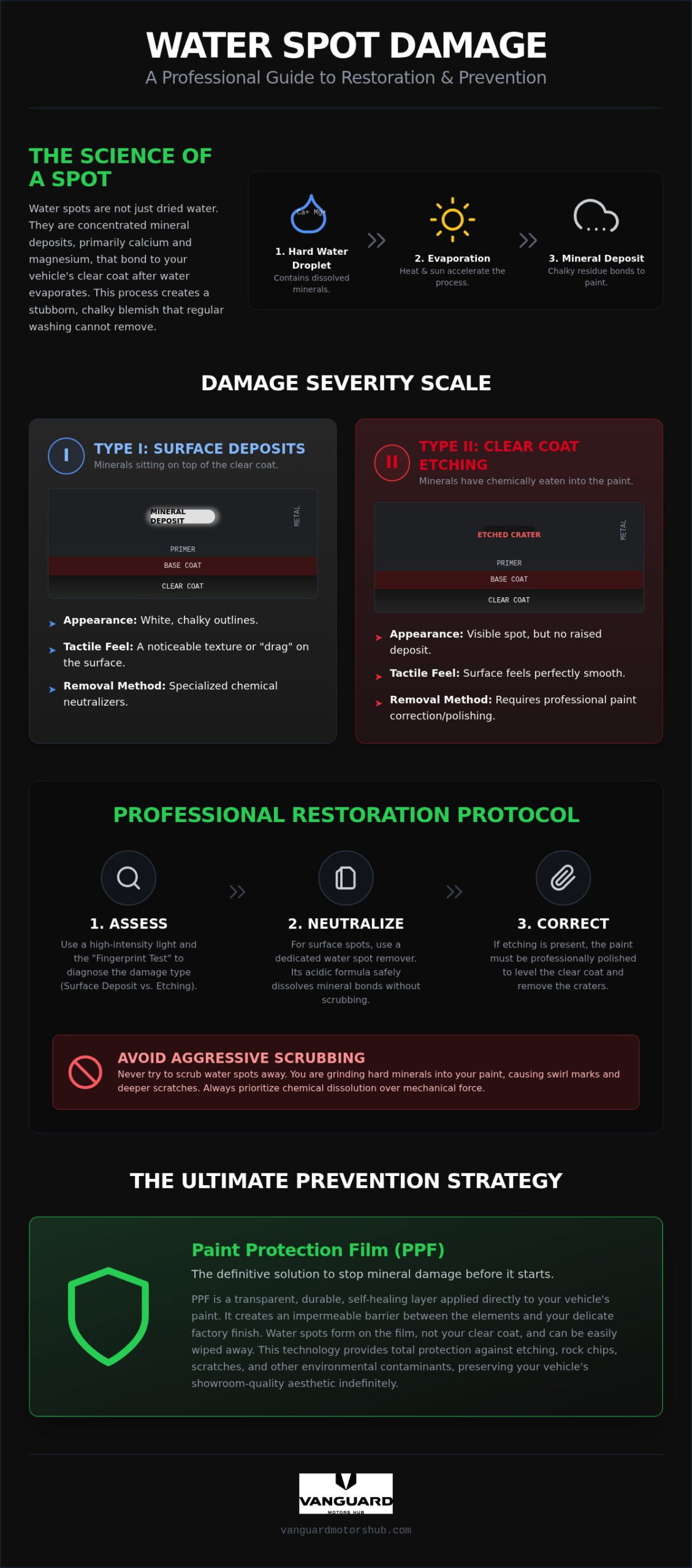
A water spot is more than a cosmetic nuisance; it’s a concentrated mineral residue left behind after liquid evaporates. When water hits your vehicle’s surface, it carries dissolved solids. As the liquid disappears into the atmosphere, these solids remain. They bond to the clear coat with surprising tenacity. Understanding this chemical process is the first step in effective water spot removal from car paint. Without intervention, these deposits transition from surface blemishes to structural paint defects.
Calcium and magnesium are the primary architects of these stubborn white rings. These minerals are highly reactive. In regions with hard groundwater, the concentration of these elements is particularly high. Once the water carrier is gone, these minerals form a crystalline structure that grips the paint. This isn’t just dirt sitting on the surface. It’s a mineral shell that physically attaches to the clear coat, making it resistant to standard cleaning methods.
Heat and sunlight act as catalysts for destruction. High-performance engines and dark-colored panels generate intense surface temperatures. This thermal energy accelerates evaporation and “bakes” the mineral crystals into the clear coat. This leads to a process known as etching. Etching is a structural failure where the minerals chemically react with the paint, carving out microscopic craters in the surface. At this stage, simple cleaning is no longer an option; the paint requires professional correction to restore its level finish.
Hard Water vs. Acid Rain
Groundwater in arid environments is notoriously high in mineral content. When this water is used for washing or irrigation, it leaves behind a heavy, chalky crust. Acid rain presents a different challenge. It contains sulfuric and nitric acids derived from industrial emissions. These atmospheric spots are often more aggressive, causing rapid oxidation and deep etching if not neutralized immediately. Both types of contamination require a sophisticated approach to ensure the paint’s elite factory finish remains uncompromised.
Why Standard Washing Fails
Soap and water are ineffective against mineral bonds. Most car shampoos are pH-neutral to protect waxes, but minerals require a specific acidic balance to dissolve. High-octane maintenance requires a shift from mechanical force to chemical precision. Scrubbing these spots only introduces swirl marks, as you are essentially rubbing rock-hard minerals into your finish. Professional water spot removal from car paint involves chemical agents that break the ionic bond safely. This method preserves the paint’s depth and clarity without the risks associated with friction-heavy cleaning. For enthusiasts seeking a total restoration, luxury detailing provides the specialized tools needed to neutralize these contaminants at a molecular level.
Identifying the Severity: From Surface Spots to Permanent Etching
Before initiating any water spot removal from car paint, you must perform a technical assessment of the damage. Treating a surface deposit as an etching leads to unnecessary paint thinning. Conversely, treating an etching as a simple surface deposit leads to repeated failure and frustration. A high-intensity inspection light is your most valuable diagnostic tool. Angle the light across the panel to reveal the profile of the mark. You are looking for either a raised mineral crust or a physical depression in the clear coat.
The “Fingerprint Test” provides immediate tactile feedback. Gently run a clean, gloved finger over the spot. If you feel a slight texture or “drag,” you’re likely dealing with a mineral deposit sitting on top of the paint. If the surface feels perfectly smooth but the spot remains visible under the light, the minerals have likely begun their descent into the clear coat. Early detection is the only way to preserve the integrity of your factory finish before the damage necessitates invasive mechanical correction.
Type I: Surface Mineral Deposits
These are characterized by white, chalky outlines that sit above the paint surface. They’re essentially the “ghost” of a dried water droplet. These occur frequently when rogue sprinklers hit a hot car or when mineral-heavy tap water evaporates after a standard wash. Because these are additive deposits, removal difficulty is relatively low. Specialized chemical neutralization usually dissolves the bond without the need for abrasive polishing. Prompt action at this stage prevents these minerals from transitioning into more aggressive, permanent damage.
Type II: Etched Water Spots
Etching represents a structural failure of the clear coat. These spots appear as crater-like depressions that distort light and create a dull finish. They occur when minerals react with the paint under intense heat, physically eating away at the finish. This is the “point of no return” for chemical cleaners. To fix Type II damage, you need mechanical paint correction to level the surrounding clear coat and restore clarity. If the etching is too deep, you risk striking through the clear coat entirely. If you suspect your paint has reached this level of compromise, consulting a specialist for a paint depth analysis is the safest course of action to ensure a successful restoration without compromising the vehicle’s longevity.
Professional Water Spot Removal: A Step-by-Step Restoration Guide
Restoring a vehicle’s finish requires a systematic approach that balances chemical efficiency with mechanical safety. You cannot simply jump to polishing without proper decontamination. The process begins with a meticulous, touchless wash to strip away loose surface debris. This ensures that when you begin water spot removal from car paint, you aren’t grinding grit into the clear coat. For surface-level minerals, chemical neutralization is the preferred first line of defense. If minerals have transitioned into the clear coat, mechanical intervention becomes necessary to level the paint and restore its high-gloss depth.
The Safe DIY Approach for Surface Spots
If your diagnostic assessment confirmed Type I surface deposits, follow this calibrated four-step sequence to safely dissolve the mineral bond:
- Step 1: Decontamination Wash. Clean the panel using a pH-neutral car shampoo. This removes organic film and prepares the minerals for chemical treatment.
- Step 2: Chemical Application. Apply a dedicated mineral remover or a 1:1 solution of distilled white vinegar. Allow the solution to dwell for 30 to 60 seconds. Don’t let it dry on the surface.
- Step 3: Acid Neutralization. Rinse the area thoroughly with water. Use a high-quality quick detailer to neutralize any remaining acidic residue and ensure the chemical reaction has stopped.
- Step 4: Protection Re-application. Acidic cleaners strip existing waxes and sealants. Re-apply a layer of protection to seal the paint and prevent immediate re-contamination.
The Professional Paint Correction Method
When chemical cleaners fail to resolve the spots, you’re dealing with Type II etching. This requires a pivot to machine polishing. Professionals use a dual-action polisher and progressive abrasives to remove a microscopic layer of clear coat. This process levels the craters formed by mineral damage and restores a perfectly flat surface. Before any aggressive correction begins, it’s vital to measure paint thickness with an ultrasonic gauge. This ensures enough clear coat remains to maintain the structural integrity of the finish. For those managing high-value assets, adhering to supercar detailing standards is essential. Precision is the priority; we aim for a mirror-like finish without compromising the vehicle’s longevity. This mechanical restoration is the only way to achieve total clarity once minerals have physically altered the paint surface.
Defensive Strategies: Preventing Mineral Damage in High-Heat Environments
High-heat environments turn standard maintenance into a race against physics. When ambient temperatures soar, water evaporates from a vehicle’s surface in seconds, leaving concentrated mineral deposits behind. This rapid drying cycle is the primary cause of recurring damage. Prevention isn’t just a convenience; it’s a calculated financial strategy. It’s far more cost-effective to implement defensive washing protocols than to perform frequent water spot removal from car paint through invasive mechanical correction.
Mastering the “Two-Bucket Method” is a foundational requirement for preserving an elite finish. One bucket holds your wash solution, while the second contains clean rinse water to clear your mitt of contaminants. Always wash your vehicle in a shaded environment or during the cooler hours of the early morning. If the panel is hot to the touch, the water will flash-dry before you can towel it off, guaranteeing mineral spots. Use a dedicated drying aid to provide lubrication and a high-GSM microfiber towel to lift moisture without dragging minerals across the clear coat.
The Limitations of Wax and Sealants
Traditional carnauba waxes are a poor match for extreme heat. These organic products begin to soften and degrade at surface temperatures easily surpassed on a dark panel under direct sun. Once the wax layer thins, it offers zero resistance to the ionic bonding of calcium and magnesium. Synthetic sealants provide better durability but still lack the chemical density needed to repel aggressive mineral etching. Relying on basic protection requires a grueling maintenance schedule that most supercar owners find unsustainable.
Ceramic Coatings as a Mineral Barrier
Ceramic coatings utilize silicon dioxide (SiO2) to create a semi-permanent, chemically resistant layer over the clear coat. Their primary advantage is extreme hydrophobicity. By reducing surface tension, the coating forces water to bead and sheet off the panel before it can evaporate. This significantly reduces the volume of minerals left behind. While SiO2 layers offer superior resistance to acidic etching compared to wax, they are a first line of defense rather than an impenetrable shield. To ensure your vehicle remains immune to the elements, book a professional consultation for advanced paint protection. This proactive approach ensures you spend less time on water spot removal from car paint and more time enjoying a flawless finish.
The Vanguard Approach: Holistic Paint Protection and Restoration
Achieving a flawless finish is only half the battle; maintaining it requires a shift from reactive cleaning to proactive preservation. The Vanguard Premium Package is engineered to break the cycle of environmental damage by combining elite detailing with advanced shielding technologies. While traditional methods focus on the repetitive cycle of water spot removal from car paint, our holistic approach ensures that minerals never reach the vulnerable clear coat in the first place. This strategy prioritizes the long-term health of the vehicle’s aesthetics, ensuring that high-performance results are matched by high-performance protection.
Paint Protection Film (PPF) stands as the only definitive solution for owners who demand absolute clarity. Unlike ceramic coatings that offer chemical resistance, PPF provides a physical, high-density barrier. Modern films feature sophisticated self-healing properties; heat from the sun or a warm engine can actually close microscopic etchings caused by environmental contaminants. By integrating these films into a maintenance roadmap, you transition from managing damage to preventing it entirely. This is the ultimate standard for supercars where factory paint preservation is non-negotiable.
Why PPF is the Ultimate Standard
PPF acts as a sacrificial layer, absorbing the impact of mineral-heavy water and industrial fallout. Because the film’s top coat is non-porous and highly hydrophobic, cleaning protected surfaces is significantly more efficient than maintaining bare clear coat. Minerals struggle to bond with the film’s surface, making routine maintenance safer and faster. For enthusiasts seeking the highest level of security, understanding why PPF is the standard for excellence is the first step toward a worry-free ownership experience. It transforms the vehicle into a resilient asset capable of withstanding the harshest climates.
Bespoke Restoration Services
Vanguard’s expertise extends beyond protection into the technical realm of cosmetic car repair. Before any film is applied, the paint must be corrected to a state of perfection. Our technicians use ultrasonic gauges to measure clear coat thickness, ensuring that restoration never compromises the vehicle’s structural integrity. Our bespoke restoration protocols ensure that any necessary water spot removal from car paint is performed with surgical precision before the final protection layer is installed. Every project begins with a personalized consultation to map out a protection strategy that fits your driving habits. This meticulous attention to detail ensures that the final result is not just a clean car, but a masterfully restored and protected machine that retains its showroom value for years to come.
Elevate Your Automotive Preservation
Mastering the intricacies of water spot removal from car paint is more than a maintenance task; it’s a commitment to preserving your vehicle’s legacy. You now understand the critical difference between surface minerals and deep clear coat etching. While chemical neutralization and mechanical correction can restore a compromised surface, the most efficient strategy remains proactive defense. Transitioning from reactive cleaning to elite protection films ensures your finish remains impervious to the environmental challenges of 2026.
Vanguard Motors stands as the visionary leader in supercar preservation. Our team utilizes advanced paint correction technology to level imperfections with surgical precision, followed by the installation of elite PPF and ceramic solutions. This holistic approach guarantees a mirror-like finish that withstands the test of time and high-heat environments. Don’t let mineral damage dictate the condition of your investment. It’s time to demand a standard of care that matches your car’s performance.
Secure Your Vehicle’s Finish with Vanguard Motors and experience the intersection of technical excellence and aesthetic perfection. Your journey toward a flawless, spot-free future begins today.
Frequently Asked Questions
Can vinegar really remove water spots from my car paint?
Yes, diluted white vinegar is an effective mild acid for dissolving Type I surface minerals. It breaks the ionic bond that calcium and magnesium form with the clear coat. You must rinse the area thoroughly afterward to neutralize the acidity. It’s important to remember that vinegar strips existing wax protection. For elite results, professional water spot removal from car paint involves specialized surfactants that offer better lubrication and safety during the restoration process.
Are water spots permanent if they aren’t removed immediately?
They can transition from surface deposits to permanent defects through a process called chemical etching. When mineral-heavy water evaporates on a hot panel, the remaining crystals react with the clear coat. This creates microscopic craters that cannot be washed away. If you don’t address these spots immediately, the damage becomes structural. Restoring an etched finish requires mechanical paint correction to level the surface and regain the factory’s mirror-like clarity.
Will a ceramic coating stop water spots from forming?
Ceramic coatings provide a high level of hydrophobic protection, but they aren’t a total shield against minerals. By forcing water to bead and sheet off the panel, they significantly reduce the amount of water left to evaporate. However, any droplets that remain can still leave mineral rings. The primary benefit is that the coating’s SiO2 layer is chemically resistant, preventing minerals from etching directly into your vehicle’s delicate factory clear coat.
What is the difference between a water spot and paint etching?
The distinction lies in whether the defect is on the surface or inside the paint layers. A water spot is a raised mineral deposit sitting on top of the clear coat. In contrast, etching is a physical depression where minerals have eaten into the paint. You can usually feel a water spot with your fingertip, whereas etching feels smooth but looks like a crater under a high-intensity inspection light.
How do I remove water spots from my car windows safely?
Glass is more resilient than paint, so you can utilize mechanical and chemical methods more aggressively. A 1:1 vinegar solution or a dedicated glass polish will remove most surface minerals. For stubborn buildup, fine-grade 0000 steel wool used with a dedicated lubricant is a professional secret for deep cleaning. Always perform this on a cool surface to prevent the chemicals from flashing and creating additional streaks on the glass panels.
Is it safe to use a clay bar on water spots?
It’s safe to use a clay bar, but it’s rarely the most efficient solution for mineral deposits. Clay is designed to lift bonded contaminants like rail dust or overspray. While it can shear off the top of a water spot, it won’t dissolve the mineral bond at the base. We recommend using a chemical neutralizer first. This softens the minerals, making the claying process much safer and reducing the risk of marring the finish.
Why do I get water spots even after washing my car in the shade?
Washing in the shade prevents the sun from flash-drying the water, but it doesn’t remove the minerals from your water supply. If you allow the vehicle to air-dry, those minerals will eventually settle on the paint as the liquid evaporates. Hard water contains high concentrations of calcium that bond quickly. To prevent this, always use a dedicated drying aid and a high-GSM microfiber towel to lift every drop of moisture immediately.
Can PPF be damaged by hard water spots?
High-quality Paint Protection Film (PPF) is exceptionally durable, but prolonged exposure to hard water can eventually stain the top coat. The advantage of PPF is its sacrificial nature; it absorbs the mineral damage so your factory paint doesn’t have to. Many modern films also feature self-healing technology. This means minor etching from environmental contaminants can often be removed simply by applying heat, restoring the film’s elite, high-gloss appearance without invasive polishing.