
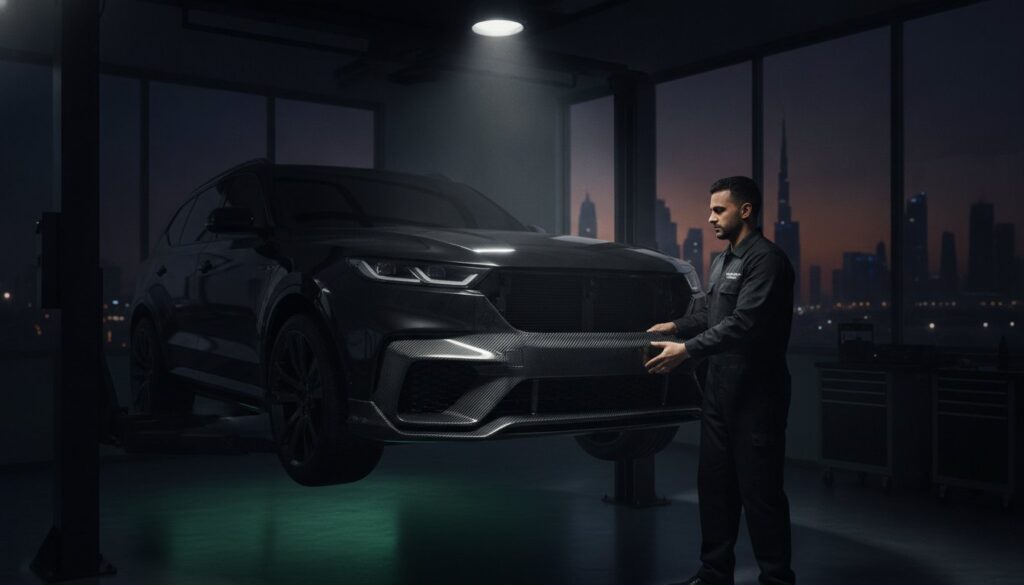
Why would a discerning owner invest six figures into a bespoke supercar only to compromise its engineering with a subpar aesthetic upgrade? You likely understand that a true transformation is about more than just bolting on new panels; it is an intricate dance of aerodynamics and surgical precision. Calculating the total full body kit installation cost in 2026 requires looking far beyond the sticker price of the components themselves.
It is frustrating to face hidden costs in painting or the fear that poor fitment might devalue your asset. We agree that your vehicle deserves better than “good enough” alignment. This guide promises a comprehensive breakdown of professional conversion standards, from the technical complexity of sensor recalibration to the elite finishing required for a showroom result. We will explore how premium materials and meticulous fitment preserve your vehicle’s value while delivering the aggressive, high-performance profile you demand. From Brabus conversions to bespoke carbon fiber integration, here is what you need to know about the investment required for excellence.
Key Takeaways
- Identify the three-pillar cost structure that defines a professional conversion, including hardware, international logistics, and master-level labor.
- Evaluate how material choices like forged carbon fiber versus fiberglass dictate the overall full body kit installation cost and long-term durability.
- Master the technical requirements of 2026 vehicle systems, ensuring that advanced sensors and cameras are recalibrated for perfect factory-level functionality.
- Compare the installation nuances of elite brands like Brabus and Mansory to ensure your vehicle maintains its status and resale value.
- Learn how to safeguard your transformation using the Vanguard Premium Package for ultimate protection and a showroom-quality finish.
The Architecture of Full Body Kit Pricing in 2026
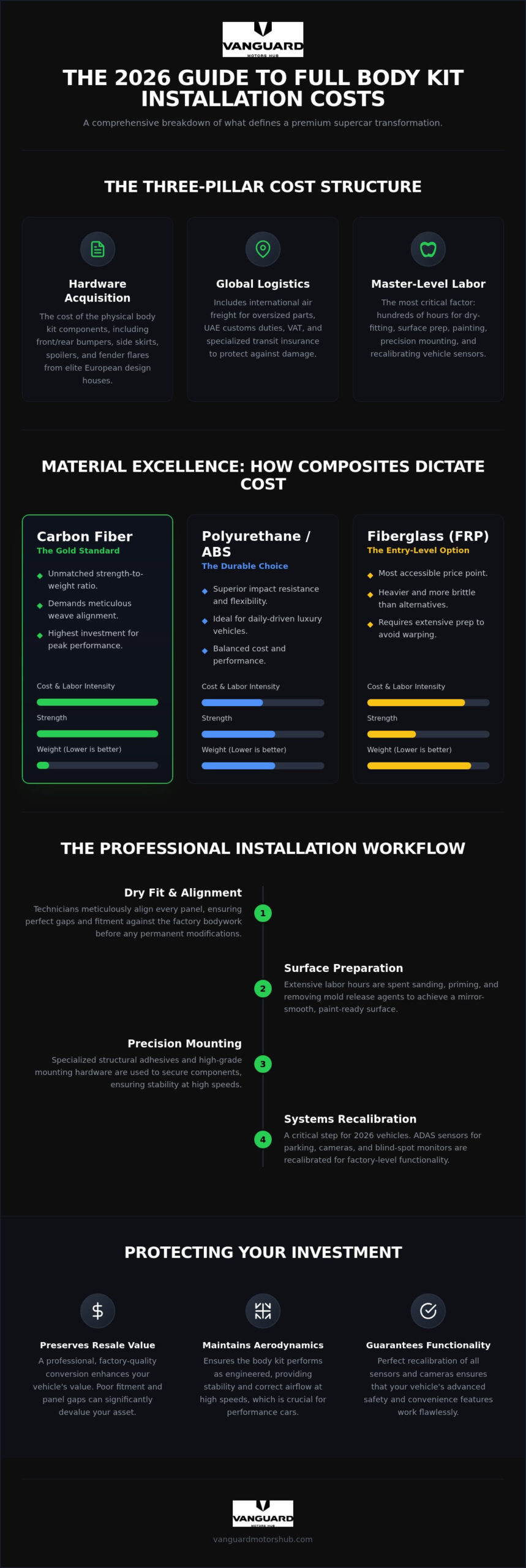
A comprehensive Body kit transformation is a multi-layered engineering project. In 2026, these conversions involve more than just aesthetic panels; they are aerodynamic overhauls. A standard package includes aggressive front and rear bumpers, sculpted side skirts, rear spoilers, and wide-body fender flares. When you calculate the total full body kit installation cost, you’re investing in a three-pillar structure: hardware acquisition, global logistics, and high-precision professional labor.
Modern pricing reflects the industry’s shift toward ultra-lightweight composites. Materials like forged carbon and aerospace-grade resins have replaced heavier, less durable alternatives. There’s a significant distinction between “off-the-shelf” mass-produced kits and the bespoke conversions handled by experts. Bespoke kits are engineered for specific chassis tolerances. This ensures the final silhouette looks factory-integrated rather than bolted on. At Vanguard Motors, we focus on these elite-tier conversions to maintain the mechanical integrity of your vehicle.
Hardware vs. Logistics: The Hidden Import Costs
Elite aerodynamic components often originate from specialized European design houses. Shipping these oversized, fragile crates to the UAE involves substantial expense. You must account for current customs duties and VAT, which are calculated based on the kit’s premium value. Logistics also include specialized transit insurance. Protecting your investment during the journey is essential; a single hairline fracture in a carbon fiber component can compromise the entire project’s structural integrity before it even reaches the workshop.
The Preparation Phase: Sanding, Priming, and Fitting
Elite results start with a “dry fit” before any paint touches the surface. This process allows technicians to align panel gaps and identify exactly where the kit meets the factory bodywork. Surface preparation requires extensive labor hours to remove mold release agents and achieve a mirror-smooth finish. Technicians use specialized structural adhesives and high-grade mounting hardware to secure the components. This meticulous attention to detail is why the full body kit installation cost varies; precision takes time, but it’s the only way to ensure the kit remains stable at high speeds.
Material Excellence: How Composites Dictate Installation Costs
Choosing the right material isn’t just about aesthetics; it’s a strategic decision that fundamentally shifts your full body kit installation cost. In 2026, the market offers a spectrum of composites ranging from flexible plastics to aerospace-grade carbon fiber. Each material requires a distinct technical approach. According to the Department of Energy on lightweight materials, advanced composites can significantly reduce vehicle weight while maintaining structural integrity, which is why they’re the preferred choice for high-performance conversions.
While fiberglass (FRP) remains an entry-level option, it often demands more labor hours in the “prep” phase due to its tendency to shrink or warp. Conversely, high-end materials like ABS plastic offer superior impact resistance for daily driven luxury SUVs. The investment you make in the material upfront often dictates the complexity of the labor that follows. If you’re looking for advice on which material suits your driving style, you can consult with our technical team today.
Carbon Fiber: The Gold Standard for Supercars
Carbon fiber is the undisputed leader in the luxury conversion space. It offers an unparalleled strength-to-weight ratio; however, it’s also the most demanding material to install. Technicians must meticulously align the carbon weaves across adjacent panels to ensure a seamless visual flow. This level of precision is labor-intensive and directly impacts the total full body kit installation cost.
We distinguish between aesthetic “carbon look” pieces and structural carbon fiber components. Structural parts are designed to withstand high aerodynamic loads at track speeds. Because carbon fiber doesn’t flex like plastic, the initial fitment must be perfect. If a component is damaged, it requires specialized expertise to fix. You can find more detail on this in our guide to Carbon Fibre Car Parts Repair.
Polyurethane and ABS: Durability and Flex
For luxury SUVs and daily drivers, ABS plastic and Polyurethane are often the smarter financial choices. These materials are prized for their flexibility. They can absorb minor impacts without cracking, making them ideal for lower-lip spoilers that might encounter steep driveways or speed bumps. While they’re heavier than carbon fiber, their durability in urban environments is unmatched.
Painting these non-carbon composites is a critical step. They require specific primers to ensure the paint adheres to the flexible surface without flaking over time. This process involves multiple stages of sanding and heat-treating to achieve a factory-quality finish. While the material cost is lower than carbon fiber, the labor required for a showroom-quality paint match remains a significant factor in your overall budget.
Precision Engineering: The Professional Installation Workflow
Professional installation is an engineering conversion, not a simple parts swap. In 2026, supercar architectures are more integrated than ever. The workflow begins with a complete disassembly of factory panels, followed by surgical-level fitment of the new aerodynamic components. This meticulous process ensures the full body kit installation cost reflects the technical expertise required to maintain vehicle safety and performance at high speeds. Every bracket and fastener must be torqued to factory specifications to prevent vibration or panel detachment during aggressive driving. We conduct high-speed aerodynamic testing on every conversion to verify that the downforce levels and cooling ducts perform exactly as the designers intended.
Precision fitment also involves managing the thermal expansion of different materials. Carbon fiber and plastic expand at different rates when exposed to the intense heat of the UAE sun. Our technicians use specialized structural adhesives that allow for this movement without compromising the bond. This level of foresight prevents the cracking or warping that often plagues lower-quality installations. It’s this commitment to mechanical excellence that preserves your vehicle’s long-term value and structural integrity.
Integrating Modern Vehicle Electronics
Modern luxury vehicles rely on a complex network of Advanced Driver Assistance Systems (ADAS). When you replace a front bumper or side mirror, you’re moving parking sensors, 360-degree cameras, and radar modules. A significant portion of the professional full body kit installation cost goes toward specialized diagnostic tools used for system recalibration. “Cheap” installations often bypass this step, which leads to persistent dashboard warning lights and potentially dangerous failures in emergency braking or lane-keep assist systems. We ensure every electronic component is perfectly zeroed out before the vehicle leaves our facility.
The Art of Color Matching and Finishing
Achieving a seamless finish requires more than just a standard paint code. Our technicians use high-end paint booths to create a mirror-like surface that matches the factory texture. We employ advanced blending techniques to ensure new panels transition perfectly into the existing bodywork, accounting for any natural aging of the factory paint. For owners who want to experiment with bold aesthetics without permanent changes, Peelable Paint offers a high-performance alternative. This specialized application provides the same depth and gloss as traditional paint but remains fully reversible, protecting the original finish while allowing for total creative freedom.
Elite Benchmarks: Brabus, Mansory, and Jetour Conversions
Elite conversions represent the intersection of high-fashion and mechanical excellence. When you evaluate the full body kit installation cost, the brand of the hardware serves as the primary benchmark for complexity. In 2026, the market is defined by three distinct philosophies: the refined performance of Brabus, the avant-garde aggression of Mansory, and the accessible luxury of Jetour. Each brand utilizes proprietary mounting systems and bespoke hardware that dictate the overall labor timeline. Our technicians at Vanguard Motors are trained to handle these specific requirements, ensuring that every bolt and carbon weave meets the manufacturer’s exact standards.
The total investment is never just about the parts. It’s about the technical hours required to marry these components to your vehicle’s chassis. While a standard kit might take a few days, an elite widebody conversion involves structural modifications and reinforcement. This level of precision is what separates a showroom masterpiece from a standard aftermarket modification. Choosing a recognized brand like Brabus or Mansory doesn’t just change the look; it alters the vehicle’s DNA and market positioning.
Brabus and Mansory: The High-End Spectrum
Brabus and Mansory occupy the pinnacle of the conversion hierarchy. Brabus remains the gold standard for Mercedes-Benz owners who demand surgical accuracy and performance integration. These kits often require recalibrating active aerodynamics and engine cooling ducts. For a detailed look at this process, you can explore our Brabus Body Kit Installation Guide. Mansory projects are even more labor-intensive, often featuring complex forged carbon geometries and widebody flares that require permanent, high-precision modifications to the original bodywork. These conversions significantly enhance the prestige factor and long-term resale value of the asset.
Jetour Kit Conversions: Accessible Luxury
Jetour kit conversions offer a more streamlined path to an aggressive, modern SUV aesthetic. While they don’t always require the structural surgery of a widebody supercar kit, they still involve high-precision fitment of front grilles, rear diffusers, and side accents. The full body kit installation cost for a Jetour upgrade is often more favorable because the components are designed for faster integration. However, the standard for the finish remains elite. We apply the same rigorous color-matching and alignment protocols to Jetour kits as we do to our most exclusive supercar projects, ensuring a factory-plus result that stands out on the road.
Ready to elevate your vehicle’s profile with a world-class conversion? Contact our conversion specialists today to discuss your custom project and receive a tailored quote.
Maximizing Your Investment with Vanguard Motors
Vanguard Motors stands as the national authority on car kit conversions because we view every project as a holistic transformation. A high-end conversion is a significant financial commitment. To truly maximize the value of your full body kit installation cost, you must look beyond the initial fitment. Our approach integrates mechanical precision with long-term preservation strategies. We provide professional documentation for every stage of the build, which is essential for maintaining your vehicle’s insurance valuation and future resale potential. This meticulous record-keeping ensures that your asset is recognized for its elite-level craftsmanship.
The “Vanguard Premium Package” represents our highest standard of care. It combines the technical installation of your Brabus, Mansory, or Jetour kit with comprehensive protection and aesthetic refinement. Our goal is to ensure your vehicle remains in showroom condition long after it leaves our facility. This proactive mindset is what distinguishes an elite service center from a standard workshop. We don’t just build supercars; we preserve the legacy of your investment through rigorous quality control and technical expertise.
The Synergy of Kits and Paint Protection Film (PPF)
New aerodynamic components, particularly low-hanging front splitters and wide-body fenders, are highly susceptible to stone chips and road debris. The aggressive profiles that improve downforce also act as magnets for high-velocity particles. Applying Paint Protection Film to your custom parts is the only way to safeguard the precision paintwork you’ve just invested in. Without this layer of defense, the leading edges of your new kit can show signs of wear within weeks of road use.
We utilize self-healing PPF technology that uses ambient heat to disappear light scratches and swirl marks. This serves as the ultimate insurance for your body kit investment. By shielding the composite materials from UV damage and chemical etching, we maintain the aerodynamic integrity and visual depth of the conversion. This protection is vital for maintaining the aggressive, high-gloss finish required for a world-class presence.
Bespoke Customization and Interior Harmony
An elite exterior demands a matching interior environment. We believe the transition from the driver’s seat to the cockpit should feel seamless. To achieve this, we offer bespoke leather restoration and custom carbon fiber interior trim that mirrors the exterior’s styling. This creates a cohesive narrative for the vehicle, elevating it from a modified car to a complete luxury masterpiece. Every touchpoint should reflect the same level of precision as the aerodynamic panels outside.
Every project undergoes our rigorous final quality control protocol, which aligns with the highest standards of Supercar Detailing. We inspect every panel gap, sensor calibration, and paint finish under specialized lighting. This ensures the result isn’t just visually stunning, but mechanically perfect. When you choose Vanguard, you’re choosing a partner dedicated to the lifelong excellence and performance of your automotive asset.
Elevate Your Automotive Legacy
Transforming your vehicle with an elite conversion is a strategic investment in both aesthetics and engineering. The total full body kit installation cost in 2026 is defined by the caliber of materials used and the technical mastery required for seamless integration. From the aggressive profiles of Mansory to the refined performance of Brabus, achieving a showroom finish demands more than just a parts swap. It requires surgical precision in sensor recalibration and advanced paint-matching technology to ensure your vehicle remains as functional as it’s visually striking.
Vanguard Motors provides comprehensive national UAE coverage for owners who refuse to compromise on quality. As authorized installers for Brabus and Mansory kits, our technicians utilize industry-leading diagnostic tools to maintain your vehicle’s structural and electronic integrity. Don’t leave your supercar’s transformation to chance. Consult Our Experts for a Bespoke Body Kit Conversion Quote and take the first step toward a world-class automotive evolution. Your vision for a high-performance masterpiece is within reach.
Frequently Asked Questions
How much does a full body kit installation cost on average in 2026?
The total full body kit installation cost is determined by three main factors: hardware brand, material choice, and labor complexity. While entry-level kits focus on simple panel swaps, elite conversions like Brabus or Mansory require structural modifications and advanced electronics integration. You’re paying for the specialized skills of technicians who understand the specific tolerances of supercars. Each project is unique, so a personalized quote is the only way to determine the exact investment required.
Does a body kit affect the resale value of my luxury car?
Professional installation of a recognized brand typically preserves or enhances the resale value of a luxury asset. High-end conversions from Brabus or Mansory are highly sought after in the secondary market. However, poor fitment or low-quality materials will significantly devalue your car. It’s essential to maintain professional documentation and ensure the conversion follows factory-standard mounting points. This transparency reassures future buyers of the vehicle’s mechanical and aesthetic integrity while protecting your long-term investment.
How long does a professional full body kit conversion take?
A standard aesthetic upgrade often takes between five to ten working days, while complex widebody conversions can extend to several weeks. This timeline accounts for meticulous dry-fitting, surface preparation, and the paint curing process. We prioritize precision over speed to ensure every panel gap is perfect and all adhesives have fully bonded. Rushing the installation often leads to alignment issues or paint failures that are costly to rectify later in the vehicle’s life.
Can I install a body kit on a leased vehicle?
You must review your lease agreement before proceeding with any permanent modifications. Most lessors require the vehicle to be returned in its original factory condition. If you choose a kit that involves cutting or structural changes, you’ll likely face significant penalties. However, some owners opt for bolt-on kits that are fully reversible. We recommend consulting with your leasing company to determine if they’ll allow a professional conversion that adds significant value to the asset.
Is painting included in the standard installation cost?
Painting and finishing are typically treated as distinct line items in a professional quote. Achieving a factory-level finish requires high-end paint booths, specialized primers for composites, and advanced color-matching technology. The labor involved in blending new panels with existing bodywork is extensive. While some kits come pre-primed, the final aesthetic result depends entirely on the quality of the topcoat application. This ensures your new aerodynamic parts look like original equipment rather than aftermarket additions.
What happens to the car sensors and cameras during a kit conversion?
All parking sensors, 360-degree cameras, and radar modules must be carefully relocated and recalibrated. Modern ADAS systems are highly sensitive to the thickness of paint and the exact angle of the sensor housing. We use specialized diagnostic tools to reset these systems to factory specifications. Skipping this step leads to dashboard errors and the failure of critical safety features like emergency braking. Precision electronics management is a major part of any high-end conversion project.
Why is carbon fiber more expensive to install than other materials?
Carbon fiber is a rigid material that doesn’t allow for the same flexibility as plastic during fitment. Technicians must spend significantly more time on the dry-fit phase to ensure perfect alignment from the start. Additionally, aligning the visual weave pattern across multiple panels is a high-skill task that increases labor hours. The full body kit installation cost for carbon fiber also includes specialized structural adhesives and cutting tools designed specifically for aerospace-grade composites.
Should I apply PPF immediately after installing a new body kit?
Applying Paint Protection Film is the final, essential step in protecting your new investment. Custom aerodynamic parts are often positioned low to the ground, making them prime targets for stone chips and road debris. Once the paint has fully cured, PPF provides a self-healing barrier that maintains the showroom finish. We often include this in our Vanguard Premium Package to ensure the leading edges of your new kit don’t suffer from immediate wear.