
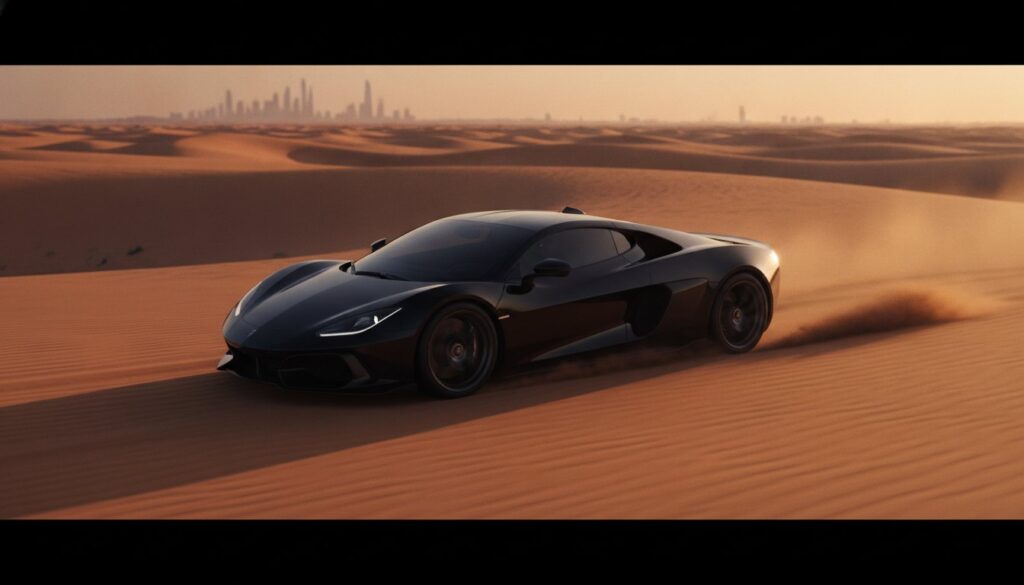
Driving a supercar across the open expanses of the UAE isn’t just a test of engineering; it’s a high-speed assault on your vehicle’s aesthetic integrity. While most enthusiasts focus on the heat, the true silent killer is the relentless, abrasive sand that acts like industrial sandpaper at highway speeds. You’ve likely noticed the subtle hazing on your headlights or the micro-pitting along your front bumper after a weekend drive. It’s a frustrating reality that can rapidly compromise your car’s resale value and the pristine look of your bespoke carbon fiber modifications.
We understand that maintaining a flawless finish in this environment requires more than just a standard wax. This 2026 guide reveals the elite strategies required to secure the best car protection for desert driving, ensuring your investment retains its showroom brilliance. You’ll discover how professional-grade, self-healing barriers and specialized interior treatments shield your vehicle from both high-velocity abrasion and intense UV radiation. We’ll preview the transformative impact of the Vanguard Premium Package and how meticulous technical care preserves every detail of your high-performance machine.
Key Takeaways
- Understand the mechanics of the “sandblasting effect” and how microscopic particles damage your vehicle’s finish at high speeds.
- Identify why ceramic coatings alone are insufficient for impact defense and why high-mil PPF is the best car protection for desert driving.
- Discover the specialized treatments required to prevent resin yellowing in carbon fiber and UV damage to luxury leather interiors.
- Learn about the technical edge-wrapping techniques that prevent sand from lifting your protective film and compromising the installation.
- Evaluate the functional differences between peelable paint and traditional film to select the most effective barrier for your high-performance machine.
The Science of Desert Abrasion: Why Your Car Needs Specialized Defense
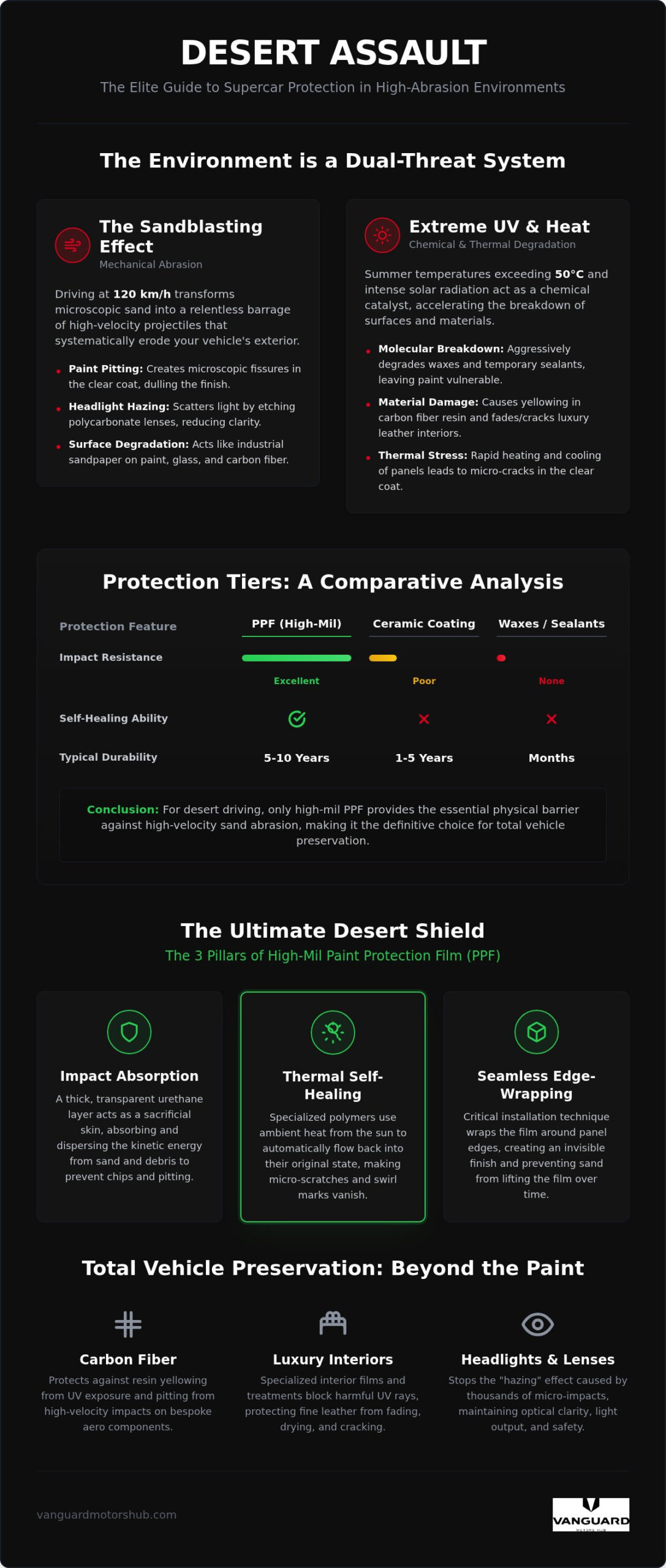
Driving at 120km/h on a national highway transforms microscopic sand into high-velocity abrasive projectiles. This isn’t just dust; it’s a relentless particulate impact that systematically erodes your vehicle’s exterior. We call this the sandblasting effect. It targets your front fascia, leading edges, and side skirts with surgical precision, turning a showroom finish into a dull, pitted surface within months. The front of your car acts like a vacuum, pulling in grit that scours every surface it touches. Without the best car protection for desert driving, your vehicle’s factory clear coat stands no chance against this mechanical assault. The damage often begins at a molecular level, invisible to the naked eye until the cumulative effect destroys the paint’s reflective properties.
High-Velocity Sand Abrasion and Paint Pitting
When silica particles strike at high speeds, they create microscopic fissures in the clear coat. These tiny cracks are invisible at first, but they trap heat and moisture, accelerating the degradation of the underlying paint layers. At 120km/h, the kinetic energy of a single grain of sand is enough to chip away at the clear coat’s integrity. Multiply this by millions of impacts over a single journey, and the result is a matte, textured finish. You’ve likely noticed the “haze” on unprotected headlights after a few desert runs. This occurs because thousands of micro-impacts scatter light rather than letting it pass through the polycarbonate lens. Paint pitting is the mechanical erosion of the clear coat by silica particles.
UV Radiation and Thermal Degradation
The desert environment is a dual-threat system. While sand provides the mechanical force, the 50°C+ summer heat and intense UV radiation provide the chemical catalyst for damage. Solar energy aggressively breaks down the molecular bonds of standard waxes and sealants, leaving the surface vulnerable to the next sandstorm. Thermal expansion also plays a critical role. As body panels heat and cool, the paint must expand and contract. Over time, this stress leads to micro-cracks that allow contaminants to penetrate deeper into the substrate. Many drivers rely on temporary “sand sprays,” but these oily barriers fail to provide any UV filtration. They might deflect a few grains of sand, but they don’t stop the sun from baking the life out of your paint. Securing the best car protection for desert driving means addressing both the physical impact and the invisible radiation that threatens your vehicle’s resale value.
Paint Protection Film (PPF): The Ultimate Desert Shield
While standard waxes and ceramic coatings offer chemical resistance, they lack the physical mass required to stop high-velocity sand. High-mil Paint Protection Film represents the definitive barrier for national driving conditions. This transparent, thermoplastic urethane layer acts as a sacrificial skin, absorbing the kinetic energy of every silica particle that strikes your vehicle. It’s engineered with a multi-layer construction that prioritizes both impact defense and optical clarity. You don’t have to choose between protection and aesthetics; a premium installation enhances the depth of your luxury paint while providing a nearly impenetrable shield. This technology is widely considered the best car protection for desert driving because it addresses the mechanical reality of the UAE environment. You can learn more about these technical standards in our detailed guide on The Ultimate Shield: Why Paint Protection Film is the Standard for Excellence in 2026.
Self-Healing Innovation: Erasing Sand Scratches with Heat
The most impressive feature of modern PPF is its ability to turn the desert’s greatest threat into its most effective maintenance tool. The top layer consists of specialized elastomeric polymers that possess a “memory” of their original state. When sand creates micro-scratches or swirl marks on the film, exposing the surface to 50°C+ heat causes these polymers to flow back into their uniform alignment. The scratches literally vanish before your eyes. This stands in stark contrast to traditional vinyl wraps, which show permanent scarring and swirl marks after a single desert run. By utilizing the intense UAE sun, your vehicle effectively heals itself while you drive, maintaining a flawless finish without constant polishing.
Impact Resistance and Hydrophobic Properties
Beyond its healing capabilities, premium PPF is designed to manage the heavy impact of gravel and dense sand clouds. The dense urethane structure dissipates energy across a wider surface area, preventing the underlying clear coat from fracturing. Modern films also integrate advanced hydrophobic top-coats. These layers reduce the surface tension of the film, making it incredibly difficult for fine desert dust and grime to bond. This technical advantage results in a vehicle that stays cleaner for longer periods. Owners typically find that a PPF-protected car requires 50% less washing effort compared to an unprotected one. If you want to ensure your supercar remains in showroom condition, you can discuss a precision PPF installation with our specialists to determine the best coverage for your driving style.
Comparing Protection Tiers: PPF vs. Peelable Paint vs. Ceramic Coating
Selecting the right defense for your vehicle depends entirely on your driving profile and aesthetic goals. A daily commuter facing the crosswinds of the national highways requires a different strategy than a weekend supercar kept in a climate-controlled environment. While we’ve established that physical barriers are essential, many owners fall victim to the “Ceramic Fallacy.” It’s a common misconception that a liquid coating alone can stop sand pitting. It can’t. While ceramic coatings provide incredible gloss and chemical resistance, they lack the tensile strength to deflect high-velocity silica particles. For the absolute best car protection for desert driving, you must differentiate between chemical shields and physical armor.
When evaluating the cost-to-benefit ratio over a five-year ownership cycle, the investment in high-tier protection pays for itself in preserved resale value. A vehicle with original, unpitted factory paint commands a significant premium in the UAE market. PPF and peelable paint represent the gold standard for this preservation; they ensure your bespoke modifications and factory finishes remain untouched by the elements. Ceramic coating then serves as the finishing touch that simplifies your maintenance routine and enhances the visual depth of the protected surface.
The Role of Peelable Paint in High-End Customization
For owners who demand a complete aesthetic transformation without compromising the original substrate, peelable paint is the visionary choice. Unlike traditional wraps, this is a sprayable film that achieves an OEM-level finish with no visible seams or edges. It’s particularly effective for the complex geometries and aggressive cooling vents found on a Brabus body kit, where traditional film might struggle to reach every deep contour. You gain the freedom to change your vehicle’s color while maintaining a thick, protective layer that shields the factory paint from the desert’s abrasive nature.
Ceramic Coating as a Complementary Layer
Think of ceramic coating as a high-performance top-coat rather than a standalone shield. Its primary role is to act as a chemical barrier against oxidation while providing a hydrophobic surface that sheds desert dust with ease. Applying a ceramic layer over your PPF or peelable paint creates the ultimate defensive stack. This combination offers the best car protection for desert driving by merging physical impact resistance with elite-level gloss. This treatment is also essential for wheels and calipers. These components face extreme thermal stress and brake dust accumulation; a dedicated ceramic application ensures they remain easy to clean and free from permanent staining.
Beyond the Paint: Protecting Interiors and High-End Materials
True automotive preservation doesn’t stop at the door handles. While the exterior battles high-velocity sand, your cabin faces a different kind of assault: the “oven effect.” During a typical UAE summer, interior temperatures can rapidly exceed 60°C. This intense thermal energy, combined with direct UV exposure, creates a kiln-like environment that leaches moisture from premium materials. High-IR rejection window tinting is your primary defense here. Unlike standard dark films that only block visible light, high-IR films filter out the infrared radiation responsible for heat buildup. This is a critical component of the best car protection for desert driving, as it prevents the structural degradation of your dashboard and upholstery before the damage becomes irreversible.
Leather Restoration and UV-Blocking Interior Care
Luxury leather and Alcantara are organic materials that require specific humidity levels to remain supple. The desert’s arid climate acts as a desiccant, causing leather to shrink, stiffen, and eventually crack. Our restoration process focuses on deep-feeding the hide with essential oils to restore its natural elasticity. We then apply specialized UV-inhibitors that provide a sophisticated matte finish without any greasy residue. This technical care is vital for more than just aesthetics. Fine desert dust is incredibly invasive; it penetrates electronic switches and infotainment cooling fans, leading to premature hardware failure. You can find a complete breakdown of these preservation techniques in our Supercar Detailing: The 2026 Reference Guide to Meticulous Automotive Preservation.
Carbon Fiber Protection and Resin Integrity
Exposed carbon fiber is a hallmark of high-performance engineering, yet it’s surprisingly vulnerable to solar radiation. The epoxy resins used to bond carbon sheets can undergo “yellowing” or delamination when exposed to constant UV rays. This is especially true for aggressive aero components like splitters and spoilers that sit close to the heat-radiating tarmac. We mitigate this risk by applying specialized, heat-resistant PPF specifically designed for carbon surfaces. This film provides a dual benefit: it stops sand pitting on leading edges and includes high-density UV blockers to keep the resin clear. If your components have already suffered from environmental exposure, we provide expert carbon fiber car parts repair to restore structural and aesthetic integrity. Don’t wait for the resin to fracture; contact our technical team today to secure your interior and carbon fiber components against the desert’s harshest elements.
The Vanguard Approach: Precision Installation for National Driving
Even the highest-grade film fails if the installation is flawed. In the UAE, the margin for error is zero. Microscopic sand grains don’t just sit on your car’s surface; they actively search for weaknesses in the adhesive bond. If a film edge is exposed by even a fraction of a millimeter, high-velocity wind will drive grit underneath it, leading to lifting and eventual failure. This is why we prioritize technical precision over speed. Our specialists utilize advanced edge-wrapping techniques, tucking the film’s boundaries behind the body panels so no seams are visible or vulnerable. This level of meticulous care is what defines the best car protection for desert driving. It ensures your defense remains structural rather than just cosmetic.
The environment where this work happens is just as critical as the technique itself. A standard garage or mobile setup cannot provide the sterile conditions required for a flawless bond. We perform every installation in a climate-controlled, dust-free facility. This controlled atmosphere prevents airborne particulates from being trapped between the film and your paint, which is a common cause of “silvering” or bubbling in lesser installations. The Vanguard Premium Package represents our most holistic desert-defense solution, combining these elite installation standards with the highest-mil materials available in 2026.
Meticulous Prep: The Secret to Long-Term Adhesion
Adhesion is only as strong as the surface beneath it. Before any film touches your vehicle, it undergoes a multi-stage decontamination process to remove industrial fallout, old waxes, and embedded desert grit. We then perform a precision paint correction to ensure the finish is flawless. Applying protection over swirl marks only “locks in” the damage, so we restore the paint to its peak brilliance first. We use precision-cut templates designed specifically for your vehicle’s make and model to ensure a seamless, factory-level fit every time.
Booking Your Desert Protection Consultation
Timing is everything when it comes to automotive preservation. Waiting until after the next major sandstorm season often means you’re paying for cosmetic repair rather than just protection. We invite you to explore the functional and aesthetic differences between our high-gloss, stealth matte, and colored protection options. Our technical experts provide professional advice tailored to your specific driving habits and vehicle type, ensuring you receive the best car protection for desert driving available today. Don’t leave your supercar’s integrity to chance. Secure your vehicle’s future and chat with our experts on WhatsApp to schedule your precision consultation.
Secure Your Showroom Finish for the National Roadways
Preserving the aesthetic integrity of a high-performance vehicle in the UAE requires more than just routine care; it demands a technical defense strategy that accounts for high-velocity sand abrasion and extreme thermal stress. We’ve explored how advanced self-healing PPF and innovative peelable paint applications provide the best car protection for desert driving by creating a resilient, sacrificial barrier. From shielding bespoke Brabus and Mansory kits to restoring leather interiors, our dedicated luxury and supercar detailing facility is engineered to maintain excellence. Precision installation and meticulous preparation are the only ways to ensure your investment remains untouched by the elements.
Don’t wait for the next sandstorm to compromise your vehicle’s resale value and visual depth. Our team of specialists is ready to design a bespoke protection package that aligns with your driving lifestyle. Protect your supercar from the desert today, contact us on WhatsApp to begin your transformation. Your car deserves a finish that lasts as long as your passion for the drive.
Frequently Asked Questions
Is PPF better than ceramic coating for desert driving?
Yes, PPF is superior for impact protection against high-velocity sand. Ceramic coating acts as a chemical barrier against oxidation, but it lacks the physical mass to stop sand pitting. High-speed silica particles require the thickness of a urethane film to prevent clear coat erosion. This is why film is considered the best car protection for desert driving. Ceramic is best used as a top layer for added gloss.
Will paint protection film yellow in the extreme UAE heat?
Premium films used in 2026 are engineered with advanced UV-stable aliphatic polyurethane. This material resists the oxidation that caused yellowing in older, cheaper films. When installed in a professional facility, these high-end films maintain their optical clarity even under the intense UAE sun. Regular maintenance and using the right cleaning products further ensure the film remains crystal clear for years. Cheaper alternatives don’t offer this stability.
How long does professional desert car protection last?
High-quality PPF typically lasts between five to ten years depending on the specific product and environmental exposure. In the harsh desert climate, the lifespan is maximized through proper maintenance and avoiding abrasive automatic car washes. Peelable paint offers similar longevity when applied correctly by specialists. Ceramic coatings usually require a top-up every one to two years to maintain their hydrophobic properties and deep showroom shine.
Can I wash my car normally after getting PPF installed?
You can wash your car, but we recommend specific techniques to preserve the film’s integrity. Avoid high-pressure washers too close to the edges, as this can cause lifting. Stick to hand washing using the two-bucket method and pH-neutral soaps. The hydrophobic top-coat on premium film means dirt and sand shed much easier, so you’ll actually spend less time scrubbing to achieve a flawless finish.
What happens if sand gets under the edge of the protection film?
If sand penetrates an edge, it can act as an abrasive and cause the film to peel further. This usually happens with low-quality installations that don’t use edge-wrapping techniques. If you notice lifting, it’s vital to have a professional trim or re-seal the area immediately. Our precision installation process minimizes this risk by tucking edges behind panels where wind and sand can’t reach them.
Is peelable paint as durable as standard PPF for off-road use?
Peelable paint provides excellent protection and is often preferred for complex body shapes. It offers similar impact resistance to standard PPF because it’s applied in multiple thick layers to create a durable skin. While it’s highly effective for highway driving and light off-road use, traditional thick-mil PPF remains the benchmark for heavy rock-chip protection. Both are elite options for preserving your vehicle’s factory finish.
Does car protection help maintain the resale value in this region?
Absolutely. In the UAE, the condition of the paint is a primary factor in a luxury vehicle’s valuation. A car with sand-pitted headlights and a dull front bumper will sell for significantly less than one with a preserved finish. By investing in the best car protection for desert driving, you ensure the factory paint remains in “as-new” condition, which often translates to a higher resale premium.
Can carbon fiber parts be protected from UV yellowing?
Yes, specialized UV-blocking films and ceramic coatings are designed specifically for carbon fiber components. These products filter out the harmful radiation that causes epoxy resins to yellow or become brittle over time. Applying these protective layers to splitters, spoilers, and mirrors is essential for maintaining the structural and aesthetic integrity of your carbon parts. It’s a proactive step that prevents costly delamination or structural repair.