
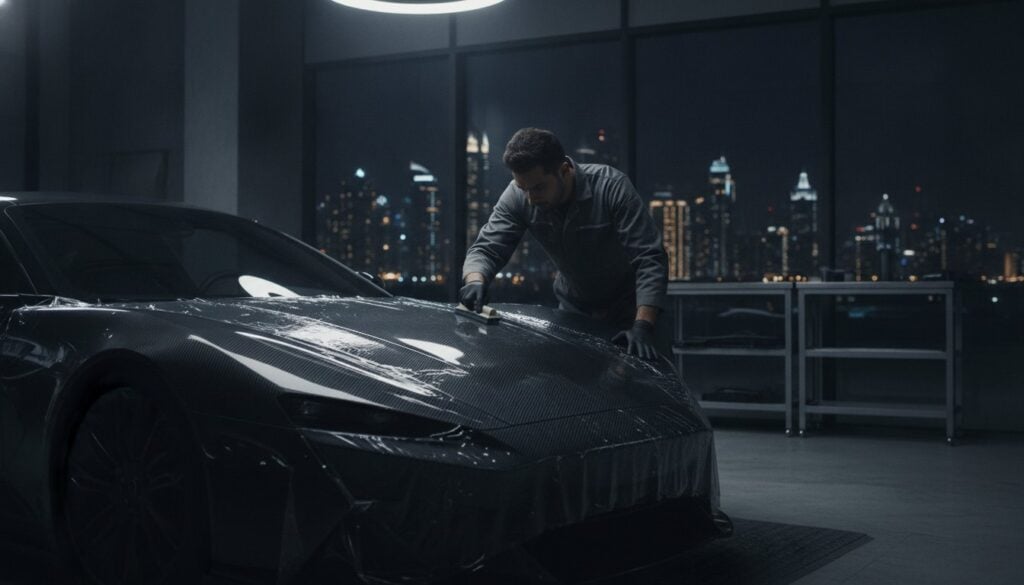
Your vehicle’s hood is its most prominent visual statement, yet it remains the primary target for every stone chip and UV ray on the road. You likely recognize that a flawless finish isn’t just about vanity; it’s about preserving the integrity of a high-performance machine. Deciphering the actual bonnet and hood wrap cost often feels like navigating a maze of cheap films and inconsistent service quotes. You want clarity on where your investment goes, whether you’re seeking a bold aesthetic transformation or the invisible shield of professional protection.
This guide serves as your technical roadmap for 2026. We’ll break down the precise factors that dictate pricing, from the quality of adhesive layers to the surgical precision required for a seamless carbon fiber installation. You’ll discover the vital differences between standard vinyl and the elite durability of Paint Protection Film. We’ll provide a professional’s perspective on balancing immediate visual impact with the long-term value of a perfectly preserved factory paint job. It’s time to move beyond guesswork and invest in a finish that commands respect on every corner.
Key Takeaways
- Master the technical differences between Vinyl, PPF, and Carbon Fiber to choose a material that aligns with your performance and aesthetic goals.
- Identify the critical variables, including vehicle geometry and material grade, that dictate the total bonnet and hood wrap cost for luxury vehicles.
- Learn how to protect your factory paint from stone chips and UV radiation with materials engineered for durability in high-heat environments.
- Understand the risks associated with budget adhesive films and why professional application is essential for a residue-free removal later.
- Discover how a premium bonnet wrap serves as the foundation for a complete bespoke car conversion and holistic vehicle protection strategy.
What is a Bonnet and Hood Wrap?
A hood wrap is a sophisticated, large-format adhesive film or specialized coating engineered specifically for the engine cover of a vehicle. While some sources might describe these as simple signage tools, the premium automotive sector treats them as a technical fusion of art and engineering. The bonnet is the most vulnerable panel on any car. It faces the constant brunt of road debris, chemical fallout, and intense thermal cycles from the high-performance engine beneath. In 2026, the market has shifted decisively toward high-tech materials that don’t just change a car’s color; they preserve its soul. Understanding the evolution of the Vehicle vinyl wrap is the first step in appreciating why quality matters. Beyond traditional films, modern alternatives like peelable paint are gaining traction, providing a seamless finish that remains fully reversible.
Aesthetic vs. Protective Wraps
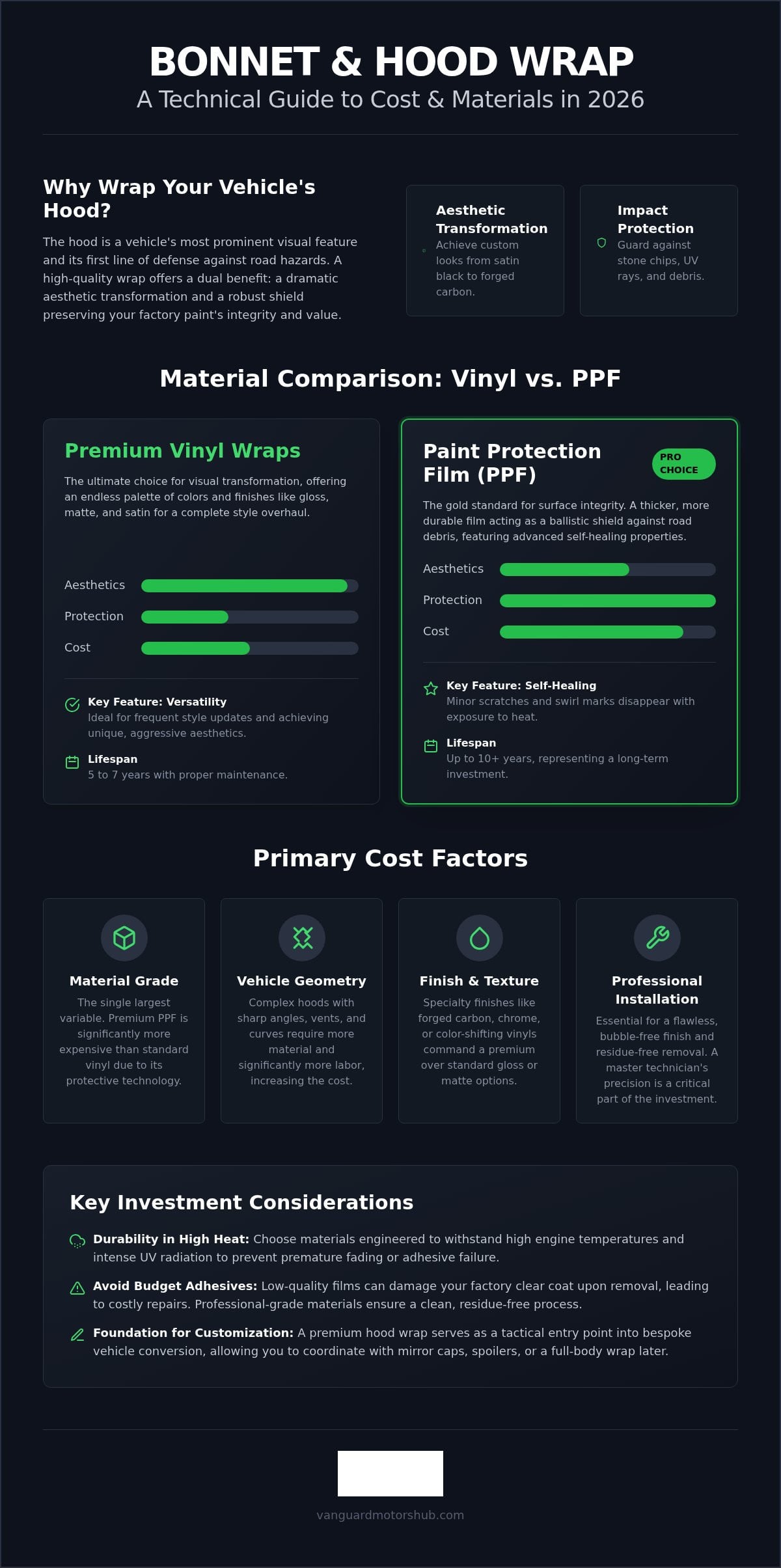
Modern owners often find themselves choosing between pure style and absolute security. Style-focused vinyl wraps offer an endless palette of textures, from satin finishes to deep metallic flakes. These are ideal for those prioritizing a complete visual overhaul. Conversely, protection-focused films, known as PPF, are significantly thicker and designed to absorb high-velocity impacts from gravel and stones. We now see the emergence of hybrid solutions that bridge this gap. These advanced films provide the vibrant color depth of a wrap with the self-healing properties of a premium protection film. This dual-purpose technology is a significant factor in the overall bonnet and hood wrap cost, as it provides a comprehensive solution in a single application that guards against stone chips while delivering a custom look.
The Rise of Partial Wrapping
Full-body transformations are a major investment in both time and resources. Many enthusiasts now opt for partial wrapping as a tactical entry point into customization. By focusing solely on the hood, you create a striking two-tone aesthetic that mirrors the design language of elite, track-focused supercars. This approach allows for meticulous creative coordination across the vehicle. You can match your new hood finish with mirror caps, spoilers, or roof panels to create a cohesive, aggressive stance. It’s a purposeful way to enhance the vehicle’s silhouette without the complexity of a full-body overhaul. Because the hood is the car’s visual centerpiece, a high-quality wrap here provides the highest ROI for your bonnet and hood wrap cost, making it the preferred choice for those seeking immediate, head-turning results. This trend is particularly popular for owners wanting to experiment with forged carbon textures or high-contrast accents before committing to a complete color change.
Comparing Materials: Vinyl vs. PPF vs. Carbon Fiber
Material selection is the most significant variable in determining your final bonnet and hood wrap cost. While entry-level films offer a quick aesthetic shift, professional-grade materials provide structural benefits that justify their premium. Peelable Paint stands as the elite alternative for owners who demand a seamless, factory-quality color change with the added benefit of complete reversibility. Understanding these nuances is critical before committing to an upgrade, as each material offers a different balance of durability, thickness, and finish quality.
Premium Vinyl Wraps
Vinyl remains the most versatile choice for visual transformation. Gloss finishes provide a classic look that mimics fresh clear coat, while matte and satin options deliver a modern, aggressive edge. These films are engineered for rapid application, allowing for a complete style overhaul in a fraction of the time required for traditional paint. High-quality vinyl typically offers a lifespan of five to seven years, provided it receives meticulous care. When researching How Much Does It Cost To Wrap A Car?, it’s clear that vinyl sits at the intersection of affordability and high-impact style, making it a popular choice for those who enjoy frequent aesthetic updates.
Paint Protection Film (PPF) for Hoods
PPF is the gold standard for owners who refuse to compromise on surface integrity. Unlike standard vinyl, modern PPF features advanced self-healing technology. The heat generated by your engine or the sun allows the film to “heal” minor swirl marks and abrasions automatically, maintaining a flawless surface. This material is significantly thicker than vinyl, acting as a ballistic shield against high-velocity road debris and stone chips. It’s widely considered The Ultimate Shield: Why Paint Protection Film is the Standard for Excellence in 2026, ensuring your factory paint remains in showroom condition regardless of mileage. Investing in PPF is a strategic decision that preserves the resale value of high-end vehicles.
Carbon Fiber and Forged Aesthetics
Achieving a high-performance look requires a choice between carbon-look vinyl and genuine overlays. While vinyl mimics the weave pattern, it lacks the depth and structural rigidity of authentic materials. Installing carbon fiber car parts requires surgical precision to ensure the weave alignment is perfect across every contour of the bonnet. In 2026, forged carbon has emerged as the signature aesthetic for supercars, offering a unique, marbled finish that standard weaves cannot replicate. This material provides an elite, bespoke appearance that signals technical excellence. If you’re ready to elevate your vehicle’s presence, consult with our technicians today for a bespoke material assessment tailored to your performance goals.
Cost Factors: What Influences the Price of a Hood Wrap?
Focusing solely on the sticker price of an automotive modification is a common mistake for luxury vehicle owners. When evaluating the bonnet and hood wrap cost, it’s essential to look beyond the initial quote and consider the technical requirements of your specific machine. A ‘cheap’ quote often signals the use of inferior adhesives that can bond too aggressively to your factory clear coat. This leads to permanent paint damage during removal, effectively turning a budget upgrade into a costly restoration project. Quality isn’t just about the finish; it’s about the safety of the underlying surface.
Vehicle geometry plays a decisive role in the final investment. A flat, expansive hood on a standard sedan requires significantly less technical skill than the aggressive vents, deep scoops, and sharp body lines found on high-performance supercars. These complex surfaces demand precise heat management and expert tensioning to prevent the film from lifting or overstretching. Master-tier installers command a premium because they possess the anatomical knowledge of automotive panels to ensure a seamless finish that resists the elements. You aren’t just paying for material; you’re paying for the steady hand that handles a blade near your factory paint.
Material Quality and Brand
Professional-grade films from industry leaders like 3M offer consistent thickness and UV stability that entry-level materials simply cannot match. Specialized finishes, such as mirror-finish chrome or textured forged carbon, involve higher manufacturing costs and more difficult installation techniques. For those seeking the absolute pinnacle of customization, Peelable Paint Applications provide a factory-level result. This technology eliminates visible edges and provides a seamless aesthetic that standard vinyl films struggle to replicate on complex hood designs. It offers the depth of real paint with the protection of a high-end wrap.
Preparation and Paint Correction
A wrap is only as good as the surface beneath it. Meticulous supercar detailing is a non-negotiable prerequisite for a premium installation. Any existing scratches, oxidation, or microscopic contaminants will be magnified once the film is applied, potentially compromising the adhesive bond. The total quote often includes the labor-intensive removal of old residue and the correction of minor paint defects to ensure a flawless foundation. Operating in a contaminant-free environment is what separates a world-class installation from a temporary fix. This preparatory phase ensures maximum adhesion and a finish that looks like it rolled off the assembly line.
Durability and Maintenance in High-Heat Climates
Intense national heat presents a unique set of thermal challenges for any automotive film. Because the engine generates significant heat from below while the sun beats down from above, the bonnet becomes a high-stress zone for adhesives. UV radiation can cause inferior materials to become brittle or lose their color depth within a single season. UV-stable adhesives are the critical component for national longevity, ensuring the film remains pliable and bonded despite extreme temperature fluctuations. To maintain the integrity of your investment and manage the long-term bonnet and hood wrap cost, meticulous edge-sealing is essential. This technical step prevents dust and sand from infiltrating the adhesive layer, which is the leading cause of premature lifting in arid environments.
Cleaning and Aftercare Protocols
Maintaining a flawless finish requires a shift in your detailing routine. Touchless washing is the preferred method for wrapped bonnets to avoid the micro-scratches often caused by mechanical brushes or abrasive mitts. High-pressure water should be used with caution, keeping the nozzle at a safe distance from edges to prevent delamination. We recommend using specialized ceramic-based sealants designed for vinyl or PPF to provide an extra sacrificial layer against UV rays. These products help repel contaminants and make the surface easier to clean. It’s vital to address chemical threats like bird droppings or tree sap immediately. In high-heat environments, these substances can bake into the film within hours, leading to permanent staining that compromises the aesthetic.
Professional Removal: Protecting Your Investment
The true value of a premium wrap is revealed during its removal. Attempting a DIY removal often results in catastrophic paint peeling or ghosting, where the adhesive pulls the top layer of clear coat or leaves behind a stubborn residue. Professional technicians use controlled heat and specialized solvents to ensure the factory finish remains untouched. You should consider replacing your wrap every five to seven years to avoid the material becoming permanently bonded to the clear coat. If a previous low-quality installation has already caused issues, professional cosmetic car repair can often restore the surface before a new application. Protecting your vehicle’s resale value is a primary factor in the total bonnet and hood wrap cost. For a technical assessment of your current wrap’s condition, contact our master installers via WhatsApp for expert guidance.
The Vanguard Standard: Why Professional Installation Matters
Excellence in automotive modification isn’t an accident; it’s the result of meticulous engineering and a commitment to surgical precision. At Vanguard Motors Dubai, we view the engine cover not merely as a metal panel, but as the visual gateway to a vehicle’s identity. When you evaluate the total bonnet and hood wrap cost, you’re investing in more than just film. You’re securing the expertise of master technicians who understand the unique thermal signatures and exotic materials of high-performance machines. Our approach ensures that every application, whether it’s a deep-gloss vinyl or the advanced protection of Peelable Paint, meets a standard that mirrors the factory finish of a showroom supercar.
We believe in total vehicle harmony rather than isolated upgrades. This philosophy is why we specialize in the integration of bespoke car conversions with our premium wrapping services. A carbon fiber hood wrap should never look like an afterthought; it should complement the aggressive lines of a Brabus or Mansory kit with absolute cohesion. For owners who demand perfection across every surface, the Vanguard Premium Package provides a holistic aesthetic strategy. This comprehensive service aligns your bonnet’s finish with the rest of the vehicle’s profile, ensuring a seamless transition between protection and performance styling.
Precision Engineering and Customization
Our facility utilizes advanced cutting technology to achieve edge alignment that is indistinguishable from original paint. We don’t rely on generic templates; instead, we customize each application to the specific contours of your model. This is especially critical for luxury and supercar components where complex vents and active aero elements require specialized handling. We also offer custom color-matching services that allow you to create a truly unique finish. By utilizing only high-grade, heat-resistant materials, we guarantee that your investment will withstand the rigorous demands of high-speed driving and intense environmental heat without bubbling or discoloration.
Next Steps for Your Vehicle Transformation
The journey toward a flawless automotive finish begins with a technical assessment of your vehicle’s current condition. We recommend combining a hood wrap with our luxury car detailing services to ensure the entire machine reflects a uniform standard of excellence. This integrated approach is the most efficient way to manage your bonnet and hood wrap cost while maximizing the visual impact of the upgrade. Our technicians are ready to guide you through material selection and design possibilities. It’s time to elevate your vehicle’s presence on the road. Contact Vanguard Motors Dubai for a personalized quote and discover the difference that professional precision makes.
Elevate Your Vehicle’s Visual Signature
Securing a flawless finish for your engine cover is a tactical decision that balances aesthetic impact with long-term paint preservation. The bonnet and hood wrap cost reflects material engineering, meticulous surface preparation, and the technical mastery required for complex geometries. Whether you choose the self-healing resilience of PPF or the seamless excellence of advanced peelable paint technology, the focus must remain on quality that withstands intense environmental heat. Vanguard Motors Hub stands as the national leader in bespoke car kit conversions and luxury supercar detailing, ensuring every project meets a world-class standard of precision.
Don’t settle for temporary solutions that risk your factory clear coat. Our specialists are ready to transform your machine into a masterpiece of form and function. Take the definitive step toward a superior automotive transformation and protect your investment with the industry’s most durable materials. Request a Premium Wrap Consultation at Vanguard Motors Hub and experience the pinnacle of automotive protection. Your vehicle deserves a finish that commands respect on every road.
Frequently Asked Questions
How much does a bonnet wrap cost on average?
The total investment for a professional application depends primarily on your choice of material and the complexity of the vehicle’s design. High-performance films and specialized finishes, such as forged carbon or metallic vinyl, require more technical precision than standard gloss options. Factors like the hood’s surface area and the presence of intricate vents or scoops will also influence the final bonnet and hood wrap cost, as these elements demand additional labor and material tensioning.
Will a hood wrap damage my car’s original paint?
A professionally installed wrap acts as a protective shield and will not damage factory paint if the underlying surface is in good condition. Premium films use advanced adhesives designed for safe removal without leaving residue or stripping the clear coat. However, the risk of damage increases significantly with low-quality materials or improper DIY removal. Entrusting the process to experts ensures the integrity of your factory finish remains preserved throughout the film’s lifespan.
How long does a professional bonnet wrap last?
You can expect a high-quality, professionally installed wrap to last between five to seven years under optimal conditions. In high-heat environments, the lifespan may be slightly shorter due to intense UV exposure and thermal cycles from the engine. Regular maintenance, such as using UV-stable sealants and parking in shaded areas, is essential to prevent the film from becoming brittle. Timely professional removal is recommended to ensure the adhesive doesn’t bond permanently to the paint.
Can I wrap a carbon fiber hood with PPF?
Applying Paint Protection Film over a carbon fiber hood is highly recommended to preserve the expensive resin finish. Carbon fiber is susceptible to UV degradation and yellowing over time, and PPF provides a vital barrier against solar radiation and high-velocity stone chips. This combination ensures that the structural and aesthetic integrity of the carbon weave remains flawless. It is a strategic upgrade for any high-performance vehicle featuring exposed or painted carbon fiber components.
Is it better to wrap a hood or paint it?
Wrapping offers several advantages over traditional painting, most notably reversibility and paint protection. A wrap allows you to experiment with bold colors and textures while keeping the original factory paint untouched, which is critical for maintaining resale value. Painting is a permanent modification that can be more expensive and time-consuming. For owners who value flexibility and surface preservation, a premium wrap is the superior choice for modern automotive customization.
How do I maintain my hood wrap in the summer heat?
Maintaining a wrap in extreme temperatures requires a proactive aftercare routine centered on UV protection and heat management. We recommend regular touchless washing to remove abrasive dust and contaminants that can bake into the film. Applying a ceramic-based sealant specifically formulated for vinyl or PPF will provide a sacrificial layer against solar radiation. Whenever possible, park your vehicle in a climate-controlled environment or shaded area to minimize the thermal stress on the adhesive layers.
Can a hood wrap cover existing scratches or dents?
While a wrap can mask minor surface swirl marks and very shallow scratches, it is not a solution for covering dents or deep paint chips. Because the film is extremely thin, any structural imperfections or texture on the paint will likely be magnified once the wrap is contoured to the panel. To achieve a flawless result, we recommend performing professional paint correction or cosmetic repairs before the installation process begins to ensure a smooth foundation.
How long does the installation process take?
The timeline for a premium installation typically ranges from one to three business days. This duration accounts for the meticulous surface preparation phase, which includes deep cleaning and decontamination to ensure maximum adhesion. Complex hood geometries with aggressive aerodynamic features require more time for precise trimming and edge-tucking. Rushing the process can lead to premature lifting, so we prioritize technical accuracy over speed to guarantee a finish that meets our elite standards of excellence.