
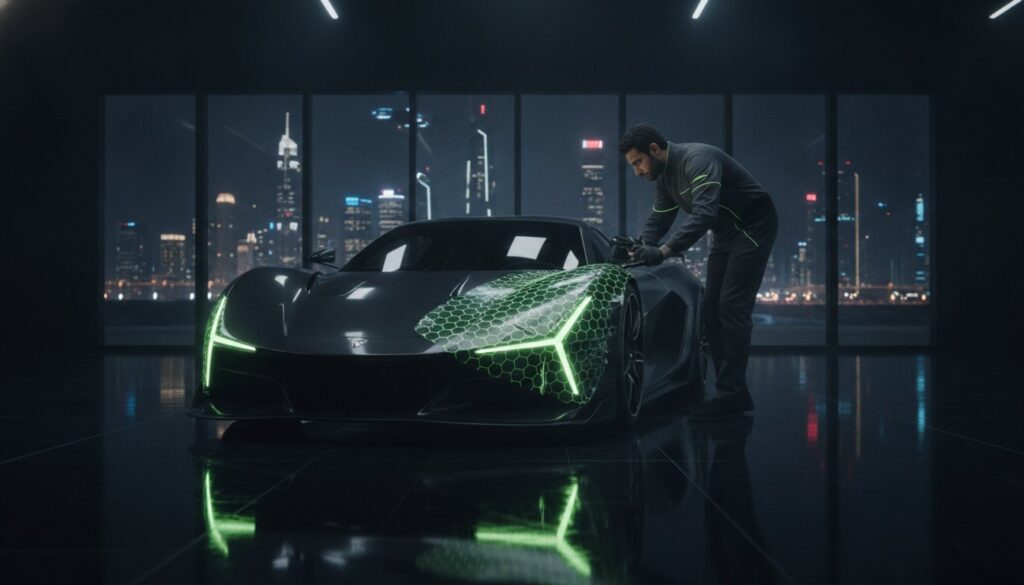
In the high-performance world of 2026, relying on yesterday’s detailing habits is the fastest way to devalue your automotive investment. You understand that maintaining a showroom-quality aesthetic requires more than a simple wash. It’s frustrating to see sand pitting on your front bumper or paint oxidation from intense UV exposure clouding your clear coat after a weekend drive. Professional car paint protection isn’t just a cosmetic luxury; it’s a vital sacrificial layer required for structural preservation in extreme climates.
We’re here to bridge the gap between outdated folklore and modern engineering. You’ll discover the truth about automotive preservation and how to shield your vehicle from the harshest environmental stressors. This guide debunks seven persistent myths, revealing how advanced solutions like the Vanguard Premium Package deliver a mirror-like finish and effortless maintenance. We’ll explore why traditional waxes fail and how elite-tier films provide the ultimate shield against physical road debris, ensuring your car looks as pristine as the day it left the showroom.
Key Takeaways
- Learn why factory clear coats offer insufficient defense against environmental damage and how to reinforce your vehicle’s exterior.
- Identify the functional differences between ceramic coatings and physical car paint protection to ensure your investment is shielded from rock chips.
- Understand the evolution of TPU materials that prevent yellowing and degradation, even in the most extreme 2026 climates.
- Master the maintenance techniques required to preserve hydrophobic surfaces and prevent swirl marks from improper washing.
- Discover how precision-engineered templates provide seamless coverage for complex carbon fiber parts and bespoke body kit conversions.
The Reality of Car Paint Protection: Why Factory Clear Coat Isn’t Enough
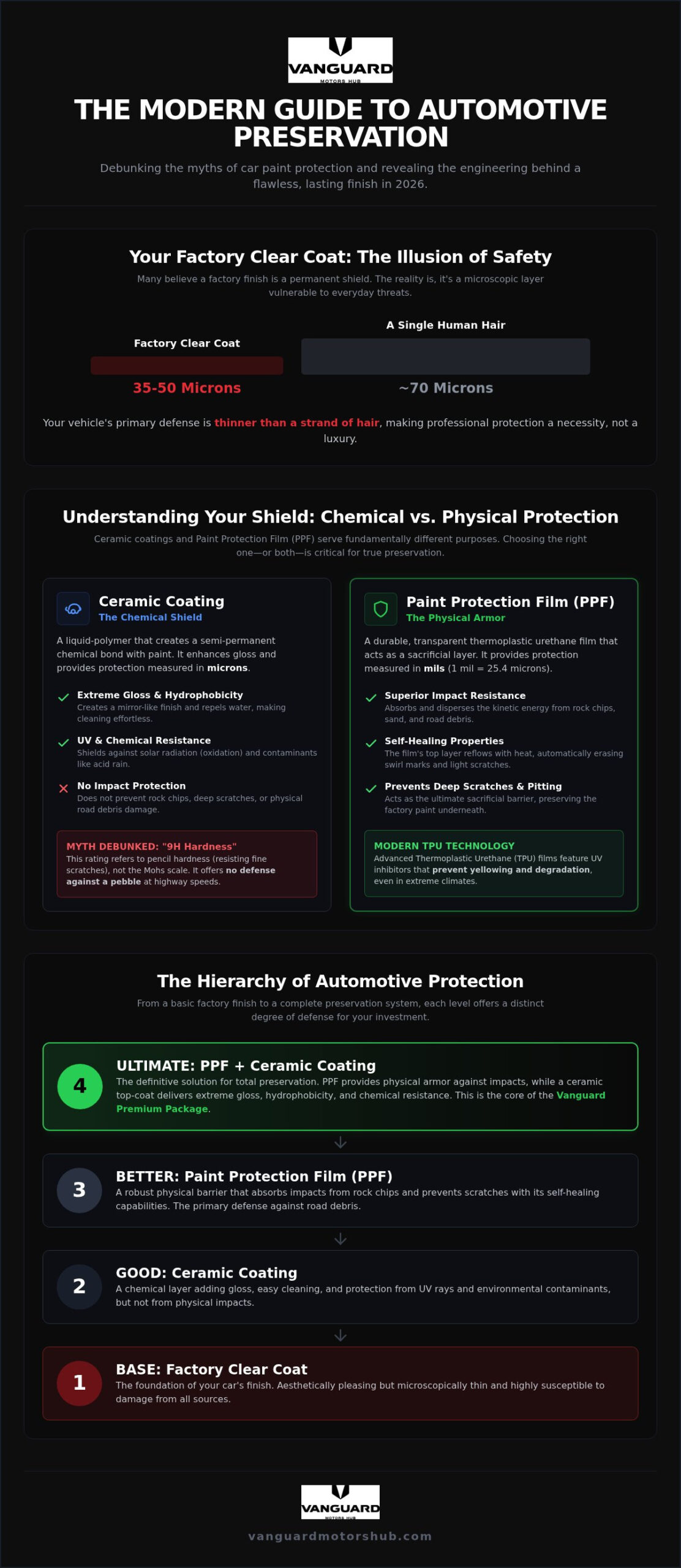
Modern automotive manufacturing is a marvel of efficiency, yet it often leaves enthusiasts with a false sense of security. Many owners believe a high-quality factory finish provides a permanent shield against the elements. This is a dangerous misconception. In reality, the clear coat applied at the factory is microscopic. It typically measures between 35 to 50 microns. To put that in perspective, a single human hair is roughly 70 microns thick. You’re effectively trusting the aesthetic integrity of your high-value asset to a layer thinner than a strand of hair.
By 2026, production standards prioritize rapid curing and environmental compliance over long-term resistance to harsh stressors. These factory finishes aren’t designed to withstand the chemical bombardment of acid rain, bird droppings, or industrial fallout. These substances act as catalysts for permanent etching. Professional car paint protection is essential to bolster this thin defense and ensure your vehicle’s finish remains immaculate.
The Sacrificial Layer Concept
A sacrificial layer is a secondary barrier designed to take the brunt of environmental abuse so your paint doesn’t have to. Think of it as a physical insurance policy for your exterior. High-performance Paint protection film (PPF) or peelable paint applications absorb the kinetic energy from road debris. Instead of fracturing the paint, the impact is dispersed through the protective medium. Investing in prevention is a logical financial decision. The cost of a full respray or carbon fiber repair far exceeds the investment in a holistic preservation package like the Vanguard Premium Package.
UV Degradation and Oxidation
Solar radiation is the most persistent enemy of automotive finishes. High-index UV rays penetrate the clear coat and break down paint polymers at a molecular level. This structural failure leads to visible degradation. You’ll notice fading, a chalky texture, or a sudden loss of color depth. These are the tell-tale signs that your vehicle’s surface is failing. Oxidation is the chemical reaction between oxygen and unprotected paint. Without a robust barrier, this process is inevitable, especially in climates with intense sun exposure. Protecting bespoke carbon fiber parts is particularly critical, as UV damage can cause the resin to yellow and delaminate over time.
Ceramic Coating vs. PPF: Debunking the “Bulletproof” Myth
There’s a persistent misconception in the automotive community that a ceramic coating is an impenetrable shield against all forms of damage. While these coatings are revolutionary, they’re often marketed with hyperbolic claims of being “bulletproof.” To truly protect your vehicle’s paint, you must understand the fundamental difference between chemical and physical barriers. Ceramic coatings are measured in microns, whereas Paint Protection Film (PPF) is measured in mils. This difference in thickness is the deciding factor when a rock flies toward your bumper at highway speeds.
Hydrophobicity is another area of confusion. Just because water beads and rolls off your hood doesn’t mean the surface can resist impact. Water beading is a chemical property of low surface tension. It has nothing to do with the mechanical strength required to stop a stone from fracturing your clear coat. Elite car paint protection strategies recognize that these two technologies serve entirely different purposes.
The Limitations of Ceramic Coatings
Ceramic coatings excel at gloss enhancement and chemical resistance. They create a semi-permanent bond with the paint, shielding it from bird droppings, acid rain, and UV-induced oxidation. However, the famous “9H hardness” rating is frequently misunderstood. This scale refers to pencil hardness, not the Mohs scale of mineral hardness. A 9H coating won’t stop a 120 km/h pebble from leaving a mark. For owners of high-performance assets, relying solely on a coating for physical defense is a mistake. Professional Supercar Detailing focuses on using coatings to preserve the finish, not to act as armor.
The Physical Strength of Paint Protection Film (PPF)
If you want to stop rock chips and sand pitting, PPF is the only solution. It acts as a robust sacrificial medium that disperses the kinetic energy of flying debris. Modern TPU films also feature a self-healing phenomenon. When exposed to heat from the sun or warm water, the top layer of the film actually flows back into place, erasing swirl marks and light scratches automatically. This makes the ultimate shield for those who actually drive their vehicles. It provides a level of durability that no liquid coating can replicate, especially on vulnerable areas like the front bumper and side mirrors.
The most sophisticated enthusiasts in 2026 choose a hybrid approach. They apply PPF to high-impact zones and layer a ceramic coating over the rest of the vehicle. This combination provides the physical impact resistance of film with the extreme gloss and ease of cleaning provided by ceramic technology. If you’re ready to define a bespoke preservation plan for your vehicle, you can consult with our technical experts today to discuss the best car paint protection for your specific needs.
Extreme Heat and Sand: Will Protection Film Yellow or Peel?
The fear that protective films will yellow or peel is rooted in the failures of early-generation materials. Don’t let outdated experiences with low-grade PVC films dictate your preservation strategy. Modern car paint protection has undergone a significant chemical evolution. While first-generation films relied on unstable polymers that reacted to UV radiation, today’s elite standards utilize Thermoplastic Polyurethane (TPU). This material is fundamentally different from the plastics of the past; it’s engineered for durability in extreme environments.
Modern aliphatic polymers are UV-stable. They resist the molecular breakdown that causes yellowing, even under the relentless exposure of high-performance driving environments. Peeling is almost always a result of poor installation rather than material failure. Precision edge-sealing and custom-template engineering ensure the film remains anchored to the bodywork. When applied correctly, the film is virtually indistinguishable from the paint it protects. It remains a clear, high-gloss shield that enhances the vehicle’s natural lines without compromising the color depth.
Combatting the Sandstorm Effect
High-speed travel in arid environments creates a sandblasting effect that can destroy a factory finish in a single season. Flying sand acts as an abrasive that pits the front bumper and leading edges of the hood. Modern films incorporate hydrophobic top coats that prevent sand from adhering to the surface. This makes cleaning effortless and reduces the risk of micro-scratches during maintenance. Advanced TPU formulations maintain high structural flexibility even in desert conditions where surface temperatures frequently exceed 50°C. This flexibility allows the film to absorb impacts without cracking or delaminating.
Thermal Stability of Modern Films
The premium films of 2026 are rated for extreme thermal stability. They’re designed to withstand rapid temperature fluctuations without losing their adhesive integrity. Interestingly, heat is a critical component of the self-healing process. When the surface is marred by light swirls, ambient heat allows the top coat to reorganize at a molecular level. This erases the imperfections automatically. High-end films also feature advanced breathability to ensure that moisture isn’t trapped between the film and the paint. This prevents the bubbling and hazing often seen in inferior products. For those seeking the gold standard in vehicle preservation, the Vanguard Premium Package integrates these high-stability films to ensure lasting aesthetic perfection.
Maintenance Myths: Does a Protected Car Ever Need Washing?
A common misconception among new owners is that high-end car paint protection renders a vehicle maintenance-free. While it’s true that hydrophobic surfaces repel water and many liquid contaminants, the “self-cleaning” claim is often an exaggeration. Dirt, road film, and industrial fallout still adhere to the surface through static electricity and atmospheric pressure. If you leave these contaminants on the film or coating for too long, they can bond to the surface, diminishing the very gloss you’ve invested in protecting.
You don’t need to scrub your vehicle to keep it clean. In fact, the “Scrub Myth” is responsible for more damage to protective films than almost any other factor. Modern maintenance relies on chemical efficiency rather than mechanical force. Periodic chemical decontamination is still necessary to remove embedded metallic particles. Iron removers are essential for maintaining the clarity of PPF, as they dissolve brake dust that would otherwise become a permanent part of the film’s texture. Meticulous care ensures the longevity of your investment.
The Two-Bucket Method for Protected Surfaces
Preserving the integrity of your ceramic bonds or film adhesive requires a specific protocol. The two-bucket method remains the gold standard for safe washing. Use one bucket for your pH-neutral soap solution and a second for rinsing your wash mitt. This prevents dirt from being dragged across the surface, which causes swirl marks. pH-neutral soaps are non-negotiable; harsh detergents can strip the hydrophobic top coat of your protection over time. Be cautious with high-pressure washers near film edges. Excessive pressure can force water under the film, leading to lifting or delamination. For those who prefer a professional touch, our Mobile Detailing Resource Guide provides deeper insights into elite maintenance routines.
The Importance of Paint Correction Before Protection
Many enthusiasts believe that applying car paint protection will hide existing scratches or swirl marks. This is a costly error. Transparent films and coatings act like a magnifying glass. They seal in whatever is beneath them, making defects a permanent visual flaw. If you don’t perform a comprehensive paint correction first, you’re essentially preserving the damage. Flawless surface preparation is the foundation of every elite installation. We recommend reviewing our guide on Paint Correction Before PPF to understand why this step is critical for a mirror-like finish. Achieving perfection requires a commitment to the process before the first layer of film is even touched.
Ready to restore your vehicle’s finish to showroom perfection before securing it for the future? Book a consultation with our detailing specialists to discuss your custom preservation plan.
Bespoke Protection: Safeguarding Carbon Fiber and Body Kits
High-performance modifications like Brabus or Mansory kits represent the pinnacle of automotive expression. Yet, many owners hesitate to apply protection, fearing that the aggressive vents and sharp angles of these conversions are too intricate for a seamless finish. This is a misconception. In 2026, custom template engineering has evolved to match the complexity of any aerodynamic component. Bespoke car paint protection is no longer limited to flat panels; it’s a precision-fit solution designed to wrap around the most challenging contours found on elite body kits.
Protecting these assets is a structural necessity rather than a cosmetic choice. Carbon fiber, while incredibly strong, relies on epoxy resins that are notoriously sensitive to UV radiation. Unlike the clear coat on your metal panels, these resins can yellow or become brittle much faster when exposed to the sun. The Vanguard Premium Package addresses these specific vulnerabilities by offering a holistic preservation strategy for modified vehicles. It ensures that every forged carbon element and wide-body flare remains in showroom condition, regardless of the environmental stressors they face.
Protecting High-Gloss Carbon Fiber
High-gloss carbon fiber is a magnet for both attention and environmental damage. The unique UV sensitivity of epoxy resins means that unprotected hoods and spoilers can lose their structural integrity and visual depth within just a few years of intense exposure. Specialized films with high-index UV blockers are required to shield these parts effectively. If your carbon components have already begun to show signs of wear, professional Carbon Fibre Parts Repair can restore the finish before a protective layer is applied. Sealing the surface after restoration prevents the cycle of degradation from restarting, maintaining the part’s value and appearance.
The Role of Peelable Paint in Customization
Peelable paint applications represent the new frontier of “invisible” protection for complex body kits. While traditional vinyl wraps often struggle with deep recesses and sharp edges, peelable paint is applied like a liquid. It flows into every crevice, providing 360-degree coverage that is indistinguishable from factory paint once cured. This technology offers the durability of PPF with the aesthetic flexibility of a custom spray job. It’s the ideal choice for safeguarding the aggressive lines of a bespoke conversion without the visible seams often associated with film. Discover the Vanguard Premium Package to see how this advanced technology provides total vehicle defense for your most prized high-performance assets.
Elevate Your Automotive Preservation Strategy
Your vehicle is more than just transportation; it’s a high-performance asset that demands meticulous care. We’ve debunked the myths that leave cars vulnerable to the elements. You now understand that a factory clear coat is a fragile starting point, not a final solution. True car paint protection requires the structural integrity of premium TPU films and the chemical precision of modern ceramic layers. For those driving bespoke Brabus or Mansory conversions, specialized protection isn’t optional; it’s the only way to safeguard your investment against the harsh 2026 climate.
Vanguard Motors Dubai stands as the national expert in supercar preservation. We specialize in protecting complex body kits and high-gloss carbon fiber with self-healing technology that erases the evidence of daily driving. Don’t leave your finish to chance. Secure Your Investment with Vanguard Motors Dubai today and experience the gold standard of vehicle defense. Your car’s future brilliance starts with a professional shield.
Frequently Asked Questions
Is car paint protection worth the investment for a new vehicle?
Professional car paint protection is a vital investment for new vehicles because it establishes a sacrificial barrier before environmental damage begins. Factory clear coats are often thinner than a human hair; this leaves the surface vulnerable to immediate stone chips and UV degradation. By applying high-grade TPU film or the Vanguard Premium Package early, you ensure the underlying paint remains in showroom condition. This significantly reduces long-term restoration costs while preserving the car’s aesthetic integrity.
How long does professional paint protection film (PPF) last?
Professional paint protection film typically lasts between seven to ten years depending on environmental exposure and maintenance protocols. In the 2026 automotive market, premium TPU materials are engineered to resist yellowing and cracking far longer than previous generations. Regular cleaning with pH-neutral solutions and avoiding abrasive techniques can extend this lifespan. If you drive frequently in harsh, sandy environments, periodic inspections ensure the film continues to provide the ultimate shield for your high-value asset.
Can I apply car paint protection myself at home?
Attempting a DIY installation is not recommended for high-performance vehicles due to the extreme precision required for a seamless finish. Professional installers use custom-template engineering and operate in climate-controlled, dust-free environments to prevent contaminants from being trapped under the film. Achieving the invisible look of elite car paint protection requires specialized tools and years of technical expertise. Mistakes made at home often lead to visible seams, bubbles, or lifting at the edges.
Does paint protection film affect the resale value of my car?
High-quality paint protection film significantly enhances the resale value of a vehicle by acting as documented proof of meticulous care. When it’s time to sell, removing the film reveals pristine original paint that hasn’t suffered from road rash, swirl marks, or oxidation. Buyers of luxury and supercars prioritize vehicles with preserved factory finishes. This protection transforms your exterior from a depreciating surface into a well-guarded asset that stands out in a competitive national market.
What happens if the PPF gets scratched or damaged?
Modern films feature self-healing technology that allows light scratches and swirl marks to vanish when exposed to heat. If the damage is severe enough to puncture the film, the affected panel can be stripped and replaced without repainting the entire car. This modular approach is much more efficient than traditional bodywork. Because the film is a sacrificial layer, it absorbs the kinetic energy of the impact, ensuring the structural paint underneath remains completely untouched.
Can you apply ceramic coating over paint protection film?
Applying a ceramic coating over your paint protection film is a highly effective hybrid strategy used by elite enthusiasts. This combination provides the physical impact resistance of the film with the extreme hydrophobicity and gloss of a ceramic layer. The coating makes the film even easier to clean; it prevents dirt and industrial fallout from bonding to the surface. It’s a sophisticated way to achieve a mirror-like finish while maintaining a robust physical shield.
How much does car paint protection typically cost nationwide?
The investment for professional car paint protection varies based on the vehicle’s size, the complexity of the body lines, and the level of coverage selected. A full-body wrap for a supercar with aggressive aerodynamic kits requires more labor and material than a standard front-end package. While we don’t quote fixed national prices due to these variables, enthusiasts should focus on the quality of the TPU film and the installer’s expertise. Investing in a comprehensive preservation package ensures long-term durability.
Will paint protection film damage the original paint when removed?
Professional-grade paint protection film will not damage the original factory paint during removal when performed by an expert. High-quality adhesives are designed to bond securely while remaining stable over time. When the film reaches the end of its lifespan, technical specialists use controlled heat to safely release the bond. This leaves the underlying surface exactly as it was on the day of installation. It’s a safe, reversible process that protects the vehicle’s long-term structural integrity.