
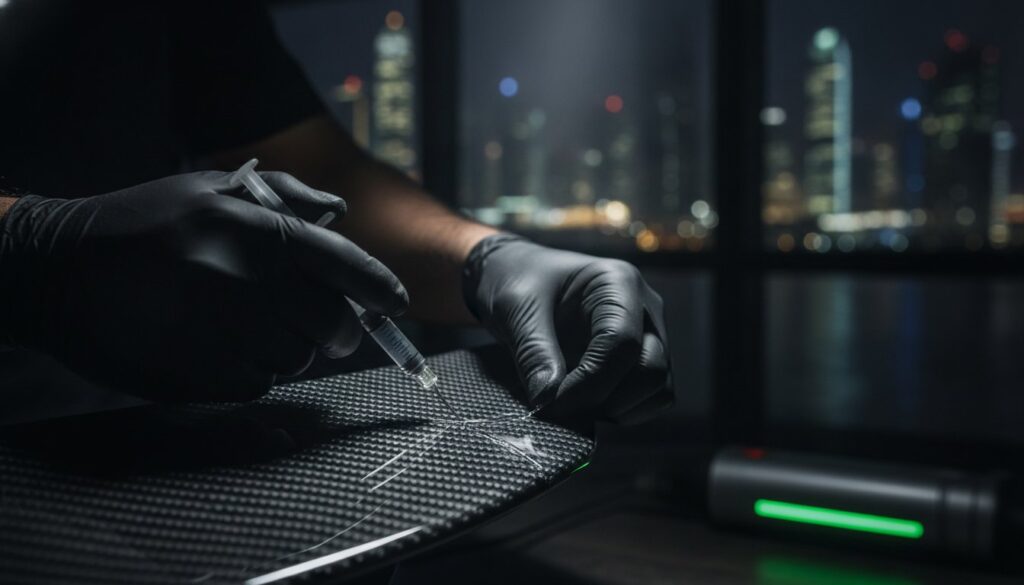
A single hairline fracture in a Mansory bumper shouldn’t necessitate an astronomical replacement bill, yet many owners still treat damaged composites as expensive write-offs. You understand that carbon fibre is the soul of modern performance, providing the structural backbone for the world’s most elite vehicles. It’s frustrating when a minor impact or UV degradation threatens the pristine look of your Brabus or Jetour conversion. Choosing professional carbon fibre repair allows you to bypass the staggering lead times of OEM replacements while ensuring your vehicle’s structural integrity remains uncompromised at high speeds.
This guide reveals how elite restoration techniques now rival factory production in both strength and finish. We’ll show you how structural engineering and precision resin matching can save your most valuable components without a hint of a mismatched weave. You’ll discover the specific processes used to achieve a UV-resistant, factory-gloss finish that ensures your car remains a masterpiece of form and function. From assessing internal delamination to perfecting the final clear coat, we’re diving into the meticulous world of high-end composite restoration to keep your performance machine in peak condition.
Key Takeaways
- Understand why carbon fibre’s non-linear damage patterns require an engineering-led approach rather than traditional metal bodywork techniques.
- Learn the importance of surgical cleanliness and advanced resin infusion in restoring the structural integrity of high-performance components.
- Discover the critical differences between surface cosmetic flaws and deeper structural fractures that can affect vehicle safety at speed.
- Evaluate why professional carbon fibre repair is superior to DIY kits for maintaining the intricate weave patterns of bespoke Brabus and Mansory kits.
- Explore how integrating restoration with premium Paint Protection Film (PPF) creates a long-term shield for your luxury composite investments.
The Science of Carbon Fibre Repair: Beyond Surface Aesthetics
Carbon fibre isn’t just a high-end finish; it’s a sophisticated reinforced polymer composite engineered for maximum rigidity. Unlike traditional steel or aluminium panels that deform predictably under stress, carbon fibre damage is non-linear. An impact that appears as a minor surface chip can often mask extensive internal delamination where the layers have separated. Carbon fibre repair is a process of restoring the matrix and reinforcement layers to original specifications. This technical restoration requires a deep understanding of how load is transferred through the weave.
Precision is the foundation of every successful restoration. Understanding The Science of Composite Repair allows technicians to rebuild the component’s structural integrity from the inside out. This isn’t a simple patch job. It’s a meticulous reconstruction of the carbon filaments and the epoxy resin matrix that binds them. By focusing on the molecular bond, we ensure that the repaired section is as strong as the original factory part. This engineering-led approach is what separates a professional restoration from a temporary cosmetic fix.
Choosing restoration over replacement offers significant economic and environmental advantages. Manufacturing a new carbon component is an energy-intensive process with a high carbon footprint. Professional restoration breathes new life into existing parts, reducing waste while preserving the value of your vehicle. For owners of rare or bespoke builds, keeping the original components is often the only way to maintain the car’s provenance and long-term investment value. It’s an efficient, sustainable way to keep your performance machine in peak condition.
Why Carbon Fibre is the Standard for Performance
Supercars rely on an exceptional strength-to-weight ratio to achieve precision aerodynamics and rapid acceleration. While this material is incredibly stiff, it remains vulnerable to sharp impacts and prolonged UV exposure. Without a protective barrier, the epoxy resin can yellow or become brittle over time. Professional restoration ensures the component’s performance profile remains unchanged, maintaining the high-speed stability and structural safety you expect. We restore the aerodynamic efficiency of your Brabus or Mansory kit, ensuring every line and curve functions exactly as the designers intended.
Repair vs. Replacement: The Decision Matrix
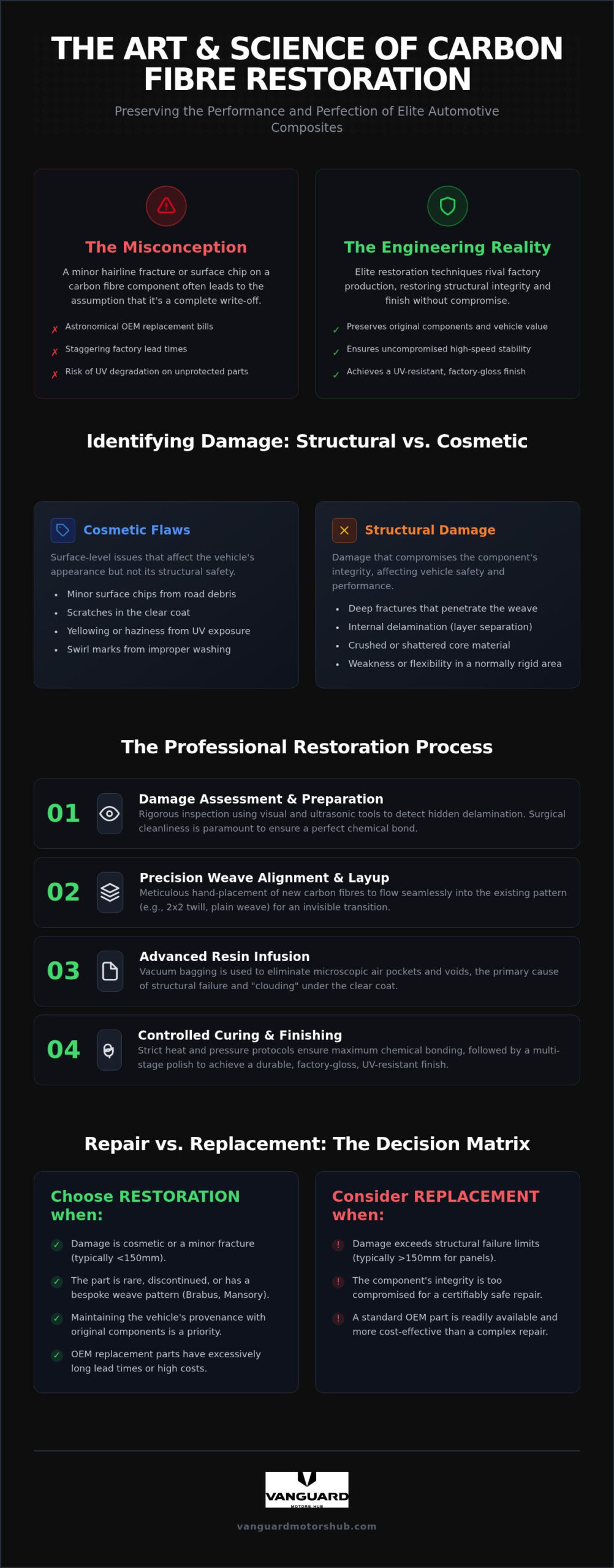
Deciding whether to restore or replace often comes down to rarity and logistics. OEM carbon parts, especially for bespoke kits, frequently face significant lead times and high procurement costs. Expert restoration is the logical choice for discontinued parts or rare weave patterns that are no longer in production. However, if the damage exceeds structural failure limits, typically around 150 mm for automotive panels, replacement becomes the safer path. For most cosmetic issues and minor structural fractures, a precision carbon fibre repair at Vanguard Motors offers an invisible, high-performance solution that returns your vehicle to the road faster.
The Professional Restoration Process: Engineering Perfection
Professional carbon fibre repair begins with surgical cleanliness. Any contaminant, from skin oils to airborne dust, can compromise the chemical bond between the original matrix and the new laminate. Unlike basic bodywork, this process utilizes advanced resin infusion and vacuum bagging to eliminate air pockets. These microscopic voids are the primary cause of structural failure and “clouding” under the clear coat. By maintaining a controlled environment, we ensure that the restoration meets the same rigorous standards as factory production.
Precision weave alignment is the hallmark of an elite restoration. It’s not enough to simply patch a hole; the new fibres must flow seamlessly into the existing pattern to ensure an invisible transition. This requires meticulous hand-placement and a deep understanding of how different weaves, such as 2×2 twill or plain weave, behave during the resin curing process. Following the layup, we employ strict curing protocols. Monitoring heat and pressure ensures maximum chemical bonding, resulting in a component that regains its original stiffness and durability.
Step 1: Damage Assessment and Surface Preparation
Before the first layer of fabric is laid, we conduct a rigorous assessment. Visual inspection only goes so far, so we often use ultrasonic tools to detect hidden delamination within the laminate stack. Once the extent of the damage is mapped, we remove fractured fibres with surgical precision. This involves creating a “scarf joint,” which is a tapered edge that increases the surface area for bonding. It ensures that stress is distributed evenly across the repair rather than concentrating on a single seam. This level of engineering is why carbon is now a new tool for bridge repairs and other critical structural applications.
Step 2: Laminate Reconstruction and Weave Matching
Restoring the aesthetic perfection of a Mansory or Brabus kit requires an artist’s eye and an engineer’s hand. We match the specific weave pattern, whether it’s standard twill or the complex aesthetics of forged carbon. Each layer is reconstructed to match the original component’s thickness and fibre orientation. We use high-grade epoxy resins designed for high-heat environments to ensure long-term structural integrity. This layer-by-layer approach prevents the “ghosting” effect where repair lines become visible under the clear coat over time. if you’ve noticed a hairline fracture in your composite trim, you can speak with our technical team to evaluate the best restoration path.
Identifying Damage: Structural vs. Cosmetic Issues
Distinguishing between a surface blemish and a deep structural failure is the first step in any professional carbon fibre repair. While carbon is renowned for its strength, it behaves very differently from metal when subjected to stress. Metal dents; carbon shatters or delaminates. Owners of high-performance vehicles often face a choice between a simple aesthetic touch-up and a full laminate restoration. Knowing how to spot the early warning signs of composite fatigue can save an elite component from becoming a total loss.
Cosmetic Imperfections and UV Damage
Surface issues often begin as minor clear coat scratches or the dreaded “white” impact marks. These white spots occur when the resin matrix is crushed by road debris, even if the underlying fibres remain intact. If left untreated, stone chips create an entry point for moisture ingress. This water can eventually cause the clear coat to peel or “bloom,” ruining the aesthetic of a bespoke Brabus or Jetour kit. In regions with intense solar exposure, UV radiation is a constant threat. It breaks down the chemical bonds in standard resins, leading to a dull, yellowed appearance that robs the material of its signature depth.
Restoring this deep gloss requires more than just polishing. It involves stripping the degraded layers and reapplying high-solids, UV-stable clear coats. This process doesn’t just improve the look; it provides a fresh protective shield against the elements. When performed correctly, this restoration returns the part to its factory-fresh brilliance, ensuring the weave pattern pops with the clarity expected of a luxury supercar.
Structural Fractures and Impact Damage
Structural damage is often more insidious because it can hide beneath a seemingly intact surface. Delamination occurs when the individual layers of carbon fabric begin to separate, often caused by a sharp impact or excessive vibration. This is a critical safety concern for high-load components like front splitters and rear wings. If these parts lose their rigidity, they can fail catastrophically under aerodynamic load at high speeds. You might see fine, splintered fibres or “spider-web” cracks that indicate the structural matrix has been compromised.
Internal cracking is particularly dangerous because it’s invisible to the naked eye. A part may feel solid but have lost a significant portion of its original stiffness. For any component that provides downforce or structural support, reinforcement is a necessity. A professional carbon fibre repair at Vanguard Motors addresses these hidden flaws by rebuilding the laminate stack. We ensure that every repaired part meets the original engineering tolerances, providing peace of mind whether you’re on the track or the open road.
Professional Restoration vs. DIY Repair Kits
DIY kits often promise showroom results for a fraction of the cost. However, for a Ferrari or a Lamborghini, these kits are a significant liability. Professional carbon fibre repair relies on equipment that simply cannot be replicated in a home garage. Hand-applying resin without vacuum pressure inevitably leads to trapped air pockets and a compromised bond. In contrast, industrial vacuum pumps and autoclaves ensure that resin is infused into every filament, creating a part that is as dense and strong as the original factory component.
Professional spray booths and precision tooling are essential for a flawless finish. Without a strictly controlled environment, dust and humidity will ruin the clear coat application. Amateur attempts frequently use inferior resins that lack high-grade UV stabilisers. These materials might look clear initially, but they will yellow and become brittle after just a few months of exposure to the sun. True restoration requires industrial-grade materials that match the chemical properties of the original laminate.
The Aesthetic Risk of Amateur Repairs
The visual complexity of a 2×2 twill or forged carbon weave is incredibly delicate. DIY sanding is the most common cause of permanent damage; it’s easy to sand through the resin and catch the fibres themselves. This creates a permanent “fuzz” that no amount of clear coat can hide. These errors lead to weave distortion and uneven gloss levels that are immediately apparent to any discerning eye. For a luxury vehicle, a botched repair doesn’t just look poor; it significantly devalues the car. Achieving that deep, mirror-like finish requires industrial sanding stages and high-solids clear coats that are only available to specialists.
Structural Safety and Reliability
Beyond the aesthetics, the structural integrity of your vehicle is at stake. Components like hoods, splitters, and wings are engineered with specific load paths to handle extreme aerodynamic forces. A brittle, hand-laid repair lacks the flexibility and tensile strength of a factory laminate. At high speeds, these amateur patches can fail catastrophically, potentially causing the part to detach or shatter. For a deeper dive into these technical requirements, read our Carbon Fibre Car Parts Repair Guide. Ensuring your safety requires a restoration that respects the original engineering. If you need a professional assessment of your composite components, contact our technical experts today.
Bespoke Carbon Solutions at Vanguard Motors
Vanguard Motors serves as a sanctuary for high-performance engineering and visionary design. We specialise in the intricate art of carbon fibre repair, focusing on the bespoke components that define the world’s most exclusive vehicles. Whether it’s a Mansory aero-blade or a Brabus diffuser, our team understands that these parts are essential to your car’s identity and market value. We utilise aerospace-grade resins and meticulous layup techniques to ensure every restoration meets our uncompromising standards for tensile strength and optical clarity. This commitment to precision ensures that your vehicle’s aerodynamic profile remains exactly as the manufacturer intended.
A successful repair is only the first step in our comprehensive restoration cycle. We ensure a seamless integration by aligning our work with existing Paint Protection Film (PPF) installations. This holistic approach shields the newly restored weave from high-velocity stone chips and harsh environmental degradation. Our facility also offers custom carbon fibre installation, allowing for unique cosmetic enhancements that push the boundaries of traditional styling. We treat every project as a fusion of technical excellence and creative expression, ensuring your car remains a masterpiece of form and function.
Restoring Elite Body Kit Components
Aerodynamic components from houses like Mansory and Jetour feature complex, aggressive geometries that demand specialised handling. These aren’t standard panels; they are precision-engineered instruments of downforce. We ensure that every curve and angle is restored to its original aerodynamic profile. Perfect fitment is non-negotiable for aftermarket conversions. For those looking to elevate their build further, our Brabus Body Kit Installation Guide provides a detailed look at how we execute these high-stakes transformations with surgical precision. We don’t just fix parts; we preserve the performance integrity of your entire conversion.
The Vanguard Standard: Protection and Finish
Our commitment to excellence extends into the final finishing stages. By combining our repair expertise with premium supercar detailing, we achieve a level of depth and gloss that standard body shops simply cannot match. We often recommend applying ceramic coatings or a fresh layer of PPF over repaired carbon to seal the matrix against heat and oxidation. This extra layer of security maintains the factory-fresh finish for years. Final quality control involves multi-angle light inspections to guarantee the repair is invisible to the naked eye. Your investment remains pristine, and your performance remains absolute.
Secure the Future of Your High-Performance Composites
Restoring luxury composites requires a precise synergy of aerospace engineering and artistic vision. You now understand how distinguishing between surface blemishes and deep delamination is vital for maintaining your vehicle’s structural safety during high-speed manoeuvres. Professional carbon fibre repair at Vanguard Motors moves beyond simple cosmetic fixes by utilising vacuum-sealing technology and aerospace-grade resins to rebuild the laminate matrix. This meticulous approach ensures your elite components regain their original stiffness while maintaining a flawless, factory-fresh appearance.
As specialists in Brabus and Mansory kit restorations, we deliver seamless aesthetic matching for even the most intricate luxury weaves. Don’t let minor road debris or UV degradation compromise the value of your bespoke conversion or the efficiency of your aerodynamics. Our technical experts are ready to return your machine to its pristine state with uncompromising care. Restore Your Performance: Book a Carbon Fibre Consultation at Vanguard Motors today. Your vehicle deserves a standard of excellence that matches its engineering.
Frequently Asked Questions
Can carbon fibre actually be repaired or should I always replace it?
Carbon fibre is absolutely repairable and often preferred over replacement for rare components. Professional restoration preserves the value of bespoke kits like Brabus or Mansory, which often have high replacement costs and long lead times. While a part with damage exceeding 150 mm may require replacement for safety, most fractures and delaminations can be restored to factory standards. This process ensures you maintain the original integrity of your vehicle’s performance profile.
How long does a professional carbon fibre repair typically take?
The timeline for a professional carbon fibre repair depends on the complexity of the damage and the required curing cycles. A comprehensive restoration typically involves precision surface preparation, laminate reconstruction, and multiple stages of clear coat application. Each resin layer must reach full chemical cross-linking to ensure structural safety. While minor cosmetic fixes are faster, structural repairs for high-load components require several days in a controlled environment to achieve a factory-level finish.
Will the repaired section be as strong as the original part?
A professionally repaired component restores the original structural integrity and stiffness of the part. By using aerospace-grade resins and vacuum-sealing technology, we eliminate microscopic air pockets that weaken the laminate. This ensures that the load-bearing paths within the composite remain consistent with factory specifications. When executed by technical experts, the restored section is engineered to withstand the same aerodynamic forces and high-speed stresses as a brand-new OEM component.
Can you match the specific weave pattern of my factory carbon fibre?
We specialise in matching the exact weave patterns of factory and aftermarket carbon fibre. Whether your vehicle features a standard 2×2 twill, a plain weave, or the complex aesthetics of forged carbon, our technicians align the new fibres with surgical precision. This attention to detail ensures an invisible transition between the original material and the repaired section. It’s an essential step for maintaining the visual perfection of elite body kits and interior trims.
Does professional carbon repair include clear coat restoration?
Every professional restoration includes a multi-stage clear coat process to achieve a factory-fresh gloss. This isn’t just about aesthetics; the clear coat acts as a critical protective barrier against moisture ingress and chemical contaminants. We use high-solids, UV-stable clear coats that prevent the resin from becoming brittle or yellowing over time. This ensures your carbon components retain their deep, three-dimensional look while resisting the harsh effects of environmental exposure.
Is it possible to repair carbon fibre that has yellowed from the sun?
It’s possible to restore carbon fibre that has yellowed due to prolonged solar exposure. This degradation usually occurs in the top layers of the resin or the clear coat rather than the fibres themselves. Our process involves carefully stripping the yellowed material and reapplying advanced UV-resistant resins and clear coats. This technique returns the composite to its original clarity and depth, effectively reversing the signs of ageing and protecting the part from future UV damage.
What is the difference between cosmetic and structural carbon repair?
Cosmetic repair focuses on surface-level issues like clear coat scratches, stone chips, or minor resin clouding. These flaws affect the appearance but not the safety of the component. Structural repair addresses deeper issues like fractured fibres, delamination, or internal cracks. These problems compromise the part’s rigidity and require a full laminate reconstruction. Identifying the difference is crucial for high-load parts like wings and splitters where structural failure could be catastrophic at speed.
Can I apply PPF or ceramic coating immediately after a carbon repair?
You should wait for the resin and clear coat to reach full chemical maturity before applying Paint Protection Film (PPF) or ceramic coatings. Applying these protections too early can trap outgassing solvents, which may lead to bubbling or adhesion failure. Once the curing process is complete, however, installing PPF is highly recommended. It provides a long-term shield for your repaired carbon, preventing future impact damage and ensuring the restoration remains pristine for years.