
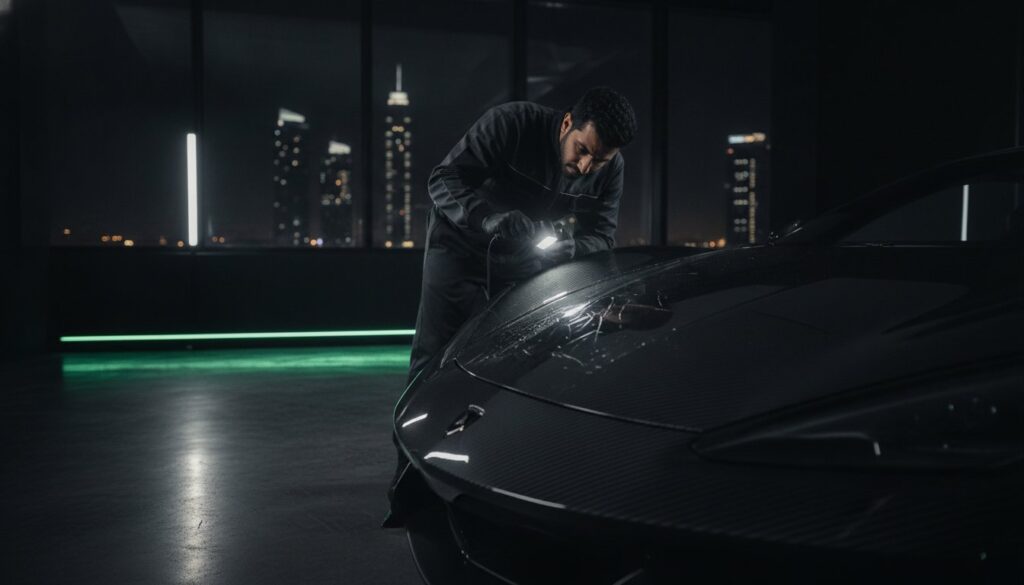
A single hairline fracture in your supercar’s carbon fiber isn’t just a cosmetic blemish; it’s a direct threat to the aesthetic integrity and resale value of your investment. You’ve likely spent hours admiring the depth of that weave, only to feel a surge of panic when the sun catches a spiderweb of cracks across the hood or wing. It’s a common fear among elite owners that fixing cracked carbon fiber clear coat requires a full, expensive replacement of the entire component.
Rest assured, most clear coat failures are entirely reversible when handled with professional precision. This guide empowers you to master the art of identifying, repairing, and permanently protecting your carbon to restore that signature mirror-finish. We will preview the technical repair process, from surgical sanding techniques to the application of high-solids UV-stable coatings, ensuring your vehicle maintains its elite status on the road and in the showroom.
Key Takeaways
- Distinguish between aesthetic spider webbing and structural delamination to accurately assess the health of your vehicle’s carbon components.
- Master the professional multi-stage protocol for fixing cracked carbon fiber clear coat to restore a flawless, high-gloss finish.
- Evaluate the critical risks of DIY repairs versus the precision of professional-grade equipment and controlled environments.
- Implement a “Repair and Protect” strategy using Paint Protection Film (PPF) to provide a permanent barrier against UV damage and impacts.
- Learn how bespoke restoration services preserve the elite aesthetic and long-term value of specialized Brabus and Mansory carbon kits.
Diagnosing Carbon Fiber Damage: Surface Cracks vs. Structural Failure
Maintaining the visual perfection of your vehicle requires a keen eye for detail. High-performance components built from Carbon fiber reinforced polymer are engineered for resilience, but their aesthetic appeal depends entirely on the integrity of the clear coat. Before committing to fixing cracked carbon fiber clear coat, you need to understand exactly what you’re looking at. Diagnostic accuracy prevents you from wasting time on cosmetic fixes when a part is structurally compromised.
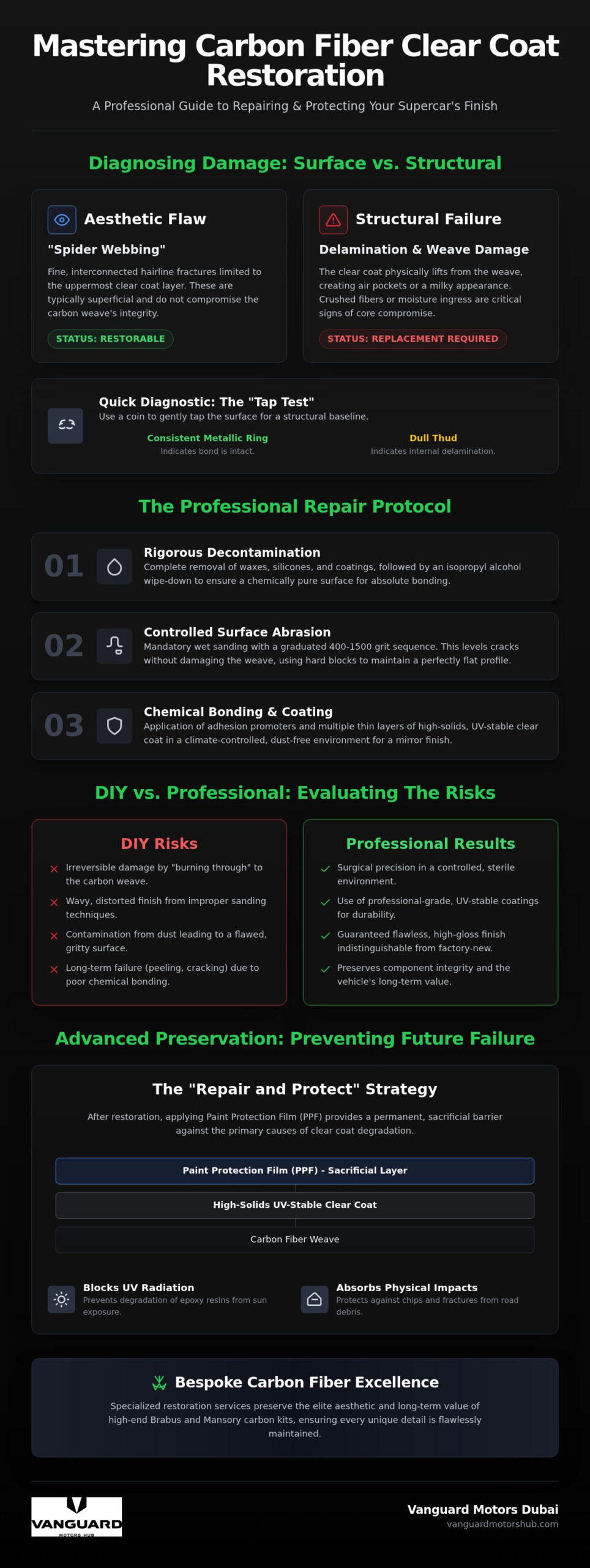
“Spider webbing” manifests as fine, interconnected hairline fractures. These are typically superficial and limited to the uppermost layer of the finish. Delamination is far more severe. This occurs when the clear coat physically lifts away from the carbon weave, creating visible air pockets or a milky, opaque appearance. Professional inspection is critical here because high-heat environments significantly accelerate the chemical breakdown of factory-standard finishes, making them brittle and prone to sudden failure.
We recommend the “tap test” for a quick structural baseline. Use a small, hard object like a coin to tap the affected area. A consistent, metallic ring confirms the bond is intact. A dull thud indicates internal delamination or resin failure. If the sound is inconsistent across the panel, the structural integrity of the CFRP may be at risk.
What Causes Clear Coat Cracking?
Understanding the root causes is essential before fixing cracked carbon fiber clear coat. Extreme thermal expansion cycles are the primary culprit. The rapid shift between intense midday heat and cooler evening temperatures forces the carbon and clear coat to expand and contract at different rates. Over time, this stress creates micro-cracks. UV radiation also plays a destructive role by degrading non-stabilized epoxy resins, while road debris provides the initial impact that shatters the protective surface.
When Restoration is No Longer an Option
There is a point where cosmetic restoration is no longer safe. If you see “crushed” fibers or any displacement in the carbon weave, the part has suffered structural damage. Similarly, signs of moisture ingress, such as dark staining deep within the layers, indicate that the core is compromised. In these instances, the risk of part failure under high-speed aerodynamic loads makes replacement the only professional choice. Cosmetic repair cannot restore the load-bearing capabilities of a fractured weave.
The 2026 Professional Protocol for Fixing Cracked Clear Coats
Executing the protocol for fixing cracked carbon fiber clear coat requires a surgical level of precision. It’s not a task for the uninitiated. The process begins with rigorous decontamination to remove every trace of wax, silicone, and ceramic coating. We follow this with a medical-grade isopropyl alcohol wipe down. This ensures the bond between the existing resin and the new finish is absolute. Without this chemical purity, the restoration will eventually fail under the stress of heat and vibration.
Precision is the hallmark of our workflow. We don’t just mask the damage; we systematically remove the compromised layers to build a new, resilient surface. This technical approach guarantees that the final result is indistinguishable from a factory-fresh component. If your vehicle’s carbon components show signs of degradation, consult our technicians for a professional assessment before the damage spreads into the structural weave.
Step 1: Controlled Surface Abrasion
Precision sanding is where most DIY attempts fail. We utilize a graduated grit sequence, starting at 400 and moving precisely up to 1500. This levels the cracks without thinning the material unnecessarily. Wet sanding is mandatory for heat management. It prevents the abrasive from clogging and keeps the surface temperature stable. The greatest risk here is “burning through” the clear coat and hitting the raw carbon fibers. Once you touch the weave, the repair becomes significantly more complex. We use hard sanding blocks throughout the process to maintain a perfectly flat surface profile, avoiding the wavy distortions common in amateur work.
Step 2: Chemical Bonding and Application
Applying high-performance protective coatings for carbon fiber requires a climate-controlled environment. Dust is the ultimate enemy of a mirror finish. We use high-solids, automotive-grade UV-stable clear coats designed to withstand the intense UAE sun. Adhesion promoters are applied first to ensure the new resin bites into the existing substrate. We apply multiple thin layers rather than one heavy coat. This prevents runs and ensures a deep, three-dimensional gloss. Each layer is allowed to flash off in a temperature-stabilized booth, ensuring a permanent, rock-hard cure that resists future yellowing and cracking.
DIY vs. Professional Carbon Fiber Restoration: Evaluating the Risks
Deciding between a weekend DIY project and a professional facility is the difference between a temporary patch and a permanent restoration. While fixing cracked carbon fiber clear coat might seem like a simple sanding task, the margin for error is razor-thin. A single slip with an abrasive can penetrate the resin, permanently scarring the weave. In the world of high-performance vehicles, a botched repair often necessitates a complete part replacement, turning a manageable restoration into a multi-thousand dollar expense.
Professional facilities utilize downdraft spray booths that eliminate airborne contaminants. Garages, by contrast, are prone to dust nibs and humidity fluctuations that compromise the final finish. Expert re-coating provides a level of depth and longevity that “rattle-can” fixes simply cannot match. Professional-grade clear coats are chemically engineered for high-heat stability and impact resistance, ensuring the repair remains invisible for years. Choosing a specialist means you’re investing in a warranty-backed result rather than a gamble.
The Complexity of High-End Body Kits
Aerodynamic shapes in Mansory or Brabus kits present unique challenges for the restorer. These components aren’t flat panels; they feature intricate vents, sharp creases, and complex curves that require specialized sanding blocks and techniques. For more severe issues, understanding carbon fiber car parts repair is essential to ensure structural integrity isn’t lost during the process. Maintaining the unique visual texture of forged carbon during the leveling phase requires an expert hand to avoid creating “blind spots” in the pattern. Precision is the only way to preserve the elite aesthetic of these bespoke conversions.
Why ‘Standard’ Body Shops Often Fail at Carbon
Most traditional body shops are optimized for sheet metal and plastic. They often lack experience with the specific epoxy resin chemistry used in high-end composites. Standard automotive clear coats frequently lack the necessary UV inhibitors to prevent future yellowing on carbon surfaces. There’s also a significant risk of overheating the part during the curing process. Excessive heat can cause the carbon to outgas, leading to tiny bubbles known as “solvent pop” that ruin the finish from the inside out. Without a climate-controlled environment and carbon-specific expertise, the risk of permanent damage is unacceptably high for any supercar owner.
Advanced Preservation: Preventing Future Clear Coat Failure
Success in fixing cracked carbon fiber clear coat is a technical victory, but without a robust preservation strategy, the cycle of degradation begins again. The intense UV exposure and thermal fluctuations of the national climate are relentless. Standard clear coats, even high-quality ones, eventually succumb to the combination of solar oxidation and road debris impact. We advocate for a comprehensive “Repair and Protect” philosophy. This approach treats the restoration as a foundation for long-term armor rather than a final destination.
Many owners ask if a ceramic coating provides sufficient protection after a repair. While ceramic layers offer excellent hydrophobic properties and chemical resistance, they provide almost zero defense against physical impacts. For high-exposure areas like hoods, roofs, and spoilers, Paint Protection Film (PPF) is the undisputed champion. It adds a sacrificial layer that absorbs the kinetic energy of road debris, which is the primary catalyst for clear coat fractures. Restoration is the first step; preservation is the final word.
Integrating PPF for Permanent Security
Modern paint protection film utilizes advanced polyurethane technology, typically 8 to 10 mils thick. This thickness acts as a high-performance shock absorber. Beyond impact resistance, these films contain potent UV-filtering properties that prevent the underlying clear coat from oxidizing or yellowing over time. The “self-healing” benefit is a significant advantage for carbon fiber. It uses ambient heat to erase swirl marks and micro-marring, ensuring the restored weave remains crystal clear without the need for constant polishing.
Climate-Specific Maintenance
Protecting carbon fiber in this region requires a disciplined maintenance schedule. High-exposure parts should be inspected quarterly for film integrity and surface contamination. We recommend applying a hydrophobic top-layer over your PPF to prevent mineral deposit etching from hard water or sand. When cleaning, use the two-bucket method with a pH-neutral shampoo to avoid micro-marring the surface. Never use high-pressure sprays directly on the edges of the film or the clear coat. This meticulous care prevents the structural stresses that lead back to the need for fixing cracked carbon fiber clear coat.
If you want to ensure your carbon components remain in showroom condition for years to come, book a professional PPF installation to shield your restoration today.
Bespoke Carbon Fiber Excellence at Vanguard Motors Hub
Vanguard Motors Hub stands as the definitive authority for owners who refuse to compromise on their vehicle’s visual and structural integrity. Fixing cracked carbon fiber clear coat is more than a service here; it’s a meticulous restoration of automotive art. We understand that a supercar isn’t just a machine. It’s a statement of excellence. Our national-scale facility is engineered to handle the world’s most prestigious marques with surgical precision, ensuring every repair meets the highest standards of durability and aesthetics.
We specialize in the complex nuances of Brabus body kit installation and repair. Whether you’re dealing with standard weave or intricate forged patterns, our technicians possess the specialized training required for Mansory, Brabus, and other bespoke conversions. The Vanguard Premium Package integrates our entire suite of expertise. This holistic approach combines expert cosmetic repair with advanced protection strategies, ensuring your vehicle leaves our care in better-than-factory condition. We provide nationwide service for elite automotive customization, positioning ourselves as the safe pair of hands for your high-value carbon components.
Precision Restoration Meets Aesthetic Enhancement
Our facility utilizes only high-solids, UV-stabilized resins and clear coats formulated for the intense environmental challenges of 2026. Our primary goal is a seamless blend. We ensure that repaired sections are indistinguishable from the original factory weave. This involves constant microscopic inspection during the curing process to prevent any surface irregularities. Once the structural restoration is complete, our supercar detailing experts take over. They execute a multi-stage correction process to achieve a show-quality finish that radiates depth and clarity, effectively fixing cracked carbon fiber clear coat while enhancing the overall luster of the part.
Your Next Steps for Carbon Perfection
Restoring your vehicle’s elite aesthetic begins with a professional diagnostic consultation. Our team evaluates the specific needs of your CFRP components to provide a tailored restoration roadmap. We combine technical precision with a high-octane passion for automotive excellence. This proactive approach ensures that every project is managed with efficiency and visionary leadership. Don’t let clear coat degradation diminish your investment or your driving experience. Secure your carbon fiber’s future with Vanguard Motors Hub and experience the gold standard in nationwide elite customization and protection.
Elevating Your Automotive Legacy
Restoring the pristine depth of your supercar’s weave requires more than just a surface fix. It demands a technical understanding of composite chemistry and a commitment to meticulous care. You’ve learned that precision diagnosis is the only way to distinguish cosmetic flaws from structural failure. By following a professional protocol and utilizing advanced UV-stable restoration techniques, you ensure that fixing cracked carbon fiber clear coat results in a factory-standard finish that withstands the test of time.
Vanguard Motors Hub serves as the ultimate authority for these high-stakes restorations. We specialize in the intricate requirements of Brabus, Mansory, and Jetour kits, providing a seamless transition from surgical repair to full-service PPF protection. Our experts don’t just restore your vehicle’s aesthetic; we armor it against the future. Trust your investment to the hands of innovators who value performance as much as you do. We’re ready to bring your vision of perfection to life.
Restore Your Carbon Fiber to Perfection Today
Your vehicle deserves a finish that reflects its elite engineering. We look forward to transforming your carbon components back to their rightful brilliance and ensuring they remain a hallmark of your automotive lifestyle.
Frequently Asked Questions
Is it possible to fix a cracked carbon fiber clear coat at home?
While DIY kits exist for surface scuffs, fixing cracked carbon fiber clear coat at home is extremely risky. Achieving a level, mirror finish requires a dust-free environment and precise grit sequencing that most home garages lack. The primary danger is sanding too deep and permanently damaging the raw carbon weave. Professional restoration in a climate-controlled booth ensures chemical bonding and a factory-quality result that DIY methods simply cannot replicate safely.
How much does it cost to professionally repair carbon fiber clear coat?
Professional restoration costs depend on the part’s complexity and the damage severity. Factors include the size of the component, the presence of intricate aerodynamic shapes in kits like Brabus or Mansory, and the type of finish required. While we don’t provide flat rates, a professional repair is a strategic investment. It prevents the need for a complete part replacement and maintains the high resale value of your luxury or supercar.
Will the cracks return after the repair in high-heat environments?
Cracks shouldn’t return if the restoration uses high-solids, UV-stable formulations. Factory clear coats often fail because they can’t handle the extreme thermal expansion cycles of the national climate. Professional repairs utilize superior resins specifically engineered for high-heat stability. When combined with a “Repair and Protect” approach using Paint Protection Film (PPF), the restored surface gains a durable barrier that shields the underlying carbon from solar oxidation and impact energy.
What is the difference between a clear coat crack and a carbon fiber fracture?
A clear coat crack is a superficial fracture in the protective resin, whereas a carbon fiber fracture involves the structural weave itself. You can identify surface issues by looking for “spider webbing” that doesn’t reach the fibers. A structural failure often shows weave displacement, crushed layers, or a dull thud during a tap test. While clear coat damage is aesthetic and repairable, structural fractures often require the replacement of the component for safety.
Can I apply PPF directly over a cracked clear coat?
Applying PPF over an existing crack is not recommended. The film is designed to bond to a smooth, flawless surface; it won’t hide the visual defect and may trap air pockets within the fracture. This can lead to further delamination as moisture or heat affects the compromised area. For a permanent solution, the clear coat must be professionally leveled and re-coated before the film is installed to provide a true “mirror-finish” protection.
How long does the professional carbon fiber restoration process take?
The duration of the restoration varies based on the extent of the damage and the curing requirements. A typical process involves meticulous decontamination, multi-stage precision sanding, and the application of several thin layers of clear coat. Each layer requires a specific “flash-off” period and a final hard cure in a temperature-stabilized environment. This methodical approach ensures a permanent bond and a show-quality finish, typically requiring several days to complete correctly.
Does fixing the clear coat affect the resale value of my supercar?
Professional restoration significantly enhances resale value by maintaining the vehicle’s elite aesthetic. Visible clear coat degradation often signals neglect to potential buyers and can lead to structural issues if moisture penetrates the weave. By fixing cracked carbon fiber clear coat, you demonstrate a commitment to meticulous maintenance. A flawless restoration, especially when documented as a professional service, reassures buyers that the vehicle’s high-value carbon components are preserved and protected.
What is the best way to clean carbon fiber to prevent clear coat damage?
The best cleaning method involves a pH-neutral shampoo and the two-bucket wash technique. Use high-quality microfiber mitts to avoid micro-marring the sensitive clear coat. You should avoid using high-pressure water directly on the edges of carbon panels or any protective film. For long-term prevention, we recommend applying a hydrophobic top layer or Paint Protection Film. These solutions reduce the need for aggressive scrubbing and provide a sacrificial barrier against mineral deposit etching.