
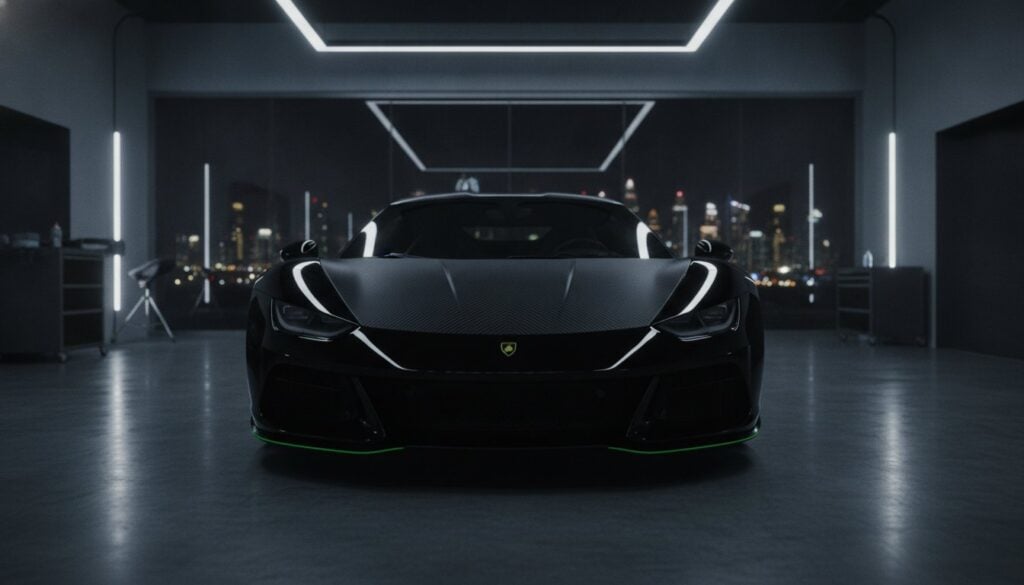
Why settle for a factory finish when your vehicle’s architecture was engineered to stand out? For many owners, the hesitation to customize stems from a genuine concern for the original paint’s integrity or the high cost of a full transformation. You likely feel that a subtle, precise modification could be more impactful than a complete overhaul, yet finding the right balance between bold expression and professional restraint remains a challenge.
Strategic partial car wrap ideas are the ultimate solution for the discerning driver. This guide reveals how targeted accents can redefine your luxury vehicle’s aesthetic while preserving its long-term value and performance. You’ll discover the most influential trends for 2026, including the rise of high-contrast carbon fiber integrations and the innovative use of colored Paint Protection Film (PPF). We will explore how these precision upgrades offer a sophisticated alternative to full wraps, ensuring your car remains as protected as it is visually striking.
Key Takeaways
- Learn how partial wrapping serves as a strategic design tool to highlight your vehicle’s engineering without the commitment of a full color change.
- Discover innovative partial car wrap ideas such as panoramic roof effects and forged carbon hood accents that simulate high-performance finishes.
- Understand the impact of “Chrome Delete” packages and industrial textures in modernizing luxury SUVs for a sleek, 2026 aesthetic.
- Explore how to layer decorative vinyl with Paint Protection Film (PPF) to ensure your custom look withstands the unique demands of the national climate.
- Gain insight into professional application techniques like knifeless tape technology that protect your original paint while delivering surgical precision.
What is a Partial Car Wrap and Why is it Trending in 2026?
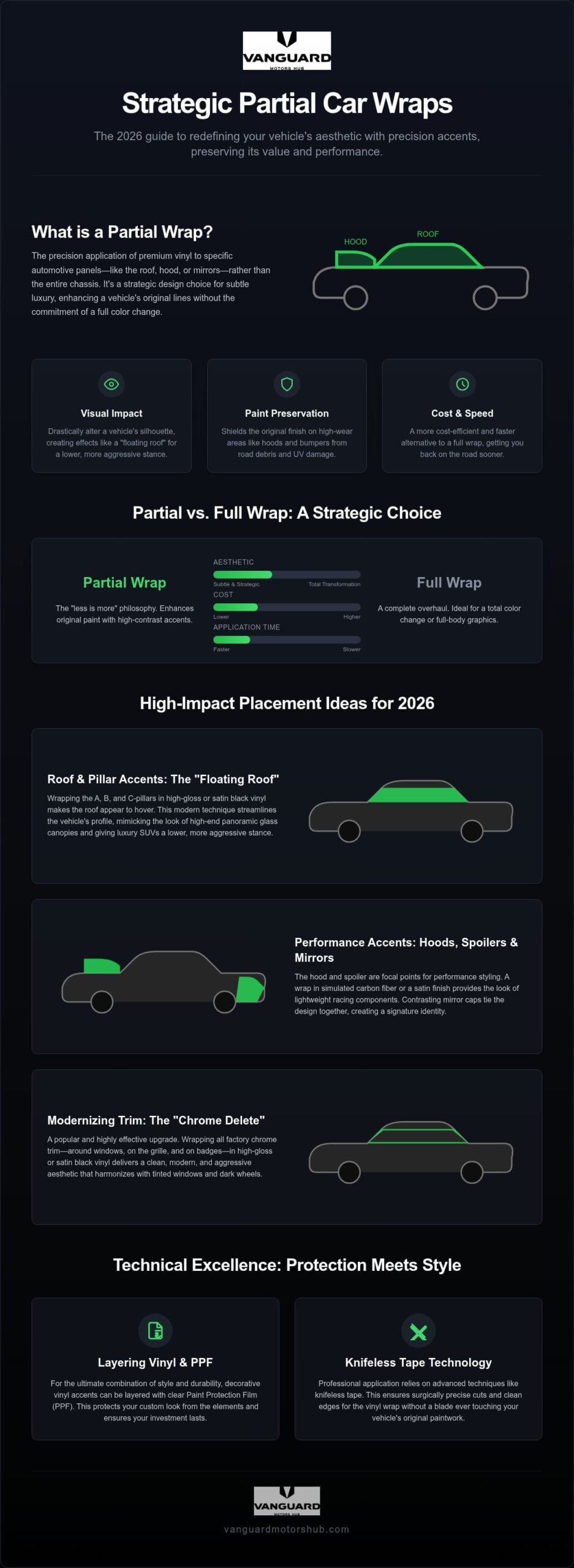
Defining the craft is simple. What is a Partial Car Wrap? It’s the precision application of premium vinyl to specific automotive panels rather than the entire chassis. In 2026, we’re witnessing a definitive shift toward “subtle luxury.” Owners of high-performance assets are moving away from loud, full-body transformations. Instead, they’re exploring innovative partial car wrap ideas that respect the vehicle’s original engineering while adding a bespoke signature. This approach isn’t just about aesthetics; it’s a strategic decision. Partial wraps offer a level of cost-efficiency that full wraps can’t match. Since the process is entirely reversible, it remains the gold standard for protecting the resale value of leased supercars or limited-edition models.
The Core Advantages of Strategic Wrapping
The impact of a well-executed partial wrap is immediate and functional. By focusing on specific zones, you can drastically alter a vehicle’s silhouette without the commitment of a total respray. Consider these primary benefits:
- Visual Impact: Wrapping the pillars and roof in high-gloss black can create a “floating roof” effect, making a luxury SUV appear lower and more aggressive.
- Paint Preservation: Applying vinyl or Paint Protection Film (PPF) to high-wear areas like the hood or rocker panels shields the original finish from road debris and UV damage.
- Customization Speed: Professional application for partial sections is remarkably efficient. You’ll spend less time in the service center and more time on the road compared to a full-body project.
Partial Wrap vs. Full Wrap: Making the Choice
Choosing between a partial and full wrap often comes down to the “less is more” philosophy. For many modern supercars, the original paint is a masterpiece that shouldn’t be hidden. A partial wrap allows you to enhance that beauty with high-contrast accents, such as forged carbon textures on the side mirrors or a satin finish on the hood. This strategy is also a perfect companion to cosmetic car repair. If a single panel requires a refresh, a partial wrap can provide a seamless aesthetic upgrade while addressing minor surface imperfections. When you’re browsing partial car wrap ideas, consider how a targeted application can highlight the aerodynamic curves that a full wrap might otherwise flatten. It’s about surgical precision, ensuring your vehicle stands out through sophisticated detail rather than sheer volume.
High-Impact Partial Car Wrap Ideas and Placements
Precision placement is what separates a professional build from a standard modification. When exploring partial car wrap ideas, the objective is to harmonize with the vehicle’s existing lines while adding a layer of technical sophistication. Strategic application allows you to highlight the engineering of a supercar without overwhelming its natural aesthetic. By focusing on specific high-visibility zones, you can create a customized look that feels factory-fresh yet entirely unique.
Roof and Pillar Accents
The roof is a primary canvas for creating a “panoramic” or lowered visual profile. One of the most effective techniques is the “Floating Roof” effect. By wrapping the A, B, and C-pillars in high-gloss black vinyl, the roof appears to hover independently from the body. This streamlines the car’s profile and mimics the look of modern high-end glass canopies. For those seeking a more tactical appearance, matte or satin finishes on the roof can reduce glare during high-noon drives while adding a rich, tactile layer to the vehicle’s upper half. Coordinating these roof wraps with professional window tinting ensures a seamless, aggressive transition from the glass to the chassis. If you’re ready to visualize these accents on your own vehicle, connect with our design consultants for a bespoke strategy.
Performance Details: Hoods, Spoilers, and Mirrors
The hood remains a focal point for performance-oriented customization. A full hood wrap in a simulated carbon fiber finish provides the look of lightweight racing components at a fraction of the cost. Alternatively, center-stripe configurations offer a classic racing heritage feel that emphasizes the vehicle’s power. Beyond the hood, precision accents on mirror caps and spoilers tie the entire design together. Contrast is key here. Using a vibrant accent color on side mirrors can create a signature brand identity that is recognizable at any speed. For vehicles equipped with active aero components, wrapping the moving wings or splitters highlights the mechanical movement of the car. These small details, when executed with surgical precision, project an image of meticulous care and elite quality.
The customization doesn’t have to stop at the exterior. Interior wraps, particularly using carbon fiber textures on the center console or dashboard trim, can transform the cabin environment. This creates a cohesive transition from the high-octane exterior to a luxury interior. Whether you’re modernizing a classic or adding a personal touch to a new acquisition, these targeted upgrades ensure your vehicle reflects the highest standards of automotive excellence.
2026 Aesthetic Themes for Premium Vehicle Accents
The aesthetic landscape of 2026 is defined by industrial textures and ultra-refined contrasts. Forged Carbon has emerged as the premier choice for drivers who find standard weaves too conventional. This material offers a marbled, non-linear pattern that projects a raw, high-performance energy. When considering partial car wrap ideas, integrating Forged Carbon on splitters, diffusers, or side skirts provides an immediate visual upgrade that feels both modern and exclusive. For high-end sedans, the two-tone “Maybach-style” wrap remains a pinnacle of prestige. By applying a contrasting metallic or satin hue to the upper half of the vehicle, you create an elongated, authoritative presence that traditional single-color finishes simply can’t achieve. These themes aren’t just about color; they’re about creating a narrative of elite quality through material choice.
The Chrome Delete Revolution
Eliminating factory chrome is no longer just a trend; it’s a prerequisite for any modern build. Transforming window surrounds, grilles, and badges with satin or gloss black creates a unified, aggressive silhouette. This process is often the foundational step in a professional bespoke car conversion, especially when preparing a vehicle for a Brabus or Mansory body kit. Wrapping these intricate trim pieces requires immense technical precision to ensure a factory-level finish that doesn’t lift or peel in the national climate. It’s about removing the distractions of brightwork to let the vehicle’s actual lines speak for themselves. This clean, “blacked-out” aesthetic provides the perfect canvas for more colorful partial car wrap ideas to pop against a dark, monochromatic base.
Textural Contrasts: Carbon Fiber and Beyond
True customization lies in the interplay between different finishes. Many owners are now integrating carbon fiber car parts repair with matching vinyl accents to maintain a flawless look across the entire chassis. If a structural carbon component has been restored, a matching partial wrap on adjacent panels ensures visual continuity. We’re also seeing a rise in “frozen” or matte clear wraps applied over original colored paint. This creates a sophisticated stealth look that retains the depth of the factory color while adding a modern, non-reflective sheen. By combining peelable paint applications with high-grade vinyl accents, you can achieve multi-layered customization that’s as durable as it is visually arresting. This technical synergy allows for a level of personalization that was previously reserved for concept cars, ensuring your vehicle remains a forward-thinking masterpiece.
Technical Excellence: Protection Meets Style
Achieving a professional aesthetic involves more than just selecting the right colors. In the high-performance sector, technical precision ensures that your creative vision doesn’t compromise the vehicle’s structural integrity. Integrating partial car wrap ideas with advanced paint protection film (PPF) represents the pinnacle of modern automotive care. This dual-layer approach allows for high-impact customization while providing a robust shield against the environmental stressors common in the national climate. By focusing on edge-sealing and material UV resistance, we ensure that every accent remains as vibrant and secure as the day it was applied.
The PPF and Wrap Synergy
The most sophisticated builds in 2026 leverage the synergy between decorative vinyl and protective films. You can apply colored vinyl directly over a full-body PPF installation, allowing for temporary style changes that are easily reversible without ever touching the original clear coat. Alternatively, “stealth” PPF can be used as a partial wrap to create matte accents on specific gloss panels, such as the hood or side skirts. A sacrificial layer is a protective barrier designed to absorb environmental damage so the underlying surface remains untouched. This technical strategy means your partial car wrap ideas serve a dual purpose: aesthetic transformation and elite-level preservation. If you’re looking to combine maximum protection with bespoke style, consult with our technical specialists today.
Maintenance and Longevity in 2026
Preserving the life of a partial wrap requires a specialized approach to maintenance. Because the vehicle features two different surface types—original paint and vinyl—detailing must be handled with surgical precision to ensure color consistency and adhesive longevity. Professional supercar detailing techniques are essential for preventing debris buildup at the wrap edges, which is the primary cause of lifting. Key maintenance factors include:
- UV Resistance: Premium materials used in high-heat regions are engineered to resist yellowing and fading, even under intense solar exposure.
- High-Speed Stability: Professional installation ensures that wind pressure at high speeds doesn’t compromise the wrap’s bond, particularly on leading edges like the hood or mirrors.
- Chemical Balance: Using pH-neutral cleaners prevents the degradation of the vinyl’s top coat, maintaining its satin or gloss finish for years.
Ultimately, the role of a partial wrap is to maintain your vehicle in “Mint” condition. By shielding high-impact areas from stone chips and minor abrasions, you preserve the factory finish for future resale. It’s a forward-thinking investment that rewards the owner with both immediate visual satisfaction and long-term asset protection.
The Vanguard Approach to Bespoke Partial Customization
Transformation begins with a meticulous consultation. Our process isn’t about simply choosing a color; it’s about mapping the unique geometry of your vehicle to create a cohesive design language. We analyze the airflow, the light reflections on the chassis, and the existing paint depth to ensure that your partial car wrap ideas translate into a flawless physical reality. Central to this execution is our use of knifeless tape technology. This industry-leading method allows our technicians to create razor-sharp lines and complex curves without ever placing a metal blade near your original paintwork. It’s the only way to guarantee that your high-value asset remains protected while undergoing a bold aesthetic evolution.
Integrating Body Kits and Wraps
A partial wrap is often the final, critical step in a comprehensive vehicle transformation. When we install a Brabus, Mansory, or Jetour body kit, the integration of matching vinyl accents is what creates a factory-integrated look. We specialize in color-matching wrap materials to specific aftermarket components, ensuring that your new spoilers, splitters, or side skirts feel like a natural extension of the original design. For a Mansory conversion, we might use high-impact partial wraps to highlight the aggressive, widened lines of the wheel arches or the intricate vents of a custom hood. This holistic approach combines structural carbon fiber elements with textural vinyl contrasts, resulting in a vehicle that looks as though it was built as a one-of-one special edition. The “Vanguard Premium Package” is designed specifically to maintain these multi-material builds, providing the specialized care required for both paint and film.
Why Professional Installation is Non-Negotiable
The risks of a low-quality or DIY “sticker” application are particularly high in the national climate. Intense UV exposure and extreme heat can cause inferior vinyls to bake into the clear coat, leading to permanent damage and difficult removal. We use only high-grade, heat-tested automotive vinyls that are engineered to withstand these conditions without lifting or fading. Professional installation ensures that every edge is sealed with surgical precision, preventing the ingress of dust and moisture that compromises the adhesive bond. Don’t leave your supercar’s integrity to chance. Elevate your vehicle with a bespoke partial wrap from Vanguard Motors and experience the intersection of technical excellence and creative innovation.
Redefining Automotive Distinction in 2026
Partial wrapping has evolved from a simple modification into a strategic design tool for the world’s most sophisticated vehicles. You’ve seen how targeted accents highlight a supercar’s engineering. The synergy of high-grade vinyl and Paint Protection Film (PPF) safeguards the original finish against the unique demands of the national climate. These partial car wrap ideas represent more than just a visual shift; they’re a commitment to maintaining elite quality and long-term asset value.
As leaders in UAE-wide luxury automotive customization, we specialize in the seamless integration of Brabus and Mansory kits with bespoke wrap designs. Our technical precision ensures every edge is sealed and every curve is respected. Whether you’re seeking a subtle “Chrome Delete” or a bold textural contrast with forged carbon, the result is a vehicle that reflects your vision with surgical accuracy. It’s time to move beyond the factory standard.
Design Your Signature Look with Vanguard Motors
Your journey toward a personalized masterpiece starts with a single, expert decision. We’re ready to transform your vehicle into a visionary statement of performance and style.
Frequently Asked Questions
How much of a car can be covered in a partial wrap?
A partial wrap typically covers between 25% and 75% of the vehicle’s surface area. Common applications focus on high-impact zones such as the hood, roof, pillars, and side panels. This flexibility allows you to execute specific partial car wrap ideas that accentuate the car’s architecture without hiding the entire factory paint job. You can choose to wrap a single component or create a multi-panel theme that flows with the vehicle’s lines.
Will a partial wrap damage my vehicle’s original factory paint?
No, a professionally installed partial wrap won’t damage original factory paint. High-grade automotive vinyl acts as a protective shield against UV rays and minor environmental contaminants. The adhesive is engineered to bond securely while remaining removable without leaving residue or stripping the clear coat. It’s essential that the paint is in good condition before application. If there’s existing damage, we recommend professional cosmetic repair to ensure a safe, flawless installation.
How long does a high-quality partial car wrap typically last?
A premium partial wrap typically lasts between three and five years when maintained correctly. Durability depends on the material quality and environmental exposure. In high-heat regions, we utilize automotive-grade vinyls specifically tested for UV resistance and thermal stability. Regular detailing and the use of the Vanguard Premium Package can extend this lifespan. These professional care solutions prevent edge lifting and color degradation, ensuring the wrap remains vibrant throughout its life cycle.
Can you apply a partial wrap over ceramic coating or PPF?
You can apply a partial wrap over Paint Protection Film (PPF), but applying it over a ceramic coating isn’t recommended. Ceramic coatings are designed to be hydrophobic and non-stick, which prevents the wrap’s adhesive from bonding correctly. If your vehicle is already coated, the specific panels must be professionally polished to remove the coating before installation. Conversely, layering vinyl over PPF is a common strategy for adding temporary style to a protected surface.
Are partial wraps noticeable at the seams or edges?
Professional installation makes seams and edges virtually invisible to the untrained eye. We utilize knifeless tape technology to create surgical cuts that follow the vehicle’s natural body lines or panel gaps. By tucking the vinyl behind trim pieces and wrapping it around panel edges, we ensure a factory-level finish. This precision is essential when executing complex partial car wrap ideas, as it prevents the “sticker” look associated with lower-quality, amateur applications.
Is a partial wrap cheaper than a full vehicle wrap?
Yes, a partial wrap is a more cost-effective solution than a full vehicle transformation. Since less material is used and labor hours are reduced, it provides a high-impact aesthetic upgrade for a lower investment. This makes it an ideal choice for owners who want to modernize their look or add performance-inspired accents without the price point of a full color change. It allows for more frequent style updates while maintaining your customization budget.
How do I clean and maintain a car with a partial wrap?
Maintenance involves gentle hand washing using pH-neutral soaps and avoiding high-pressure washes at close range. You should focus on keeping the edges clean to prevent debris buildup, which can lead to lifting. We recommend using specialized sealants designed for vinyl to maintain the finish and provide extra UV protection. For owners seeking a holistic solution, our mobile detailing van provides professional care that ensures both the wrap and original paint remain in pristine condition.
Can partial wraps be used for commercial branding on luxury vehicles?
Absolutely, partial wraps are an excellent medium for sophisticated commercial branding on luxury assets. We can integrate high-resolution graphics or subtle matte logos that promote your business without compromising the vehicle’s elite aesthetic. This approach is particularly effective for high-performance fleets or promotional supercars. By using precision-cut vinyl, we ensure the branding feels like a bespoke design element rather than a standard commercial decal, preserving the vehicle’s professional and authoritative image.