
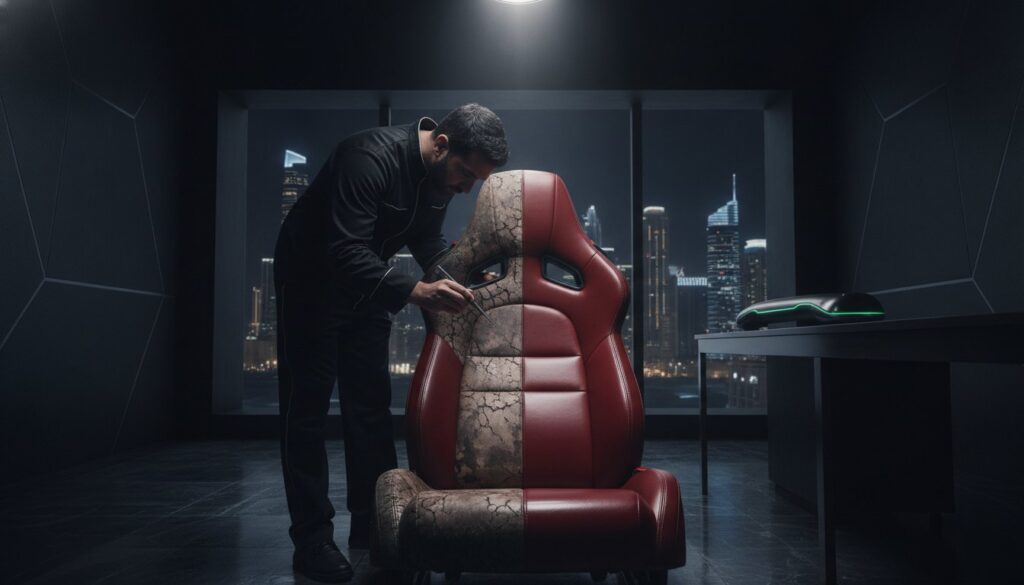
What if the defining mark of your vehicle’s heritage isn’t the engine’s roar, but the pristine touch of its factory-original hides? For elite owners across the UAE, the debate over leather re-dyeing vs replacement has become a critical pivot point in maintaining a cabin that reflects true luxury. A single deep crack or a faded bolster can instantly compromise the high-octane atmosphere of a bespoke interior; this leaves you to choose between the meticulous art of preservation and the engineering necessity of a structural overhaul.
You likely value the authenticity of your original interior and fear that a full replacement might strip away the vehicle’s factory-grade character. It’s a valid concern, as the soul of a high-performance machine often resides in its unique, aged textures. This guide promises to clarify the technical boundaries of restoration, helping you decide when to revive your existing leather for a flawless finish and when a total replacement is the only way to maximize resale value. We will preview the 2026 standards in pigment technology, the long-term durability of professional restoration, and the strategic moments where investing in new hides is the only path to maintaining elite cabin standards.
Key Takeaways
- Identify the structural thresholds where leather restoration is no longer viable and full replacement becomes an engineering necessity for your cabin.
- Optimize your vehicle’s valuation by choosing between leather re-dyeing vs replacement based on the specific degradation of the hide’s collagen and pigment bonding.
- Gain insight into the 2026 standards for multi-stage chemical restoration that ensure new pigments bond flawlessly with original factory leather for a factory-standard finish.
- Understand the impact of thermal cycling and UV radiation on luxury interiors to implement more effective long-term protection and maintenance strategies.
- Discover how bespoke interior services can unify leather restoration with technical repairs for a comprehensive and high-performance cabin transformation.
The Science of Interior Wear: Why Luxury Leather Degrades
Luxury leather isn’t a static material; it’s a complex organic matrix that breathes and reacts to its environment. In a high-performance cabin, this material undergoes constant stress from thermal cycling. When your vehicle transitions from a climate-controlled garage to the intense heat of the outdoors, the leather hides expand and contract rapidly. This process forces out essential moisture and natural oils, leading to a loss of elasticity that eventually manifests as visible fatigue.
UV radiation acts as a silent catalyst for degradation. Solar energy penetrates the glass, breaking down the chemical bonds between pigments and the underlying structural proteins. Understanding The Science of Interior Wear reveals that when collagen fibers lose their integrity, the leather becomes brittle. Friction adds another layer of complexity. High-performance driving involves frequent contact with seat bolsters, which accelerates the mechanical wear of the protective topcoat. This intersection of chemical and mechanical breakdown is where the decision between leather re-dyeing vs replacement begins to take shape.
Surface vs. Subsurface Damage
Distinguishing between aesthetic wear and structural failure is vital for interior preservation. Micro-cracking and pigment loss are typically surface-level issues. We can rectify these through professional restoration techniques that bond new pigments to the existing grain. However, if the hide exhibits dry rot or significant thinning, the structural integrity is gone. Re-dyeing a structurally compromised seat is a temporary fix at best; true excellence in these cases requires a full replacement of the affected panels to maintain safety and aesthetic standards.
The UAE Environmental Factor
The UAE climate presents a unique set of challenges for luxury upholstery in 2026. Intense sunlight doesn’t just fade colors; it accelerates the evaporation of the specialized tanning agents that keep leather supple. Inside a parked vehicle, cabin temperatures can soar, causing leather adhesives to soften and topcoats to become tacky. Generic conditioners often fail here. They sit on the surface, creating a greasy film that attracts dust rather than penetrating the dense grain of premium Nappa or semi-aniline hides. Specialized care is the only way to prevent the premature need for a total interior overhaul.
The Art of Leather Re-Dyeing: Precision Restoration
Professional leather re-dyeing is a meticulous multi-stage chemical intervention. It doesn’t merely mask damage; it restores the hide’s original pigment and sealant layers through advanced bonding chemistry. This process is essential for preserving the heritage and tactile feel of a high-performance vehicle. When considering leather re-dyeing vs replacement, the ability to maintain the original factory grain is often the deciding factor for discerning owners. Unlike a full replacement, re-dyeing ensures the cabin remains authentic to its production-line specifications. It’s an art form that demands an exact eye for color, particularly when matching the unique OEM shades found in bespoke cabins for brands like Lamborghini or Ferrari.
The Professional Restoration Process
True restoration begins with an aggressive stripping phase. This removes old finishes and contaminants to ensure new pigments bond at a molecular level. Following industry best practices, technicians perform deep degreasing to extract years of body oils and silicone-based conditioners. Surface preparation involves delicate sanding to create a receptive base without compromising the hide’s thickness. Precision application via airbrushing avoids the heavy, “plastic” look of DIY kits. Technicians layer the pigment to achieve depth and transparency that mimics the factory finish. The final step is the topcoat. You choose between matte, satin, or gloss to match the original factory sheen. This ensures the restored seat is indistinguishable from the rest of the cabin.
Preserving Resale Value through Authenticity
Collectors and enthusiasts place a premium on original components. An interior that retains its factory hides often commands a higher resale value than one with aftermarket reupholstery. Restoration maintains the precise OEM stitching and grain patterns that define the identity of elite marques. It’s about the psychological value of preservation. A “restored” interior feels like a well-maintained legend; a “rebuilt” one can feel like a departure from its roots. This technical approach respects the engineering that went into the original cabin design. For a tailored assessment of your cabin’s potential, you can consult our restoration experts directly.
Complete Leather Replacement: The Engineering Choice
While restoration is an art of preservation, complete leather replacement is an exercise in precision engineering. There are moments in a vehicle’s lifecycle where the structural integrity of the hide has been compromised beyond the reach of chemical bonding. In the high-stakes evaluation of leather re-dyeing vs replacement, choosing the latter is often a strategic decision to reset the cabin’s baseline. This process involves stripping the interior down to its frame; it allows for the inspection and reconstruction of seat foam that has likely collapsed after years of high-performance use. For high-mileage luxury vehicles, new leather doesn’t just refresh the aesthetics; it restores the ergonomic support intended by the original designers.
Opting for a full replacement also opens a gateway to bespoke innovation. You aren’t limited to the factory-specifications that came with the car. This is an opportunity to upgrade to superior leather grades or introduce modern materials that weren’t available when the vehicle was first commissioned. At Vanguard Motors Dubai, we treat this as a transformative phase. It’s where technical skill meets creative expression, ensuring that the new interior exceeds the standards of the original assembly line.
Signs Replacement is Unavoidable
Technical experts look for specific markers that indicate a hide is past the point of restoration. If the leather has suffered large-scale punctures or tears, the tension required for a seated passenger will eventually cause any repair to fail. You should consider replacement if you notice:
- Severe Shrinkage: When UV damage causes the leather to tighten and pull away from the seat frame or stitching lines.
- Structural Thinning: Areas where the hide has become paper-thin due to excessive friction.
- Environmental Contamination: Deep-seated mold or persistent odors that have migrated from the leather into the underlying foam.
Bespoke Reupholstery Options
Choosing to replace your leather allows for total cabin personalization. You can select from elite materials like ultra-supple Nappa, high-grip Alcantara, or sophisticated semi-aniline hides. Many owners use this stage to integrate custom stitching patterns, such as diamond quilting or contrasting piping that highlights the cabin’s geometry. This is also the ideal time to consider a total interior refresh. By integrating leather restoration with carbon fibre accents or trim repairs, you create a cohesive, high-octane environment. The result is a cabin that feels fundamentally new, reflecting a commitment to both form and function that defines the 2026 luxury standard.
Leather Re-Dyeing vs Replacement: A Strategic Comparison
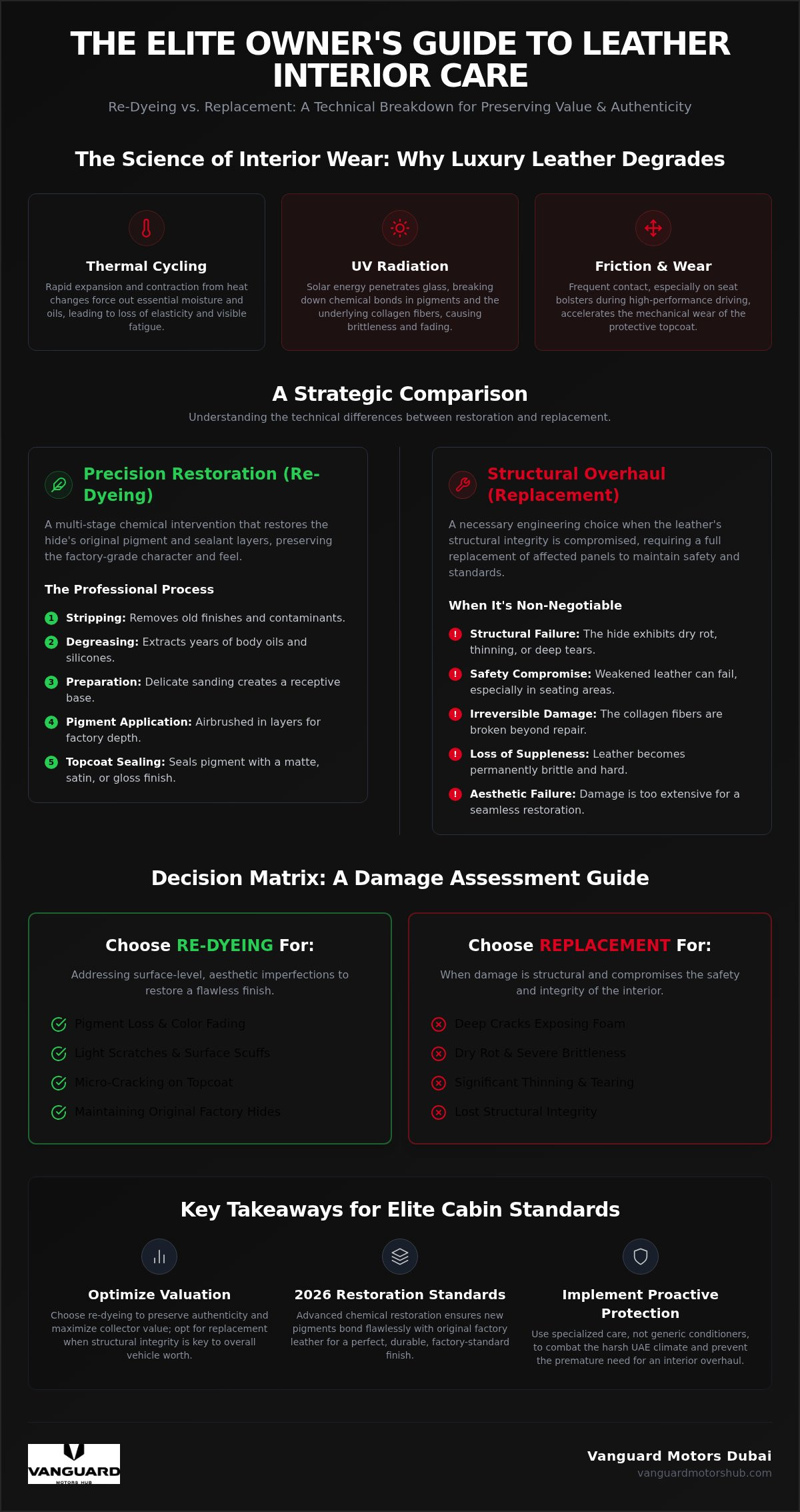
Choosing between leather re-dyeing vs replacement is a critical pivot for any luxury vehicle owner. It involves balancing the desire for factory authenticity against the need for structural renewal. Re-dyeing stands as the superior option for aesthetic refreshes; it offers a significantly higher ROI by preserving the original materials while erasing years of visual wear. The turnaround time is also a decisive factor. Professional restoration can often be executed within a few days. In contrast, a full replacement involves extensive lead times for sourcing premium hides and the labor-intensive process of pattern matching and stitching.
Durability is no longer a compromise in 2026. Modern restoration coatings are engineered at a molecular level to bond with existing fibers. They provide a finish that rivals the longevity of new leather even in the UAE’s high-heat environments. The aesthetic outcome differs fundamentally between the two paths. Restoration delivers a perfected factory look that maintains the vehicle’s original soul. Replacement offers a new custom finish that can redefine the cabin’s personality entirely. Your choice should align with the vehicle’s role in your collection and its future valuation goals.
The Decision Matrix for Owners
Assessing the vehicle’s age and rarity is the first step in this matrix. For a limited-production supercar, the preservation of original factory hides is paramount for maintaining provenance. You can perform a simple thumbnail test to evaluate leather health at home. Press your thumbnail into a hidden area of the hide. If the indentation remains or the material feels crunchy rather than supple, the internal fibers have likely failed. When the damage is localized to surface pigment loss, consulting with cosmetic car repair experts will often reveal that restoration is the most efficient path forward.
Impact on Long-Term Preservation
A successful re-dyeing project fits seamlessly into a holistic supercar detailing regime. By restoring the pigment and then applying a specialized protective coating, you create a resilient barrier against the friction of entry and exit. These coatings are designed to be breathable, ensuring that the leather does not dry out under the intense UAE sun. For a five-year-old supercar exhibiting standard bolster wear and light fading, professional re-dyeing is the optimal choice to maintain factory authenticity while achieving a showroom-grade finish. To determine the best strategy for your specific vehicle, contact our technical team for a professional interior assessment.
Bespoke Interior Excellence at Vanguard Motors Dubai
Vanguard Motors Dubai operates at the intersection of technical precision and aesthetic vision. Our approach to interior preservation is designed for the owner who demands perfection without compromise. When navigating the complexities of leather re-dyeing vs replacement, our team provides a level of scrutiny that ensures every decision serves the vehicle’s long-term value. We don’t just treat the leather; we manage the entire cabin environment. This often involves integrating specialized carbon fibre repair to address cracked trim or delaminated accents alongside our upholstery services. This holistic methodology ensures a total cabin refresh that maintains strict OEM standards while fueling the excitement of a high-performance transformation.
Our commitment to elite craftsmanship means we coordinate seamlessly between minor cosmetic repairs and full-scale bespoke conversions. Whether you’re preserving a vintage supercar’s heritage or engineering a modern masterpiece, Vanguard Motors Dubai acts as your sophisticated guide. We understand that in 2026, luxury is defined by the meticulous care of original details. Our facility is a visionary leader in the UAE, providing national coverage for those who value both form and function in their high-performance machines.
The Vanguard Restoration Protocol
Every project begins with detailed interior diagnostics. We evaluate the moisture content and pH levels of every hide to determine if restoration is truly viable. By utilizing premium, climate-resilient pigments specifically engineered for the UAE, we guarantee a finish that resists the thermal cycling discussed earlier in this guide. The process concludes with a final inspection and a deep conditioning treatment. This step restores the factory-fresh scent and tactile suppleness that defines a premium automotive environment.
Elevating Your Vehicle’s Aesthetic
True preservation extends beyond the cabin. We recommend combining interior restoration with exterior paint protection film for a comprehensive shield against the elements. Maintaining your restored leather in high-heat conditions requires a proactive strategy; use specialized UV-blocking conditioners and avoid abrasive cleaning agents that can strip the new topcoat. Our experts are ready to design a maintenance regime tailored to your driving habits. Contact Vanguard Motors Dubai today for a bespoke interior assessment and discover how we can elevate your vehicle to elite standards.
The Future of Interior Preservation: Engineering Your Cabin’s Legacy
Maintaining a luxury interior is a strategic commitment to automotive excellence. We’ve explored how re-dyeing serves as a powerful tool for preserving factory heritage; it allows you to maintain original textures while erasing years of visual fatigue. Conversely, full replacement offers a total engineering reset for compromised hides, ensuring that even high-mileage machines return to showroom standards. The decision regarding leather re-dyeing vs replacement ultimately depends on your vehicle’s structural health and your long-term vision for its valuation.
As specialists in supercar leather restoration, Vanguard Motors Dubai delivers a national UAE elite service standard that balances technical skill with creative expression. We offer bespoke interior and exterior customization designed to transform your driving environment into a high-octane sanctuary. It’s time to secure your vehicle’s legacy with meticulous care and professional precision. Restore Your Luxury Interior with Vanguard Motors Dubai and ensure your cabin remains a definitive masterpiece of form and function.
Frequently Asked Questions
Is leather re-dyeing permanent or will it peel off?
Professional leather re-dyeing is designed to be a permanent restoration of the hide’s pigment. Unlike DIY kits that sit on the surface, our multi-stage chemical process ensures the new dye bonds at a molecular level with the original fibers. This prevents peeling or cracking under normal use. When comparing leather re-dyeing vs replacement, the longevity of a professional restoration typically matches the durability of the factory finish provided the topcoat is maintained.
Can I change the colour of my car interior with re-dyeing?
Yes, you can change your car interior’s color through professional re-dyeing. While many owners choose to restore their original OEM shade, we can transition from lighter to darker tones with exceptional precision. Moving from a dark hide to a lighter one requires more intensive preparation and multiple pigment layers to ensure total opacity. This is a popular choice for those seeking a bespoke cabin refresh without the structural upheaval of a full leather replacement.
How long does the leather restoration process take?
The timeline for a professional leather restoration typically ranges from two to five days. This duration allows for meticulous deep cleaning, the stripping of old sealants, and the precise application of multiple pigment layers. Each stage requires specific curing times to ensure the new finish is resilient and stable. While a full replacement might involve weeks of lead time for sourcing hides, re-dyeing offers a significantly faster turnaround for your luxury vehicle.
Will re-dyeing my seats affect the smell of the leather?
High-quality restoration pigments are designed to be odorless once they have fully cured. In fact, our final conditioning stage often restores that signature factory-fresh scent associated with premium luxury hides. We utilize water-based, low-VOC pigments that comply with the latest 2026 environmental standards. This ensures your cabin remains a sophisticated environment without the lingering chemical odors often found in lower-grade aftermarket products or DIY repair solutions.
Is it worth replacing leather if only one panel is damaged?
Replacing a single damaged panel is a common engineering choice when the rest of the hide is healthy. This localized replacement is often more cost-effective than a full interior overhaul while ensuring structural integrity. However, matching the color and grain of a new panel to the aged leather in the rest of the cabin can be challenging. In many cases, we integrate a new panel with a full interior re-dye to achieve a seamless finish.
How do I care for restored leather in the UAE heat?
Caring for restored leather in the UAE requires a proactive maintenance regime focused on UV protection. We recommend applying a specialized, non-greasy leather conditioner every three months to replenish natural oils lost to high cabin temperatures. Utilizing high-quality window tinting and sunshades will also reduce the thermal stress on the pigment bonds. Regular maintenance prevents the hide from becoming brittle and ensures the long-term success of your leather re-dyeing vs replacement strategy.
Can re-dyeing fix deep cracks or holes in the seat?
Re-dyeing is primarily a pigment restoration process and cannot fix structural holes or deep, through-and-through cracks. For these issues, we utilize specialized flexible fillers or perform structural cosmetic repairs before the dyeing phase. If the cracks are widespread or the leather has thinned significantly, we will recommend a full replacement of the affected section. Restoration is most effective when the underlying hide remains supple and structurally sound.
Does interior restoration help with car resale value?
Interior restoration significantly enhances a vehicle’s resale value by maintaining the high-end aesthetics that luxury buyers expect. A pristine cabin suggests meticulous overall vehicle care, which can justify a premium price point on the secondary market. By preserving original factory hides through expert re-dyeing, you maintain the vehicle’s provenance and heritage. This is a strategic investment that often yields a much higher return than selling a vehicle with a worn or neglected interior.