
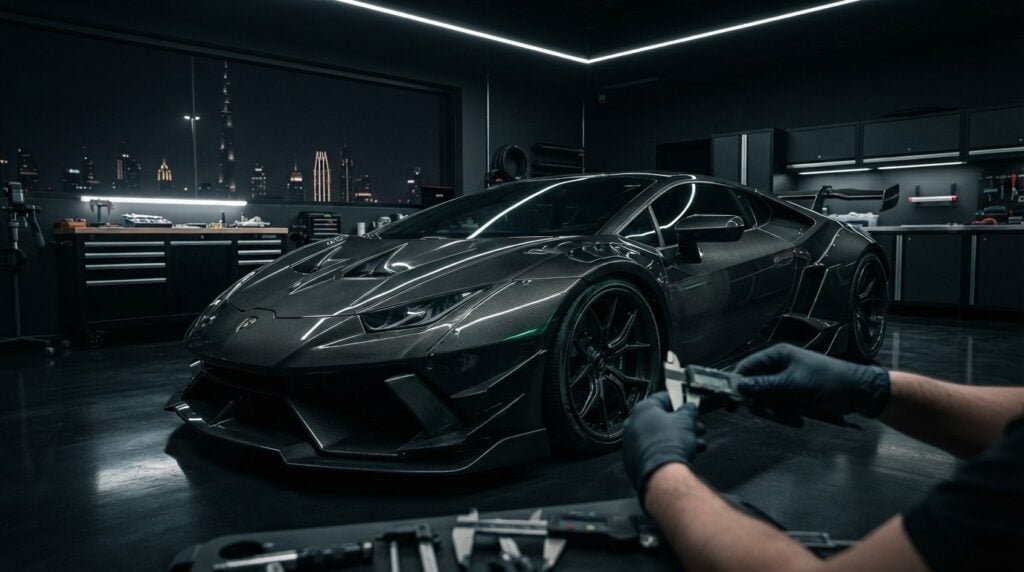
Is a six-figure widebody conversion a masterpiece of aerospace engineering or just an expensive exercise in branding? When you’re modifying a multi-million dollar supercar, the fear of poor panel gaps or resin yellowing isn’t just paranoia; it’s a calculated risk. This Mansory carbon fiber quality review cuts through the marketing noise to examine the technical reality of these elite components. You likely already know that Mansory represents the peak of bold, aggressive styling. However, the true value lies beneath the surface in the meticulous autoclave curing process that defines their 2026 production standards.
We’ll provide the technical validation you need to move forward with confidence. You’ll learn the critical differences between dry and wet carbon, why a less than 1% internal air-void ratio matters for long-term structural integrity, and how professional installation ensures factory-level fitment. We’re also covering essential preservation strategies, from specialized clear coats to the necessity of paint protection film. By the end, you’ll understand exactly how these components transform a vehicle while maintaining the meticulous standards required for high-performance results.
Key Takeaways
- Understand the engineering behind the 2026 “Dry Carbon” standard and how autoclave curing provides superior strength-to-weight ratios for elite builds.
- This Mansory carbon fiber quality review highlights the importance of weave alignment and panel tolerances to ensure a seamless integration with your vehicle’s factory lines.
- Evaluate how Mansory’s proprietary finishes and translucent clear coats compare to OEM factory carbon in terms of aesthetic depth and UV resistance.
- Identify why professional Paint Protection Film (PPF) installation is essential for preserving the mirror-like finish of exposed carbon components in harsh climates.
- Gain insight into the specialized installation techniques required to recalibrate advanced electronic sensors within complex aerodynamic body kits.
Beyond the Brand: What Defines Mansory Carbon Fiber Quality in 2026?
Mansory has long occupied the apex of the luxury aftermarket. While many enthusiasts recognize the brand for its polarizing designs, this Mansory carbon fiber quality review focuses on the engineering that justifies its prestige. In 2026, the brand has pushed its “Dry Carbon” technology further; they’ve moved beyond simple aesthetics to provide components that meet rigorous performance standards. Through advanced Mansory customization, the company utilizes industrial autoclaves to cure composite materials under extreme heat and pressure. This process distinguishes visual trim pieces from structural kit components like fenders and hoods, which must withstand significant aerodynamic loads at high speeds. It’s a level of precision that ensures every bolt-on part aligns perfectly with the vehicle’s original geometry.
The Science of Pre-preg Carbon Fiber
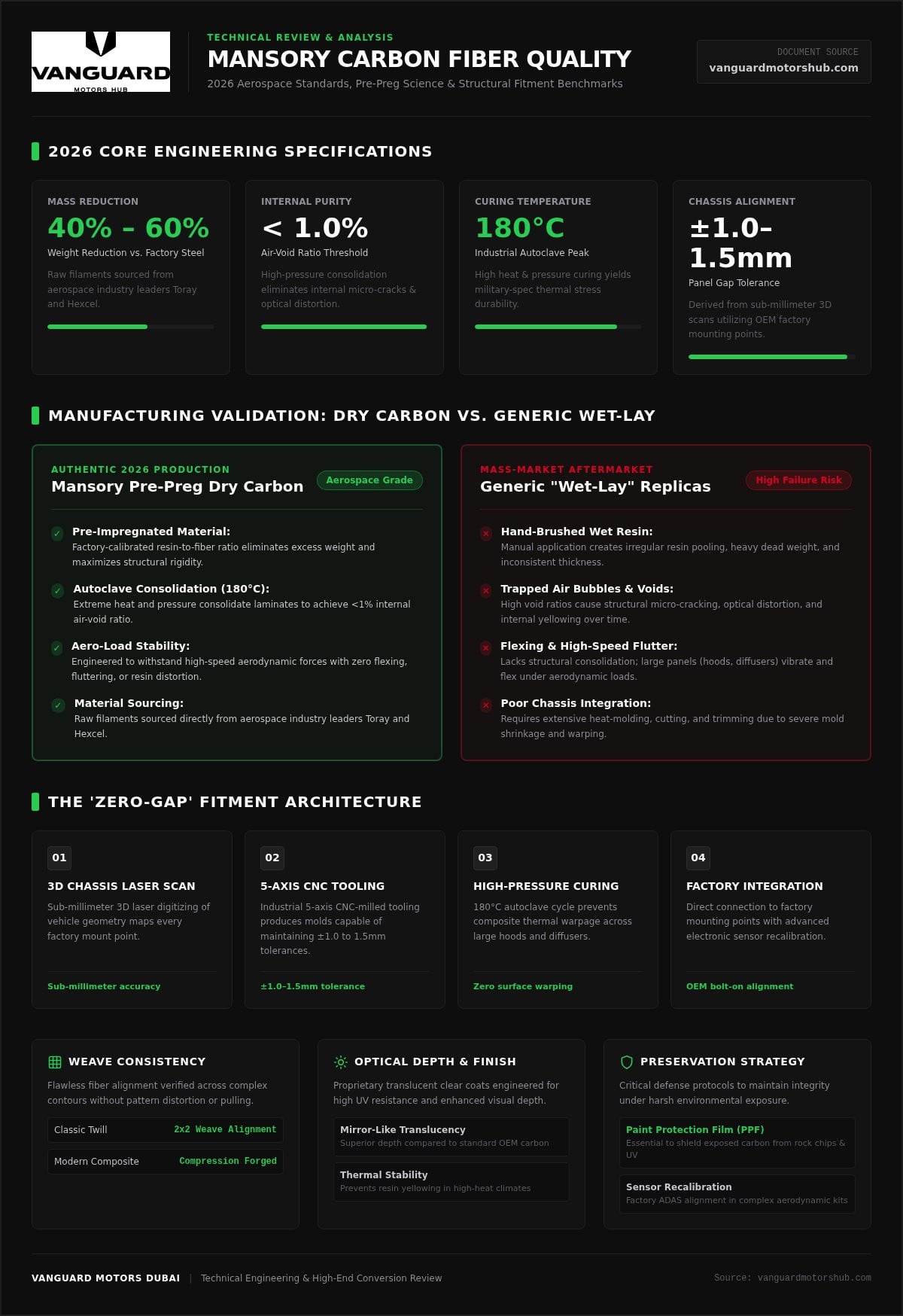
Pre-preg, or pre-impregnated material, is the foundation of Mansory’s 2026 catalog. Unlike traditional methods where resin is applied manually, pre-preg sheets come with a factory-calibrated resin-to-fiber ratio. This precision eliminates excess weight while maximizing structural rigidity. By sourcing raw filaments from aerospace leaders like Toray and Hexcel, the brand achieves a 40% to 60% weight reduction compared to factory steel. Mansory’s 2026 carbon fiber grade is engineered to a military-spec equivalent, ensuring unrivaled durability under extreme thermal stress. This level of material science ensures that every panel remains stable even in high-heat environments.
Mansory vs. Generic Aftermarket Kits
Generic kits often rely on “wet-lay” techniques. This involves hand-brushing resin over carbon cloth, which frequently results in trapped air bubbles and uneven surfaces that warp over time. Mansory succeeds where these kits fail by using high-pressure manufacturing to consolidate laminates. This achieves an internal air-void ratio of less than 1%, preventing the micro-cracking and optical distortion often seen in cheaper alternatives. The autoclave curing process at temperatures reaching 180°C ensures a bond that generic replicas cannot replicate.
Authentic Mansory components are easily identified by their perfect weave alignment, whether it’s the classic 2×2 twill or the modern compression-molded forged carbon. For owners seeking a Mansory Kit conversion, understanding these technical differences is the first step toward a successful transformation. At Vanguard Motors Dubai, our technical specialists understand that the result is a finish that doesn’t just look elite; it performs at a professional level. You aren’t just buying a look; you’re investing in a component engineered for high-octane environments.
Technical Review: Analyzing Weave Consistency and Fitment
Precision installation begins long before the first bolt is turned. This Mansory carbon fiber quality review focuses on the technical benchmarks that separate elite components from mass-market replicas. High-end automotive enthusiasts prioritize fitment above all else; even a minor misalignment can ruin the silhouette of a multi-million dollar vehicle. While factory steel or aluminum panels add significant mass, Mansory components reduce this burden substantially, often by more than half. These parts aren’t just lighter. They’re designed to handle high-speed aerodynamic loads without flexing or vibrating, ensuring the vehicle’s performance envelope remains intact during aggressive maneuvers.
Fitment Precision: The ‘Zero-Gap’ Standard
Mansory utilizes industrial 5-axis CNC-milled molds derived from sub-millimeter 3D laser chassis scans of specific luxury models. This technology ensures that panel gap tolerances align within ±1.0 to 1.5 mm of OEM body points. While generic kits often require extensive trimming or heat molding to sit flush, authentic Mansory parts utilize factory mounting points for a cleaner integration. Large-scale components like hoods or rear diffusers present the greatest challenge. A slight warp in a hood can lead to hood-flutter at high speeds, but the high-pressure autoclave curing keeps these large surfaces perfectly flat and rigid. Achieving this “zero-gap” look requires a workshop that understands the nuances of composite thermal expansion.
Weave Uniformity and Aesthetic Perfection
The visual appeal of carbon fiber lies in the perfection of its weave. Any “pulls” or distortions in the fabric suggest a lack of tension control during the layup process. Research into the mechanical performance of composite weaves confirms that fiber orientation is critical for both visual symmetry and structural resilience. Mansory excels here, maintaining perfect alignment even across complex, three-dimensional contours. Matching “Forged Carbon” patterns is particularly difficult; it requires a master’s eye to ensure the marbled texture looks intentional rather than chaotic.
Classic 2×2 twill remains a staple, but the trend is shifting toward proprietary collage weaves. If your vehicle has sustained minor cosmetic damage, our guide to Carbon Fibre Car Parts Repair explains how to restore these intricate patterns without losing the original depth. Maintaining this level of aesthetic perfection is what defines a true elite build. If you’re ready to upgrade your vehicle’s aerodynamics, you can speak with the specialists at Vanguard Motors Dubai to ensure your kit is installed to these exact standards.
Performance Benchmarking: Mansory vs. OEM Factory Carbon
Comparing aftermarket components to factory standards is the ultimate test of engineering. While Lamborghini, Ferrari, and McLaren produce exceptional composites, their focus often leans toward scalability and standardized weave patterns. This Mansory carbon fiber quality review finds that the German tuner often exceeds OEM benchmarks in visual depth and complex geometry. While a factory might opt for simpler 1×1 or 2×2 patterns, Mansory utilizes proprietary techniques to create aggressive aerodynamic extensions that factory production lines aren’t equipped to handle. It’s the difference between mass-produced excellence and bespoke artistry.
OEM Grade vs. Bespoke Grade
OEM carbon fiber is designed for a balance between performance and production cost. In contrast, Mansory’s bespoke grade focuses on pushing the boundaries of “impossible” geometry. You’ll often see their signature “V-weave” on hoods, a mirrored pattern that requires extreme precision during the hand-layup phase of pre-preg sheets. This level of detail creates a seamless visual flow that mass-produced components lack. Beyond aesthetics, the material density provides superior tensile strength. It resists the micro-fractures that can plague lower-grade composites during high-speed vibration, ensuring the kit remains silent and stable at the limit.
The Brabus Comparison: A Different Philosophy
The choice between a Brabus Body Kit Installation and a Mansory conversion often comes down to design philosophy. Brabus typically follows an “OEM+” approach, enhancing the vehicle’s original lines with high-density, understated carbon. Mansory pursues a “Complete Transformation,” using larger, more aggressive panels that redefine the car’s silhouette. Both brands utilize high-grade autoclave technology, but Mansory’s 2026 clear coats are specifically engineered for high-heat environments. This ensures the resin remains stable and transparent even under intensive UV exposure, preventing the common “yellowing” effect seen in lesser kits.
A technical detail often overlooked is the “Resonance Test.” High-grade carbon fiber has distinct sound-dampening qualities. Thinner, generic panels often produce a hollow, metallic ring when struck or subjected to road noise. Mansory’s consolidated laminates offer a solid, dampened response. This density translates to better impact resistance against daily driving hazards like road debris and stone chips. For those in national climates with extreme sun, this material stability is non-negotiable for maintaining a vehicle’s elite status and long-term aesthetic value.
Longevity and Protection: Maintaining the Mansory Finish
High-performance carbon fiber is a significant investment that requires proactive preservation. While the previous sections of this Mansory carbon fiber quality review established the technical superiority of autoclave-cured composites, the environment remains the ultimate test of durability. In our national climate, extreme heat and intense UV radiation act as constant stressors on even the finest resins. UV rays can penetrate standard clear coats, potentially leading to oxidation or a cloudy appearance that obscures the intricate weave patterns. Maintaining that showroom luster demands a strategic combination of chemical protection and physical barriers to ensure long-term aesthetic preservation.
UV Protection and Resin Yellowing
Modern Mansory kits utilize advanced UV-resistant resins designed to withstand high thermal loads without warping. However, prolonged exposure to direct sunlight can still cause resin yellowing if the surface isn’t shielded. Signs of heat stress include a subtle loss of gloss or the appearance of fine surface hazing that disrupts the visual flow of the carbon. “By applying a high-grade ceramic coating, you create a sacrificial barrier that bonds to the carbon fiber clear coat, effectively repelling UV rays and environmental contaminants while enhancing the visual depth of the weave.” This chemical layer ensures the resin remains transparent and stable over years of use, preventing the brittle texture that often affects lower-quality aftermarket parts.
The Role of PPF in Carbon Preservation
Physical impact is the second major threat to your vehicle’s transformation. Stone chips are far more dangerous to carbon fiber than to traditional metal panels; a high-velocity impact can cause delamination or star-cracks in the resin that are notoriously difficult to fix. This is why The Ultimate Shield: Why PPF is the Standard for Excellence is a mandatory consideration for any Mansory conversion. You can choose between a gloss PPF to amplify the carbon’s natural shine or a satin finish for a more aggressive, muted look that hides fingerprints and minor dust accumulation.
Cleaning protocols must be equally precise to avoid micro-scratches on delicate clear coats. You should avoid automated car washes and harsh chemicals that can mar the surface finish. Instead, use pH-neutral shampoos and high-pile microfiber towels to lift dust without dragging contaminants across the panel. If damage does occur, light surface scratches can often be polished out by a specialist, though deep structural cracks require expert carbon fiber repair. Protecting your vehicle’s elite status requires a technical approach to maintenance that matches the quality of the components themselves. To ensure your carbon fiber remains in pristine condition, book your PPF or detailing consultation with Vanguard Motors Dubai today to secure your investment against the elements.
Expert Installation: Maximizing Your Mansory Investment
The technical sophistication of a Mansory kit requires a level of expertise that standard body shops simply cannot provide. This Mansory carbon fiber quality review emphasizes that even the finest aerospace-grade materials fail without elite implementation. High-end conversions involve more than just aesthetic alignment; they require the seamless integration of complex vehicle systems. Modern supercars rely on a dense network of electronic sensors, including parking assist, blind-spot monitoring, and adaptive cruise control radar. These components must be recalibrated and housed within the new carbon fiber bumpers to ensure factory-level functionality remains intact. A single millimeter of misalignment can trigger system errors or compromise safety features.
Aerodynamic balance is another critical factor during a full body kit installation. Mansory components are engineered to manage airflow at high speeds, providing the downforce necessary for stability. If a rear diffuser or front splitter is installed without considering the vehicle’s original pitch and yaw, it can create unwanted turbulence. Our approach focuses on maintaining the mechanical integrity of the donor vehicle. We ensure that every panel, from the side skirts to the rear wing, works in harmony with the car’s existing active aerodynamics. This meticulous care guarantees that your vehicle performs as aggressively as it looks.
The Conversion Process: What to Expect
A complete vehicle transformation is a structured journey that prioritizes precision over speed. For a standard aerodynamic kit consisting of a front lip, side skirts, and a diffuser, you should expect approximately 6 to 8 billable labor hours. However, full widebody conversions are significantly more complex. These projects often require 12 to 16+ labor hours, followed by several shop days for surface preparation and clear coat curing. During this time, master technicians perform rigorous quality control checks. We analyze weave alignment across every panel and verify that all mounting points utilize factory-spec hardware for a secure, vibration-free fit.
Next Steps for Your Vehicle
Selecting the right kit for your specific model is a collaborative process. Our specialists guide you through the 2026 catalog to find the weave and finish that best complements your vehicle’s lines. To achieve a total showroom finish, many owners choose to combine their carbon fiber upgrades with professional Supercar Detailing. This ensures that the original paintwork matches the brilliance of the new composite additions. If you are ready to elevate your vehicle’s performance and presence, Contact Vanguard Motors Hub for a professional Mansory consultation today. We provide the technical skill and visionary leadership required to execute these elite transformations to the highest standards of excellence.
Elevate Your Vehicle to the 2026 Standard
Investing in a Mansory kit is more than a styling choice; it’s a commitment to aerospace-grade engineering and uncompromising performance. This Mansory carbon fiber quality review has highlighted the technical benchmarks that define elite customization, from the precision of autoclave curing to the necessity of professional sensor recalibration. Maintaining this standard requires a partnership with experts who understand the delicate balance between aggressive aesthetics and mechanical integrity. It’s about ensuring your vehicle remains a masterpiece on the road for years to come. Your investment deserves the highest level of care and technical precision available.
Vanguard Motors Hub has built a national reputation for automotive excellence. We specialize in elite carbon fiber installation and offer bespoke supercar protection packages designed specifically for our unique climate. Our technicians ensure that every panel aligns with factory-level tolerances while preserving the structural depth of the weave. If you’re ready to transform your vehicle with the industry’s most prestigious components, Explore Mansory Kit Conversions at Vanguard Motors Hub. Take the first step toward a visionary build that reflects your passion for high-performance results today.
Elite Customization: Frequently Asked Questions
Is Mansory carbon fiber better than the factory carbon on my Lamborghini?
Mansory matches OEM structural rigidity through autoclave pre-preg technology while offering proprietary weave patterns that aren’t available from factory catalogs. While Lamborghini produces exceptional composites, Mansory focuses on aggressive, bespoke visual styling and complex three-dimensional geometry that factory production lines often avoid for cost-efficiency. You’re choosing a specialized finish, such as forged collage or mirrored V-weave, that provides a distinct aesthetic edge over standardized dealership options.
Does installing a Mansory kit affect my vehicle’s structural integrity?
No, provided the installation is performed by specialists who understand composite bonding and chassis points. Mansory panels act as weight-saving replacements or aerodynamic extensions designed to handle high-speed loads better than factory steel. However, poor installation by unqualified shops can lead to panel flutter or improper sensor calibration. Technical precision is mandatory to ensure the kit enhances performance without compromising the original vehicle’s safety envelope.
How do I know if a Mansory carbon fiber part is authentic or a replica?
Authentic Mansory components feature near-perfect weave alignment and an internal air-void ratio of less than 1%. Replicas often show “pulls” in the fabric, trapped air bubbles, and uneven resin distribution that warps under heat. You should also verify fitment; a genuine kit aligns within ±1.0 to 1.5 mm of OEM body points without requiring extensive heat molding. Our team identifies authentic parts through these rigorous manufacturing benchmarks.
Can Mansory carbon fiber be repaired if it gets cracked or scratched?
Yes, cosmetic damage like clear coat scratches can be polished out by our detailing experts. Deep structural cracks require specialized carbon fiber repair where the laminate is restored to maintain both safety and aesthetics. We provide these restoration services to ensure that even impacted panels return to their original showroom condition. Proactive care prevents minor surface issues from developing into structural failures that could compromise the kit’s integrity.
How much weight does a full Mansory carbon fiber kit actually save?
A comprehensive Mansory carbon fiber quality review shows weight reductions between 40% and 60% compared to standard factory steel or aluminum panels. This reduction improves the power-to-weight ratio and sharpens handling characteristics. By replacing heavy hoods, fenders, and diffusers with autoclave-cured pre-preg carbon, you significantly lower the vehicle’s curb weight. This transformation increases structural rigidity while providing the aggressive weight-saving benefits required for high-performance track or street use.
What happens to Mansory carbon fiber in extreme heat or sun exposure?
High-grade Mansory resins are UV-resistant, but our national climate still poses a threat of oxidation and yellowing over time. Intense heat can cause resin hazing or micro-cracking if the surface isn’t shielded. We recommend ceramic coatings or high-grade clear coats to prevent thermal stress from dulling the visual depth of the weave. These protection layers ensure the components remain stable and transparent even during the peak summer temperatures.
Do I need to wrap my Mansory carbon fiber in PPF?
Yes, Paint Protection Film (PPF) is essential for preserving the mirror-finish of exposed carbon. Stone chips can cause delamination or star-cracks in the resin that are far more expensive to fix than metal damage. Applying an 8-mil to 10-mil self-healing PPF acts as a sacrificial layer against road debris, UV rays, and environmental contaminants. This protection is a non-negotiable insurance policy for maintaining the elite status of your kit.
Will a Mansory kit conversion void my manufacturer’s warranty?
Cosmetic carbon panels rarely void powertrain or suspension warranties, but active aero replacements or structural fender cutting can forfeit specific OEM body and sensor calibration coverage. It’s best to check your specific dealer nuances before starting a full conversion. Our team focuses on using factory mounting points whenever possible to minimize impact on the original vehicle’s warranty status while delivering a complete, bespoke automotive transformation.