
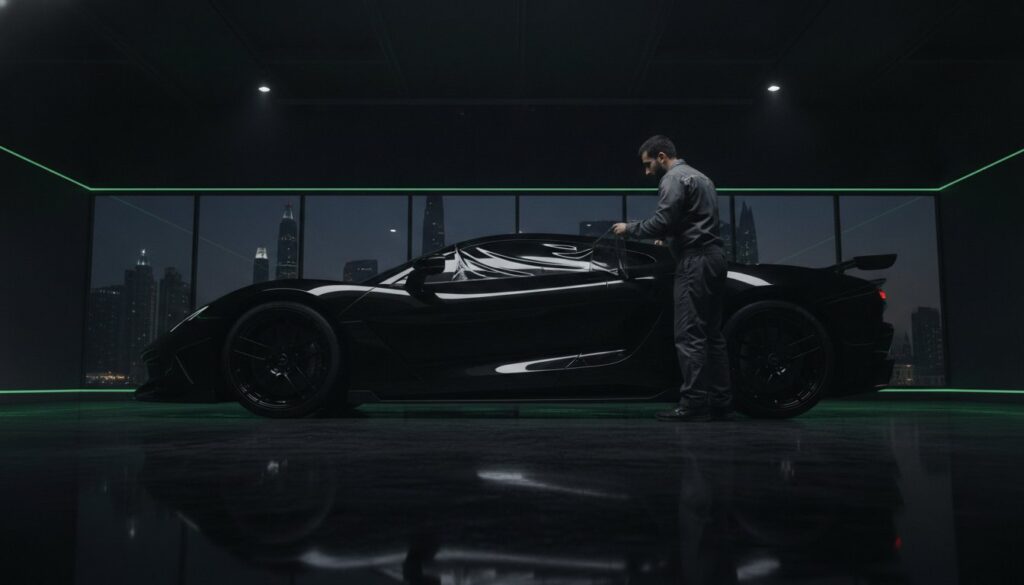
In the punishing heat of the UAE, your luxury vehicle’s glass is far more than a design element; it’s a critical thermal barrier that dictates the lifespan of your interior. Choosing professional car window tinting is no longer just about privacy or aesthetics; it’s a calculated investment in high-performance thermal management. You’ve likely noticed the subtle fading of bespoke leather or felt the unbearable blast of trapped heat after a few hours parked in the sun. We agree that a world-class machine deserves better than the subpar heat rejection of standard factory glass.
This 2026 performance guide reveals how the latest graphene-infused and nano-ceramic technologies deliver up to 99% UV rejection and significantly lower cabin temperatures. We’ll preview the elite coatings and smart tints that provide crystal-clear visibility and a sophisticated finish. You will learn how to safeguard your interior and enhance driving comfort through every sandstorm and midnight drive, ensuring your vehicle remains an oasis of climate-controlled serenity.
Key Takeaways
- Master the distinction between basic shading and advanced thermal barriers to ensure your vehicle achieves maximum Total Solar Energy Rejection (TSER).
- Identify why modern luxury vehicles require ceramic or crystalline films to maintain uninterrupted 5G and GPS signal performance in 2026.
- Discover how professional car window tinting serves as a vital preservation layer for leather restoration and high-end colored car wraps.
- Learn the technical necessity of a controlled, laboratory-grade installation environment to avoid the visual defects and contamination risks inherent in mobile services.
- Explore the synergy between internal heat-rejection films and external hydrophobic glass coatings for absolute climate protection and enhanced visibility.
The Science of Thermal Management: Beyond Basic Dark Tints
Professional car window tinting is an advanced, multi-layered shield designed to manipulate the solar spectrum with surgical precision. It’s not just a cosmetic upgrade; it’s a technical intervention for your vehicle’s glass. Modern Window Film Technology utilizes precious metals and ceramic particles to selectively filter light. By blocking specific wavelengths while allowing others to pass, these films transform your windows into a sophisticated thermal management system that maintains cabin integrity even in the harshest climates.
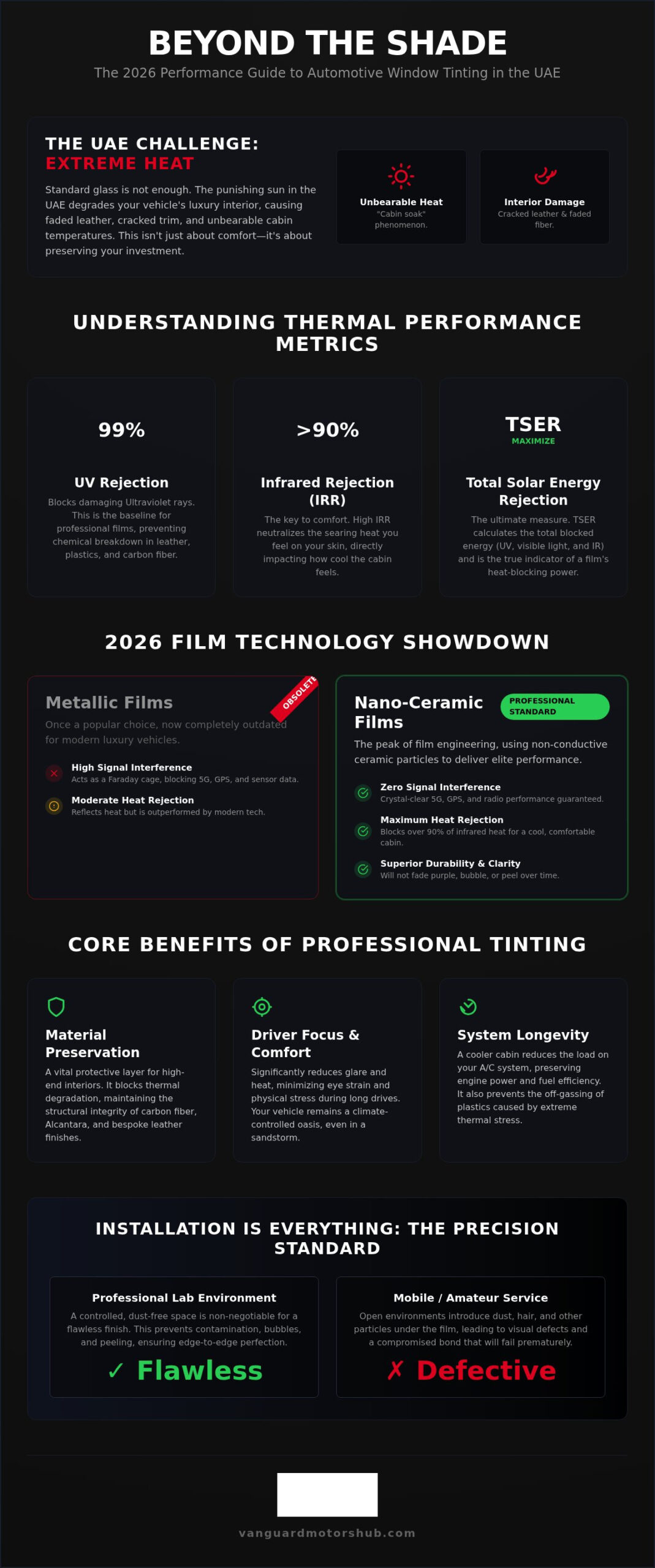
Many owners confuse Visible Light Transmission (VLT) with actual protection. VLT only measures how dark the film looks to the human eye, which tells you very little about how cool your car will stay. In contrast, Total Solar Energy Rejection (TSER) calculates the combined percentage of blocked UV rays, visible light, and infrared radiation. Total Solar Energy Rejection (TSER) is the ultimate measure of a film’s heat-blocking performance. While TSER provides a broad overview, Infrared Rejection (IRR) is the metric that dictates your immediate comfort. High IRR percentages ensure that the searing heat you feel on your skin is neutralized before it ever enters the cabin.
UV Protection vs. Heat Rejection
UV rays are the silent killers of bespoke interiors. They penetrate standard glass to trigger chemical breakdowns in high-end materials, leading to cracked leather and cloudy carbon fiber. While 99% UV rejection is the baseline for professional car window tinting in 2026, it doesn’t stop the heat on its own. Infrared rays are responsible for “cabin soak,” a phenomenon where surfaces like your dashboard absorb energy and radiate it back into the air. Professional films decouple darkness from performance. You can achieve elite heat rejection with a nearly clear film, maintaining a factory-fresh aesthetic without the greenhouse effect.
The Impact on Luxury Performance
Maintaining a cool interior isn’t just about comfort; it’s about mechanical and material efficiency. A cooler cabin significantly reduces the constant load on your vehicle’s air conditioning system, which preserves engine power for the road. This protection is the perfect companion to leather restoration and interior detailing, as it prevents the cycle of heat damage that ages upholstery prematurely.
- Material Preservation: It maintains the structural integrity of carbon fiber and delicate resin finishes by blocking thermal degradation.
- Driver Focus: Reducing glare and heat minimizes ocular fatigue and physical stress during long drives.
- System Longevity: Lower cabin temperatures prevent the off-gassing of interior plastics and adhesives caused by extreme thermal stress.
Performance Comparison: Ceramic vs. Crystalline vs. Hybrid Films
In 2026, the selection of window film has moved beyond simple aesthetics to complex signal management. Metallic films, once the gold standard for heat rejection, are now entirely obsolete for modern luxury vehicles. These films act as a Faraday cage, disrupting the 5G connectivity, GPS precision, and complex sensor arrays that supercars rely on for performance and safety. Professional car window tinting now prioritizes nano-ceramic and optical-grade technologies that offer elite protection without compromising your vehicle’s digital heartbeat.
Understanding The Science of Thermal Management is essential when selecting a film that uses advanced materials to selectively block infrared radiation. High-performance films today utilize microscopic particles to filter the solar spectrum, ensuring that your cabin remains cool while your devices stay connected. For supercars with expansive windshields and steeply raked rear glass, these films are a technical necessity to prevent the interior from becoming a massive heat sink.
Ceramic Films: The Professional Standard
Nano-ceramic technology represents the peak of modern film engineering. These films use non-conductive, ceramic particles that are small enough to be virtually invisible to the naked eye but large enough to block over 90% of infrared heat. This level of precision is why ceramic films are a core component of the Vanguard Premium Package. Unlike cheap alternatives, professional ceramic films offer incredible durability. They don’t turn purple, bubble, or peel because the color is locked into the ceramic structure itself, ensuring aesthetic consistency across every pane of glass for over a decade.
Crystalline and Carbon Alternatives
While ceramic is the all-rounder, other specialized films have their place in a high-end build. Carbon-based films are often chosen for a specific matte aesthetic, providing a deep, non-reflective finish that complements certain paint protection films. Crystalline films, on the other hand, utilize multi-layer optical technology—sometimes over 200 layers in a single sheet—to reject heat better than many dark tints while remaining almost clear. This is the ideal choice for drivers who want maximum visibility during night driving or sandstorms without sacrificing thermal protection.
Choosing the right tier depends on your specific driving environment and the surface area of your glass. If you’re unsure which technology suits your vehicle’s sensor array, you can speak with a specialist to discuss a tailored performance solution. Premium tiers typically offer the longest warranties, often exceeding ten years, providing peace of mind that your investment in protection will endure the test of time and climate.
Glass Coating for Windshields: The Invisible Shield
While professional car window tinting secures your vehicle’s interior climate from the inside, the external glass surface remains vulnerable to the abrasive elements of the desert. True automotive protection in 2026 requires a dual-layer strategy. By combining internal heat-rejection films with high-performance external glass coatings, you create a comprehensive barrier that addresses both thermal energy and physical environmental stress. This synergy ensures your glass isn’t just a window, but a precision-engineered shield.
Advanced glass coatings work at a molecular level to transform the surface of your windshield. These specialized ceramic or graphene-based liquids fill the microscopic pores and valleys inherent in factory glass to create a perfectly level surface that prevents the adhesion of water, dust, and road debris. This microscopic leveling is the foundation of the coating’s hydrophobic properties, making it much harder for contaminants to “grip” the surface during high-speed driving.
Hydrophobic Performance and Visibility
The primary benefit of an elite glass coating is the dramatic “self-cleaning” effect it provides. During those rare but intense desert rainstorms, water beads instantly and flies off the glass at speeds as low as 60 km/h. This often eliminates the need for constant wiper use, which is critical when rain mixes with fine sand to create a muddy slurry that can streak and scratch unprotected glass.
- Night Clarity: By creating a smoother surface, the coating reduces the refractive scattering of light, significantly cutting down on glare from oncoming headlights.
- Water Spot Prevention: Mineral-heavy water from car washes or humidity won’t etch into the glass, preserving that crystal-clear factory finish.
- Debris Repellency: Organic matter and oil-based road film don’t bond to the treated surface, allowing them to be rinsed away with minimal effort.
Protecting the Glass Surface
Beyond visibility, these coatings add a vital layer of structural defense. The increased surface tension provides a degree of scratch resistance against the fine, high-velocity sand particles that act like sandpaper on standard windshields. For owners who have already invested in Paint Protection Film (PPF), adding a glass coating completes the front-end security package. It ensures that while your paint is safe from stone chips, your glass remains free of the micro-pitting that can ruin the aesthetic of a luxury car.
Peak performance requires minimal but specific maintenance. You’ll want to avoid harsh alkaline cleaners that can strip the coating over time. Instead, use pH-neutral glass cleaners and high-quality microfiber towels to maintain the hydrophobic bond. When integrated with professional car window tinting, this external treatment ensures your visibility remains uncompromised, regardless of the time of day or the intensity of the climate.
The Preservation Synergy: Protecting Luxury Interiors and PPF
Professional car window tinting is the essential final layer in a holistic protection ecosystem. It shouldn’t be viewed as a standalone add-on. Instead, it acts as the primary defense for your interior investments. When you commission a leather restoration, the goal is to return your cabin to a pristine state. Without high-performance tinting, that fresh leather is immediately exposed to the same UV radiation that caused its initial degradation. We view tinting as the critical partner to interior care, ensuring that your investment in craftsmanship remains protected for years to come.
This preservation extends beyond the cabin. High-performance films play a surprising role in protecting external colored car wraps. By significantly reducing interior-to-exterior heat transfer, professional car window tinting prevents the greenhouse effect that can stress wrap adhesives from the underside of the glass. This is why we include it as a cornerstone of the Vanguard Premium Package for every new vehicle delivery. Some owners worry that tinting might alter the sophisticated look of their factory glass. In 2026, we offer ultra-clear films that provide elite thermal rejection without changing the visual transparency of the window at all.
Interior Protection Strategies
Blocking 99% of UV rays is non-negotiable for preserving luxury materials. This protection stops leather shrinkage and prevents dashboards from warping under the desert sun. It’s about maintaining that “factory feel” that preserves resale value. This is especially vital for vehicles featuring delicate carbon fibre interior trim. Over time, heat and UV exposure can cloud the resin finish on carbon parts; professional films neutralize this threat completely.
Aesthetic Integration
Aesthetics and performance must coexist. We can match your tint shade to your vehicle’s paint or wrap to create a seamless, unified profile. For those who prefer the “stealth” look, we use clear, high-performance films that offer maximum protection with a factory-original appearance. This allows for a standardized aesthetic across a fleet of luxury vehicles, ensuring every car in your collection maintains a consistent level of protection and style. It’s an efficient way to protect your assets while maintaining a polished, authoritative presence on the road.
If you’re ready to integrate elite protection into your next vehicle build, book your Vanguard Premium Package today to secure your interior’s future.
The Vanguard Precision Standard: Professional Installation
The performance of a world-class thermal film is entirely dependent on the caliber of its application. Professional car window tinting is a surgical procedure that requires a laboratory-grade environment to achieve a flawless result. While some providers promote mobile services for convenience, this approach introduces significant risks. Open-air environments are plagued by wind, microscopic dust, and airborne contaminants that inevitably become trapped between the film and the glass. These micro-particles create permanent bubbles and visual distortions that compromise both the aesthetic and the structural integrity of the bond.
At Vanguard Motors Dubai, we operate within a strictly controlled, dust-free facility to ensure absolute clarity. Our technicians utilize edge-to-edge filing and micro-gap technology to eliminate the unsightly light gaps often seen in standard installations. This precision ensures the film follows the exact contour of the glass, creating a finish that looks like a factory-tinted pane rather than an after-market addition. Choosing the right film requires an expert-led consultation to match the technical specifications of your vehicle’s sensor arrays with your specific climate needs.
The Installation Process
A bubble-free finish begins with multi-stage decontamination. We strip the glass of all oils, residues, and industrial fallout to create a pristine surface for the adhesive bond. For supercars with complex, multi-axis curved glass, we employ advanced heat-shrinking techniques. This process requires mastery to ensure the film conforms perfectly without distorting its optical properties. In 2026, high-performance ceramic and graphene films require specific thermal curing protocols, which we monitor closely during the final inspection to guarantee the film is set for the long term.
Aftercare and Longevity
Maintaining your protection system is straightforward but essential for longevity. You must avoid any ammonia-based cleaning products, as these chemicals can degrade the adhesive layers and the protective hard coat of the film over time. Use only pH-neutral cleaners and soft microfiber towels to preserve the crystal-clear finish. We also enforce a strict “no-window-down” period immediately following the installation. This window of patience allows the moisture used during application to evaporate completely, ensuring a lifelong bond that will not peel or shift even under extreme thermal stress.
Your vehicle deserves a shield that matches its engineering. To ensure your car receives the highest level of thermal management and aesthetic precision, book your professional tinting consultation with Vanguard Motors Dubai today. Our specialists will guide you through the 2026 film tiers to find the perfect balance of performance and style for your luxury machine.
Elevate Your Automotive Thermal Defense
Investing in your vehicle’s glass is a commitment to its long-term preservation and your daily driving comfort. We’ve explored how nano-ceramic technology and hydrophobic coatings work in tandem to neutralize the harsh UAE climate. You now understand that professional car window tinting is a technical necessity that safeguards bespoke leather interiors and ensures your supercar’s digital systems remain uninterrupted by signal interference. It’s the difference between a simple aesthetic change and a precision-engineered thermal barrier.
Vanguard Motors Dubai brings a legacy of expert handling for luxury and exotic brands to every project. We don’t settle for standard results; we provide precision installation in a dust-controlled environment to guarantee a flawless, factory-grade finish. Our comprehensive 2026 protection packages are designed for owners who demand absolute excellence in both form and function. Don’t let the heat dictate the lifespan of your interior or the quality of your drive.
Take the final step in total vehicle security. Secure Your Vehicle with Vanguard Professional Tinting and experience the peak of automotive thermal management. Your machine deserves the elite protection only a visionary expert can provide.
Frequently Asked Questions
Is professional car window tinting legal for the front windshield?
In 2026, national regulations generally permit a non-reflective tint on the top 4 to 6 inches of the front windshield. While tinting the entire windshield is restricted, many owners choose clear, high-performance films that provide UV protection without reducing visibility. It’s essential to ensure your vehicle remains compliant with Visible Light Transmission (VLT) standards. You should always consult with a professional technician to verify the latest national requirements before any application.
How long does a professional glass coating for windshields last?
A high-caliber glass coating for windshields typically maintains its peak hydrophobic performance for 12 to 24 months. This durability depends on environmental exposure and your maintenance habits. Using pH-neutral cleaners and avoiding abrasive wipers will extend the coating’s lifespan. Because these coatings bond at a molecular level, they provide a long-term barrier against micro-pitting from sand and dust, ensuring your visibility remains crystal clear throughout the year regardless of the climate.
Does ceramic tint interfere with my car’s GPS or mobile signal?
Nano-ceramic technology is specifically engineered to be non-conductive, meaning it won’t disrupt your car’s GPS, 5G connectivity, or mobile signals. Unlike older metallic films that create a Faraday cage effect, ceramic particles allow radio frequencies to pass through without interference. This makes professional car window tinting with ceramic film the ideal choice for modern luxury vehicles equipped with advanced navigation systems and integrated communication arrays that require uninterrupted data transmission.
Can window tinting really stop my leather seats from cracking?
Yes, professional tinting is a primary defense against interior degradation. By blocking up to 99% of harmful UV rays and significantly reducing infrared heat, these films prevent the chemical breakdown of leather fibers. This protection stops shrinkage and cracking before they start. It’s a critical partner to leather restoration services, ensuring that your bespoke upholstery retains its factory-fresh suppleness and aesthetic value even when exposed to extreme desert heat for extended periods.
What is the difference between 30% and 50% tint in terms of heat rejection?
The percentage refers to Visible Light Transmission (VLT), not total heat rejection. A 30% tint is darker than a 50% tint, but with high-performance ceramic technology, the heat rejection (TSER) can be remarkably similar. You don’t need a dark film to stay cool. Advanced 50% films often outperform standard 30% dyed films because they focus on blocking infrared radiation rather than just visible light, providing elite comfort without compromising your night-time visibility.
How do I clean my windows after a professional tinting service?
After a professional tinting service, you should wait for the full curing period before cleaning the internal surface. Once set, use only pH-neutral, ammonia-free glass cleaners and a clean microfiber towel. Ammonia is highly abrasive and can cause the film to haze or peel over time. Gentle, circular motions with a soft cloth will keep the surface clear and preserve the protective hard coat that maintains your film’s optical clarity and performance for years.
Can I apply a glass coating over an existing window film?
Glass coatings and window films serve different purposes and are applied to opposite sides of the glass. Professional car window tinting is applied to the interior surface to manage thermal energy and UV rays. In contrast, glass coatings are applied to the exterior to provide hydrophobic properties and scratch resistance. They work in synergy rather than overlapping; applying a coating over a film would be ineffective and could damage the film’s specialized surface.
Why should I choose a shop-based installation over mobile tinting?
Shop-based installation is mandatory for a professional, bubble-free finish. Mobile services cannot control environmental variables like wind, dust, and humidity, which lead to micro-contaminants becoming trapped under the film. Vanguard’s state-of-the-art facility provides a laboratory-grade environment where technicians can perform precision edge-to-edge filing. This controlled setting ensures that every application meets the highest standards of durability and optical clarity, which is impossible to replicate in an uncontrolled outdoor environment.