
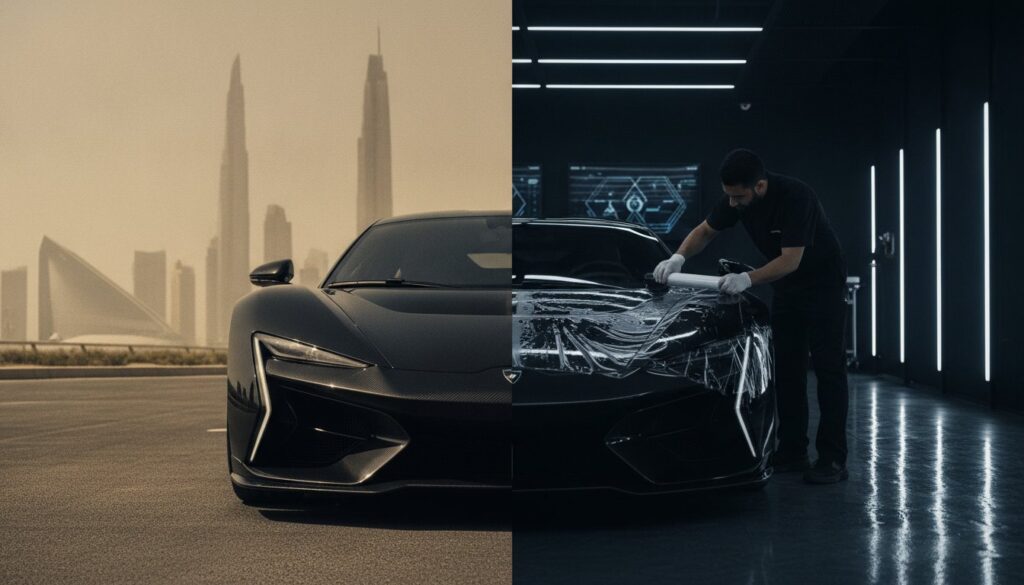
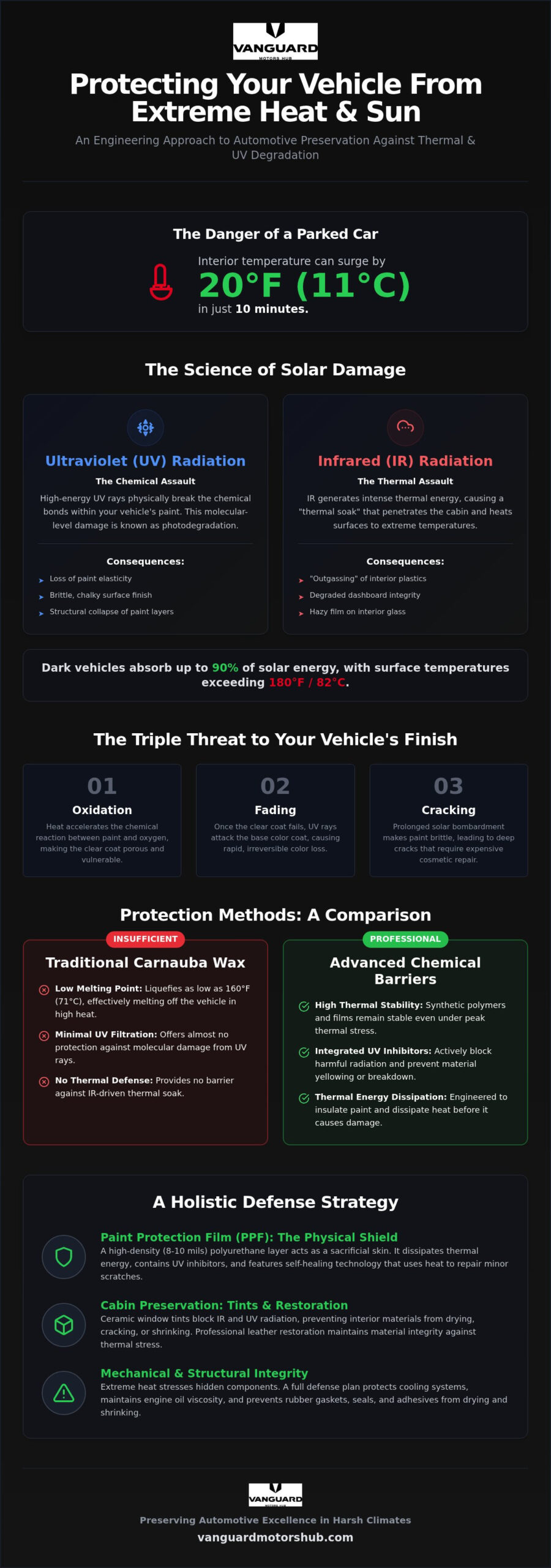
Did you know that the temperature inside your parked vehicle can surge by 20 degrees Fahrenheit in just ten minutes? You’ve likely felt that oppressive wall of heat when opening your door, or noticed the subtle dulling of your premium paint after a single season. It’s a frustrating reality for any owner who treats their vehicle as a high-value asset. Protecting car from extreme heat and sun is no longer just about finding a shady spot; it’s a multi-layered engineering strategy involving sophisticated chemical and thermal barriers.
We understand the meticulous care required to maintain elite automotive standards. This guide will empower you to master professional-grade solutions, from self-healing Paint Protection Film (PPF) to advanced leather restoration, ensuring your vehicle remains in showroom condition despite harsh conditions. We’ll break down the technical differences between basic DIY fixes and elite professional applications. You’ll learn how to shield your investment against the devastating effects of thermal soak and high-intensity UV radiation, securing its value and performance for years to come.
Key Takeaways
- Understand the science of photodegradation and why dark-colored vehicles are uniquely vulnerable to intense thermal soak.
- Master the application of high-density Paint Protection Film (PPF) as the ultimate barrier for protecting car from extreme heat and sun.
- Discover how ceramic window tints and professional leather restoration techniques prevent luxury interiors from drying, cracking, or shrinking.
- Identify the mechanical risks of peak summer heat, focusing on cooling system integrity and maintaining optimal engine oil viscosity.
- Learn why a holistic defense strategy like the Vanguard Premium Package is necessary to preserve a vehicle’s value in a harsh national climate.
Understanding the Impact of UV Radiation and Infrared Heat on Vehicles
The sun is a relentless architect of degradation. While we often admire the aesthetic of a high-gloss finish under the afternoon light, the reality is a constant bombardment of electromagnetic radiation. Photodegradation isn’t just a surface issue; it’s a molecular assault where high-energy ultraviolet (UV) rays physically break the chemical bonds within your vehicle’s paint. This structural breakdown leads to a loss of elasticity in the paint layers, eventually manifesting as a brittle, chalky surface. Without a strategic approach to protecting car from extreme heat and sun, your paint’s molecular integrity will simply collapse.
Infrared radiation (IR) presents a different set of challenges. While UV causes chemical damage, IR generates intense thermal energy. Dark-colored vehicles act as thermal sponges, absorbing up to 90% of the sun’s energy and reaching surface temperatures that can exceed 180°F. This thermal soak penetrates deep into the cabin, creating a greenhouse effect that accelerates the “outgassing” of interior plastics. This process releases chemicals that create a hazy film on windows and degrade the structural integrity of the dashboard. Using high-quality windshield sun shades can mitigate some immediate cabin heat, but professional-grade barriers are required for long-term preservation of high-end materials.
The Triple Threat: Oxidation, Fading, and Cracking
Oxidation is the chemical reaction between your car’s paint and oxygen, a process that accelerates exponentially when catalyzed by high heat. Clear coats, designed to be the final line of defense, eventually succumb to prolonged solar bombardment. They become porous, allowing moisture and contaminants to penetrate the base coat. You’ll notice this first on horizontal surfaces like hoods, roofs, and trunk lids, where the sun’s angle is most direct. Once the clear coat fails, the paint beneath fades rapidly, eventually leading to deep cracks that require expensive cosmetic repair.
Why Standard Wax is Insufficient for Extreme Heat
Traditional carnauba wax is a legacy solution that fails in modern, high-intensity climates. Natural waxes have a remarkably low melting point, often liquefying at temperatures as low as 160°F. On a hot day, your protection can literally melt off the hood before lunch. Standard wax provides minimal UV filtration and offers no defense against IR-driven thermal soak. To truly shield a high-value asset, you must transition from temporary waxes to permanent chemical barriers. Solutions provided by Vanguard Motors Hub utilize synthetic polymers and advanced films that remain stable even under peak thermal stress.
Heat also targets the hidden components. Rubber gaskets, door seals, and adhesive bonds are highly susceptible to thermal stress. Continuous expansion and contraction cycles cause these materials to dry out and shrink. When seals fail, you lose cabin insulation and risk water ingress during the rare but intense rainstorms. A professional perspective treats the vehicle as a complete system, ensuring every seal and bond remains resilient against the climate’s harshest demands.
Professional Barriers: The Role of PPF and Ceramic Coatings
Protecting car from extreme heat and sun requires more than surface-level shine; it demands a sophisticated, structural barrier. In 2026, automotive preservation has evolved beyond traditional methods into the realm of advanced material science. We focus on two primary technologies that provide the ultimate high-heat defense: Paint Protection Film (PPF) and ceramic coatings. While they serve different primary functions, their combined application creates a fortress for your vehicle’s exterior.
PPF: The Physical Shield for High-Performance Paint
Paint Protection Film is a high-density, transparent polyurethane layer that acts as a sacrificial skin for your vehicle. Unlike thin vinyl wraps, professional-grade PPF is engineered with a thickness of 8 to 10 mils. This specific density is essential for dissipating thermal energy before it reaches the clear coat, effectively insulating the paint. Premium films are now manufactured with integrated UV inhibitors. These chemical stabilizers prevent the film from yellowing or becoming brittle, which are common failure points in standard products exposed to high-intensity radiation.
A defining feature of 2026-standard films is advanced self-healing technology. These films use the very heat they protect against to their advantage. When the surface reaches a specific temperature, the top layer of the polyurethane reorganizes its molecular structure to erase swirl marks and minor abrasions automatically. This ensures your finish remains flawless without the need for constant polishing. For those seeking the highest level of care, The Ultimate Shield: Why Paint Protection Film is the Standard for Excellence in 2026 provides a deeper dive into these material advancements.
Ceramic Coating: Chemical Resistance and UV Reflection
While PPF provides physical mass, ceramic coatings offer chemical and solar reflection at a molecular level. Utilizing Nano-SiO2 technology, these coatings create a permanent bond with the clear coat. The result is a glass-like finish that is highly hydrophobic. In dusty, high-heat environments, this slick surface prevents contaminants from baking into the paint. The high-gloss finish isn’t just for aesthetics; it actively reflects a significant portion of solar energy away from the vehicle, reducing the rate of thermal soak.
Maintenance for coatings in extreme climates requires precision. Dust and sand can act as abrasives, so regular, specialized washing is mandatory to maintain the coating’s hydrophobic properties. The most effective strategy is ‘Stacking’. By applying a ceramic coating over PPF, you combine the impact resistance of polyurethane with the chemical slickness of Nano-SiO2. This synergy creates the most durable barrier available today. If you’re ready to upgrade your vehicle’s defense, speak with our protection specialists to design a custom package for your car.
Preserving the Cabin: Window Tinting and Interior Restoration
While Paint Protection Film secures the chassis, the cabin remains a vulnerable greenhouse if left untreated. Glass surfaces don’t just allow light to enter; they act as thermal conductors that trap heat, leading to temperatures that can degrade even the most resilient luxury materials. Successfully protecting car from extreme heat and sun requires a dual-focus strategy that addresses both the glass and the organic surfaces within the cockpit.
Thermal Rejection Films for Glass Surfaces
Modern window tinting has evolved far beyond aesthetic darkening. In 2026, the industry standard has shifted toward multi-layered ceramic and crystalline films designed specifically for infrared (IR) rejection. Unlike traditional carbon or dyed films, ceramic tints utilize non-conductive particles to block up to 99% of UV rays and a significant portion of IR radiation without interfering with electronic signals or reducing night-time visibility.
When selecting a film, you must prioritize Total Solar Energy Rejection (TSER). This metric provides a holistic view of the film’s ability to block UV, visible light, and infrared heat. High-TSER films significantly reduce the thermal load on your vehicle’s interior, which translates to a lower air conditioning demand. By reducing the strain on the compressor, you don’t just preserve the climate control system; you actively improve fuel efficiency and maintain engine performance during peak summer months.
Leather Restoration and Hide Preservation
Leather restoration is a professional process that restores suppleness and original color to heat-stressed hides by deep cleaning and replenishing essential lubricants. Organic materials like premium leather are exceptionally vulnerable to the national climate. Intense heat causes the essential oils within the hide to evaporate, leading to a loss of structural integrity. Without these oils, the fibers become brittle, causing the leather to shrink and pull away from the stitching.
Early intervention is critical for maintaining the value of a high-end interior. You can identify the onset of heat damage by checking for increased stiffness in seat bolsters, subtle discoloration, or the appearance of micro-cracking in high-wear areas. Beyond the seats, the dashboard requires specialized UV-resistant treatments to prevent “sticky dash syndrome,” a condition where the plasticizers in the material break down and migrate to the surface. For a comprehensive look at revitalizing aging cabins, consult our guide on Cosmetic Car Repair in 2026: The Definitive Guide to Luxury Automotive Restoration. These professional treatments ensure that the interior remains a refined sanctuary, regardless of the external environment.
Mechanical Integrity: Protecting the Engine and Cooling Systems
Aesthetic preservation is vital, but the mechanical toll of extreme climates is often more catastrophic. Protecting car from extreme heat and sun requires a deep understanding of fluid dynamics and material science. High ambient temperatures don’t just affect the surface; they penetrate the engine bay, altering the viscosity of critical lubricants. When engine oil thins beyond its designed operating range, lubrication fails, leading to accelerated wear on internal components. Switching to high-performance synthetic lubricants with superior shear stability is a prerequisite for any vehicle operating in peak summer conditions.
The cooling system operates under immense pressure as it fights to dissipate heat. Older rubber hoses and plastic reservoirs often become the weakest link during this period. Heat-induced brittleness leads to sudden failures that can result in total engine loss. Similarly, your vehicle’s battery faces a silent threat. High temperatures accelerate the chemical reactions within the cells, leading to internal corrosion and fluid evaporation. On the ground, sun-baked asphalt can reach temperatures far higher than the air. This causes heat-induced over-inflation in tires, which compromises the contact patch and increases the risk of a high-speed blowout.
Fluid Management for Extreme Temperatures
Maintaining mechanical health starts with chemical precision. High-boiling-point coolants are essential to prevent boil-over when the vehicle is stationary in traffic. A professional cooling system flush is non-negotiable before the peak heat season begins. This ensures that the radiator and heater core are free of scale that inhibits heat transfer. We also monitor brake fluid integrity; moisture-contaminated fluid can reach its boiling point under spirited driving, leading to a dangerous vapor lock and a spongy pedal feel.
The Critical Role of Carbon Fiber Care
Performance vehicles often feature extensive carbon fiber, which presents its own set of thermal challenges. High heat can cause the resin used in the manufacturing process to yellow or even delaminate from the carbon weave. To prevent this, we apply specialized UV-protective clear coats that shield the resin from solar radiation. If you’ve already noticed signs of clouding or structural stress, our guide on Carbon Fibre Car Parts Repair: The 2026 Guide to Structural Restoration details the professional recovery process.
To ensure your vehicle’s mechanical systems are prepared for the season, book a professional cooling system inspection today. Our team provides the meticulous care required to keep high-performance machines running at their peak, regardless of the external temperature.
The Vanguard Protocol: Professional High-Heat Defense Packages
The ultimate strategy for protecting car from extreme heat and sun isn’t found in a single product. It’s a holistic engineering approach we call the Vanguard Protocol. This system recognizes that heat attacks every surface differently. By integrating high-density Paint Protection Film, advanced ceramic window tints, and precision detailing, we create a synergistic barrier that no single DIY solution can match. True preservation requires a multi-front defense that addresses chemical, physical, and thermal threats simultaneously.
The Vanguard Premium Package represents our most comprehensive defense. It’s a bespoke service tailored specifically to the rigors of our national climate. We don’t just apply products; we engineer a shield. For owners who demand excellence without the logistical hurdle, our Mobile Detailing Van delivers this high-tier preservation directly to your location. This ensures your vehicle’s protection levels never dip, even during the most punishing summer months. Convenience and precision are no longer mutually exclusive in the world of elite automotive care.
Investing in professional-grade protection is a calculated financial decision. When the time comes for resale, a vehicle with a documented history of professional care and a preserved, showroom-quality finish commands a significant premium. You aren’t just spending on maintenance; you’re securing a high-value asset against the inevitable depreciation caused by environmental neglect. In the luxury market, the condition of the paint and interior materials is the primary driver of value retention.
Bespoke Detailing and Paint Correction
Before any permanent barrier is applied, the surface must be flawless. Paint correction is a critical prerequisite. This process removes micro-scratches and embedded contaminants that the sun’s heat would otherwise “bake” into the clear coat permanently. Professional detailing ensures that when the PPF or ceramic coating is applied, it bonds to a pristine surface, maximizing both longevity and visual depth. For a deeper understanding of these standards, see our Supercar Detailing: The 2026 Reference Guide to Meticulous Automotive Preservation.
Ensuring Perfection with Vanguard Motors
The efficacy of any protection system relies on the precision of its installation. High-end vehicles feature complex curves and intricate trim that require specialized care. Our technicians understand the specific nuances of luxury marques, ensuring seamless edges and a finish that is virtually invisible. Protecting car from extreme heat and sun is a mission of meticulous accuracy. Amateur applications often lead to lifting edges or trapped air, which compromise the very protection you seek. Secure your vehicle’s future with the experts at Vanguard Motors Hub and experience the intersection of technical skill and automotive passion.
Securing Your Automotive Legacy Against the Elements
Preserving a high-performance vehicle in a demanding national climate is a pursuit of technical precision and unwavering standards. We’ve explored how 2026-spec Paint Protection Film and ceramic coatings create an impenetrable exterior barrier, while advanced window tints and leather restoration maintain the sanctuary of your cabin. Successfully protecting car from extreme heat and sun is about more than just aesthetics; it’s about ensuring the mechanical and structural integrity of your high-value asset for years to come.
As specialists in luxury and supercar preservation, Vanguard Motors provides national coverage for those who refuse to compromise on quality. Our Vanguard Protocol integrates the latest chemical and thermal technologies to shield your investment from every angle. Don’t wait for the first signs of solar damage to take action. Protect your investment with Vanguard Motors’ Elite Protection Services today. Your vehicle deserves the meticulous care and elite protection that only a visionary leader in automotive preservation can provide. Drive with confidence, knowing your masterpiece is built to withstand the heat.
Frequently Asked Questions
Does Paint Protection Film (PPF) really stop the sun from fading my car’s paint?
Yes, professional-grade Paint Protection Film (PPF) is engineered with integrated UV inhibitors that effectively block the ultraviolet radiation responsible for fading and oxidation. These films act as a high-density polyurethane barrier, preventing solar energy from reaching the clear coat. This ensures your vehicle maintains its original color depth and luster over the long term. Beyond fading, PPF also shields against the chemical breakdown of paint bonds, making it essential for protecting car from extreme heat and sun.
How often should I apply a ceramic coating if my car is always in the sun?
High-end ceramic coatings typically offer a lifespan of two to five years, even under constant solar exposure, provided they receive professional maintenance. In extreme climates, we recommend a specialized inspection and maintenance application every twelve months. This replenishes the hydrophobic top layer and ensures the Nano-SiO2 bond remains intact. Regular care prevents environmental contaminants from baking into the coating, which is crucial for vehicles that lack consistent garage storage during peak daylight hours.
Can extreme heat cause my car’s window tint to bubble or peel?
Bubbling and peeling are primarily symptoms of low-quality dyed films or amateur installation, not the heat itself. Professional ceramic window tints are engineered to be heat-stable and utilize advanced adhesives that resist failure even at high temperatures. These films are designed to manage thermal expansion without losing their bond to the glass. Choosing a high-TSER (Total Solar Energy Rejection) film ensures the tint remains flawless while significantly reducing the internal cabin temperature and cooling system load.
Is a car cover better than professional paint protection in high-heat areas?
Professional paint protection like PPF or ceramic coatings is superior to a car cover for active preservation. While covers provide shade, they can trap heat against the paint and cause micro-abrasions when wind moves the fabric against dust particles. Professional barriers offer 24/7 defense without the risk of physical scratching or the inconvenience of constant removal. They provide a permanent chemical and physical shield that manages thermal soak more effectively than a temporary fabric layer.
What are the first signs of sun damage on a luxury car’s interior?
The earliest indicators often manifest as a loss of suppleness in leather hides or a subtle change in the texture of the dashboard. You might notice seat bolsters feeling stiffer than usual or a faint tackiness on plastic surfaces, known as outgassing. If left unaddressed, these signs progress to micro-cracking and visible fading. Professional leather restoration and UV-resistant treatments are necessary to replenish essential oils and stabilize the materials before structural failure occurs.
Does the color of my car affect how much heat protection I need?
Yes, darker shades like black, deep blue, or charcoal act as thermal sponges, absorbing up to 90% of solar energy. This results in significantly higher surface temperatures and faster thermal soak compared to lighter vehicles. While all cars require UV defense, dark-colored luxury vehicles demand a more robust infrared rejection strategy. We prioritize high-density PPF and multi-layered ceramic coatings for these cars to dissipate heat and prevent the rapid oxidation that dark pigments are prone to.
Can I wash my car normally after applying high-heat protection films?
You can maintain your vehicle with regular washing, but we recommend a touchless or two-bucket hand wash method to preserve the film’s self-healing properties. Avoid automated brush washes that can introduce heavy swirling. Using pH-neutral soaps ensures that the hydrophobic layers on ceramic coatings and PPF remain effective. Protecting car from extreme heat and sun also means removing bird droppings or tree sap immediately, as these acids can etch into surfaces more quickly when catalyzed by the sun.
How does heat affect the performance of my supercar’s carbon fiber parts?
Intense thermal stress can cause the epoxy resins in carbon fiber to yellow, cloud, or even delaminate from the weave. This compromises both the aesthetic and the structural integrity of lightweight components like spoilers and hoods. To prevent this, we apply specialized UV-protective clear coats or PPF specifically designed for carbon surfaces. These barriers filter out the radiation that breaks down resin, ensuring your performance parts remain visually striking and structurally sound throughout the vehicle’s lifespan.