
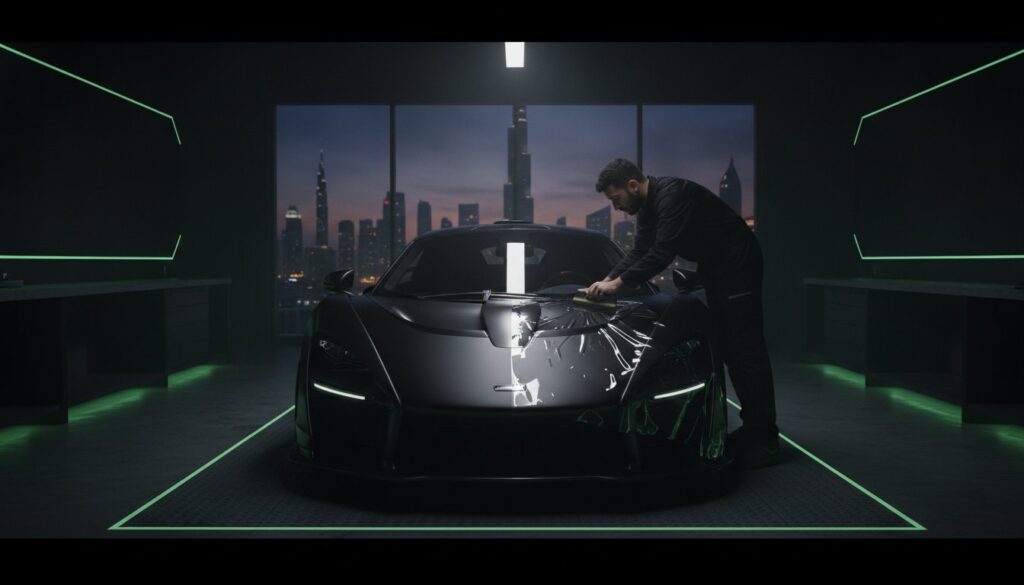
What if the very film meant to protect your supercar actually hid a legacy of razor marks and peeling edges? For owners of high-performance machines, the decision to apply Paint Protection Film is driven by a high-octane passion for perfection, yet it’s often clouded by anxiety. You fear the yellowing of inferior materials in the intense heat or the loss of factory paint integrity under an amateur blade. At Vanguard Motors Dubai, we believe that world-class protection should be as invisible as it is durable. Understanding the specific questions to ask before getting PPF installed is the only way to ensure your vehicle receives the meticulous care it deserves.
We promise to help you master the consultation process by providing the 12 critical questions that separate elite technical mastery from average applications. This selection guide serves as your visionary guide through the complex landscape of 2026-grade TPU chemistry and precision edge wrapping. We’ll preview the essential benchmarks for installer certification, the science of self-healing innovation, and the aftercare protocols required to maintain a showroom finish. By the end of this article, you’ll have the peace of mind that comes with knowing your investment is guarded by professional precision and a commitment to automotive excellence.
Key Takeaways
- Identify the technical benchmarks required for installers to safely navigate the sophisticated sensors and camera systems on high-performance machines.
- Navigate your consultation with confidence using 12 specific questions to ask before getting PPF installed to ensure elite results.
- Evaluate the precision of edge wrapping and the ‘Pre-Cut vs. Bulk’ debate to guarantee a truly invisible, factory-level finish.
- Uncover the science behind 2026-grade TPU and how modern self-healing films maintain a flawless surface under extreme ambient heat.
- Distinguish between film manufacturer warranties and professional labor guarantees to protect your investment and ensure long-term durability.
Evaluating Technical Mastery: Why the Installer is Your Most Critical Choice
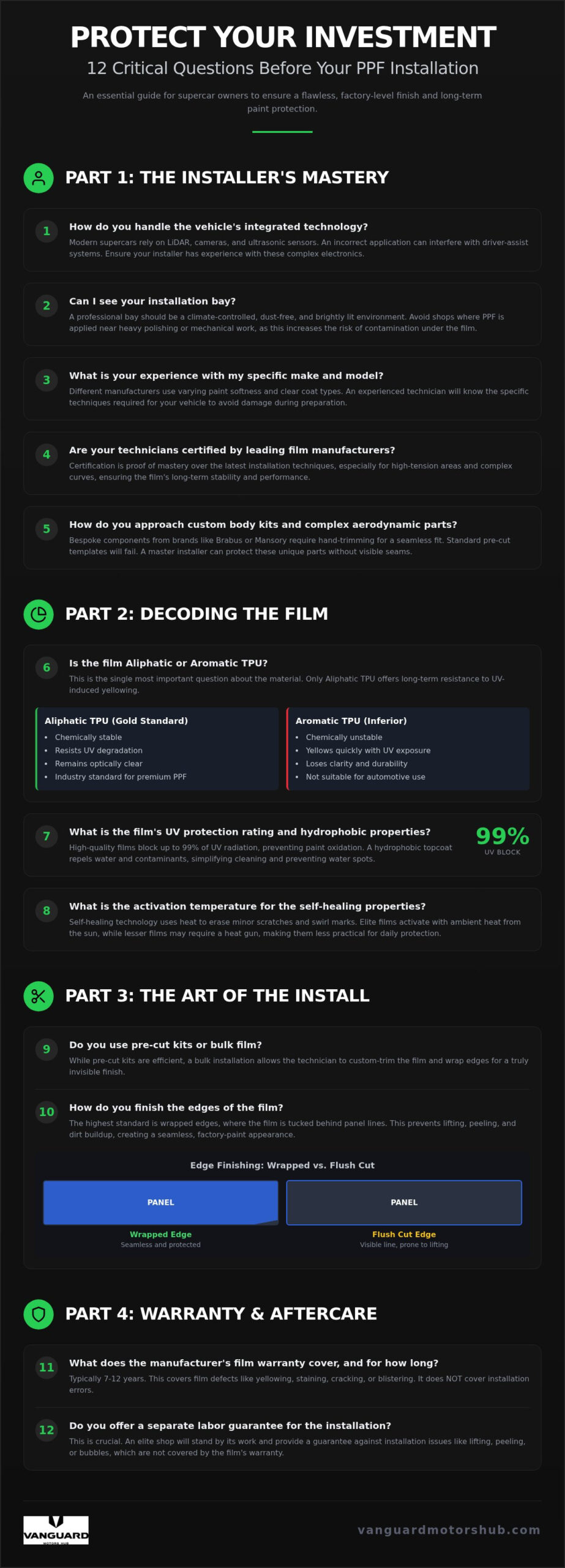
The film provides the raw material, but the technician provides the performance. In 2026, the gap between a standard detailer and a certified PPF specialist has never been wider. While a general detailer focuses on surface aesthetics, a specialized technician understands the structural geometry of your vehicle’s exterior. One of the most vital questions to ask before getting PPF installed is how the shop handles integrated technology. Modern luxury vehicles are rolling computers, relying on a complex web of LiDAR, cameras, and ultrasonic sensors. An amateur application can lead to sensor interference or ghosting in your driver-assist systems. You need a partner who views your car as a high-performance instrument, not just a canvas.
A shop walk-through reveals more than any marketing brochure. Look for a climate-controlled, dust-free environment. Red flags include cluttered workspaces, poor lighting, or a lack of dedicated installation bays. A professional bay should resemble a laboratory; every tool has its place and every surface is immaculate. If you see film being applied in the same area where heavy polishing or mechanical work is occurring, the risk of contamination is high. Precision requires a sterile stage.
Specialized Experience with Luxury Assets
When formulating your list of questions to ask before getting PPF installed, prioritize their experience with your specific manufacturer. Ask if they’ve worked on your specific paint code recently. Modern clear coats vary significantly; some are remarkably soft and require delicate handling during the decontamination phase. Verify their certification from leading film manufacturers. This isn’t just a badge on the wall. It’s proof they’ve mastered the latest 2026 installation techniques for high-tension areas and complex curves, ensuring the film remains stable for years rather than months.
Handling Complex Contours and Body Kits
Standard templates often fail when you move into the world of bespoke car conversions. If you’ve invested in a Brabus body kit installation or Mansory components, you need a technician who can hand-trim film for a seamless fit. These kits feature aggressive angles and exposed carbon fiber elements that demand extreme precision. Ask how they plan to protect these additions without leaving visible seams. A master installer will ensure the film follows every contour of the carbon weave; they’ll maintain the kit’s aggressive aesthetic while providing bulletproof protection. This level of detail separates a visionary guide from a simple service provider.
Decoding the Film: Questions About Material Quality and Durability
Choosing the right film is a scientific endeavor. In 2026, the industry has moved beyond basic plastic wraps to sophisticated Thermoplastic Polyurethane (TPU) membranes. One of the essential questions to ask before getting PPF installed is whether the film is aliphatic or aromatic TPU. Aliphatic TPU is the 2026 gold standard; it offers superior resistance to the chemical breakdown caused by intense UV exposure. While lower-grade films might yellow within months, premium aliphatic films are engineered to remain optically clear for a decade or more. Most top-tier manufacturers now offer warranties ranging from 7 to 12 years to back this durability.
In extreme climates, the sun is your paint’s greatest enemy. High-quality PPF blocks up to 99 percent of UV radiation, which actively prevents paint oxidation and clear coat failure. This protection is vital for maintaining the deep, rich color of factory paint. Additionally, modern films incorporate advanced hydrophobic topcoats. This technology ensures that water, oils, and environmental contaminants bead off the surface instantly. It simplifies your cleaning routine and prevents the bonding of harsh minerals that can lead to permanent spotting.
Self-Healing Innovation and Maintenance
Self-healing PPF is a heat-activated polymer that uses thermal energy to reorganize its molecular structure and erase surface-level swirl marks. You must ask: “What is the activation temperature for this film’s self-healing properties?” In 2026, elite films often heal at ambient temperatures or with the heat from a running engine, but deeper gouges that penetrate the topcoat remain permanent. Understanding these physical limits prevents unrealistic expectations. While the film is resilient, it isn’t indestructible. You should still use pH-neutral soaps to preserve the integrity of the self-healing layer over time.
Gloss vs. Matte: Aesthetic Integrity
Visual integrity is paramount. A common issue with inferior films is “orange peel,” a textured distortion that ruins the mirror-like finish of high-gloss paint. You need a film with a high-clarity adhesive layer that remains invisible and smooth. For those with satin finishes, the challenge is maintaining the look without adding unwanted sheen. Premium matte films are designed to preserve that flat, aggressive aesthetic while offering the same level of protection. If you’re unsure which finish suits your vehicle’s current aesthetic, consult with a specialist today to explore high-performance options that match your style.
The Art of the Install: Asking About Precision and Edge Wrapping
The debate between pre-cut templates and bulk installation is a cornerstone of professional automotive protection. Historically, bulk installation was favored for its seamless look, but it carried the inherent risk of technicians using blades directly on your factory clear coat. In 2026, the elite standard has shifted toward a hybrid approach. One of the vital questions to ask before getting PPF installed is how the shop balances digital precision with manual finishing. You want the safety of a plotter-cut film combined with the aesthetic perfection of hand-wrapped edges. This combination ensures your paint remains untouched by steel while the film itself remains invisible to the naked eye.
Precision isn’t just about the flat surfaces; it’s about how the film behaves on complex aerodynamic curves. Poorly managed tension leads to “silvering” or “lift lines,” where the adhesive pulls away from the surface, creating a hazy, unprofessional appearance. A master installer understands the physics of film stretch. They’ll ensure that even the most aggressive air intakes and spoilers are covered without compromising the material’s integrity or the car’s silhouette.
Precision Plotting and Software
Modern supercar detailing relies on advanced software to ensure every millimeter of the vehicle is accounted for. Digital templates in 2026 are more accurate than ever, covering vents and sensors that were previously impossible to plot. However, factory templates don’t account for aftermarket modifications. If your vehicle features aggressive Brabus or Mansory components, you must ask: “How do you modify templates for custom body kits?” A visionary installer will digitally adjust the plot to provide total coverage without the need for dangerous hand-cutting over your sensitive paintwork. This ensures that no blades ever touch the factory finish during the process.
Edge Wrapping and Tuck Techniques
True invisibility is achieved through edge wrapping. A “flush cut” stops exactly at the edge of a body panel, leaving a tiny gap where dirt and wax can accumulate. This gap eventually leads to peeling that ruins the vehicle’s aesthetics. In contrast, a wrapped edge is tucked behind the panel, making the film’s boundary completely hidden. This technique is particularly critical when dealing with carbon fiber car parts repair areas. Carbon fiber often features sharp, unforgiving edges where film tension must be perfectly managed to prevent lifting.
When interviewing a potential shop, ask: “Do you remove badges, door handles, or lights for a seamless fit?” The answer reveals their commitment to excellence. Removing these components allows the film to be tucked deep into the recesses of the bodywork, ensuring the protection is truly undetectable. This level of meticulous care is what separates an average application from a world-class masterpiece.
The Long-Term View: Warranty, Maintenance, and Aftercare Support
High-end protection is a long-term commitment. The excitement of a flawless installation must be matched by the security of a robust support structure. One of the vital questions to ask before getting PPF installed involves the precise distinction between film failure and installation failure. A manufacturer’s warranty typically covers material defects like yellowing, cracking, or delamination for 7 to 12 years. However, these warranties rarely cover the labor required to replace the film. If the material begins to lift at the edges due to poor tucking, that responsibility falls solely on the installer. You must clarify the shop’s specific policy regarding lifting or bubbling within the initial curing period.
Elite service centers mandate a post-installation inspection, usually scheduled one week after the initial application. This check-up is critical. It allows technicians to ensure the adhesive has bonded perfectly across every complex aerodynamic curve and aggressive vent. Documented PPF protection is a significant asset; it can add between $1,500 and $5,000 to a vehicle’s resale value in 2026. Without a clear understanding of your coverage, that value remains at risk.
Manufacturer vs. Installer Guarantees
Authorized dealer status is a non-negotiable requirement. If a shop isn’t officially certified by the film manufacturer, your national warranty may be void from the moment the film is cut. When finalizing your list of questions to ask before getting PPF installed, ask if the warranty is transferable to a new owner. This detail is a powerful selling point for future resale. You should also confirm the claims process. Knowing exactly who to call if the film shows signs of premature wear ensures you aren’t left stranded between a manufacturer and a third-party installer.
Preserving the Shield: Aftercare Protocols
Preserving the aesthetic integrity of your film requires specific maintenance habits. While the film is durable, it isn’t indestructible. You should avoid high-pressure washers at close range, as they can catch the edges of the film and cause lifting. Use pH-neutral soaps and dedicated microfiber drying cloths to maintain the hydrophobic topcoat. Many owners choose the Vanguard Premium Package approach, which integrates a ceramic coating over the PPF for enhanced gloss and easier cleaning. This dual-layer strategy provides the ultimate physical and chemical shield for your investment. If you’re ready to secure your vehicle’s future, schedule your long-term maintenance consultation with our specialists today.
The Vanguard Standard: Why Elite Detailers Ask Themselves These Questions
The true measure of an elite installer isn’t just their ability to answer your inquiries. It’s the standard they set for themselves before you even walk through the door. At Vanguard Motors Dubai, we believe that paint protection film should never be a standalone service. It must integrate seamlessly into a broader aesthetic strategy that honors the vehicle’s design and structural integrity. Our pursuit of professional precision is driven by a high-octane passion for automotive excellence. We don’t just apply film; we curate an aspirational lifestyle for owners who demand the absolute best for their high-performance machines.
Achieving a flawless, dust-free finish in 2026 requires more than just a clean shop. It demands a fully climate-controlled environment where humidity and temperature are strictly regulated. This laboratory-like setting is essential for preventing the static electricity that attracts microscopic contaminants during the application process. When you’re finalizing the questions to ask before getting PPF installed, the facility’s environmental controls should be a primary focus. A visionary guide knows that the environment is as critical to the film’s clarity as the material itself. Without this control, even the most expensive film will suffer from visible imperfections.
A Holistic Approach to Protection
Elite protection begins long before the first sheet of TPU is cut. We often integrate film installation with cosmetic car repair to ensure the surface is perfectly leveled and free of imperfections. Applying film over existing swirls or chips only “locks in” the damage, compromising the final result and the film’s ability to bond. Our holistic philosophy extends to the interior, where combining PPF with specialized leather restoration creates total preservation. This comprehensive care is designed to withstand the unique challenges of our national environment, from intense UV radiation to abrasive sand. We ensure that every inch of your vehicle remains in showroom condition through every season.
Your Next Steps Toward Excellence
Mastering the consultation process is about more than just reading a guide. It’s about preparing the right questions to ask before getting PPF installed and then seeing that mastery in person. We recommend scheduling a physical consultation to inspect a live installation at Vanguard Motors Dubai. This allows you to witness the precision of edge wrapping and the sterile conditions of the bay firsthand. During this visit, a transparent and detailed quote is essential. It should outline every panel covered and the specific warranties included. Use this final checklist to determine if you’re ready to secure your vehicle’s legacy:
- Does the installer have documented experience with my specific manufacturer and paint code?
- Is the facility climate-controlled and separated from heavy mechanical work?
- Are the edges wrapped and tucked for a truly invisible finish?
- Is the quote comprehensive and devoid of hidden fees or vague labor charges?
When you’ve answered these, you’ll have the confidence to move forward. Your vehicle deserves nothing less than world-class protection that stands the test of time and maintains its aggressive aesthetic.
Secure Your Automotive Legacy with Visionary Protection
Mastering the 12 critical questions to ask before getting PPF installed transforms you from a standard owner into a savvy curator of your vehicle’s future. You now have the technical vocabulary to distinguish between average film application and world-class mastery. Elite protection in 2026 is defined by the synergy of advanced self-healing film technology and the surgical precision of the technician’s hand. Whether you’re safeguarding factory paint or navigating the complex contours of Brabus and Mansory kit conversions, the standard remains excellence.
True preservation goes beyond the surface; it involves specialized carbon fiber protection and a commitment to long-term durability in harsh climates. You’ve gained the clarity needed to navigate warranties and aftercare with absolute confidence. Don’t leave your machine’s finish to chance when you can secure its legacy today. Our team is ready to guide you through a bespoke protection strategy that matches your high-performance lifestyle and ensures your investment remains pristine for years to come.
Book Your Elite PPF Consultation at Vanguard Motors Hub and experience the intersection of technical skill and creative expression. Your masterpiece deserves nothing less than the Vanguard standard.
Frequently Asked Questions
Is it better to get PPF or ceramic coating first?
Paint protection film must always be installed before a ceramic coating. PPF provides a physical barrier against impact, while the coating acts as a chemical and aesthetic enhancement. If you apply the coating first, the film’s adhesive won’t bond correctly to the surface. Professional installers recommend applying the film to bare, corrected paint and then sealing it with a high-grade ceramic layer for maximum gloss and hydrophobic performance.
Can PPF be installed over a car that already has rock chips?
Film can be applied over existing chips, but it’s rarely recommended for elite results. The TPU membrane is designed to be transparent; it will magnify any imperfections rather than hiding them. Air pockets often form around deep gouges. For a world-class finish, you should integrate cosmetic car repair or paint touch-ups before the installation. This ensures the surface is structurally sound and visually perfect before it’s sealed.
How long does a professional PPF installation typically take in 2026?
Installation timelines vary based on the level of coverage you select. A partial front package usually takes 4 to 8 hours to complete. For a comprehensive full-body application, expect the process to span 1 to 3 days. This duration allows for meticulous decontamination, precision plotting, and the critical drying time required for wrapped edges to set. Complex projects involving bespoke body kits often require additional time for custom trimming.
Will PPF damage my factory paint when it is eventually removed?
High-quality film won’t damage factory paint when removed by a professional technician. The adhesive is engineered to remain stable over a 10 year lifespan. Problems only arise with low-grade films or if the car was repainted using poor-quality clear coats. Using a controlled heat source during removal ensures the bond releases smoothly without leaving residue. It’s one of the most important questions to ask before getting PPF installed if you prioritize resale value.
How do I know if a PPF installer is actually certified?
Verification is straightforward. Most premium film manufacturers maintain a public database of authorized dealers on their official websites. You should ask to see physical certification credentials during your shop walk-through. Certification ensures the technician has been trained in 2026-grade application techniques. It also guarantees that your manufacturer’s warranty remains valid. A shop’s willingness to provide these details is a hallmark of professional transparency and elite technical mastery.
Can you see the edges of the film once it is installed?
Visible edges are a sign of a standard installation rather than a premium one. When edges are wrapped and tucked behind body panels, the film becomes virtually invisible. You might see a faint line around sensors or badges if they aren’t removed, but a visionary installer minimizes these gaps. If you’re concerned about aesthetics, ask to inspect a finished vehicle in the shop to evaluate the technician’s ability to hide the film’s boundaries.
What happens if I get a scratch on my PPF?
Modern films feature a self-healing top coat that erases minor scratches and swirl marks when exposed to heat. This can come from the sun, the engine, or warm water. While this technology is revolutionary, it has limits. Deeper gouges that penetrate the TPU layer won’t heal and may require a panel replacement. This is why understanding the questions to ask before getting PPF installed regarding self-healing limits is vital for maintaining realistic expectations.
Does PPF require any special insurance coverage?
While not legally required, you should notify your insurance provider about the installation. Professional PPF is a significant aftermarket upgrade that increases the vehicle’s replacement value. In the event of an accident, an insurance endorsement ensures the cost of replacing the film on damaged panels is covered. Keep your detailed receipts and warranty documents as proof of the investment. Many luxury car owners find that this proactive step provides essential peace of mind.