
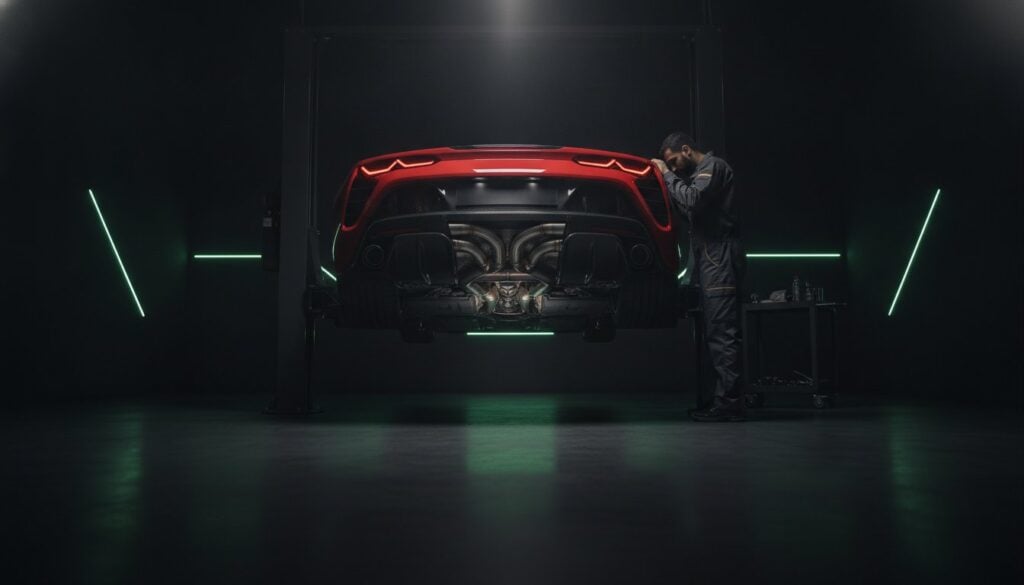
Your supercar’s factory exhaust isn’t designed to maximize its soul; it is designed to satisfy a committee of global regulators. While modern engineering is impressive, the stock system often acts as a bottleneck that stifles both raw power and acoustic personality. You understand that a true high-performance machine should sound as formidable as it looks. However, the fear of ruining a vehicle’s value with generic parts or suffering through relentless cabin drone often keeps owners from making a change. It’s a delicate balance between achieving an aggressive note and maintaining the sophisticated composure of a luxury exotic.
This 2026 guide to supercar exhaust upgrades shows you how to bridge that gap with precision-engineered solutions. You’ll discover how bespoke modifications can deliver measurable gains of up to 50 horsepower while significantly improving thermal management during high-intensity driving. We’ll explore the latest in valved technology and lightweight materials like titanium and forged carbon. This journey covers everything from the technical nuances of backpressure to the professional installation of elite kits like Mansory and Capristo, ensuring your car performs with as much precision as it does passion.
Key Takeaways
- Understand how a strategic exhaust modification serves as a vital enhancement of your engine’s breathing while refining its unique acoustic signature.
- Learn how precision-engineered supercar exhaust upgrades, including high-flow sport catalysts and headers, can unlock significant horsepower gains and torque improvements.
- Evaluate the differences between cat-back and axle-back systems to determine which modification best suits your sound and performance requirements.
- Discover why aerospace-grade materials like Inconel 625 and titanium are essential for maintaining optimal thermal management during high-performance driving.
- Gain insights into why professional installation and meticulous tuning are mandatory to ensure mechanical precision and prevent common sensor errors.
The Art of Sonic Engineering: Why Upgrade Your Supercar Exhaust?
Exhaust modification is not merely a cosmetic change; it is a strategic recalibration of your engine’s breathing and acoustic profile. While manufacturers must compromise to meet global noise regulations, a bespoke system allows your vehicle to express its true personality. A refined exhaust note transforms a simple drive into a visceral event, creating a profound emotional connection between the driver and the machine. It’s the difference between a muffled hum and a sharp, articulate roar that signals elite performance.
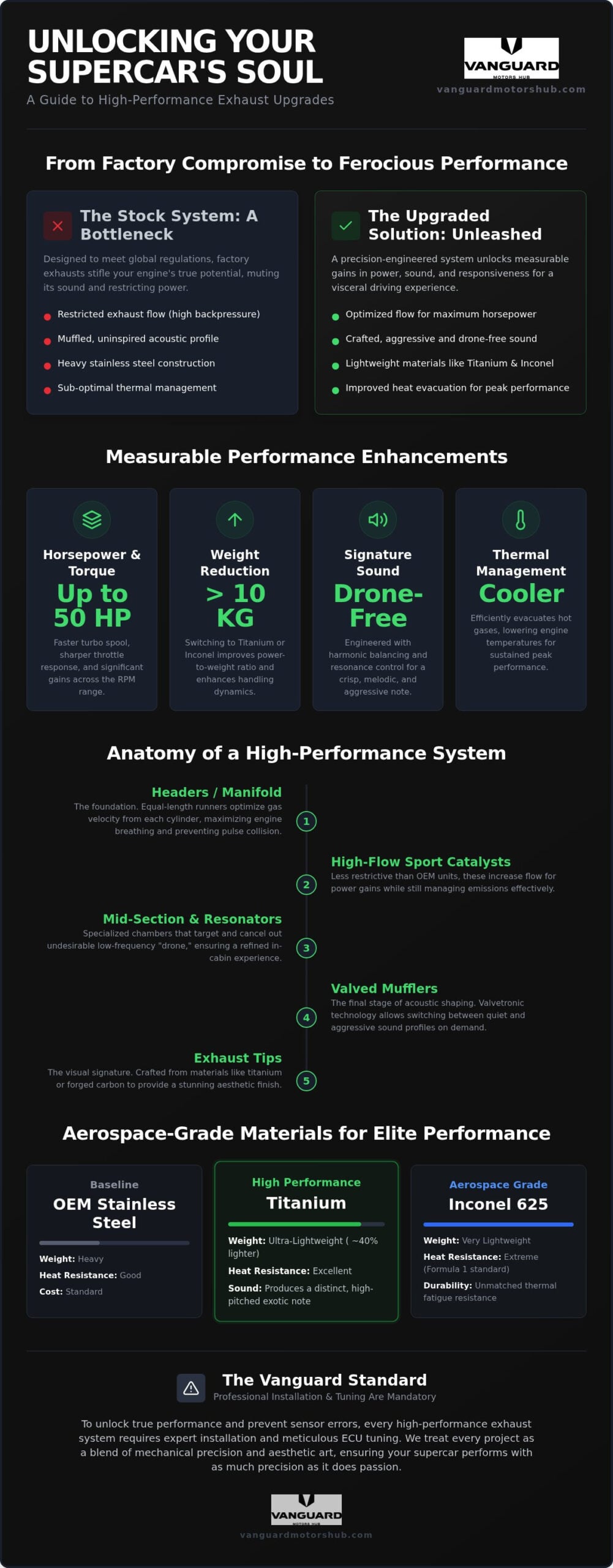
Precision-engineered supercar exhaust upgrades also serve as a critical weight-reduction strategy. Switching from standard OEM stainless steel to advanced materials like titanium or Inconel 625 can shed significant mass from the vehicle’s rear, often exceeding 10 kilograms. This reduction improves the power-to-weight ratio and enhances handling dynamics by lowering the polar moment of inertia. The engineering challenge lies in balancing backpressure reduction with low-end torque retention. Removing all resistance can actually hurt performance; instead, we optimize flow to ensure the engine breathes efficiently across the entire RPM range.
Performance Gains Beyond Horsepower
Reduced backpressure does more than just increase peak power; it fundamentally changes how the car responds to your inputs. In turbocharged applications, a freer-flowing system allows the turbos to spool faster, virtually eliminating lag and sharpening throttle response. This improved efficiency also plays a vital role in thermal management. By evacuating hot gases more quickly, the system lowers engine operating temperatures, which is essential for maintaining peak performance during high-intensity track sessions or in high-ambient temperature environments.
Exhaust scavenging utilizes the kinetic energy of exiting gas pulses to create a vacuum that draws out residual combustion gases, thereby increasing the intake of fresh air to maximize cylinder efficiency.
Crafting the Signature Sound
In the world of high-end automotive customization, there is a distinct difference between raw loudness and tone quality. A superior system focuses on the latter, using specific pipe diameters and internal resonator designs to curate a “sonic signature.” This process involves:
- Harmonic Balancing: Eliminating unrefined frequencies to produce a crisp, melodic note.
- Resonance Control: Using specialized chambers to cancel out “drone,” the low-frequency vibration that causes cabin fatigue.
- Flow Dynamics: Shaping the exhaust path to emphasize high-frequency crescendos at high RPMs.
Achieving this level of acoustic perfection requires professional tuning and meticulous installation. Without expert calibration, a system may produce unwanted vibrations or “drone” that ruins the luxury experience of the cabin. At Vanguard Motors Dubai, we treat every installation as a blend of mechanical precision and aesthetic art, ensuring your supercar exhaust upgrades deliver a sound that is as sophisticated as it is aggressive.
Primary Components of a High-Performance Exhaust System
The architecture of a high-end exhaust system is a sequence of precision-engineered stages, each designed to manage heat, velocity, and sound. It begins at the exhaust manifold, often called headers. This component is the foundation of gas collection. By using equal-length runners, high-quality headers ensure that exhaust pulses from each cylinder don’t collide. This maintains high gas velocity and optimizes engine breathing from the very start of the cycle. When considering supercar exhaust upgrades, the choice of manifold material is vital for long-term durability under extreme thermal stress.
The journey continues through the mid-section and into the mufflers, where the final acoustic shaping occurs. This is where internal baffles and resonators work to refine the raw noise of combustion into a sophisticated note. For those seeking a bespoke aesthetic, finishing the system with forged carbon tips or ceramic-coated outlets provides a visual signature that matches the performance gains. If you’re ready to define your vehicle’s unique voice, you can consult with Vanguard Motors Dubai about a custom configuration.
High-Flow Sport Catalytic Converters
Stock catalytic converters are often the most restrictive part of an OEM system. High-flow sport cats, typically featuring a 200-cell metallic substrate, represent the “sweet spot” for performance. They provide significantly less resistance than standard 400 or 600-cell units, allowing the engine to exhale with less effort. This modification is particularly transformative for turbocharged cars, as it brings the turbocharger’s high-pitched whistle to the forefront of the sonic profile. Because these components operate at intense temperatures, professional-grade heat shielding is required to protect surrounding engine bay components from radiant heat soak.
X-Pipes vs. H-Pipes: Choosing Your Pitch
The mid-section of the exhaust is where the character of the sound is truly defined. Crossover pipes are used to balance pressure between the two cylinder banks, but their geometry dictates the final pitch. This is a critical decision in any supercar exhaust upgrades project.
- X-pipes: These merge the exhaust streams at a sharp intersection. This design creates a high-frequency, “F1-style” scream as the RPMs climb toward the redline.
- H-pipes: These utilize a perpendicular bridge between the two main pipes. This setup retains a deeper, more muscular growl reminiscent of classic supercar heritage.
Choosing between them depends on whether you prefer a sharp, mechanical shriek or a broad, guttural roar. Both designs effectively balance pressure pulses, which can help in smoothing out the power delivery across the rev range.
Selecting the Right Modification: Cat-Back vs. Full Systems
Choosing the right tier of modification depends on your ultimate goal: subtle refinement or total transformation. Supercar exhaust upgrades typically fall into three distinct categories. Axle-back systems are the most conservative, replacing only the rear mufflers and tips to enhance aesthetics and provide a modest sound increase. Cat-back systems offer a more comprehensive solution, replacing everything from the catalytic converter to the tailpipes. This is often the ideal entry point because it significantly improves the exhaust note without requiring an immediate ECU remap.
For those pursuing maximum power, a full turbo-back or header-back system is the only choice. These setups replace the most restrictive factory components, including the headers and downpipes. Because they fundamentally alter gas flow and backpressure, these systems are usually paired with Stage 2 tuning to prevent sensor errors and optimize the air-fuel mixture. It’s a high-precision path that requires an authoritative understanding of your vehicle’s specific engine management system.
The Versatility of Valvetronic Systems
Modern supercar owners shouldn’t have to choose between a deafening roar and a usable daily driver. Valvetronic technology provides the best of both worlds by using vacuum-operated or electronic valves to redirect exhaust flow. In “Silent” mode, gases pass through the mufflers for a refined, neighbor-friendly experience. Switching to “Race” mode opens the valves, bypassing the baffles for a raw, visceral soundtrack.
Integration is seamless. High-end systems sync directly with factory drive modes like Sport, Corsa, or Track. Precision is critical here; we utilize high-quality valve actuators designed to resist heat-seizure. In the high-temperature environment of a mid-engine supercar, inferior components often fail, leaving valves stuck in one position. Only professional-grade hardware can withstand the thermal demands of spirited driving.
Matching the System to Your Supercar Brand
Every manufacturer has a distinct engineering philosophy that dictates how an exhaust should be modified. Ferrari engines are highly sensitive to backpressure changes. Systems from Capristo are often preferred because they maintain the necessary pressure levels to avoid “Check Engine” lights while delivering that iconic high-pitched scream. Lamborghini owners often look toward Mansory setups to match the aggressive visual language of their vehicles.
There is a natural synergy between bespoke car conversions and exhaust tuning. When you’re upgrading the bodywork with carbon fiber components, the exhaust should be treated as part of a total transformation. This holistic approach ensures that the vehicle’s performance and sound are as cohesive as its new aesthetic. Professional installation is non-negotiable to ensure every sensor remains calibrated and every bracket is perfectly aligned for a flawless finish.
Thermal Management and Aesthetic Integration
In high-ambient temperature environments, managing radiant heat is just as vital as maximizing gas flow. Supercars generate immense thermal energy during spirited driving. Without proper management, this heat can lead to “heat soak,” causing the ECU to pull timing and reduce power output to protect the engine. High-performance supercar exhaust upgrades must address this challenge through advanced metallurgy and insulation. While titanium is celebrated for its lightweight properties, it can become brittle under extreme, repeated heat cycles. Protecting your engine bay requires a more sophisticated approach to material science and heat shielding.
Advanced thermal management often involves the use of ceramic coatings or specialized heat wraps. These solutions act as a barrier, keeping the heat inside the exhaust pipes and away from sensitive electronics, hoses, and suspension components. By maintaining higher internal gas temperatures, these coatings also help sustain exhaust velocity, which further improves scavenging efficiency. If you are concerned about maintaining peak performance in demanding climates, contact our technical team to discuss thermal protection options for your vehicle.
Inconel: The Ultimate Supercar Material
Inconel 625 is the undisputed gold standard in Formula 1 and hypercar engineering. This nickel-chromium-based superalloy maintains incredible structural integrity at temperatures exceeding 1,000°C, where stainless steel would simply soften or warp. Because Inconel is so strong, manufacturers can use significantly thinner walls than they would with steel or titanium. This results in a system that is remarkably light without compromising durability. Inconel is the premium choice for high-performance headers because it allows for ultra-thin construction that withstands extreme thermal fatigue and high-pressure exhaust pulses over thousands of miles.
Carbon Fiber and Exhaust Aesthetics
The visual integration of an exhaust system is the final step in a bespoke conversion. Designing exhaust tips that complement carbon fiber car parts requires meticulous attention to detail. We often utilize forged carbon surrounds for exhaust outlets to create a seamless transition between the mechanical hardware and the rear diffuser. This creates a cohesive, aggressive aesthetic that signals the vehicle’s upgraded status.
Precision fitment is essential for more than just looks. Ensuring proper clearance between the exhaust tips and the bodywork is vital to prevent heat damage to paint protection film or sensitive composite panels. Even a minor misalignment can lead to bubbling film or scorched carbon fiber. Our installation process guarantees that your supercar exhaust upgrades sit perfectly within their surrounds, providing both visual perfection and long-term protection for your vehicle’s exterior finish.
The Vanguard Standard: Professional Installation and Tuning
Professional installation is a mandatory requirement for supercar exhaust upgrades, not a suggestion. Modern exotic engines utilize highly sophisticated management systems that monitor everything from backpressure to oxygen levels in real time. A minor exhaust leak or a slightly misaligned sensor can trigger immediate “check engine” lights or, worse, force the vehicle into a restricted “limp mode.” We ensure every flange is perfectly seated and every bolt is torqued to exact specifications. This level of mechanical precision prevents the common sensor errors that plague less meticulous installations.
Our approach at Vanguard Motors Dubai combines this technical rigor with aesthetic perfection. After the hardware is secured, we conduct rigorous post-installation testing to verify both sound quality and thermal integrity. We look for unwanted vibrations and ensure the system maintains its “sonic signature” without rattling against the chassis. This holistic care often involves integrating exhaust modifications with cosmetic car repair. If a factory bumper requires modification to accommodate larger tips, we perform the restoration with factory-level finish quality, ensuring the upgrade looks like it belonged there from day one.
Bespoke Kit Conversions
We specialize in the expert installation of premier systems from Brabus, Mansory, and Capristo. These high-end kits are frequently part of a larger, bespoke vehicle transformation. When we execute widebody conversions, we often customize the exhaust path to ensure it exits perfectly through new aerodynamic bodywork. Precision fitment is vital in these scenarios; even a millimeter of misalignment can disrupt the airflow through the rear diffuser. We align every component to maintain the vehicle’s aerodynamic profile, ensuring that your performance gains aren’t offset by increased drag or reduced stability at high speeds.
Protecting Your Investment
Every modification we perform is designed to enhance your vehicle’s long-term market value and performance. We treat every supercar with the meticulous care it deserves, ensuring that the installation process is clean and non-destructive. Maintaining the pristine finish of high-end exhaust components, particularly those with ceramic coatings or forged carbon tips, is a priority. Regular supercar detailing plays a critical role here, as it prevents road contaminants and heat-driven oxidation from dulling the luster of your new system. Experience the Vanguard Motors Dubai difference for your supercar exhaust upgrade and join a community of owners who demand absolute excellence in both form and function.
Transform Your Driving Experience with Precision Engineering
A superior exhaust system is more than a mechanical component; it’s the definitive expression of your vehicle’s identity. By choosing high-performance supercar exhaust upgrades, you unlock a symphony of power and sound that factory standards simply can’t replicate. We’ve explored how the strategic use of Inconel and titanium manages extreme heat while shedding significant weight. You now understand that professional installation is the only way to ensure these complex systems integrate flawlessly with your car’s sophisticated electronics and bespoke bodywork.
Vanguard Motors stands as your dedicated partner in this transformation. As authorized installers for Brabus and Mansory kits, we specialize in the meticulous fitment of Inconel and titanium systems. Our full-service facility provides a holistic approach, combining mechanical excellence with elite PPF and detailing services to protect every aspect of your investment. Don’t settle for a muted driving experience when peak performance is within reach. Elevate Your Supercar’s Performance with Vanguard Motors and rediscover the thrill of every rev.
Frequently Asked Questions
Will an exhaust modification void my supercar’s warranty?
An aftermarket exhaust typically only affects the warranty on the specific components replaced or any failures directly caused by the new hardware. Manufacturers cannot legally void your entire vehicle warranty unless they prove the modification resulted in a specific mechanical breakdown. For supercar exhaust upgrades, we recommend using high-quality components and professional installation to ensure the modification remains within the safety parameters of your vehicle’s engineering standards.
What is the difference between a Cat-Back and a Header-Back exhaust?
A cat-back system replaces everything from the catalytic converter to the rear tips, focusing primarily on sound and moderate flow improvements. A header-back system is a total replacement from the engine manifolds down to the tailpipes. While cat-back systems are easier to install, header-back systems provide the most significant performance gains by removing the most restrictive factory components. These full systems usually require expert tuning to function correctly.
How much horsepower can I expect from a high-performance exhaust upgrade?
You can expect gains between 20 and 50 horsepower depending on your vehicle’s engine type and the system’s complexity. Turbocharged supercars usually see the largest increases because reduced backpressure allows the turbos to spool faster and more efficiently. These supercar exhaust upgrades provide measurable results by improving the engine’s volumetric efficiency. When paired with a professional ECU calibration, the power delivery becomes smoother and more responsive across the entire rev range.
Can I control the loudness of my exhaust with a mobile app or drive modes?
Yes, modern Valvetronic systems allow you to adjust the acoustic volume through your vehicle’s factory drive modes or a dedicated smartphone app. By using electronic or vacuum-actuated valves, the system can redirect gases through a muffled path for quiet cruising or a straight path for maximum sound. This technology gives you the flexibility to enjoy a refined cabin during daily commutes while retaining the ability to unleash a raw, aggressive roar.
Why is Inconel better than Titanium for exhaust systems?
Inconel 625 is the superior choice for high-performance headers because it maintains structural integrity at extreme temperatures where titanium can become brittle and crack. While titanium is exceptionally light, Inconel’s incredible heat resistance allows for thinner pipe walls that don’t sacrifice durability. This makes it the preferred material for Formula 1 and hypercars. It offers a sophisticated balance of weight reduction and the ability to withstand intense thermal cycles over long periods.
Does an exhaust modification require an ECU remap or tuning?
A simple cat-back system rarely requires a remap, but a full system involving headers or high-flow cats usually does. Significant changes in exhaust flow can alter backpressure and oxygen sensor readings, which might trigger “Check Engine” lights or cause the engine to run lean. Professional tuning ensures the engine management system is calibrated for the new hardware. This prevents sensor errors and optimizes the air-fuel mixture to maximize your performance gains safely.
How do I prevent “drone” inside the cabin after an upgrade?
Preventing drone requires a system designed with specific resonators and acoustic chambers that cancel out unwanted low-frequency vibrations. Opting for a Valvetronic system is the most effective solution, as closing the valves during highway speeds significantly reduces cabin hum. Professional installation is also vital; we ensure all brackets and hangers are perfectly aligned to prevent mechanical resonance from transferring through the chassis. This meticulous approach maintains a comfortable environment for long-distance driving.
Are high-flow sport cats legal for road use in the UAE?
High-flow sport catalytic converters are generally legal provided the vehicle passes the standard RTA emissions test during its annual registration renewal. These units, typically featuring a 200-cell metallic substrate, are engineered to reduce backpressure while still filtering exhaust gases to meet environmental requirements. Completely removing the catalytic converters with “de-cat” pipes will result in an emissions failure. Choosing high-quality sport cats ensures you gain performance without compromising your vehicle’s road-legal status.