
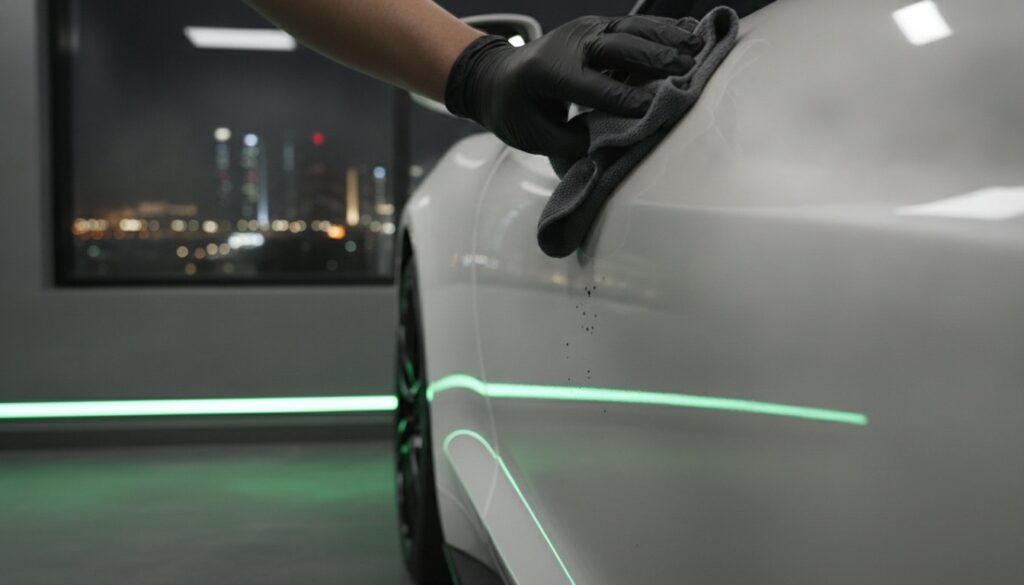
Most enthusiasts treat tar spots as a minor cleaning nuisance, but in the high-stakes world of elite automotive care, these contaminants represent a chemical assault on your vehicle’s structural integrity. You’ve likely experienced the frustration of finishing a meticulous wash only to discover that standard tar and road grime removal isn’t as simple as it looks. Stubborn, jagged black specs often remain clinging to your rocker panels. It’s a delicate moment. You want them gone, yet you rightfully fear that aggressive agitation will mar your clear coat or permanently haze your expensive paint protection film.
We understand that maintaining a pristine aesthetic requires more than just effort; it demands professional precision. This 2026 guide empowers you to master the surgical techniques and professional chemistry required to eliminate these contaminants without compromising your vehicle’s elite finish. You’ll learn to select high-performance solvents while ensuring total safety for ceramic coatings and PPF. We will also reveal why deep decontamination is the non-negotiable prerequisite for the Vanguard Premium Package and other advanced protection tiers. From identifying chemical triggers to implementing long-term prevention strategies, you’re about to transition from standard maintenance to expert-level paint restoration.
Key Takeaways
- Understand why bitumen and road film act as microscopic abrasives that can permanently etch your vehicle’s clear coat if not professionally neutralized.
- Master the surgical process of tar and road grime removal by utilizing specialized solvents that preserve the integrity of your ceramic coatings.
- Learn to distinguish between citrus-based and hydrocarbon chemistries to ensure your decontamination kit is optimized for 2026 standards of precision.
- Recognize why a complete chemical decontamination is a non-negotiable prerequisite for high-end services like luxury paint correction and premium PPF installation.
- Discover how the Vanguard Premium Package offers a comprehensive solution for maintaining an elite, contaminant-free finish on any high-performance vehicle.
The Science of Contamination: Why Tar and Road Grime Threaten Your Finish
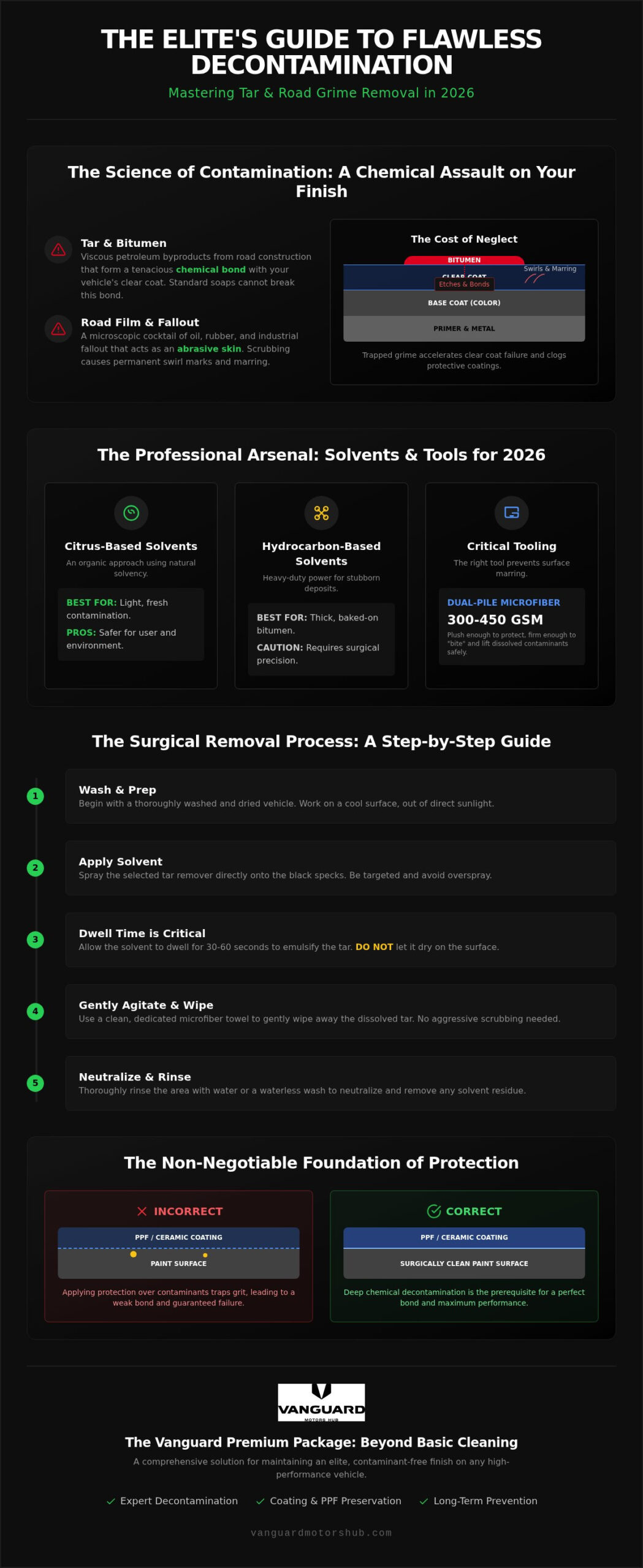
Road debris is an inevitable consequence of high-performance driving. However, the black specks peppering your wheel arches are far more sinister than simple mud. These deposits are primarily bitumen, a viscous petroleum byproduct used as a binder in road construction. Understanding The Science of Asphalt Concrete reveals why these deposits are so resilient. Bitumen is designed to survive extreme weather and heavy traffic; it’s engineered to stick. When these particles flick onto your paint, they don’t just sit on the surface. They form a tenacious chemical bond with the clear coat that defies traditional washing methods.
Road film adds another layer of complexity. It’s a microscopic cocktail of oil, rubber, and industrial fallout. This film creates an abrasive skin over your vehicle. If you attempt mechanical removal by scrubbing, you’re effectively rubbing sandpaper across your finish. This leads to permanent paint marring, visible as unsightly swirl marks under direct light. In 2026, modern road materials and higher ambient temperatures have made these contaminants even more aggressive. Mastering tar and road grime removal is the only way to preserve the mirror-like finish of a supercar without causing structural damage to the paint.
Bitumen and Industrial Fallout
Standard car soaps are formulated to lift loose dirt. They lack the solvency required to break the molecular bond of organic tar. As you drive, engine heat and UV exposure bake these contaminants into the paint’s pores. This process transforms a topical stain into a structural invader. Without specialized chemistry, the bitumen remains trapped, slowly leaching oils that can permanently yellow or stain lighter paint finishes. The synthetic nature of modern paint finishes requires a delicate balance; you need a solvent strong enough to dissolve petroleum but gentle enough to leave the clear coat’s integrity intact.
The Hidden Cost of Neglect
Neglect isn’t just an aesthetic issue. Trapped grime accelerates clear coat failure by creating localized hotspots of oxidation. For vehicles protected with ceramic coatings, these contaminants are particularly damaging. They clog the coating’s surface, killing the hydrophobic properties and making the car harder to clean. This is why professional luxury car detailing always begins with a deep decontamination. If the surface isn’t surgically clean, any subsequent protection will be compromised by underlying grit. Effective tar and road grime removal ensures your vehicle remains a masterpiece of form and function.
The Professional Arsenal: Essential Solvents and Tools for 2026
Achieving a concours-level finish requires a sophisticated understanding of chemical interactions. For effective tar and road grime removal, professionals rely on two primary solvent categories. Citrus-based removers offer a safer, organic approach for light contamination and maintain a pleasant working environment. Hydrocarbon-based solvents provide the heavy-duty power needed for thick bitumen deposits that have undergone thermal bonding. However, these chemicals must be used with surgical precision to prevent clear coat swelling or surface hazing.
Decontamination isn’t a single-step process. While tar removers handle organic oils, pH-neutral iron removers target metallic fallout from brake dust. Using these in tandem ensures a truly “naked” surface. Your choice of microfiber is equally critical. We recommend a dual-pile towel with a GSM (grams per square meter) between 300 and 450. A higher GSM is too plush to effectively “bite” into the dissolved tar, while a lower GSM lacks the cushion needed to prevent marring on soft European clear coats. Research into Asphalt Composition and Performance demonstrates how modern binders are engineered for extreme durability, which is why standard soaps fail to break their molecular grip.
Solvent Chemistry 101
Dwell time is your most valuable asset in the detailing bay. A professional-grade solvent needs sufficient time to emulsify the tar without drying on the surface. If you’re working on a vehicle with paint protection film, you must verify chemical compatibility before application. Some aggressive hydrocarbons can yellow or swell the edges of the film if left too long. Avoid industrial-grade degreasers at all costs. They lack the refinement of automotive solvents and can leach essential oils from plastic trim and rubber seals, leading to premature fading and cracking.
Mechanical Tools for Precision
Clay bars are often misused in the decontamination cycle. In 2026, we treat clay as a secondary refinement tool, not a primary solution for tar. Using clay on hard tar spots causes dragging, which induces the very marring we aim to avoid. Always chemically dissolve the bulk of the grime first. For final inspection, use the “baggie test”—place your hand inside a thin plastic bag and glide it over the paint. This amplifies the sensation of remaining microscopic grit. If you’re unsure which chemistry suits your specific wrap or coating, you can consult our technical team for expert advice.
The Precision Removal Process: A Step-by-Step Detailing Guide
The “Contactless First” rule is the foundation of elite paint care. Before any chemical hits the paint, you must remove loose grit that could cause scratching. While many owners follow basic advice like J.D. Power’s guide to tar removal, professional decontamination requires a more structured, safety-first methodology. This process ensures that you aren’t just removing spots, but restoring the paint’s chemical purity without inducing marring or swirls.
Phase 1: The Preparatory Wash
Start with a high-foaming snow foam to encapsulate surface debris. This high-lubricity layer carries away abrasive particles before you ever touch the surface. Moving to the two-bucket contact wash is the next logical step, as it remains the gold standard for luxury vehicle maintenance. After a thorough rinse, you must dry the vehicle completely. Residual water acts as a barrier that dilutes your solvents, which significantly reduces the efficiency of your tar and road grime removal products. A dry surface allows the chemistry to interact directly with the bitumen.
Phase 2: Chemical Decontamination
Apply your tar remover to the lower panels first, working upward to ensure complete coverage. These areas bear the brunt of road spray and bitumen accumulation. As the chemical reacts, you’ll see the black spots begin to “bleed” and liquefy. Dwell time is the crucial window where chemicals break molecular bonds without drying on the surface. If the contamination is particularly stubborn, use a damp, high-GSM microfiber for gentle agitation. The goal is to facilitate the chemical reaction, not to scrub the paint. Let the professional-grade solvents do the heavy lifting.
Phase 3: Final Surface Refinement
Rinsing is a critical neutralization step. Use a pressure-neutral approach around delicate seals and emblems to prevent solvent intrusion into sensitive areas. Follow this with a dedicated strip wash to remove the oily residue that solvents often leave behind. This step is essential because any remaining oils will prevent waxes, coatings, or PPF from bonding correctly. Finally, inspect the finish under high-intensity detailing lights. This professional verification ensures that every trace of tar and road grime removal has been successful, leaving a pristine canvas for your next protection tier.
Post-Removal Care: Restoring Brilliance and Protection
Once the chemical process of tar and road grime removal is complete, your vehicle’s finish is in a state of clinical purity. However, this level of cleanliness comes with a caveat. The aggressive solvents required to break down bitumen also dissolve your existing sacrificial layers. Your paint is now “naked,” meaning it lacks the hydrophobic barriers and UV inhibitors provided by waxes or sealants. Leaving the surface in this “thirsty” state invites rapid oxidation and immediate re-contamination from the very first drive.
Special care is required for vehicles featuring exposed carbon fiber car parts. While the resin used in high-end composites is durable, it’s susceptible to solvent-induced hazing if the cleaning agents aren’t neutralized immediately. Maintaining these components involves precise rinsing and the application of specialized UV-stable coatings. This prevents the structural resin from yellowing or becoming brittle over time, ensuring your lightweight upgrades remain both functional and beautiful.
Surface Inspection and Correction
With the contaminants removed, you can finally see the true condition of the clear coat. It’s common to discover “ghosting,” which is a faint silhouette left behind by tar that has sat on the paint for too long. This etching occurs when the acidic components of road grime begin to eat into the clear coat. At this stage, you must decide if the vehicle requires professional paint correction. A light, refining polish can often remove these shadows, restoring the optical clarity and depth that define a luxury finish. This step represents the transition from basic maintenance to true automotive restoration.
Sealing the Victory
The final phase is about fortification. In the 2026 detailing landscape, SiO2-based sealants and ceramic boosters are the gold standard for post-decontamination care. These products create a high-tension surface that actively repels water and oils, making future tar and road grime removal a much simpler task. We recommend performing this deep decontamination at least once every quarter for daily-driven performance cars. This proactive approach ensures that contaminants never have the chance to bake into the substrate. If your paint still feels rough or looks dull after a deep clean, contact us to schedule a comprehensive surface restoration.
The Vanguard Approach: Beyond Basic Cleaning
At Vanguard Motors Dubai, we view tar and road grime removal as more than a maintenance task; it’s a foundational step for automotive excellence. Before we begin a premium PPF installation, the paint substrate must be surgically pure. Any microscopic bitumen residue trapped under the film will compromise the adhesive bond and create visible imperfections over time. We ensure every panel is chemically neutralized to 2026’s highest technical standards before any protection is applied. This meticulous preparation is what allows our work to stand the test of time and high-speed driving.
The Vanguard Premium Package represents our most comprehensive solution for the modern collector. It’s a holistic shield designed to repel environmental hazards before they can bond to your finish. For clients who demand concierge-level care without visiting our facility, our Mobile Detailing Van brings this elite expertise directly to your location. We deliver the same professional chemistry and precision equipment found in our main center. This ensures your vehicle receives world-class treatment on your own schedule. We remain committed to utilizing 2026’s most advanced automotive protection technologies to keep your investment in pristine condition.
The Ultimate Shield: PPF and Peelable Paint
High-quality Paint Protection Film transforms the daily maintenance experience. Once the film is professionally cured, future tar and road grime removal becomes a simple 30-second task. The contaminants sit on the film’s hydrophobic top coat rather than bonding to the clear coat. For those seeking a complete aesthetic shift, our peelable paint applications offer the ultimate solution for color change and total surface protection. Our precision installation techniques ensure all edges are perfectly sealed. This prevents grime from accumulating in the film margins, which is a common failure point in standard installations.
Bespoke Maintenance for Supercars
Elite vehicles featuring Brabus, Mansory, or Jetour kits require specialized decontamination protocols. These aerodynamic enhancements often include intricate vents and custom carbon fiber upgrades where road debris tends to collect. We tailor our cleaning processes to protect these high-value components. This ensures that custom exhausts and forged carbon elements remain free of corrosive buildup. This level of meticulous care is essential for maintaining the structural and aesthetic integrity of bespoke automotive conversions. Experience the Vanguard standard of automotive preservation today.
Elevate Your Automotive Preservation Standards
Maintaining a showroom finish in 2026 requires more than effort; it demands a commitment to technical excellence. We’ve explored how professional tar and road grime removal serves as the critical foundation for any high-performance protection strategy. By mastering solvent chemistry and precision techniques, you ensure your vehicle’s clear coat remains free from the corrosive grip of bitumen and industrial fallout. Whether you’re preparing for a bespoke body kit installation or maintaining a ceramic coating, surgical decontamination is the non-negotiable first step toward long-term brilliance.
As specialists in supercar and luxury detailing, Vanguard Motors Dubai provides the elite care your investment deserves. Our UAE national mobile detailing concierge brings this level of technical mastery directly to your driveway. We are approved installers for elite PPF and body kits, ensuring every finish meets our uncompromising standards for quality and durability. Don’t settle for standard cleaning when you can achieve automotive perfection through visionary care and expert execution.
Secure your vehicle’s legacy with the Vanguard Premium Package. Your car is a masterpiece of engineering. It’s time to treat it like one.
Frequently Asked Questions
Is it safe to use tar remover on a car with Paint Protection Film (PPF)?
It is safe to use specialized tar removers on Paint Protection Film provided the chemistry is specifically formulated for synthetic substrates. We recommend testing a small area to ensure the solvent doesn’t cause edge swelling or surface hazing. While high-quality films like those in the Vanguard Premium Package are resilient, avoid leaving any solvent to dry on the surface. Always rinse thoroughly to maintain the film’s optical clarity and self-healing properties.
Can I use WD-40 or gasoline to remove road tar from my car’s paint?
You should avoid using gasoline or WD-40 for automotive decontamination as these substances aren’t refined for modern clear coats. Gasoline is highly volatile and can permanently damage plastic trim or rubber seals. WD-40 contains heavy oils that are difficult to remove and can interfere with the bonding of future waxes or ceramic coatings. Professional-grade tar and road grime removal products are engineered to dissolve bitumen safely without compromising your vehicle’s structural integrity.
How often should I perform a full decontamination on my vehicle?
We recommend performing a full chemical decontamination at least once every three to four months for vehicles driven regularly. This quarterly schedule prevents bitumen and road film from undergoing thermal bonding with your paint’s pores. If you’re preparing for a major service like PPF installation or a color change wrap, a deep decontamination is a non-negotiable prerequisite. High-performance cars in the UAE benefit from more frequent checks to manage the impact of heat-intensified road debris.
Will tar removal chemicals strip my ceramic coating?
Dedicated tar removers won’t strip a professionally installed and fully cured ceramic coating, but they can temporarily impact its hydrophobic performance. The solvent effectively “clogs” the coating’s surface with oily residue. This is why we follow chemical removal with a dedicated strip wash to restore the coating’s water-beading properties. However, frequent use of aggressive solvents can eventually degrade the coating’s lifespan, making long-term prevention strategies like PPF more efficient for maintaining an elite finish.
What is the difference between road grime and industrial fallout?
Road grime is primarily an organic cocktail of bitumen, tire rubber, and oil that forms a sticky film on your lower panels. Industrial fallout consists of microscopic metallic particles, such as brake dust or rail dust, which physically embed themselves into the clear coat. While tar and road grime removal requires hydrocarbon or citrus solvents, industrial fallout requires pH-neutral iron removers to dissolve the metallic bonds. Both must be neutralized for a truly pristine finish on any supercar.
Can road tar cause permanent damage if left on the paint for too long?
Road tar can cause permanent aesthetic damage if left to bake into the surface under intense UV exposure. The petroleum oils in bitumen can leach into the paint’s pores, leading to localized yellowing or “ghosting” that remains even after the physical spot is removed. Over time, these contaminants can cause the clear coat to become brittle and prone to oxidation. Prompt removal is essential to prevent these chemical stains from requiring deep paint correction.
Do I need to polish my car after removing tar and road grime?
Polishing isn’t always mandatory after decontamination, but it’s highly recommended for restoring optical depth. The process of dissolving stubborn contaminants often reveals underlying etching or minor marring that occurred during the road’s initial impact. A light refining polish removes these “ghost” marks and ensures the surface is perfectly smooth. This refinement step is particularly important before applying a new layer of protection, as it maximizes the clarity and brilliance of the final finish.
Are there any eco-friendly solvents that actually work on stubborn bitumen?
High-performance citrus-based solvents are excellent eco-friendly alternatives that effectively dissolve bitumen without the harsh odors of traditional hydrocarbons. These products utilize d-Limonene, a natural derivative that breaks down organic bonds with surprising efficiency. While they may require a slightly longer dwell time for heavy accumulation, they offer a safer working environment for both the detailer and the vehicle’s delicate trim. We utilize these refined chemistries to maintain our elite standards of care while minimizing environmental impact.