
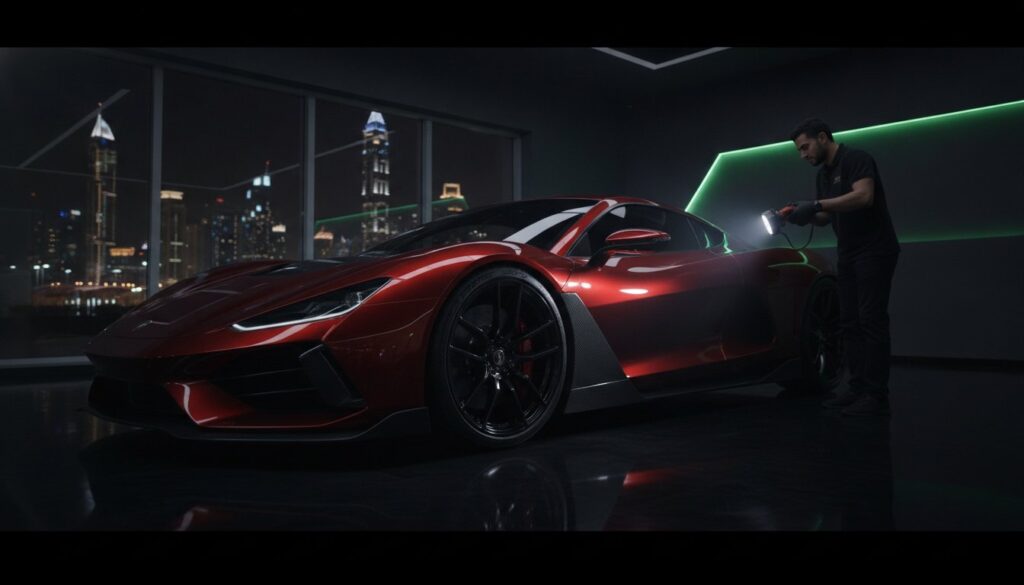
A trophy isn’t won under the stadium lights; it’s secured weeks earlier in the sterile environment of a professional detailing bay. You’ve spent months perfecting every line of your build, yet as the 2026 show season approaches, that familiar anxiety often begins to settle. You know the judges possess a forensic eye for detail. The fear of a single overlooked swirl mark or a misaligned carbon fiber weave costing you the podium is a heavy burden. Preparing a car for a car show requires more than a standard wash; it demands a systematic, high octane pursuit of aesthetic perfection.
We understand the intense pressure of the elite automotive circuit. This guide provides a professional grade blueprint to master the art of show winning presentation. You’ll gain a structured checklist designed to eliminate last minute stress and replace it with the unwavering confidence of an industry expert. We’ll show you how to achieve a flawless, mirror like finish that commands attention the moment the transport doors open.
Our comprehensive breakdown covers everything from advanced paint correction to auditing bespoke body kits for structural integrity. You’ll learn the essential steps for protecting your investment and ensuring every modification, from leather restoration to forged carbon accents, is presented with absolute clarity. It’s time to transform your vehicle from a high performance machine into a curated masterpiece that stands ready for the spotlight.
Key Takeaways
- Establish a strategic timeline starting six to eight weeks before the event to perform a forensic audit of stone chips, carbon cracks, and leather wear.
- Master the multi-stage correction techniques required when preparing a car for a car show to achieve a mirror finish that passes professional judging panels.
- Audit the installation of bespoke body kits and carbon fiber components to ensure factory-level alignment and structural integrity across all surfaces.
- Execute a forensic detailing deep dive into the interior and engine bay, focusing on leather restoration and the elimination of debris in microscopic crevices.
- Implement a high-stakes show day protocol to manage final inspections, lighting, and vehicle positioning for maximum visual impact.
The Strategic Timeline: Planning Your Show Season Debut
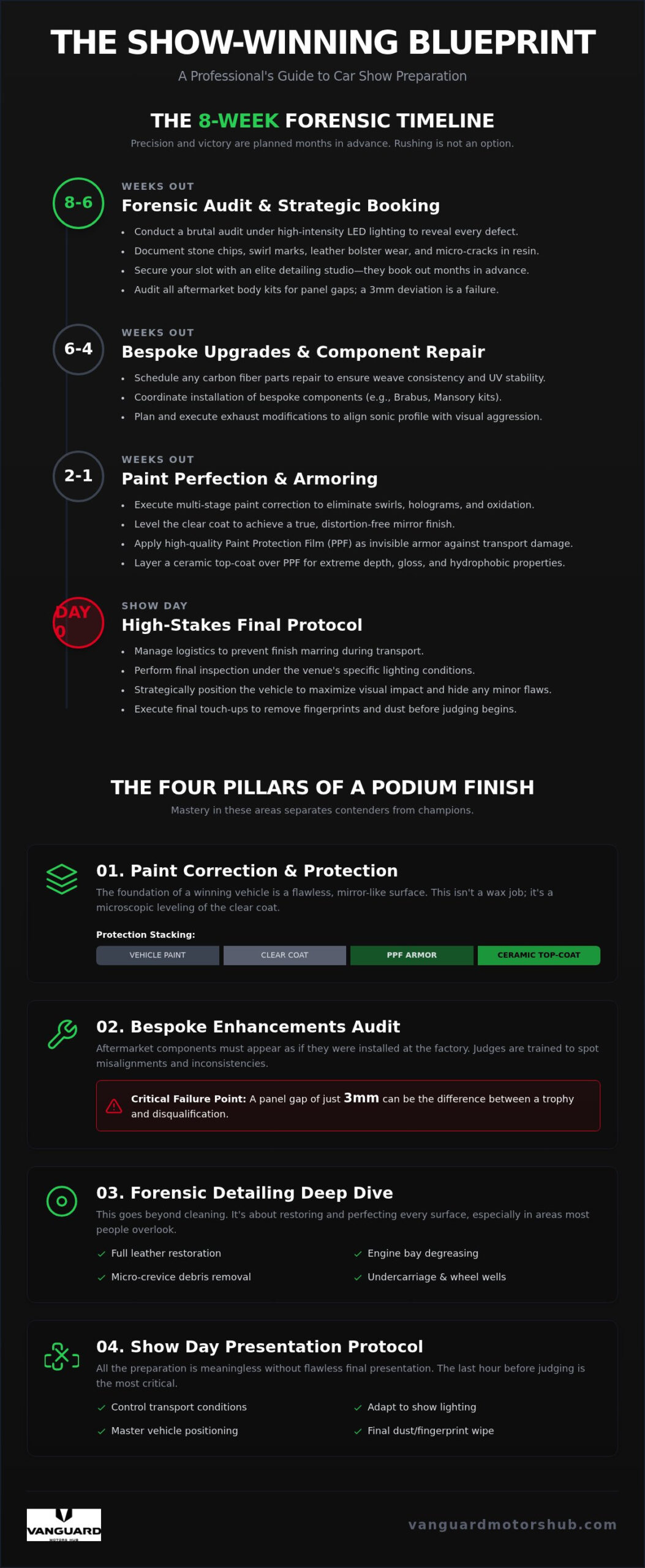
Winning starts long before the first spectator enters the gates. Elite competition in 2026 demands a level of precision that cannot be achieved in a single weekend. Preparing a car for a car show is a marathon of technical execution that begins at least six to eight weeks before your debut. This window isn’t just a suggestion; it’s a structural requirement for those aiming for a podium finish. Elite detailing studios and conversion specialists often book out months in advance. Securing your slot early ensures your vehicle receives the undivided attention of master technicians who understand the nuances of high level automotive detailing. This lead time allows for the procurement of rare components and the meticulous execution of multi stage paint correction.
The 8-Week Forensic Inspection
Success requires a brutal level of honesty. You must document every paint defect using high intensity LED lighting to reveal what the naked eye misses. We look for stone chips that require cosmetic repair, bolster wear in the upholstery, and micro-cracks in resin. Check the fit and finish of aftermarket body kits; even a three millimeter panel gap can be the difference between a trophy and a ‘thanks for coming’ handshake. This audit should extend to the undercarriage and wheel wells, as judges in 2026 leave no stone unturned. A true Show Standard is the absolute absence of all mechanical and cosmetic compromises.
Coordinating Bespoke Upgrades
If you’re planning a transformation with a Brabus or Mansory kit, logistics are your greatest hurdle. These components require precision installation and often involve complex carbon fiber integration. You should schedule any carbon fiber car parts repair early to ensure the weave patterns remain consistent and the resins stay UV stable under harsh show lights. Don’t ignore the auditory experience; plan your exhaust modifications to ensure the sonic profile matches the visual aggression of your build. The process of preparing a car for a car show concludes with a final audit of these bespoke elements to ensure total synergy. At Vanguard Motors, we recommend the Vanguard Premium Package for those seeking an all-in-one solution that covers protection and aesthetics simultaneously.
Paint Correction and Protection: Establishing a Mirror Finish
The mirror-like finish is non-negotiable. When preparing a car for a car show, the foundation is multi-stage paint correction. It’s a scientific process of removing holograms, swirls, and oxidation to reveal the true depth of the pigment. We don’t just hide defects; we eliminate them by leveling the clear coat to a microscopic degree. Standard correction won’t suffice for exotic finishes. Professional supercar detailing involves a forensic approach to abrasive selection. Master technicians must account for paint hardness and heat sensitivity to avoid compromising rare factory clears.
Transporting a show-ready vehicle across the country introduces significant risks. Dust, road debris, and even the subtle vibration of a trailer can mar a fresh finish before it ever reaches the venue. High-quality paint protection film (PPF) acts as an invisible armor. It prevents transport damage and shields the paint from the inevitable fingerprints of curious spectators. Layering a ceramic top-coat over the PPF adds a hydrophobic barrier and an incredible level of depth. This is essential for maintaining that “just-washed” appearance during outdoor events where dust and light rain are constant threats.
Achieving the ‘Wet’ Look
True gloss comes from leveling the clear coat, not just filling it with temporary waxes. We aim for a surface so smooth that light reflects with zero distortion. For those running matte or satin finishes, the strategy shifts. We utilize specialized cleaning agents and matte-specific PPF to preserve the texture without adding unwanted shine. A judge’s critical eye will always seek out exposed edges. Ensuring every piece of film is tucked behind panels or around trim is a hallmark of elite preparation. If you want to elevate your finish further, you can consult with our detailing experts to discuss the Vanguard Premium Package.
Peelable Paint: The Show Season Game Changer
Peelable paint offers a revolutionary alternative to traditional vinyl wraps for the 2026 season. It provides a seamless, spray-on finish that mimics factory paint quality without the visible seams or orange peel often associated with adhesive films. This allows for high-impact color changes that are completely reversible. You can debut a bold new aesthetic for the show circuit while keeping your vehicle’s original value intact. The finish is significantly thicker than vinyl, offering superior protection and a depth of color that stands up to the most intense scrutiny. It’s the ultimate choice for owners who demand a “show-only” look that can be safely removed post-season.
Bespoke Enhancements: Auditing Body Kits and Carbon Fiber
Judges at elite events in 2026 look far beyond a mirror finish; they scrutinize the synergy between the factory chassis and your aftermarket enhancements. When preparing a car for a car show, auditing the installation of Brabus body kits or Mansory conversions requires a forensic level of attention. A single millimeter of misalignment in a fender flare or a poorly secured side skirt can lead to immediate point deductions. We focus on achieving factory level alignment that suggests the kit was born on the assembly line. This involves a deep dive into the hidden areas that many owners overlook. You must detail the underside of spoilers, the interior walls of intake ducts, and the recesses of wheel arches. Replacing standard steel bolts with titanium or color matched fasteners adds a layer of technical sophistication that signals elite quality.
The Carbon Fiber Audit
Carbon fiber is the crown jewel of modern builds, but it’s also the most vulnerable to scrutiny. We identify and rectify yellowing or cloudy clear coats that often plague older or track used components. It’s essential that any carbon fiber car parts repair is completely invisible to the naked eye under high intensity show lighting. Whether you’re showcasing traditional twill or the chaotic brilliance of forged carbon, the goal is maximum light refraction. We polish every surface to ensure the weave pattern remains crisp and the resins are fully UV stable. This prevents the dulling effects often seen during long outdoor exhibitions.
Body Kit Precision
Achieving perfection with Mansory or Jetour kit installations demands more than just adhesive. We meticulously correct panel gaps to ensure uniform spacing across the entire silhouette. Every mesh grille and vent must be decontaminated and dressed with a non-greasy, matte finish protectant. It’s not just about aesthetics; we check the integrity of adhesive bonds and mechanical fasteners that may have shifted under high stress. Preparing a car for a car show means ensuring that every bespoke element is as structurally sound as it is visually striking. This level of meticulous care separates a standard build from a visionary masterpiece.
- Inspect all mesh grilles for trapped debris or wax residue.
- Verify that all carbon fiber weave patterns align across adjacent panels.
- Ensure mechanical fasteners are torqued correctly and aesthetically uniform.
The Detailing Deep Dive: Interiors and Engine Bays
When preparing a car for a car show, the exterior is your first impression, but the interior and engine bay are where trophies are truly won. Judges in 2026 expect a forensic level of cleanliness that transcends a standard valet. This requires deploying Q-tips to purge dust from air vents, individual stitching lines, and the often ignored seat rails. It’s about the microscopic details that signal a build of elite quality. You aren’t just cleaning; you’re restoring every surface to a condition that rivals the day it left the showroom floor.
We strictly adhere to the ‘Jamb’ Rule during every preparation. Every door, trunk, and hood jamb must be as pristine as the exterior panels. If a judge opens a door to find grease or road grime trapped in the hinges or weather stripping, your chances of a podium finish vanish instantly. These transitional spaces bridge the gap between the car’s skin and its soul. They must be free of water spots, wax residue, and any evidence of use.
Leather and Fabric Restoration
Bolster wear is a common point of failure for high-performance show cars. Our professional leather restoration techniques erase friction damage and return premium hides to their factory matte feel, avoiding the greasy shine of inferior products. We deep clean Alcantara with specialized brushes to prevent matting the delicate fibers, ensuring the texture remains uniform across the cabin. Restoring the natural scent of high-end upholstery is just as vital as the visual result. To ensure your cabin remains flawless under the intense sun of outdoor events, we apply UV-resistant protectants that maintain the integrity of the material. If your interior needs a professional touch before the season starts, book our leather restoration service today.
Engine Bay Mastery
The engine bay is the most scrutinized area in judged competitions because it reveals the owner’s true commitment to maintenance beyond the surface. We utilize safe degreasing techniques to protect sensitive supercar electronics while stripping away heat-cycled oils and road film. Polishing metal components and dressing rubber hoses creates a high-contrast, ‘new-car’ aesthetic that commands attention the moment the hood is lifted. Every surface, from the engine block to the underside of the hood, must be free of oxidation and debris. This level of Super Car Detailing ensures that the mechanical heart of your build looks as revolutionary as its bespoke exterior.
The Show Day Protocol: Presentation and Final Inspection
The morning of the event is a high stakes performance where professional precision meets the pressure of the spotlight. You’ve spent weeks preparing a car for a car show, but the final five percent of effort often dictates the final score. This phase is about managing the ‘Last 5 Percent’—the forensic elimination of every fingerprint, dust mote, and tire smudge that occurred during transport. Success on the show floor requires a shift in mindset from restoration to active preservation. You must remain vigilant as spectators arrive, ensuring the mirror finish you’ve achieved remains untarnished by the environment.
Environmental factors are unpredictable. A sudden breeze can coat your corrected paint in fine grit, or a change in humidity can affect the clarity of your glass. Utilizing a professional mobile detailing service provides a significant competitive advantage. Having a dedicated team on site allows for immediate, professional grade touch ups that exceed the capabilities of a standard handheld kit. They can address emergency contaminants with the same level of care used in the studio, ensuring your vehicle remains in peak condition throughout the judging window. When the judges approach, be ready to present your build’s story. Highlight the technical challenges of your bespoke kit installation or the complexity of your leather restoration with confident, authoritative clarity.
The Event Day Touch-Up Kit
Your arsenal must be curated for speed and safety. Essential items include ultra-plush, lint-free microfibers and a high lubrication quick detailer. Use soft brushes to purge dust from intricate wheel spokes or badge recesses that a cloth cannot reach. For glass, we employ the two-towel method: one dampened with cleaner to lift oils and a second dry waffle-weave towel to buff to a streak-free finish. This is vital under the unforgiving glare of high intensity show lights. When applying tire dressing, aim for a sophisticated satin finish. Avoid high-gloss products that ‘sling’ onto your wheel arches if the vehicle needs to be repositioned on the grass or pavement.
Final Presentation Tactics
Visual symmetry is a hallmark of elite preparation. Set your wheels so the center-cap logos are perfectly upright and the steering wheel is centered. Interior staging is equally critical. Ensure seat positions are uniform, seatbelts are flat, and any display signage is positioned to lead the eye toward your car’s best features. Conduct a final walk-around from the judges’ perspective, crouching low to check the undercarriage and side skirts for missed debris. Preparing a car for a car show concludes only when the judges move to the next vehicle. Until then, every second is an opportunity to reinforce the image of meticulous excellence you have built.
Dominating the 2026 Show Circuit
Securing a podium finish in 2026 requires more than a standard detailing routine. It demands a sophisticated, layered strategy that begins weeks before the event. You’ve learned that preparing a car for a car show is a comprehensive process involving forensic paint correction, precise body kit auditing, and meticulous interior restoration. By adhering to a structured timeline and mastering the ‘Last 5 Percent’ of presentation, you transform a high-performance vehicle into a curated masterpiece. Perfection isn’t an accident; it’s the result of relentless precision and technical expertise.
Vanguard Motors stands ready to elevate your build to the elite level. We are specialists in Brabus and Mansory bespoke conversions, offering industry-leading carbon and leather restoration services. Our team provides elite PPF and innovative peelable paint installations to ensure your finish remains flawless under the most intense scrutiny. Don’t leave your reputation to chance when the judges are watching. Secure your show-winning finish with Vanguard Motors’ Premium Prep Services today. Your journey to the winner’s circle starts with the right partner. Let’s make your vision the standard for excellence this season.
Frequently Asked Questions
How early should I start preparing my car for a major show?
You should begin the process of preparing a car for a car show at least six to eight weeks before the event date. This duration allows for a forensic audit to identify stone chips or leather wear that require professional restoration. Elite detailing studios often have long lead times, so early booking is a structural necessity. This window also ensures you have ample time to source rare components or complete complex carbon fiber repairs.
Is PPF or ceramic coating better for a show car?
For a premier show vehicle, the answer is usually both. Paint protection film (PPF) provides a physical barrier against transport damage and fingerprints, while a ceramic coating enhances depth and hydrophobic properties. We recommend applying ceramic top-coats over the PPF to achieve that signature “wet” look. This combination ensures your corrected finish remains pristine under the harsh lighting of the show floor while simplifying on-site maintenance.
Can I enter a car show with a wrapped car?
You can certainly enter a car show with a wrapped vehicle, provided the execution is flawless. Judges in 2026 evaluate the quality of the finish, looking for visible seams or lift at the edges of colored sticker wraps. High-end peelable paint applications often score better than traditional vinyl because they provide a seamless, factory-like appearance. Ensure every edge is tucked and the surface is free of orange peel to satisfy the most critical eyes.
What do car show judges look for in the engine bay?
Judges look for evidence of meticulous maintenance beyond the visible exterior surfaces. They scrutinize the engine block, the underside of the hood, and every rubber hose for cleanliness and oxidation. Preparing a car for a car show involves degreasing sensitive components and ensuring metal parts are polished to a high-contrast finish. A pristine engine bay signals to the panel that the owner values mechanical excellence as much as aesthetic perfection.
How do I protect my car’s finish during transport to the show?
Protecting your finish during transport requires a layered approach. High-quality PPF is your primary defense against road grit and vibrations inside a trailer. We strongly suggest using an enclosed transport service to minimize environmental exposure. Once you arrive, use a professional mobile detailing van for immediate touch-ups to remove any microscopic contaminants that may have settled during the journey. This proactive strategy keeps your mirror finish intact for judging.
Is it worth repairing carbon fiber before a show?
It’s absolutely worth repairing carbon fiber components before a show. Judges will quickly spot yellowing resins, cloudy clear coats, or misaligned weave patterns, which can lead to significant point deductions. Professional carbon fiber restoration ensures these parts refract light correctly and remain UV-stable. Restoring these high-value accents demonstrates a commitment to technical perfection that resonates with the most sophisticated judging panels on the national circuit.
Should I use a glossy or satin tire dressing for judged events?
A satin finish is the gold standard for judged events in 2026. While high-gloss dressings can look overly artificial, a satin product provides a clean, sophisticated contrast that mimics a brand-new factory tire. It’s essential to use a non-greasy formula to prevent “sling” onto the wheel arches if the car is moved. This subtle approach ensures the focus remains on your custom rims and corrected paintwork rather than a distracting shine.
How can I make my bespoke body kit stand out to judges?
To make a bespoke kit stand out, focus on the fit and finish of your Brabus or Mansory conversion. Judges reward installations that achieve factory-level alignment with uniform panel gaps across the entire silhouette. Detail the hidden areas, such as the underside of spoilers or the interior walls of intake ducts, to show a level of care that exceeds expectations. Replacing standard hardware with titanium fasteners also adds a technical edge that signals your build is a masterpiece.