
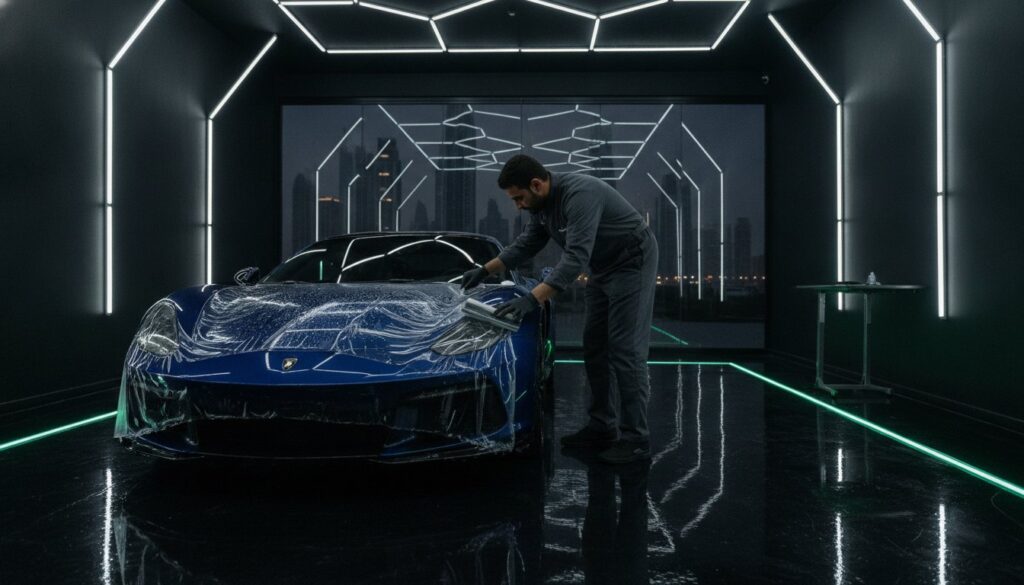
A single slip of an unguided razor blade against your vehicle’s factory clear coat can instantly devalue your high-performance investment by thousands of dirhams. It’s a nightmare scenario that many UAE supercar owners face when they prioritize a low price over proven technical expertise. You demand perfection from your engine and your aesthetics, so why settle for anything less when it comes to the shield protecting them?
When asking what certifications should a PPF installer have, you aren’t just looking for a badge on a wall; you’re looking for a legal guarantee of quality. We understand the anxiety of seeing film lift or bubble just months after application due to poor technique. This guide uncovers the essential technical credentials and manufacturer certifications required to ensure your film is installed with elite precision and a valid long-term warranty. We’ll preview the 2026 benchmarks for masters of the craft, from XPEL and STEK factory training to IDA skills validation, giving you the checklist needed to select a truly elite tier installer with absolute confidence.
Key Takeaways
- Identify the critical link between manufacturer-authorized installers and the validity of your 10 to 12 year film warranty.
- Learn exactly what certifications should a PPF installer have, focusing on the elite standards set by XPEL, STEK, and 3M.
- Distinguish between standard detailing and specialized film protection, where disassembly mastery and edge-wrapping techniques prevent visible seams.
- Use our 2026 verification checklist to audit technician credentials through official portals, ensuring your vehicle is in expert hands.
- Explore how Vanguard Motors Dubai integrates advanced software templates with master-level bulk trimming for a truly bespoke finish.
What is a Certified PPF Installer and Why Does it Matter?
A certified PPF installer is a specialist technician who has undergone rigorous vetting and hands-on testing by film manufacturers. They aren’t just applying a sticker; they’re engineering a sacrificial layer of protection that must withstand the UAE’s 50°C summer heat and abrasive sandstorms. While a general car detailer focuses on cleaning and polishing, a specialized film technician understands the complex chemistry of thermoplastic urethane and the mechanical precision required for a seamless fit.
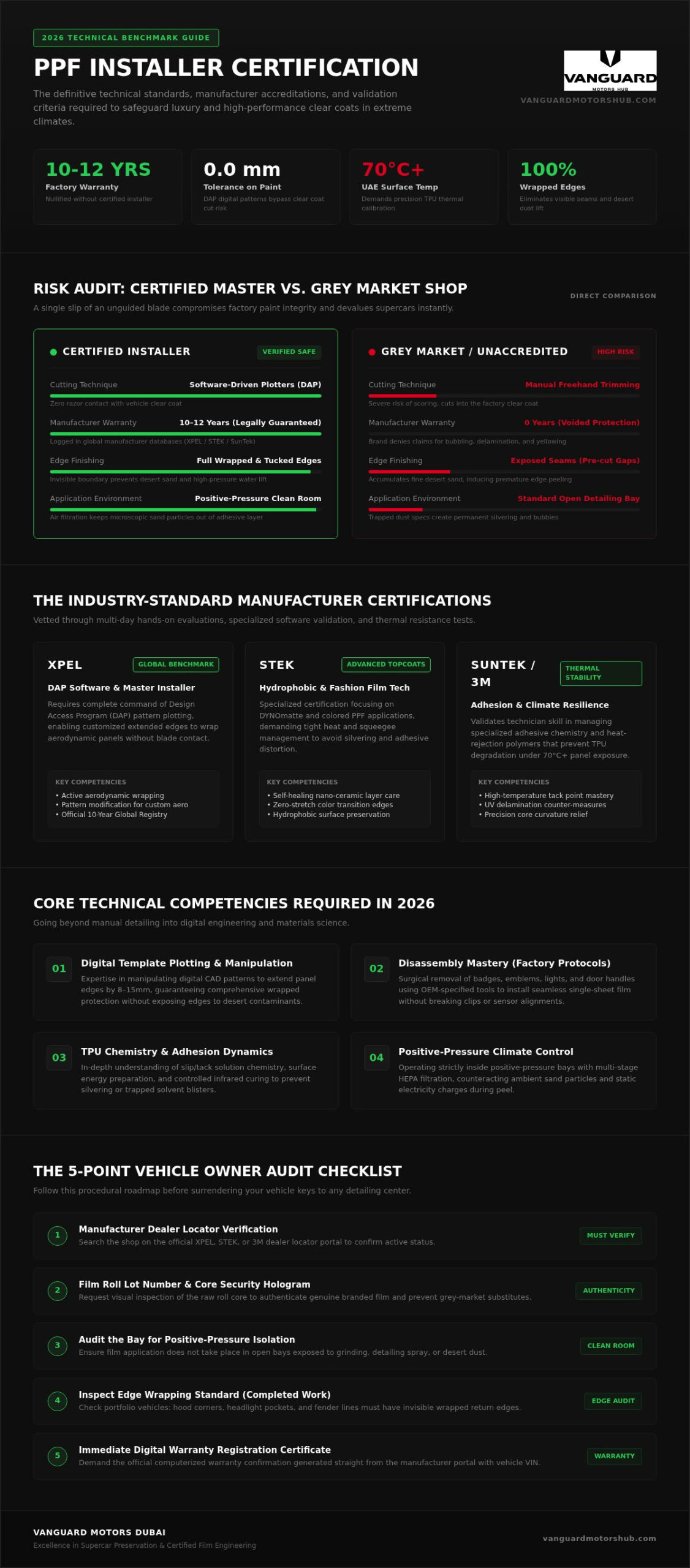
In 2026, the industry has moved beyond simple manual application. Modern paint protection film standards and technology demand a deep understanding of software-driven cutting programs and advanced adhesion science. When considering what certifications should a PPF installer have, you’re looking for proof that the technician can manage these digital templates to avoid placing a physical blade anywhere near your factory paint. Uncertified work often leads to “scoring,” which are invisible blade cuts in the clear coat, lifting edges that trap desert dust, and premature yellowing caused by the use of inferior, non-certified materials.
The Link Between Certification and Manufacturer Warranty
Elite brands like XPEL, SunTek, and STEK offer comprehensive 10-year limited warranties, but these are strictly conditional. A manufacturer will only honor a claim for bubbling, delamination, or yellowing if the film was installed by an authorized dealer. Choosing a “grey market” or unaccredited shop often leaves owners with zero recourse when the film fails under the intense UAE sun. Authorized Dealer status is the primary gateway to consumer protection and ensures your investment is registered in the manufacturer’s global database.
Precision vs. Speed: The Certified Mindset
Certified installers operate with a mindset that prioritizes long-term paint integrity over rapid turnover. They utilize specialized tools, such as digital depth gauges and positive-pressure clean rooms, to ensure a flawless bond. This meticulous approach is what separates a factory-quality finish from a rushed, amateur job. You can learn more about how these standards define luxury care in our guide on The Ultimate Shield: Why Paint Protection Film is the Standard for Excellence in 2026. Every decision made by a certified professional is designed to protect your vehicle’s resale value and aesthetic brilliance.
The Industry-Standard Manufacturer Certifications to Look For
Identifying what certifications should a PPF installer have begins with recognizing the industry’s “Big Three” manufacturers: XPEL, STEK, and SunTek/3M. These global leaders don’t just sell film; they certify technicians through rigorous, multi-day factory programs that test heat management, edge-wrapping, and tension control. Achieving “Master Installer” or Level 2 status indicates a technician has moved beyond basic flat panels to master complex compound curves and deep recesses. This hierarchy of training ensures that every edge is tucked and every contour is respected, preventing the lifting common in uncertified work.
XPEL Certification: The Global Benchmark
XPEL certification remains the global benchmark for luxury automotive protection. Technicians must demonstrate total mastery of the Design Access Program (DAP), which is the industry’s most advanced pattern-cutting software. This digital precision allows for custom-extended edges that wrap around panels for an invisible finish. For owners of vehicles with intricate aerodynamics or active aero components, this certification is non-negotiable. It aligns perfectly with the elite Supercar Detailing standards required to maintain a vehicle’s showroom-level finish.
Stek and SunTek: Specialized Protection Credentials
While XPEL leads in precision patterns, STEK and SunTek offer specialized credentials for modern aesthetic transformations. STEK certification focuses heavily on their proprietary hydrophobic topcoats and the technical application of fashion films, such as DYNOmatte or high-gloss colored PPF. These films require specific heat settings and squeegee techniques to avoid silvering or adhesive distortion. SunTek and 3M emphasize adhesive science and heat-rejection training, ensuring the film remains stable even when surface temperatures in the UAE exceed 70°C. Understanding what certifications should a PPF installer have allows you to verify if they can handle these specialized TPU chemistries without compromising the bond.
Beyond film-specific training, foundational expertise is vital for a successful long-term bond. Adhering to International Detailing Association certification standards ensures the installer understands the nuances of multi-stage paint correction and chemical decontamination. PPF acts as a magnifying glass; any swirl mark or dust particle left on the paint will be trapped and highlighted for years. Certified detailers possess the skills to create a flawless substrate before the first inch of film is applied. If you want to ensure your vehicle receives this level of certified care, consult with our master technicians today.
Core Technical Competencies Every Certified Installer Must Master
A certification is only as strong as the hands that hold the squeegee. Beyond the brand name on the film, elite technical competencies define the final aesthetic result. When evaluating what certifications should a PPF installer have, you must look for mastery in four critical areas: contamination management, edge tucking, precision disassembly, and the hybrid use of cutting methods. These aren’t just preferences; they’re the difference between a vehicle that looks “wrapped” and one that appears to have a second skin.
Contamination management is the first hurdle. In the UAE’s desert environment, airborne silica and dust are constant threats. A certified professional maintains a surgical-grade environment, often utilizing positive-pressure bays to prevent particles from being trapped under the adhesive. Similarly, edge tucking and wrapping require a high level of dexterity. The goal is a seamless finish where the film edges are rolled behind the panel, making the protection invisible to the naked eye. This level of detail requires adherence to International Detailing Association certification standards, ensuring the paint surface is decontaminated and corrected to a mirror finish before the film ever touches the car.
Bulk vs. Template: The Mark of a Master
There’s a constant debate between “Bulk” and “Template” installations. Bulk involves hand-trimming film directly on the vehicle for total coverage, while template uses software to pre-cut shapes. A truly certified master doesn’t choose one; they excel at both. Templates are safer for standard panels, but bespoke Brabus or Mansory body kits often feature unique carbon fiber geometries that don’t exist in any database. In these cases, the installer must possess the steady hand required for bulk trimming without ever scoring the underlying clear coat.
Advanced Disassembly and Reassembly
Modern paint protection often requires the safe removal of badges, mirrors, and door handles to ensure the film reaches every corner. This makes a certified installer a part-time mechanic. They must understand the clip locations and torque specs for luxury marques to avoid broken trim or misaligned panels. For supercar owners, “Paint-Safe Disassembly” is a vital credential that ensures a flawless wrap without compromising the vehicle’s structural integrity. Without it, shops often resort to “tucking” film around obstacles, which leads to dirt accumulation and eventual lifting at the edges. A certified professional ensures every component is returned to factory specifications, maintaining the vehicle’s original build quality.
The 2026 PPF Installer Verification Checklist
Trusting a shop with your supercar requires more than a handshake; it requires active verification. When determining what certifications should a PPF installer have, you must move from passive belief to technical due diligence. A world-class installation is the result of a controlled environment and a technician who is accountable to global manufacturing standards. Use this five-step checklist to audit any facility before handing over your keys.
- Step 1: Request the Physical Certificate. Authentic credentials feature a specific date and the individual technician’s name. Ensure the training was completed within the last three years to account for 2026 film technology updates.
- Step 2: Verify via Manufacturer Portal. Use the “Find a Dealer” tool on official XPEL, STEK, or 3M websites. If the shop isn’t listed, they cannot register your factory-backed warranty.
- Step 3: Inspect the Lighting Bay. Look for a sealed, climate-controlled environment. Dust particles are the primary cause of silvering and bubbles, making a positive-pressure room essential in the UAE’s sandy climate.
- Step 4: Review the Macro Portfolio. Ask for high-resolution photos of edge tucks and complex corners. A certified master will be proud to show the “invisible” seams on a front bumper or side mirror.
- Step 5: Check Liability Insurance. Confirm the facility carries comprehensive coverage specifically for luxury vehicle handling and storage.
How to Spot ‘Badge Engineering’ and Fake Certs
Some facilities practice “badge engineering,” where they display a manufacturer’s logo on their website without holding “Authorized Dealer” status. This is a critical distinction. If the shop owner is certified but the person actually working on your car is an unvetted apprentice, your warranty is at risk. Always ask if the individual technician is factory-trained. Furthermore, a lack of foundational Cosmetic Car Repair knowledge is a major red flag. An installer who doesn’t understand the chemistry of automotive paint cannot safely prepare the surface for long-term film adhesion.
Questions to Ask During the Consultation
Direct questions reveal the depth of a shop’s expertise. Ask, “Which specific technician will be performing the bulk cuts on my vehicle?” and follow up by requesting to see their digital warranty registration process. If your vehicle features exposed composites, ask for their protocol for protecting Carbon Fiber Parts. Certified professionals will have a clear, documented strategy for managing these sensitive materials without damaging the resin. If a shop hesitates to provide these details, they likely lack the elite credentials your vehicle deserves. Verify our master credentials via WhatsApp and ensure your investment is protected by the best in the industry.
Why Vanguard Motors Hub is the Standard for Certified PPF in the UAE
Vanguard Motors Hub operates at the intersection of high-octane passion and surgical precision. In the competitive UAE market, we don’t just meet industry benchmarks; we redefine them. When you investigate what certifications should a PPF installer have, you’ll find that our team holds the elite manufacturer credentials necessary to handle the world’s most exclusive marques. We combine 2026-grade software templates with the steady hand required for master bulk-trimming, ensuring every millimeter of your vehicle is shielded against the harsh desert elements. Our facility is designed to be a sanctuary for automotive excellence, where technical skill meets a visionary approach to protection.
Our philosophy centers on the Vanguard Premium Package, a holistic approach to vehicle preservation. It isn’t just about film; it’s about the meticulous preparation and integration of multiple protection tiers. This commitment to excellence makes us the preferred choice for supercar owners who demand a finish that is as durable as it is beautiful. We treat every vehicle as a masterpiece, applying the same level of care to a standard luxury sedan as we do to a limited-edition exotic. By maintaining a proactive and efficient service model, we ensure your vehicle spends less time in the bay and more time on the road, protected by the best technology available.
Mastery Over Complex Curves and Bespoke Kits
Handling the aggressive geometries of modern aerodynamics requires more than basic training. We specialize in applying protection to intricate Jetour, Brabus, and Mansory kits, where standard templates often fall short. These bespoke conversions feature deep carbon fiber recesses and sharp angles that demand a master’s touch to prevent lifting or silvering. Our technicians also understand the synergy between external film and internal preservation, often integrating carbon fiber repair and leather restoration into a single, seamless service. Secure your vehicle’s future with a certified Vanguard installation on WhatsApp.
Transparent Warranty and Aftercare
A certification is only valuable if it translates into long-term security for the owner. We handle the entire manufacturer warranty registration process on your behalf, ensuring your 10 to 12 year coverage is officially logged in the global database of brands like XPEL or STEK. Our relationship with clients doesn’t end at the delivery bay. We offer a mobile detailing van service to provide professional-grade maintenance at your doorstep, preserving the self-healing properties of the film for years to come. This transparent approach to aftercare is why we remain the trusted authority in the UAE. Message our master technicians for a bespoke protection consultation.
Shield Your Investment with Certified Precision
Your vehicle is a masterpiece of engineering and design. It deserves a protective shield that matches its caliber. We have explored how manufacturer credentials act as the ultimate safeguard for your warranty and why technical mastery over complex curves is non-negotiable for 2026. Understanding what certifications should a PPF installer have allows you to distinguish between a temporary aesthetic fix and a long-term preservation strategy. These standards are the only way to ensure your film survives the UAE’s intense UV radiation and abrasive sand.
At Vanguard Motors Hub, our XPEL and STEK certified technicians bring elite precision to every project. We specialize in the intricate demands of Brabus and Mansory bespoke conversions, ensuring even the most aggressive body kits receive seamless coverage. By providing full manufacturer warranty support, we offer the peace of mind that your investment remains protected. Don’t leave your paintwork to chance. Consult with a Certified Master Installer via WhatsApp today. Your supercar is ready for its ultimate transformation.
Frequently Asked Questions
Does a PPF installer need a specific license in the UAE?
Automotive centers in the UAE must hold a valid trade license for vehicle detailing and protection services. While there isn’t a specific government-issued “PPF license,” manufacturer certifications serve as the primary technical benchmark. These credentials ensure the facility meets international standards for clean-room environments and technician training. This is vital for maintaining the vehicle’s aesthetic and structural integrity in our challenging environmental conditions.
Can an uncertified installer still offer a warranty?
An uncertified installer can only offer a “shop warranty,” which is limited to their own business’s lifespan and discretion. They cannot provide an official manufacturer-backed warranty from global brands like XPEL or STEK. If the shop closes or a dispute arises, the owner has no recourse with the film manufacturer. Official certifications are the only way to secure a 10 to 12 year global warranty registered in a centralized database.
How do I check if an XPEL installer is actually certified?
You can verify an installer’s status by visiting the official XPEL website and using their “Find an Installer” dealer locator tool. This database is the most reliable way to confirm that a shop is authorized to register your warranty. When researching what certifications should a PPF installer have, always cross-reference the shop’s name with the manufacturer’s portal to ensure their status is active and recognized across the UAE.
What happens if a technician cuts the paint during PPF installation?
If a technician scores the paint, it often remains hidden until the film is removed, potentially leading to corrosion or clear coat failure. Certified installers prioritize software-driven templates to minimize blade use on the vehicle. In cases where bulk cutting is necessary, they use a “scoring” technique that only cuts halfway through the film. Choosing an elite facility with proper liability insurance ensures you are protected if any mechanical damage occurs during the process.
Is certification more important than years of experience?
Both are essential, but certification proves the installer is trained in modern 2026 film technologies and software. A technician might have years of experience with older PVC wraps but lack the specific training required for advanced thermoplastic urethane (TPU) films. Certification ensures they understand current heat-management protocols and adhesive sciences. These skills are critical for preventing yellowing and lifting in the extreme UAE climate where surface temperatures can exceed 70°C.
Do certifications cover both pre-cut and bulk installation methods?
Comprehensive manufacturer certifications typically cover both high-precision software templates and manual bulk installation techniques. Master-level training is specifically designed to teach technicians how to handle standard panels using digital patterns while also mastering the hand-trimming skills required for bespoke body kits. This dual proficiency is what certifications should a PPF installer have to ensure 100% coverage on complex supercar aerodynamics and custom carbon fiber components found on luxury marques.
Should I ask to see the physical certification in the shop?
It’s highly recommended to request to see the physical certificates of the specific technicians assigned to your vehicle. A reputable shop will proudly display these credentials, which should include the technician’s name and the date of their training. This transparency confirms that the individual performing the work has been personally vetted by the manufacturer. It ensures you aren’t just paying for a shop that uses a brand’s logo for marketing purposes without the actual expertise.
Are certifications for colored PPF different from clear PPF?
Foundational training is similar, but colored PPF often requires advanced master-level certification due to its increased thickness and opacity. Applying colored film demands greater precision in edge-wrapping and heat control to avoid “silvering” or adhesive distortion that would be visible on a solid color. Elite installers often seek additional training specific to fashion films to ensure a finish that is indistinguishable from a traditional respray while providing superior rock-chip protection.