
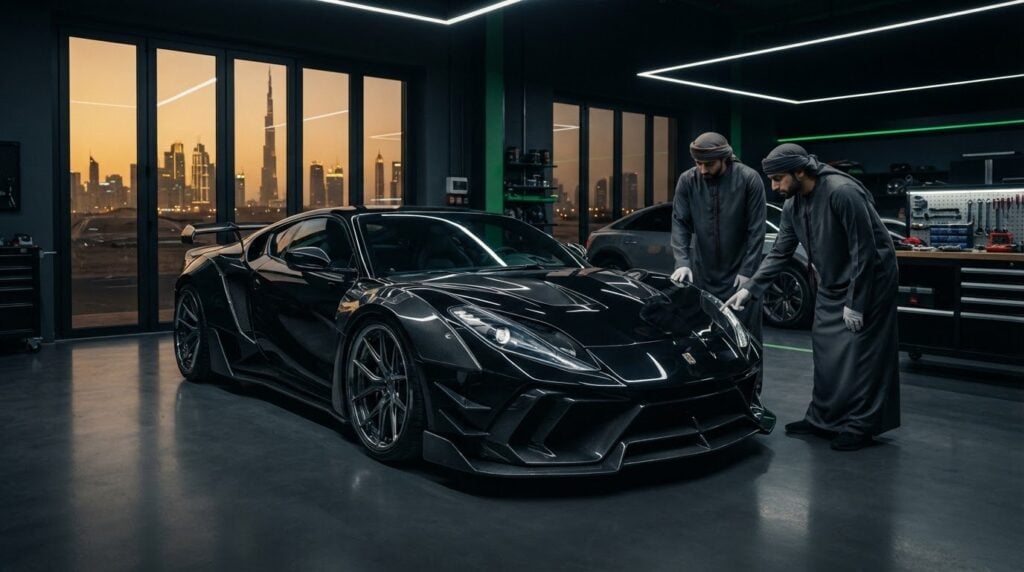
True bespoke car conversion isn’t merely an aggressive visual upgrade; it is an exacting architectural science combining composite engineering with OEM-level harmony. You’ve invested in an elite, multi-million-dirham machine, and the fear of irregular panel gaps, high-speed aerodynamic lift, or substandard carbon weaves is completely justified. Far too many fragmented workshops attempt complex transformations without the integrated technical mastery required to preserve original body lines and high-speed stability.
Achieving a dominant, one-of-a-kind supercar presence doesn’t mean sacrificing factory precision. Discover how elite bespoke car conversions integrate high-end aerodynamic styling, carbon engineering, and factory-level precision to redefine modern luxury performance. This guide unpacks the mechanics of flawless composite fitment, seamless paint matching, and the essential benchmarks for identifying an elite customization partner capable of executing your vision without compromise.
Key Takeaways
- Understand how a true bespoke car conversion moves far beyond bolt-on accessories to reshape vehicle architecture using autoclave-cured composite components.
- Discover the mechanical role of sculpted carbon splitters, widebody panels, and engineered diffusers in generating functional downforce without compromising chassis balance.
- Explore the five-phase transformation framework that guarantees factory-grade panel tolerances, seamless color matching, and flawless structural fitment.
- Learn why safeguarding composite bodywork requires specialized full-body paint protection film and peelable paint formulations engineered for high-impact driving conditions.
- Identify the core technical capabilities, material standards, and fabrication benchmarks required when selecting an elite automotive conversion partner.
What Is a Bespoke Car Conversion? Defining Luxury Automotive Personalization
While generic industry conversions often focus on industrial fleet utility or standard powertrain swaps, a true bespoke car conversion is an entirely different discipline. It re-engineers vehicle aesthetics, aerodynamics, and presence using elite materials and coachbuilt precision. Unlike surface-level cosmetic accessories, a bespoke conversion involves comprehensive structural bodywork, sculpted composite panels, and engineered exterior architecture. Discerning supercar and luxury vehicle owners demand an unmistakable visual identity that turns heads while strictly preserving underlying crash safety, sensor telemetry, and factory driving dynamics.
The Evolution of Coachbuilding in the Modern Era
Modern coachbuilding has evolved far beyond traditional hand-hammered aluminum sheets. High-precision laser scanning and reverse CAD modeling now allow composite aerodynamic components to integrate seamlessly with complex modern vehicle platforms. Every front splitter, widened fender, and sculpted rear diffuser is calibrated to channel turbulent airflow into functional downforce. This fusion of computational fluid dynamics and artisanal craftsmanship ensures that aggressive design works in tandem with high-speed chassis stability.
Bespoke Conversions vs. Basic Aftermarket Body Kits
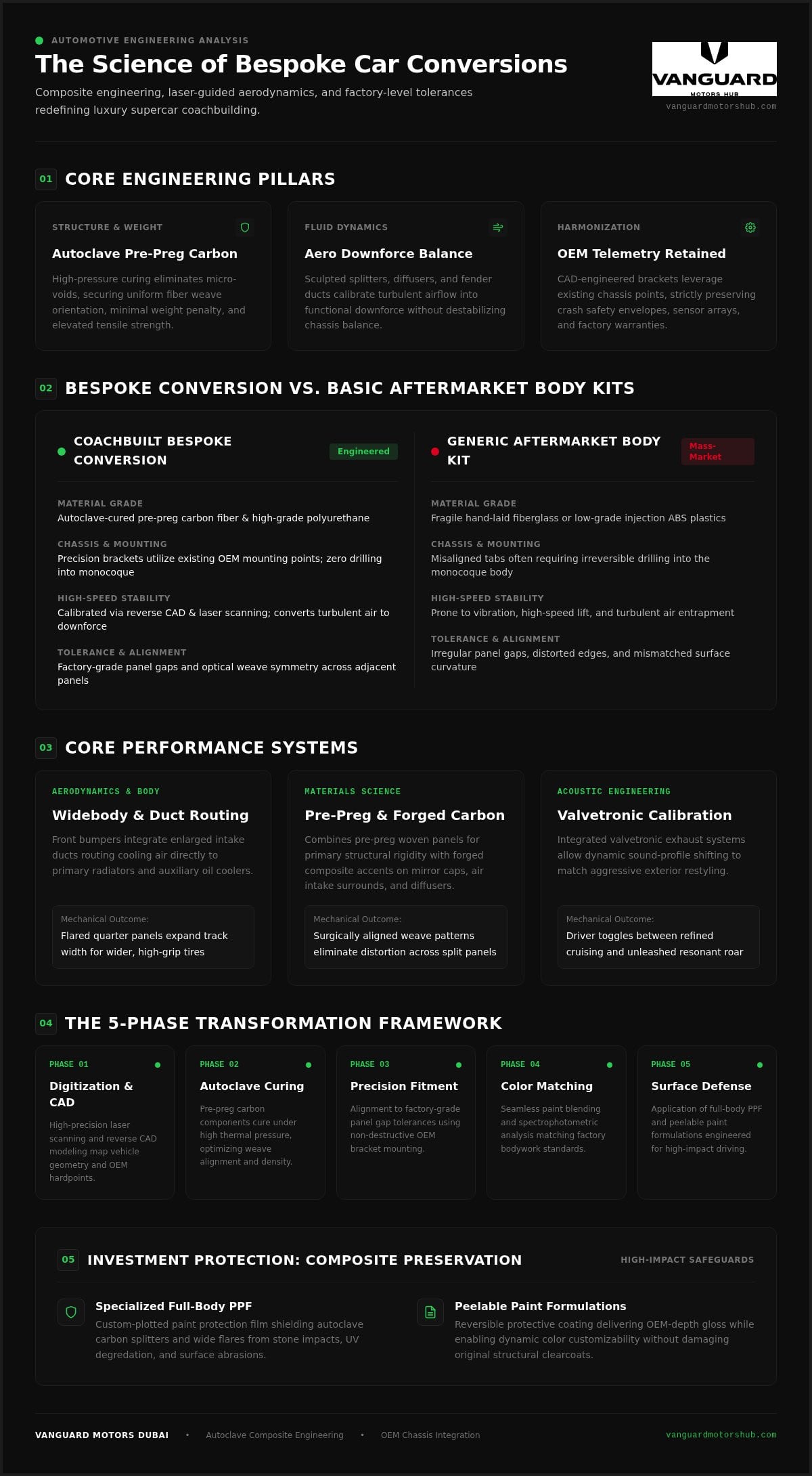
Mass-market body kits frequently arrive with misaligned mounting tabs, uneven panel gaps, and fragile fiberglass or low-grade ABS plastics. These cheap additions vibrate at speed and often require irreversible drilling into the monocoque body. In contrast, coachbuilt conversions prioritize structural integrity and long-term vehicle equity:
- Aerospace-grade materials: Autoclave-cured pre-preg carbon fiber and high-grade polyurethane ensure maximum tensile strength with minimal weight penalty.
- Factory-grade mounting: Precision-engineered brackets utilize existing OEM chassis mounting points, preserving core body integrity and warranty requirements.
- Integrated execution: Elite facilities like Vanguard Motors Dubai deliver end-to-end transformation, pairing complex carbon composite fabrication with dedicated full-body protection to ensure every bespoke car conversion maintains showroom-level panel alignment and surface durability.
Core Components of High-Performance Automotive Conversions
Executing an authentic bespoke car conversion requires technical synergy across aerodynamics, composite materials, and powertrain dynamics. Elite styling packages do not merely decorate a car; they fundamentally reshape how air, light, and mechanical power interact. Renowned styling architectures, from aggressive Mansory and Brabus configurations to high-performance SUV packages, demand precision parts that harmonize with the factory platform rather than fight it.
Engineered Aerodynamic Body Panels and Widebody Kits
Aerodynamic panels dictate both road presence and high-speed stability. Sculpted front bumpers integrate enlarged cooling ducts that route clean air toward primary radiators and auxiliary oil coolers. Meanwhile, flared quarter panels increase overall track width, providing room for wider performance tires that elevate lateral cornering grip. Discerning drivers interested in high-end platform restyling can consult our definitive guide to Brabus body kit installation for deep platform insights.
Structural and Cosmetic Carbon Fiber Integration
Lightweight composite components serve as the visual and structural backbone of modern conversions. Autoclave prepreg carbon cures under intense pressure, eliminating micro-voids and aligning the weave across every split panel with surgical accuracy. High-end builds frequently balance this with forged composite accents on mirror caps, air intake surrounds, and diffusers. Learn more about preserving lightweight composites with our resource on carbon fiber car parts repair.
Acoustic and Stance Calibration
True presence extends beyond visual impact; acoustic character completes the transformation. Integrating valvetronic sport exhausts allows the driver to toggle between refined cruising and an unleashed, resonant roar. To dive deeper into tailored acoustic profiles, explore acoustic tuning in our guide to supercar exhaust upgrades.
A flawless aesthetic also demands an aggressive stance. Lightweight forged alloy wheels, precisely milled with custom offsets, bring the rubber flush to newly widened arches. When you are ready to explore an integrated bespoke car conversion tailored to your machine, you can speak with a conversion specialist to review composite styling options and fitment requirements.
The Engineering Process: Executing a Bespoke Conversion
Precision execution separates elite coachbuilt transformations from crude aesthetic modifications. When restyling a multi-million-dirham platform, tolerances are measured in fractions of a millimeter. Executing a bespoke car conversion demands structured workflow discipline, technical expertise, and uncompromising quality controls. Every successful commission advances through five interconnected engineering stages to guarantee structural rigidity, acoustic refinement, and flawless aesthetic continuity.
Phase 1 to 2: Conceptual Design and Vehicle Disassembly
The journey begins with blue-light 3D optical scanning. Technicians digitize the donor vehicle’s exterior surface geometry, establishing a CAD baseline to verify sensor bracket positions, intercooler clearances, and structural hardpoints. Disassembly follows a strict non-destructive protocol. Factory bumpers, aerodynamic diffusers, and delicate exterior trim are systematically de-pinned, labeled, and archived. ADAS radar arrays, ultrasonic parking sensors, and camera harnesses are carefully mapped to guarantee seamless electronic integration during final assembly.
Phase 3 to 4: Dry-Fitting, Alignment, and Paint Formulation
Dry-fitting is the litmus test of structural coachbuilding. Master technicians mount unfinished composite panels directly onto the naked chassis, meticulously measuring shut lines, panel flushness, and uniform gaps:
- Sub-millimeter alignment: Custom shims and adjustable CNC brackets balance panel spacing across the hood, doors, and widened quarter panels.
- Spectrophotometer color matching: Advanced digital cameras analyze factory paint samples under multiple light spectrums, isolating base pigments, metallic flake orientation, and clear-coat depth.
- Refined surface prep: Panels undergo multi-stage priming and hand block sanding. For detailed paint restoration standards, consult our guide to cosmetic car repair.
Phase 5: Reassembly, Calibration, and Track Validation
Final mechanical installation utilizes aerospace-grade elastomeric adhesives and calibrated torque-spec fasteners. These damp chassis vibration and prevent high-speed panel buzz. With the new bodywork secured, technicians initiate digital sensor alignment. Driver-assist cameras, front radars, and blind-spot sensors undergo static target board alignment and dynamic road calibration, ensuring safety suites operate precisely to OEM benchmarks.
High-speed road testing validates that widened air curtains, underbody splitters, and diffusers maintain optimal thermal cooling and pitch stability under severe driving conditions. To review custom conversion timelines and platform feasibility for your vehicle, connect directly via WhatsApp for conversion consultations.
Preserving and Elevating Your Conversion Investment
Completing a bespoke car conversion is an exhilarating milestone, but protecting that coachbuilt artistry requires deliberate technical preservation. Intricate carbon splitters, widened arches, and hand-finished paintwork encounter intense environmental hazards the moment rubber meets the road. Flying gravel, abrasive sand, and chemical contaminants degrade exposed composites rapidly without proper defense. Safeguarding newly installed aerodynamic components demands an integrated preservation strategy that matches the build quality of the conversion itself.
Paint Protection Film (PPF) for Custom Aerokits
Custom-plotted thermoplastic polyurethane forms an invisible, self-healing shield against road debris. Front air splitters and low-slung diffusers absorb punishing kinetic impacts; without dedicated defense, stone chips fracture delicate clear coats and damage structural carbon weaves. Explore comprehensive film defense with paint protection film to preserve panel purity. Advanced elastomeric layers self-heal light swirl marks under ambient heat while slick hydrophobic topcoats stop brake dust and chemical etching from clouding clear finishes.
Color Customization via Vinyl Wraps and Peelable Paint
Styling evolution doesn’t have to stop at conversion completion. Innovative coatings allow owners to transform their vehicle’s visual signature while adding an extra barrier of defense:
- Sprayable peelable paint: Delivers an authentic OEM-grade paint finish with seamless edge wrap around flared bodywork, peeling away cleanly when design preferences change.
- Architectural vinyl films: Review finish selection in the car wrap buying guide to contrast matte, satin, and gloss sheens that accentuate widened wheel arches.
- Reversible protection: Both applications shield underlying custom paint layers from UV oxidation and micro-scratching.
Interior Restoration and Detailing Synergies
True automotive harmony unites aggressive exterior lines with an opulent cabin. Re-trimming seats in glove-soft semi-aniline hides, adding matched contrast stitching, and restoring high-wear steering wheel touchpoints align cockpit luxury with the exterior stance. Outside, jewel-like composite elements deserve multi-stage corrective polishing to eliminate micro-marring and deepen optical clarity. Maintain pristine vehicle brilliance through comprehensive supercar detailing.
Preserving your conversion’s value requires specialized technical care from the start. Schedule a vehicle preservation consultation to protect your custom composite panels with tailored film and detailing packages.
Selecting an Elite Automotive Conversion Partner
Entrusting a high-performance supercar or luxury SUV to a workshop is a high-stakes decision. The facility you select determines whether your vehicle achieves genuine coachbuilt prestige or suffers from compromised safety, ruined electronics, and uneven lines. Fragmented body shops often outsource structural composite trimming, paint blending, or ADAS radar sensor calibration to separate third parties, creating accountability gaps and inconsistent quality. A premier facility houses all essential disciplines under one roof, orchestrating mechanical alignment, carbon composite curing, computerized paint formulation, and bespoke leather tailoring in perfect unison.
Essential Criteria for Vetting a Conversion Facility
Before commissioning any bespoke car conversion, demand absolute transparency into workshop workflows and technical track records:
- Inspection of physical portfolio builds: Verify true panel gap symmetry along hood lines and quarter panels. Inspect exposed carbon weave continuity across multi-piece splitters and mirror caps to confirm zero weave distortion.
- Advanced diagnostic capabilities: Ensure the facility uses diagnostic platforms capable of completing static board targets and dynamic road recalibrations for parking radars, front-facing radar cruise units, and lane sensors.
- Dedicated environmental clean rooms: High-end paint blending and thermoplastic film installations require pressurized, dust-free paint booths and climate-controlled clean rooms to eliminate contamination under the clear coat.
The Vanguard Motors Bespoke Experience
Vanguard Motors eliminates the risks of fragmented workmanship by delivering an integrated, factory-grade customization ecosystem. Our master technicians manage every conversion phase with architectural precision, supporting premier aerodynamic packages for Brabus, Mansory, and contemporary performance SUV platforms like the Jetour series. From the initial 3D design mapping and dry-fitting phase to custom valved exhaust integration, composite repair, and final full-body paint protection film application, every detail is engineered to protect vehicle equity while commanding road presence.
Ready to turn your automotive vision into a flawless reality? Connect directly with technical specialists to start your custom project today with Vanguard Motors on WhatsApp.
Transform Your Supercar Vision into Precision Reality
A true bespoke car conversion bridges the gap between raw automotive passion and structural engineering excellence. Achieving coachbuilt dominance requires more than aggressive styling panels; it demands micron-level alignment tolerances, flawless composite weaving, and full-spectrum electronic sensor recalibration. When paired with advanced thermoplastic shields and interior tailoring, your machine commands attention on every straightaway without compromising factory structural balance or driving dynamics.
Vanguard Motors Hub brings every stage of this transformation under a single roof. Our master technicians specialize in high-end aerokit conversions, including iconic Brabus and Mansory platforms. Within our climate-controlled cleanrooms, we execute precision carbon fiber alignment, computerized paint blending, and durable paint protection film application, alongside bespoke valvetronic exhaust tuning and bespoke leather restoration.
Ready to elevate your vehicle into an unmistakable, coachbuilt masterpiece? Discuss your bespoke conversion project with our engineering team on WhatsApp today.
Frequently Asked Questions
Will a bespoke car conversion void my factory vehicle warranty?
A professionally executed conversion doesn’t automatically void your vehicle warranty. Dealerships can only legally challenge claims if an aftermarket component directly triggers a mechanical or electrical failure. Utilizing premier styling kits that mount to factory chassis points protects core drivetrain coverage. Elite facilities ensure that electronic wiring harnesses and driver-assist sensors remain intact and calibrated strictly to OEM tolerances.
How long does a comprehensive high-end body kit conversion typically take?
A comprehensive conversion generally takes between two to six weeks, depending on build complexity. The timeline accounts for precision 3D scanning, non-destructive vehicle disassembly, multi-stage dry-fitting, computerized paint formulation, and sensor recalibration. If you incorporate custom valved exhaust routing, interior leather restoration, or full-body paint protection film installation, specialized curing and road validation add necessary time to guarantee flawless fitment.
Can carbon fiber body conversion parts be repaired if damaged?
Yes, structural and cosmetic carbon fiber panels can be restored through specialized composite repair techniques. Surface scratches and clear-coat gouges are resolved via resin blending, wet sanding, and optical polishing. For deeper fractures or cracked splitters, technicians execute structural scarf repairs, layer fresh pre-preg carbon weaves, and vacuum-cure the section to restore original tensile strength without replacing the entire bespoke car conversion panel.
What is the difference between pre-preg carbon fiber and wet-lay carbon?
Pre-preg carbon fiber features resin pre-impregnated at exact ratios and cures under extreme heat and pressure in an autoclave. This industrial process eliminates microscopic air voids, delivering exceptional tensile rigidity and ultra-low weight. Wet-lay carbon relies on hand-brushed liquid resin cured at room temperature, which leaves uneven resin distribution, adds excess weight, and often distorts visual weave symmetry across complex curves.
Is it possible to reverse a bespoke car conversion back to stock?
Yes, an authentic conversion is fully reversible if the installation utilizes non-destructive mounting methods. Master technicians preserve factory body hardpoints by securing widebody kits, diffusers, and spoilers with OEM brackets and elastomeric bonding rather than cutting the unibody structure. Original body panels, bumpers, and exhaust hardware are carefully cataloged and stored, allowing future return to stock specification whenever desired.
How do custom body conversions affect vehicle aerodynamics and driving performance?
High-end conversions improve aerodynamic efficiency and high-speed stability when engineered with computational fluid dynamics. Sculpted front splitters, functional hood vents, and rear diffusers reduce aerodynamic lift while channeling cooling air toward high-temperature brake systems and radiators. Widened quarter panels also accommodate broader wheel fitments, expanding the vehicle’s track footprint for significantly increased mechanical grip and flatter cornering composure.
Why is Paint Protection Film recommended immediately following a body conversion?
Installing Paint Protection Film immediately after installation shields delicate composite materials and custom paintwork against punishing road debris. Low-slung aerodynamic splitters and flared arches sit directly in the strike zone of gravel and abrasive sand. Applying optically clear, self-healing polyurethane film locks in showroom depth, prevents rock chips from fracturing exposed carbon weaves, and preserves the equity of your bespoke car conversion investment.