
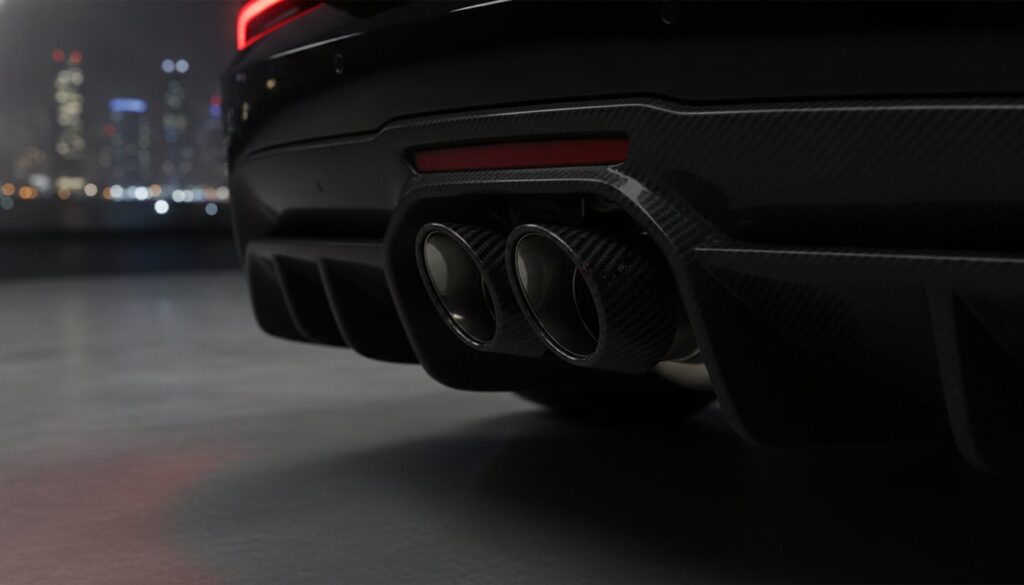
The exhaust tip is the final punctuation mark on your vehicle’s design. It’s the difference between a high-end masterpiece and an unfinished project. If you’re driving a supercar in the UAE, you know that every millimeter of fitment counts toward that elite presence. However, choosing the right exhaust tip often brings more anxiety than excitement. You might worry about buying a component that won’t align with your factory pipe or, worse, heat-damaging a bespoke carbon fiber diffuser that cost thousands of AED.
It’s a common frustration for owners who demand perfection. You want a look that’s aggressive yet refined, and a sound that commands respect on the road. This 2026 guide reveals how to select a tip that balances bold styling with technical precision. You’ll discover how to achieve a perfectly flush fitment and a deeper, more resonant exhaust note using premium materials like T304 stainless steel or forged carbon fiber. We’ll break down the structural differences between single-wall and double-wall performance to ensure your choice enhances both form and function.
Key Takeaways
- Define the exhaust tip as the critical final exit point that shapes both the visual presence and the refined sonic profile of your luxury vehicle.
- Identify the precise measurement techniques required to differentiate between inlet and outlet diameters for a seamless, factory-level fit.
- Evaluate the performance benefits of premium materials like T304 stainless steel and carbon fiber to ensure long-term resistance against the UAE’s coastal humidity.
- Simplify the process of choosing the right exhaust tip by matching specific shapes and finishes to the aggressive lines of bespoke Brabus or Mansory body kits.
- Understand why expert installation is vital for protecting high-end paintwork and ensuring perfect alignment with complex rear diffusers.
Beyond Aesthetics: Why Choosing the Right Exhaust Tip Defines Your Vehicle’s Persona
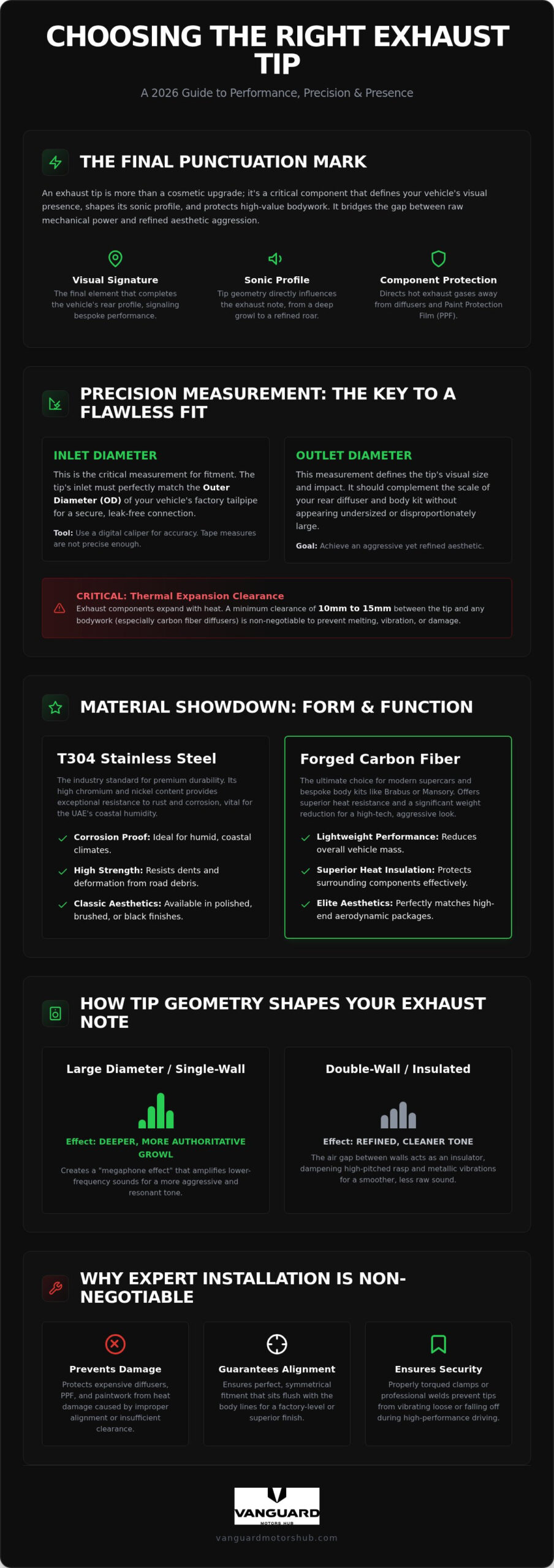
The exhaust tip is more than a decorative sleeve. It represents the final stage of the vehicle’s exhaust system; the precise point where raw mechanical power meets the atmosphere. While some view it as purely cosmetic, choosing the right exhaust tip is a strategic decision that bridges the gap between mechanical efficiency and aggressive aesthetics. In the high-performance landscape of the UAE, where supercars are the standard, the rear profile of your vehicle serves as its primary visual signature. It’s the final punctuation mark that communicates either factory-standard compliance or bespoke performance intent.
Rear-end styling has a profound psychological impact on a vehicle’s presence. A car with undersized or poorly finished tips looks underpowered, regardless of its actual horsepower. When you select a specific tip design, you’re choosing the personality your vehicle projects as it overtakes others on the highway. This is why luxury vehicles require a higher register of material excellence. Standard aftermarket options often fail to meet the rigorous standards needed for elite builds, lacking the edge thickness and finish quality required to complement a high-end diffuser.
The Functional Role of the Exhaust Tip
Precision fitment is about protection as much as it is about style. High-performance engines generate immense heat, and the exhaust tip acts as a thermal guide. It directs scorching gases away from delicate bodywork and expensive aerodynamic components. This is especially critical for vehicles equipped with paint protection film, as improper heat dissipation can lead to film lifting or discoloration. A well-engineered tip also facilitates the venturi effect. This creates a slight pressure drop that helps pull gases out more efficiently during high-RPM driving, ensuring your engine breathes without restriction.
How Tips Influence Your Exhaust Note
Your engine’s voice is shaped by the geometry of its exit point. Large-diameter outlets create a “megaphone effect,” amplifying deeper frequencies to provide a more authoritative growl. Conversely, double-wall tips utilize an air gap for insulation, which refines the sound by dampening high-pitched raspiness and metallic vibrations. Exhaust resonance is the specific frequency at which sound waves vibrate within the pipe, and it’s directly manipulated by the length and volume of the exhaust tip. By choosing the right exhaust tip with the correct internal volume, you can eliminate unwanted cabin drone while enhancing the external sonic profile to match your vehicle’s aggressive persona.
Precision Measurement: Sizing Your Inlet and Outlet for a Seamless Fit
Precision is the hallmark of elite automotive engineering. When choosing the right exhaust tip, a “close enough” mentality often leads to costly aesthetic and structural failures. You must distinguish between the inlet diameter, which must match your tailpipe’s outer diameter (OD), and the outlet diameter, which defines the tip’s visual footprint. While mass-market retailers push “universal fit” options, these are rarely compatible with the complex tolerances of luxury performance vehicles. Generic components often ignore the specific mounting points or clearance requirements of bespoke carbon fiber diffusers found on Brabus or Mansory conversions.
Thermal expansion is a critical factor frequently overlooked by DIY enthusiasts. During high-performance driving, exhaust components reach extreme temperatures and physically expand. Failure to calculate at least 10mm to 15mm of clearance can result in the tip vibrating against the rear valance or, in severe cases, melting the surrounding bodywork. Adhering to professional installation standards ensures that these physical shifts don’t compromise the vehicle’s integrity or safety. Proper measurement also dictates the final projection; you want a tip that sits flush with the diffuser edge or provides a subtle, intentional stagger.
Measuring Your Tailpipe Inlet
Achieving a seamless fit starts with professional-grade tools. Use a digital caliper to measure the outer diameter of your factory tailpipe; don’t rely on a standard tape measure. You must account for the thickness of the clamp or the specific depth of the weld joint to ensure the tip sits securely without leaks. Finally, verify the vertical and horizontal clearance between the pipe and the rear valance to prevent contact during engine idling or heavy gear shifts. When choosing the right exhaust tip for a supercar, even a two-millimeter error can ruin the symmetry of the rear profile.
Determining the Ideal Outlet Size
The outlet size should complement the visual weight of your vehicle’s rear profile. For performance SUVs like the Lamborghini Urus or Mercedes G-Wagon, 4-inch tips can appear undersized within a wide-body kit. Moving to a 5-inch outlet provides a more authoritative stance that fills the diffuser void. Whether you prefer a staggered quad-exit configuration or a singular, oversized dual-exit look, the outlet must align with the vehicle’s existing aerodynamic lines. If you’re unsure which dimensions suit your specific conversion, it’s wise to consult with a modification expert to ensure a precision result.
Material Science: T304 Stainless Steel vs. Carbon Fiber
Material choice is the foundation of longevity and aesthetic retention. In the UAE, high humidity and coastal salinity can quickly degrade inferior alloys, leading to unsightly pitting or structural failure. Choosing the right exhaust tip requires understanding how different materials react to extreme heat and environmental stressors. While standard steel may suffice for basic commuters, luxury builds demand high-grade composites and alloys that maintain their luster under the intense operating temperatures of a supercar engine.
Different finishes offer varying thermal profiles and maintenance requirements. Chrome provides a classic mirror shine but requires frequent cleaning to prevent permanent soot staining. Matte black finishes offer a stealthy, modern aesthetic and often feature ceramic coatings that resist discoloration. Burnt blue titanium finishes are popular for their heat-treated look, though they require precise manufacturing to ensure the color gradient doesn’t fade after a few high-speed runs on the highway.
The Case for T304 Stainless Steel
T304 is the industry gold standard for a reason. Its high chromium and nickel content provides exceptional corrosion resistance, making it essential for vehicles driven in coastal environments. It stands up to road debris and the high-velocity heat cycles of performance driving without cracking or warping. For the daily performance driver, it offers an excellent cost-to-performance ratio. Maintenance is straightforward; a high-quality metal polish can restore a mirror finish even after months of exposure to the elements.
Carbon Fiber: The Elite Performance Choice
Carbon fiber tips don’t just look the part; they reduce unsprung weight at the very edge of the vehicle’s chassis. Their superior heat dissipation properties are vital for protecting bespoke body kits from melting or warping during extended use. This material creates a perfect visual synergy with other high-end modifications, often requiring specialized carbon fiber car parts repair expertise to maintain its structural perfection over time.
When choosing the right exhaust tip, you must distinguish between traditional 2×2 twill weaves and the modern, marbled look of forged carbon. Forged carbon offers higher multidirectional strength and a unique aesthetic that complements the latest Mansory and Brabus conversions. High-quality carbon tips will always feature a stainless steel inner liner to ensure the resin doesn’t yellow or degrade from direct contact with exhaust gases.
The Aesthetic Match: Integrating Exhaust Tips with Bespoke Body Kits
An exhaust tip is the final chapter of a vehicle’s visual narrative. When you invest in a comprehensive conversion, the exit points must harmonize with the new aerodynamic silhouette. Choosing the right exhaust tip involves more than just picking a finish; it requires an eye for geometric symmetry. Round tips offer a timeless, balanced look that complements the fluid lines of a Porsche or Ferrari. In contrast, square or trapezoidal outlets match the aggressive, architectural language of modern wide-body kits. This ensures the rear profile looks cohesive rather than cluttered.
Authenticity is paramount in the world of elite customization. For owners of high-end builds, brand-specific designs are essential to maintain the vehicle’s pedigree. Coordinating the tip finish with your wheel centers or window trim creates a unified aesthetic that separates professional builds from amateur attempts. Whether you opt for a satin black to match forged wheels or a polished steel to contrast with a carbon fiber diffuser, the result should feel intentional. Precision alignment is the hallmark of quality. Even a slight tilt in a branded tip can undermine the entire conversion.
Tips for Brabus and Mansory Conversions
Signature conversions demand signature hardware. For those undergoing Brabus body kit installations, the iconic quad-tip configuration is a non-negotiable standard. These tips are engineered to fit perfectly within Brabus-specific rear valances, providing that unmistakable “B” logo presence. Mansory-styled supercars often require more radical, angular tips that mirror the sharp, faceted edges of their forged carbon components. At this level, ensuring the tip logo alignment is perfectly horizontal is a critical detail that reflects meticulous care.
Single-Wall vs. Double-Wall Styles
The choice between single-wall and double-wall designs dictates the vehicle’s overall maturity. Single-wall tips feature a raw, thin-edge profile inspired by motorsport, making them the preferred choice for track-focused builds where weight and simplicity are prioritized. Double-wall tips offer a more sophisticated, heavy-duty appearance with a thick-edged premium look. This style better suits a supercar detailing standard, as the layered construction hides the inner pipe for a much cleaner finish. Choosing the right exhaust tip often comes down to this balance of raw aggression versus refined luxury. If you’re ready to elevate your car’s rear profile, you can book a bespoke exhaust consultation today to find your perfect match.
Professional Customization: Why Expert Installation is Non-Negotiable
Many enthusiasts fall into the trap of believing that exhaust modifications are a ten-minute DIY project. While bolt-on components exist, the reality for luxury vehicles involves navigating a landscape of complex electronic sensors and high-value materials. Choosing the right exhaust tip is only half the battle; the installation determines whether that tip remains a stunning asset or becomes a structural liability. A poorly fitted tip can lead to persistent rattling, excessive vibration, and even catastrophic heat damage to expensive rear diffusers. In the high-performance world, there is no room for “close enough.”
Security is paramount when dealing with high-velocity exhaust gases. You must decide between weld-on and clamp-on fitment styles. Clamp-on tips offer a non-permanent solution that’s easier to swap, yet they are prone to loosening under the intense vibrations and heat cycles of a performance engine. Weld-on installation is the professional standard for elite builds. It creates a permanent, leak-free bond that ensures your tips stay perfectly centered, even during aggressive gear shifts. This level of precision preserves your vehicle’s resale value, as discerning buyers in the UAE market look for flawless, factory-grade workmanship rather than amateur modifications.
The Vanguard Approach to Exhaust Modification
Precision isn’t just a goal; it’s our baseline. We utilize laser-guided measurement tools to ensure that every tip is aligned with mathematical accuracy against the rear valance. This is vital for complex supercar exhaust upgrades where the margin for error is non-existent. Beyond alignment, our technicians prioritize thermal shielding. Modern supercars house sensitive rear-mounted cameras and parking sensors near the exhaust exit. We ensure that heat is directed away from these components, preventing electronic failure and protecting your investment from internal heat soak.
Take the Next Step in Customization
Your vehicle deserves a finish that matches its performance. Choosing the right exhaust tip requires a balance of technical knowledge and aesthetic vision. Our specialists are here to guide you through the selection process, ensuring the inlet, outlet, and material are perfectly matched to your car’s persona. Beyond exhaust work, we offer a comprehensive suite of cosmetic car repairs and bespoke upgrades to keep your vehicle in showroom condition. Don’t leave your car’s final signature to chance. You can Consult with a Vanguard Specialist via WhatsApp to secure a precision fitting today.
Master Your Vehicle’s Final Signature
Your vehicle’s rear profile is the last thing other drivers see; make it unforgettable. Masterful customization requires a perfect balance of dimensional accuracy, material science, and aesthetic intent. From calculating thermal expansion to selecting between the raw edge of single-wall stainless and the refined layers of forged carbon, every detail contributes to a superior street presence. Choosing the right exhaust tip is about more than a visual upgrade. It’s about protecting your investment through professional alignment and heat management.
As authorized installers for Brabus and Mansory kits, our team understands the technical nuances of high-heat supercar exhaust modifications. Our facility serves as an expert carbon fiber repair and installation hub, ensuring your bespoke components remain in pristine condition. Don’t settle for generic fitment on an elite machine. Take the final step in your vehicle’s transformation with a precision-engineered solution that reflects your passion for excellence.
Upgrade Your Exhaust Aesthetics via WhatsApp
Frequently Asked Questions
Do larger exhaust tips change the sound of my car?
Yes, larger exhaust tips act as resonators that amplify the deeper frequencies of your engine’s note. While they don’t change the fundamental tone created by your mufflers, the increased outlet volume creates a “megaphone effect” that projects a more authoritative and resonant sound. This is particularly effective on high-performance supercars where a wider tip can reduce high-pitched raspiness, giving the vehicle a more refined and aggressive auditory presence on the road.
What is the best material for an exhaust tip in 2026?
T304 stainless steel and high-grade carbon fiber remain the premier choices for 2026. T304 offers unmatched resistance to corrosion in the UAE’s humid coastal environment, while carbon fiber provides superior heat dissipation to protect expensive body kits. When choosing the right exhaust tip, consider forged carbon for a modern, marbled aesthetic or polished stainless steel for a classic mirror finish that withstands the intense heat cycles of high-speed desert driving.
Can I install a 5-inch exhaust tip on a 3-inch pipe?
Yes, you can install a 5-inch tip on a 3-inch pipe using a specialized reducer or stepped inlet adapter. However, the visual transition must be handled carefully to avoid looking disproportionate. It’s vital to ensure the 5-inch outlet has enough clearance within your rear diffuser to account for thermal expansion. Professional fitment is required here to prevent the tip from vibrating against the valance, which could damage your vehicle’s paint or carbon fiber trim.
Will a new exhaust tip increase my horsepower?
No, changing an exhaust tip alone won’t provide a measurable increase in horsepower. The tip is located at the very end of the exhaust system, whereas performance gains are typically found in the headers, catalytic converters, and mufflers. While some high-end tips utilize a venturi design to marginally improve gas expulsion, their primary purpose remains the refinement of your vehicle’s sonic profile and the completion of its aggressive rear-end aesthetic.
Should I choose a weld-on or a clamp-on exhaust tip?
Weld-on tips are the superior choice for high-performance luxury vehicles because they provide a permanent, leak-free bond that won’t loosen over time. Clamp-on tips offer the convenience of being easily removable, but they are more susceptible to vibration and theft. For supercars subjected to high heat and intense driving, a professional weld-on installation ensures the tips remain perfectly aligned and secure, preserving the structural integrity of your bespoke exhaust modification.
How do I clean carbon fiber exhaust tips without scratching them?
Clean carbon fiber tips by using a pH-neutral automotive soap and a soft microfiber towel to gently lift soot and road grime. Avoid abrasive metal polishes or stiff brushes, as these will swirl and scratch the clear coat finish of the resin. For stubborn deposits, a clay bar can be used with plenty of lubricant. Regularly applying a high-temp ceramic coating can also help repel carbon buildup, making future maintenance much easier for supercar owners.
Does changing the exhaust tip affect my vehicle warranty?
Generally, changing an exhaust tip doesn’t void your entire vehicle warranty, as it is a cosmetic modification located after the catalytic converter. However, it’s always wise to check with your local dealership in the UAE regarding specific regional policies. As long as the installation doesn’t interfere with emissions sensors or cause heat damage to the surrounding bodywork, it shouldn’t impact mechanical coverage. Professional installation is key to ensuring no secondary damage occurs during the process.
What is the difference between single-wall and double-wall exhaust tips?
Single-wall tips feature a thin, sharp edge that provides a raw, motorsport-inspired look suitable for track-focused builds. Double-wall tips consist of two layers of metal with an air gap in between, offering a thicker, more premium appearance. This gap provides thermal insulation that keeps the outer wall cooler, protecting your diffuser from heat soak. When choosing the right exhaust tip for a luxury SUV or grand tourer, double-wall designs are often preferred for their sophisticated finish.