
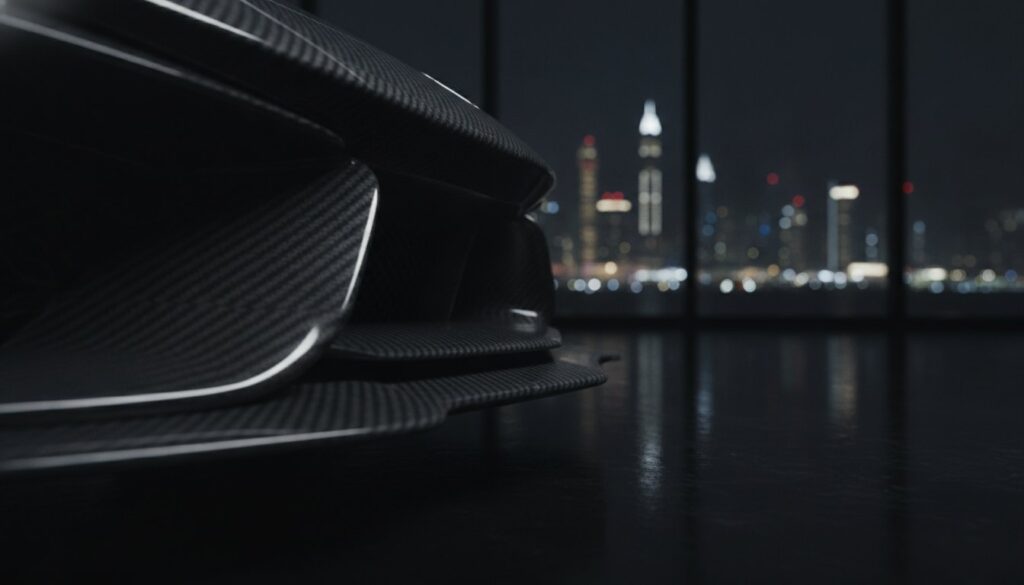
In the elite circles of the UAE automotive scene, the classic 3K twill weave has moved from a mark of distinction to a common standard. When every supercar on the road flaunts the same uniform pattern, true exclusivity requires a shift in perspective. You’ve likely felt that even your most aggressive modifications are beginning to blend into the background. It’s frustrating to invest in high-end upgrades only to worry about the intense national sun causing premature yellowing or UV degradation. You deserve a finish that remains as pristine as the day it was installed.
This 2026 guide is designed to help you master the technical and aesthetic nuances of forged carbon fiber parts to elevate your supercar’s performance and visual signature. We’ll show you how to achieve a unique, marbled aesthetic that stands out while ensuring long-term durability against extreme heat. You’ll learn the secrets of aerodynamic efficiency and why this non-linear composite is the future of bespoke artistry. From understanding the precision of Mansory kit integrations to finding expert repair solutions, we’re covering everything you need to transform your vehicle into a visionary masterpiece of form and function.
Key Takeaways
- Understand how the non-linear strength and unique marbled DNA of forged carbon fiber parts provide a level of exclusivity that traditional weaves cannot match.
- Discover how to seamlessly integrate forged components with elite Brabus and Mansory body kits for a cohesive, high-performance visual signature.
- Learn about the significant weight reduction and aerodynamic advantages gained by replacing standard panels with high-pressure forged composites.
- Identify the 2026 standards for UV protection, including advanced ceramic clearcoats designed to prevent resin yellowing in the intense national sun.
- Recognize the technical precision required for professional installation and repair to maintain the structural integrity of your vehicle’s aerodynamic profile.
What are Forged Carbon Fiber Parts? The Marbled Future of Performance
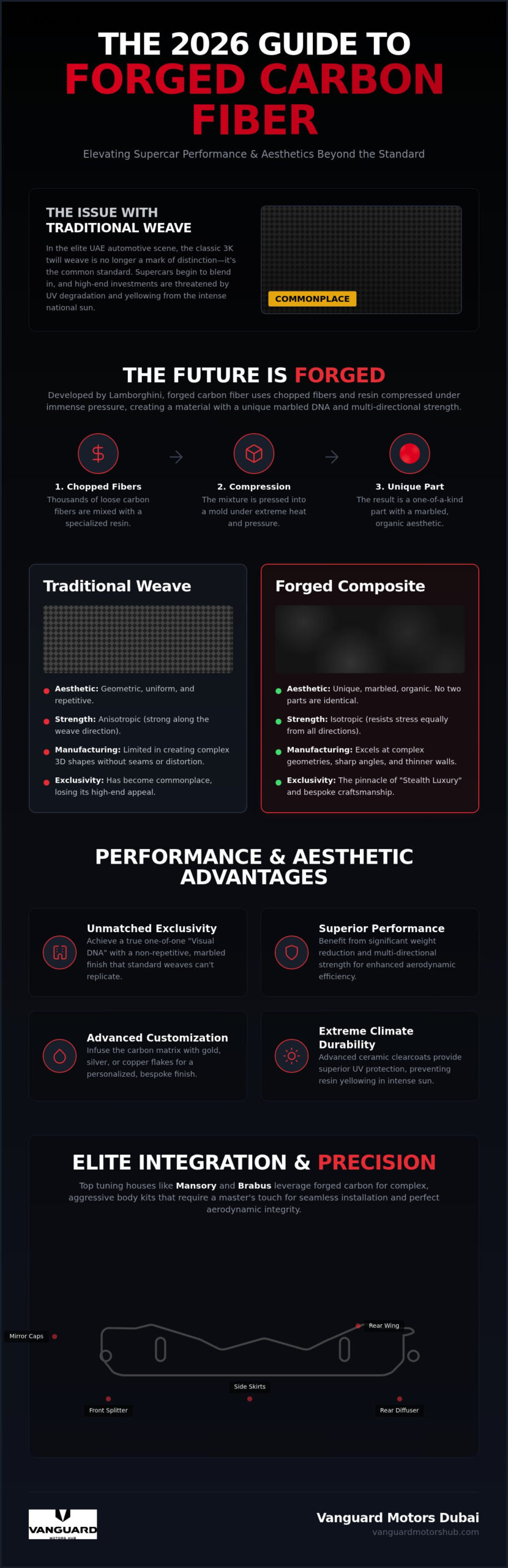
Forget the repetitive, geometric grids of the past. Traditional carbon fiber has long been the gold standard for weight reduction, but the elite automotive world has moved toward a more sophisticated solution. To understand this shift, we must look at What is Forged Composite technology. Instead of weaving long strands of carbon into a fabric, this process uses thousands of chopped carbon fibers. These fibers are mixed with a specialized resin and pressed into shape under immense pressure. The result is a material that doesn’t just perform; it tells a unique story through its marbled, organic texture.
What began as a groundbreaking innovation by Lamborghini for the Sesto Elemento has matured into the 2026 standard for supercar customization. Unlike traditional “twill” or “plain” patterns that repeat across every panel, no two forged carbon fiber parts are identical. Every hood, mirror cap, and spoiler features a distinct visual DNA. It’s the ultimate expression of “Stealth Luxury” for owners who demand exclusivity that can’t be mass-produced. In 2026, these components represent the pinnacle of bespoke engineering at Vanguard Motors Dubai.
The Science of Chopped Fibre Composites
The magic of forged carbon lies in the compression moulding process. By using chopped fibers rather than continuous sheets, engineers can achieve a much higher fiber-volume content. This translates to incredible density and strength without the bulk. One of the most significant technical advantages is isotropic strength. Traditional weaves are strongest in the direction of the threads; however, the random orientation of chopped fibers in forged parts allows them to resist stress from every direction simultaneously. It’s a level of multi-directional durability that’s essential for the high-performance demands of the national UAE driving environment.
Forged vs. Traditional Carbon Weave
The choice between forged and traditional weave is often a battle between heritage and innovation. While the classic weave offers a structured, mechanical aesthetic, forged carbon provides a fluid, marbled appearance that mimics precious stone. Beyond the looks, forged carbon allows for manufacturing flexibility that weaves simply can’t reach. It can be moulded into complex 3D geometries and sharp angles that would cause traditional fabric to bunch or tear. This precision allows for thinner, stronger walls in aerodynamic components, effectively shaving kilograms off your vehicle’s profile while maintaining structural integrity. For those pursuing the absolute peak of bespoke engineering, the transition is clear.
Why Forged Carbon Fiber Parts Define Modern Supercar Aesthetics
The shift from traditional weave to forged carbon represents a decisive move toward “Stealth Luxury.” In the highly competitive UAE automotive scene, standard carbon patterns have become ubiquitous. They no longer signal the same level of exclusivity they once did. Choosing forged carbon fiber parts allows you to break away from the predictable geometric grids of the past. The marbled, non-repetitive finish signals a commitment to bespoke craftsmanship. It’s a visual statement that your vehicle isn’t just another production model; it’s a curated piece of performance art.
One of the most compelling trends for 2026 is the ability to infuse the carbon matrix with personal flair. By utilizing Colored Forged Carbon Fiber, owners can now match their vehicle’s paint or create a striking contrast using gold, silver, or copper flakes suspended within the resin. This level of customization ensures that every aerodynamic component or engine cover is a true one-of-one masterpiece. This isn’t just about weight reduction; it’s about defining a visual identity that remains unmatched on the road.
Bespoke Kits and Forged Carbon Integration
Elite tuning houses like Mansory and Brabus have embraced this material to push the boundaries of aggressive styling. Mansory frequently utilizes the unique properties of forged carbon to create complex winglets, diffusers, and air intakes that would be nearly impossible to execute with traditional fabric. For Mercedes-Benz enthusiasts, a Brabus body kit installation often relies on forged accents to highlight the vehicle’s muscular lines. Achieving a cohesive look across the front splitter, side skirts, and rear wing requires a master’s touch in resin matching and alignment. When these elements come together, the result is a seamless transition of power and prestige.
Interior Sophistication
The 2026 market has seen forged carbon fiber parts move aggressively from the exterior into the cabin. Replacing standard plastic or wood trim with a satin-finished forged composite creates a modern, high-tech atmosphere that feels solid and cool to the touch. The tactile experience is vastly different from traditional materials, offering a sense of technical excellence that matches the car’s performance capabilities. When you pair these interior upgrades with professional leather restoration, the transformation is total. It breathes new life into the cockpit, ensuring the interior environment is as aggressive and refined as the exterior profile. If you’re ready to redefine your vehicle’s visual signature, you can consult with our bespoke conversion specialists to explore the possibilities of forged composite.
Performance Benefits: Weight, Strength, and Aerodynamics
While the visual impact of forged carbon fiber parts is undeniable, the engineering advantages are what truly define their role in the 2026 supercar market. Weight reduction remains the primary driver for performance enthusiasts. By replacing factory-standard hoods, rear wings, and mirror caps with forged composites, you can shave significant kilograms off your vehicle’s curb weight. This reduction directly translates to a sharper power-to-weight ratio, allowing for more responsive handling and improved braking performance. Every gram saved is a step toward a more agile driving experience.
Thermal stability is another critical factor, particularly in the extreme temperatures of the national climate. Forged carbon is exceptionally resistant to heat, making it the ideal material for engine covers and exhaust surrounds. Unlike traditional materials that may warp or discolor when subjected to high engine bay temperatures, forged components maintain their structural integrity and finish. This resilience ensures that your high-performance modifications remain functional and aesthetically pleasing even under heavy track use. It’s a material built to thrive where others fail.
Isotropic Strength Explained
The technical superiority of forged carbon stems from its isotropic strength. Traditional woven sheets are strong along the axis of the fibers but can be vulnerable to stress from other directions. In contrast, the randomly oriented chopped fibers in forged parts provide uniform resistance to multi-axis stress. This makes them significantly better at handling the complex loads found in safety-critical components like steering wheels and paddle shifters. By distributing force evenly through the material, forged carbon effectively reduces the risk of micro-cracking in high-vibration automotive environments, ensuring long-term reliability for your most essential controls.
Aerodynamic Efficiency
Achieving peak aerodynamic performance requires manufacturing tolerances that traditional weaves often struggle to meet. Forged composite technology allows for the creation of complex splitters and diffusers with razor-sharp edges and intricate channels. These components are vital for managing airflow and generating the massive downforce needed at high speeds. The lightweight nature of these parts also plays a role in improving 0-100 km/h acceleration times by reducing rotational mass and overall drag. Integrating these aerodynamic upgrades with supercar exhaust upgrades creates a comprehensive performance package where heat management and airflow work in perfect harmony. The result is a vehicle that doesn’t just look faster; it’s engineered to dominate every corner.
Protecting Your Investment: UV Stability and Maintenance
The intense national sun is the primary adversary of high-end composite materials. Without proper protection, the resin used in forged carbon fiber parts can succumb to UV radiation, leading to unsightly yellowing or “clouding.” This degradation doesn’t just ruin the marbled aesthetic; it can eventually compromise the structural integrity of the component. In 2026, the industry standard for combating this environmental stress is the application of advanced ceramic clearcoats. These specialized coatings provide a permanent chemical bond that filters out harmful rays while enhancing the visual depth of the carbon fragments.
For the ultimate level of security, we recommend a dual-layer approach. By combining a UV-stable resin with a high-end Paint Protection Film, you create a formidable barrier against both solar radiation and physical impacts. This synergy ensures that your splitters and mirrors remain pristine despite high-speed road debris. Maintaining this finish requires a soft-touch approach. Avoid abrasive chemicals or stiff brushes that can create micro-scratches in the clearcoat, which dulls the unique marbled signature over time. Use only pH-neutral cleaners and high-quality microfiber towels to preserve that showroom glow.
Carbon Fibre Repair and Restoration
One common concern is whether the organic pattern of forged composite can be restored after physical damage. Unlike traditional weaves, where a broken thread is nearly impossible to hide, the random nature of forged carbon actually allows for more seamless cosmetic fixes. Our specialized carbon fiber car parts repair techniques involve injecting matching resin into chips and deep scratches, followed by precision sanding and re-clearing. This process restores the structural bond and brings back the three-dimensional depth of the marbled pattern, making the previous damage virtually invisible to the naked eye.
Maintenance in Extreme Climates
Extreme heat soak is a significant factor for forged carbon fiber parts installed in engine bays or near exhaust systems. During peak summer months, these components can reach temperatures that test the limits of standard resins. Hydrophobic coatings are essential here; they don’t just repel water, but also prevent dust and oily residues from baking into the surface. We suggest scheduled inspections every six months to check for resin “gassing” or edge lifting. Proactive care ensures that your investment continues to perform at the elite level you expect. If you’ve noticed any dulling or surface irregularities, book a professional carbon health check with our technical team today.
Bespoke Forged Carbon Services at Vanguard Motors Hub
Vanguard Motors Hub stands as the national authority for owners seeking to transcend the ordinary. Installing forged carbon fiber parts requires more than just mechanical skill; it demands an artisan’s eye for symmetry and a physicist’s understanding of airflow. Our facility is engineered to handle the most prestigious marques, providing precision fitting for Ferrari, Lamborghini, McLaren, and Mercedes-Benz. We understand that at this level of automotive excellence, there’s no room for error. Every component we install is treated as a critical piece of a larger performance narrative.
Our approach is holistic and uncompromising. We don’t just bolt on aftermarket components; we integrate them into the vehicle’s existing architecture. By combining elite forged carbon installations with professional PPF and meticulous finishing, we ensure your supercar’s new visual signature is both breathtaking and durable. This commitment to technical perfection is why elite tuning houses like Brabus and Mansory are central to our conversion repertoire. We bridge the gap between raw engineering and bespoke artistry, ensuring your vehicle remains a benchmark of style on any national road.
The Installation Process
Achieving factory-level panel gaps is our baseline standard. When dealing with the complex geometries of forged composite, aerodynamic alignment is essential to maintain high-speed stability. Our technicians specialize in custom resin tinting and finish matching, ensuring that bespoke projects feel like an original factory option rather than an afterthought. To truly elevate the result, we recommend integrating your new forged carbon fiber parts with our specialist supercar detailing. This process eliminates microscopic surface imperfections and ensures the marbled depth of the carbon fragments is displayed with maximum clarity under the intense UAE sun.
Start Your Customisation Journey
Consulting with our master technicians allows you to explore the infinite configurations available for your vehicle. Whether you’re looking for subtle interior accents or a full-body aerodynamic overhaul, we provide the expert guidance needed to make informed decisions about your automotive assets. Choosing a national service provider ensures you have access to specialized repair and maintenance facilities long after the initial installation is complete. Your vision for a unique, high-performance masterpiece deserves the care of a visionary leader. You can contact Vanguard Motors Hub via WhatsApp to discuss your forged carbon project and begin the transformation of your supercar today.
Redefining the Future of Your Supercar’s DNA
Choosing forged carbon fiber parts is a decisive move toward automotive exclusivity. We’ve seen how this marbled composite offers more than just a unique aesthetic; it provides the isotropic strength and weight reduction necessary for elite performance in 2026. Whether you’re integrating a Mansory aerodynamic profile or seeking the precision of a Brabus conversion, the technical details matter. From UV-stable clearcoats to meticulous panel alignment, your vehicle’s transformation requires a partner who understands the intersection of art and engineering.
Vanguard Motors Hub remains the national leader in luxury automotive protection and bespoke conversions. Our expert composite technicians specialize in the installation and repair of high-end kits, ensuring that every edge is sharp and every finish is flawless. We’re committed to maintaining the highest standards of excellence for the UAE’s most prestigious vehicles. It’s time to move beyond the common weave and embrace a visual signature that’s truly your own.
Elevate your vehicle with bespoke forged carbon parts from Vanguard Motors
Frequently Asked Questions
What is the main difference between forged carbon and traditional carbon fiber?
The primary difference lies in the manufacturing architecture. While traditional carbon fiber utilizes a structured weave pattern, forged carbon fiber parts are crafted from thousands of chopped fibers compressed into a mold. This results in a unique, marbled visual signature where no two components are identical. Beyond aesthetics, the forging process allows for the creation of complex three-dimensional geometries that traditional fabric sheets simply cannot achieve without structural compromise.
Is forged carbon fiber stronger than standard woven carbon?
Forged composite offers a specific advantage known as isotropic strength. Standard woven carbon is exceptionally strong along the direction of the weave but can be vulnerable to stress from other angles. Because the chopped fibers in forged parts are oriented randomly, they provide uniform resistance to multi-axis stress. This makes the material ideal for safety-critical components and high-vibration environments where structural integrity must be maintained from every possible direction of load.
Can forged carbon fiber parts be repaired if they are cracked?
Yes, forged composite is often easier to restore than traditional weaves. If a woven part is cracked, the broken threads are nearly impossible to align perfectly during repair. However, the random, organic pattern of forged material allows our technicians to inject matching resin and chopped fibers into the damage site. Once sanded and re-cleared, the repair becomes virtually invisible, effectively restoring both the structural bond and the original marbled depth of the component.
Why is forged carbon fiber becoming so popular for supercars in 2026?
In 2026, the demand for forged carbon fiber parts is driven by a shift toward bespoke exclusivity. Traditional weaves have become common in the luxury sector, making the unique, non-linear patterns of forged composite the new mark of distinction. Its ability to be molded into aggressive aerodynamic shapes makes it the preferred choice for elite tuning houses. It represents the perfect intersection of advanced material science and the desire for a one-of-one automotive identity.
Does forged carbon fiber yellow over time in the sun?
Untreated resin can yellow or cloud when exposed to the intense national sun. However, we prevent this degradation by using high-grade, UV-stable resins and advanced ceramic clearcoats. These protective layers act as a permanent shield against solar radiation. For maximum longevity, we recommend integrating Paint Protection Film (PPF), which provides a physical and chemical barrier that keeps the carbon fragments looking deep and clear for years despite extreme heat exposure.
How much weight can I save by switching to forged carbon fiber parts?
Switching to forged components can reduce the weight of specific panels by up to 50% compared to traditional steel or aluminum. Replacing a factory hood, rear wing, or mirror caps can shave significant kilograms off your vehicle’s total mass. This reduction in curb weight directly improves the power-to-weight ratio, resulting in sharper handling and more responsive acceleration. It’s a strategic upgrade for those looking to maximize performance without compromising structural rigidity.
Is forged carbon fiber more expensive than traditional carbon fiber?
Forged composite typically commands a higher price point than standard 3K twill weave. This is due to the sophisticated compression molding process and the higher cost of the specialized raw materials involved. While standard weaves are more cost-effective for simple surfaces, the engineering required to produce complex forged shapes is more intensive. For most enthusiasts, the investment is justified by the material’s unique visual DNA and its superior multi-directional strength profile.
What is the best way to clean and maintain forged carbon parts?
Maintenance requires a gentle, professional approach to preserve the clearcoat’s clarity. Use only pH-neutral automotive shampoos and high-quality microfiber towels to avoid creating fine scratches that can dull the finish. It’s best to avoid high-pressure washers at close range and abrasive polishing compounds. Applying a high-end ceramic coating or PPF is the most effective way to simplify cleaning, as these hydrophobic layers prevent dust and environmental contaminants from bonding to the surface.