
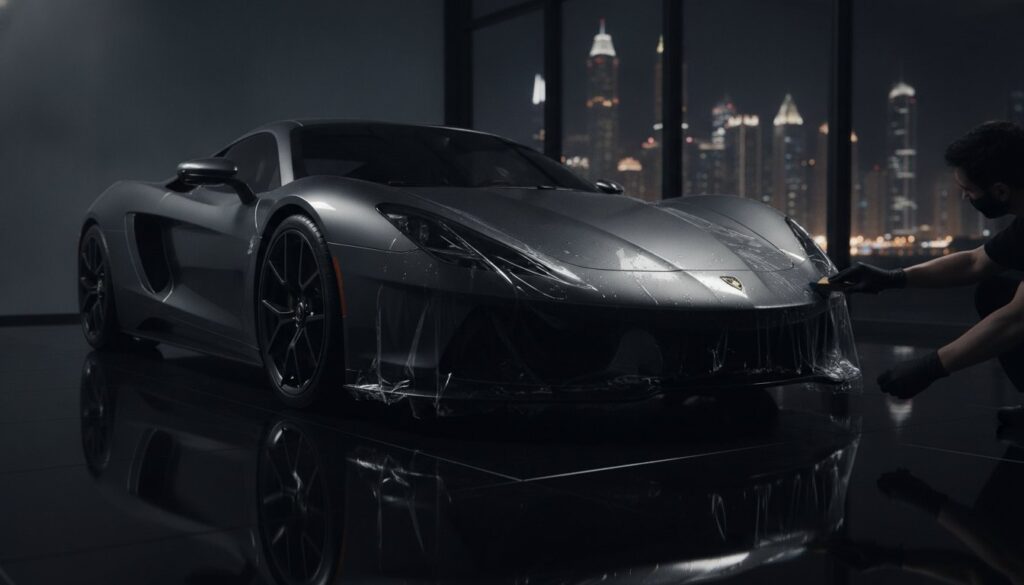
Did you know that a premium vehicle can lose up to 30% of its market value in just twenty-four months due to environmental exposure alone? Learning how to maintain car value in the Middle East is no longer about simple oil changes. It’s a tactical defense against a climate that actively tries to dismantle your investment. Between the relentless 50°C heat that cracks fine leather and the abrasive sandstorms that strip factory paint, the desert is a relentless adversary for any luxury owner.
We understand that you view your vehicle as more than just transport. It’s a high-performance asset that deserves to remain in showroom condition regardless of the terrain. This guide reveals the professional-grade strategies used by elite collectors to shield their cars from the elements while commanding the highest possible prices on the secondary market. You’ll discover how to deploy self-healing Paint Protection Film (PPF) as depreciation insurance and why leather restoration is vital for cabin integrity. We’ll also preview how bespoke conversions can differentiate your vehicle in a crowded 2026 marketplace, ensuring your car looks as flawless as the day it left the factory.
Key Takeaways
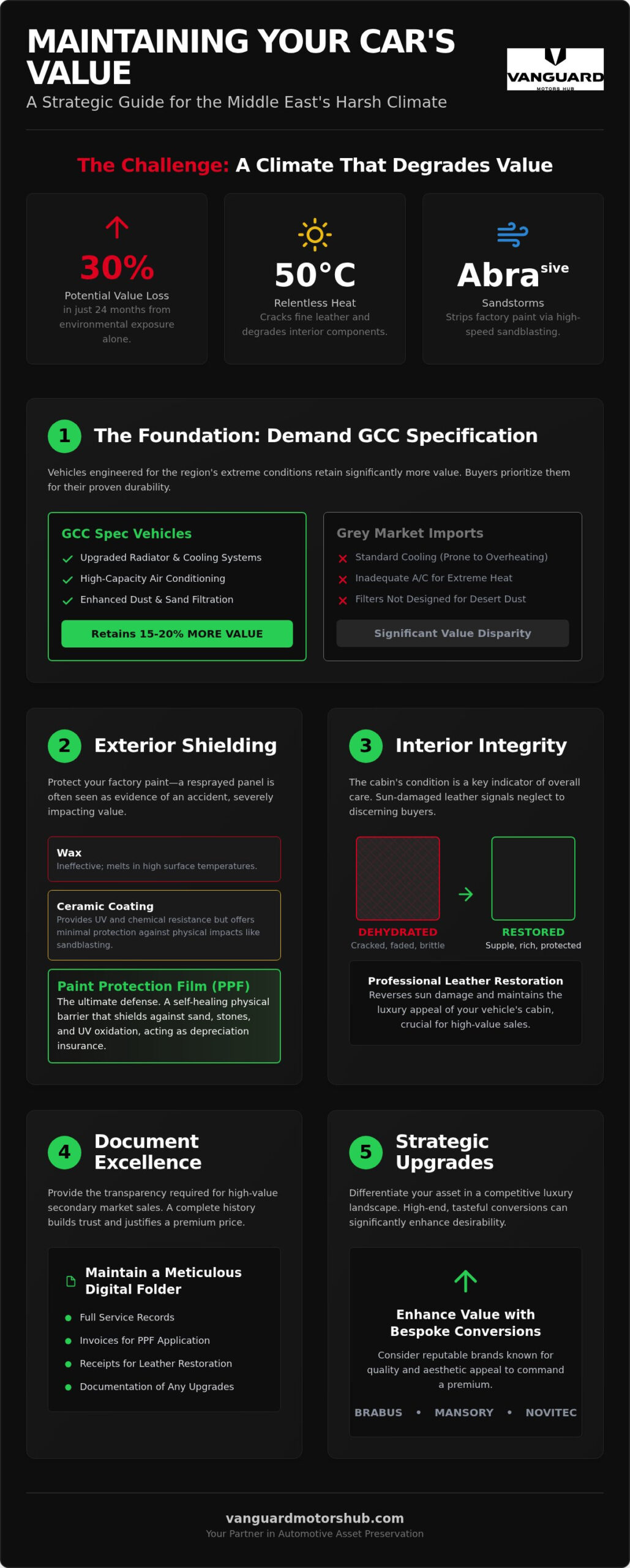
- Prioritize GCC-specification vehicles to ensure your car’s cooling and filtration systems are engineered for the region’s extreme thermal demands.
- Learn how to maintain car value in the Middle East by installing self-healing Paint Protection Film (PPF) to shield your factory paint from sandblasting and UV oxidation.
- Utilize professional leather restoration to reverse the dehydrating effects of the desert sun and maintain the luxury appeal of your vehicle’s cabin.
- Maintain a meticulous digital folder of all service records and protection applications to provide the transparency required for high-value secondary market sales.
- Consider strategic, high-end conversions from brands like Brabus or Mansory to differentiate your asset in a competitive luxury landscape.
Understanding the Middle East Automotive Market: GCC Spec and Resale Drivers
Understanding how to maintain car value in the Middle East begins with recognizing that the local market operates on a unique set of rules. In this region, a vehicle is more than a tool for mobility; it’s a high-value asset subject to intense scrutiny. Buyers are exceptionally discerning, often prioritizing a vehicle’s regional pedigree and aesthetic perfection over its mileage. If you want to command the highest price in the secondary market, you must treat your vehicle as a preserved specimen rather than a daily driver.
The GCC Spec Advantage
The foundation of resale excellence is the “GCC Spec” designation. Vehicles must meet the technical regulations set by the GCC Standardization Organization (GSO) to ensure they can handle the unique environmental stressors of the region. Regional buyers prioritize these models because they feature upgraded radiators, high-capacity air conditioning units, and enhanced filtration systems designed for fine desert dust. A grey market import might look identical on the surface, but it lacks the thermal resilience required for 50°C summers. This technical disparity creates a significant value gap, with GCC spec cars often retaining 15% to 20% more value than their imported counterparts. GCC Spec is the gold standard for regional resale value, representing a vehicle engineered specifically to survive and thrive under the Arabian Peninsula’s extreme thermal and atmospheric conditions.
Market Sentiment and Aesthetic Perfection
The Middle East’s “showroom culture” dictates that a car must look untouched by the elements to fetch a premium. First impressions are final in this market. A single visible stone chip on the hood or a clouding headlight lens can cost you thousands during a negotiation. Local buyers view these minor imperfections as signs of general neglect, leading them to wonder if mechanical maintenance was similarly ignored.
Paint integrity is particularly critical. There’s a profound preference for pristine, unmodified factory paint. In local inspections, a resprayed panel is often interpreted as evidence of a previous accident, regardless of the actual reason for the work. This is why learning how to maintain car value in the Middle East involves shielding the original clear coat at all costs. Protecting that factory finish isn’t just about vanity; it’s a calculated financial move. A car with documented original paint across all panels will always outperform a resprayed vehicle, even if the respray was done to a professional standard. You aren’t just selling a car; you’re selling the peace of mind that comes with a flawless history.
Exterior Preservation: Shielding Against Sand and UV Oxidation
High-speed desert winds aren’t just a nuisance; they’re a powerful abrasive force. Sandblasting occurs when microscopic silica particles collide with your clear coat at highway speeds. This constant bombardment creates micro-pitting that dulls even the most vibrant factory finishes. Over time, these structural imperfections can significantly affect resale value by making a mechanically sound vehicle look neglected. UV radiation adds another layer of complexity. Intense solar energy breaks down paint polymers, leading to oxidation and color fading. While white and silver vehicles are popular for their heat-reflective properties, they still require a physical barrier to survive the Middle Eastern climate.
Traditional carnauba waxes are virtually useless in this environment. They often melt when surface temperatures exceed 60°C. Ceramic coatings provide a sophisticated chemical bond and excellent hydrophobic properties, but they offer little protection against physical impact. For those serious about how to maintain car value in the Middle East, a multi-layered defense is essential. Combining high-end coatings with physical shields is the only way to ensure a showroom finish remains intact after years of desert exposure.
The Role of Paint Protection Film (PPF)
Modern paint protection film has evolved into a self-healing armor. These advanced thermoplastic polyurethane layers use ambient heat to “heal” swirl marks and light scratches caused by sand. For luxury collectors, PPF is a financial instrument that locks in the car’s aesthetic condition. Full-body coverage is particularly effective for high-speed motorway driving, where the front fascia acts as a lightning rod for debris. It transforms a vulnerable asset into a protected investment that requires minimal paint correction during resale.
Peelable Paint and Aesthetic Flexibility
Peelable paint applications offer a unique advantage over traditional vinyl wraps in extreme heat. Unlike vinyl, which can become brittle or leave adhesive residue after years of 50°C exposure, peelable paint provides a seamless, spray-on finish that protects the original factory coat. It allows for complete aesthetic transformation without the risks associated with permanent resprays. If you’re deciding between different protection methods, you should explore our guide on car wrap vs ppf to determine which fits your specific needs. Protecting your vehicle’s exterior is a proactive step toward securing its future market position. To design a custom defense strategy for your vehicle, you can consult with our preservation experts.
Interior Restoration: Combating Heat-Induced Leather Degradation
The greenhouse effect inside a parked vehicle is a silent predator for luxury cabins. When ambient temperatures reach 45°C, the interior of a car can spike to over 70°C within an hour. This extreme thermal soak doesn’t just make the cabin uncomfortable; it actively destroys the structural integrity of your upholstery. High heat evaporates the natural oils within premium hides, leading to brittle surfaces and failed stitching. If you’re strategizing how to maintain car value in the Middle East, you must view the cabin as a climate-controlled environment that requires constant defense. High-performance UV window tinting is a mandatory upgrade. It serves as a thermal barrier that blocks the radiation responsible for warping dashboards and cracking exotic wood veneers.
Sensory appeal is equally vital for resale success. Prospective buyers are often swayed by the “new car smell,” which is frequently lost to dust accumulation or cabin odors. Deep detailing paired with ozone treatment effectively neutralizes bacteria and odors at the source rather than masking them with artificial scents. This meticulous approach ensures the cabin remains an inviting, high-value space that reflects a history of elite care.
Advanced Leather Care and Repair
A pristine interior is consistently ranked as the second most influential factor in luxury car appraisals, trailing only mechanical health. Once leather begins to harden or develop fine hairline cracks, generic conditioners found at local retailers won’t provide a solution. Professional leather restoration involves a hide rejuvenation process that replenishes moisture at a molecular level. This restoration returns the leather to its original matte finish and supple texture, preventing the “greasy” look associated with low-quality treatments. Mastering how to maintain car value in the Middle East means ensuring your seats look as if they’ve never seen a summer sun.
Protecting Carbon Fiber and Trim
Modern supercars and luxury SUVs rely heavily on carbon fiber for both performance and aesthetics. However, intense UV exposure can cause the clear resin binding these fibers to yellow or delaminate over time. This aesthetic degradation can be a deal-breaker for high-end collectors. Expert carbon fiber car parts repair can restore the structural and visual clarity of these components, saving you from the astronomical costs of total interior replacement. We also emphasize the preservation of original Alcantara and exotic wood finishes, ensuring every tactile surface remains flawless for the next owner’s inspection.
Documenting Excellence: The Power of Service and Protection Records
In a market where aesthetic perfection is the expected baseline, documentation is the ultimate differentiator. You can’t just claim your vehicle was pampered; you must prove it with surgical precision. If you’re serious about how to maintain car value in the Middle East, your service history must be beyond reproach. A meticulously organized digital and physical folder containing every receipt, inspection report, and protection certificate is mandatory for high-value sales. This isn’t just about tracking oil changes. It’s about providing a comprehensive narrative that justifies a premium asking price over similar models.
Comprehensive supercar detailing logs act as a diary of elite ownership. They show that the vehicle was treated with specialized care, not just subjected to generic, abrasive car washes. Professional inspection reports from recognized centers provide an objective third-party validation. These reports can shut down aggressive low-ball offers instantly by confirming the car’s structural and cosmetic integrity.
Transferable Warranties as a Sales Tool
Buyers in 2026 aren’t just looking for a car; they’re looking for security. An active, transferable warranty for Paint Protection Film (PPF) or a ceramic coating maintenance plan is a powerful closer. It signals that the protection isn’t just a temporary cosmetic addition but an ongoing commitment to quality. When you use a reputable, nationally recognized center, you’re buying credibility that transfers directly to the next owner. Presenting a well-structured “Car Bio” that highlights these active protections turns a negotiation into a simple confirmation of value. A proper bio should include high-resolution photos of the protection application process, proving the film was tucked correctly and the paint was corrected prior to installation.
The Importance of Genuine Parts
Trust is fragile in the secondary market. Using non-OEM parts for mechanical repairs or cosmetic fixes can slash up to 30% off your vehicle’s market value. Discerning buyers and showroom inspectors will spot third-party sensors or non-standard trim immediately. You must document every specialized upgrade, from professional exhaust modification to carbon fiber repairs, ensuring they meet factory standards. Documentation is the bridge between “used” and “pre-owned excellence”. It transforms a machine into a verified investment. Learning how to maintain car value in the Middle East requires this level of administrative discipline to ensure your financial return matches your vehicle’s performance.
To ensure your vehicle’s history is as flawless as its finish, contact our specialists for a comprehensive preservation audit.
Strategic Upgrades: Enhancing Value Through Bespoke Conversions
In the luxury automotive sector, not all modifications are created equal. While generic aftermarket parts often act as a red flag for buyers, bespoke conversions from world-renowned houses offer a rare opportunity to increase desirability. Understanding how to maintain car value in the Middle East requires a strategic approach to customization. You must differentiate between amateur additions that compromise factory engineering and professional-grade enhancements that elevate the vehicle’s status. In a market where exclusivity is currency, the right conversion can turn a standard model into a highly sought-after collector’s item.
The Investment Value of Elite Body Kits
Elite conversions from brands like Brabus and Mansory hold their value far better than common modifications because they’re perceived as re-engineered extensions of the original brand. A professional Brabus body kit installation provides a “limited edition” feel that targets a niche, high-paying buyer who prioritizes performance and prestige. These kits are designed with precision, but their value is entirely dependent on the quality of the integration. Professional installation is non-negotiable; it prevents structural damage and ensures that the aerodynamic properties of the vehicle remain intact. This technical excellence is what allows these conversions to command a premium on the secondary market.
We’ve also seen a significant rise in the popularity of SUV conversions, particularly with the Jetour G700 and T2 kits. These modifications tap into the region’s deep-seated passion for rugged luxury and high-performance off-roaders. To protect your investment, ensure that any aesthetic changes are either professionally integrated or fully reversible. This flexibility allows you to cater to specific buyer tastes without permanently altering the vehicle’s core identity. Maintaining this balance is essential for ensuring your car stands out for the right reasons during a resale inspection.
Cosmetic Perfection as a Final Step
Before your vehicle hits the secondary market, it must be “lens-ready.” High-end marketplaces are visually driven, and even the most expensive conversion won’t save a car with scuffed alloys or minor door dings. Professional cosmetic car repair is the final, essential step in your resale strategy. This includes alloy rim repair, precision paintless dent removal, and interior upholstery touch-ups that restore a showroom-new appearance.
Final detailing before listing should include a deep engine carbon cleaning and a refresh of all carbon fiber accents. These small, meticulous details signal to a buyer that the car has been maintained with an uncompromising standard of excellence. Don’t leave your resale price to chance; invest in the final polish that justifies a top-tier valuation. Ready to protect your investment? Consult with Vanguard Motors Hub today to design a preservation and enhancement strategy that maximizes your car’s long-term market value.
Secure Your Asset’s Future Market Performance
Preserving a luxury vehicle in this region requires a shift from passive ownership to active, tactical defense. You’ve discovered that shielding your factory paint with self-healing PPF and restoring interior leather are essential protocols to combat the desert’s extreme atmospheric demands. These aren’t just aesthetic enhancements; they’re calculated financial decisions that lock in your car’s equity. By prioritizing GCC-spec engineering and maintaining a meticulous digital history of every professional detailing session, you position your vehicle at the absolute top of the secondary market.
Mastering how to maintain car value in the Middle East ensures that your high-performance asset remains a liquid investment. As specialists in luxury and supercar protection and an elite Brabus and Mansory conversion center, we provide the technical expertise required to outpace depreciation. Whether you need premium national detailing coverage or a bespoke conversion to differentiate your vehicle, the right professional partnership is your greatest advantage. Your car represents your standard of excellence; let’s ensure it stays that way for years to come.
Secure Your Vehicle’s Future Value with Vanguard Motors Hub
Frequently Asked Questions
Does PPF really help with the resale value of a car in the Middle East?
Yes, Paint Protection Film (PPF) is a primary driver of resale value because it preserves the original factory paint. In a market where resprayed panels suggest accident history, documented PPF installation proves the exterior is in showroom condition. It shields against sandblasting and stone chips, allowing you to command a premium price. Discerning buyers view PPF as a form of depreciation insurance that validates the vehicle’s elite maintenance history and aesthetic integrity.
What is the most important factor in maintaining a car’s value in this region?
The single most important factor is a combination of GCC-specification compliance and a documented history of climate-specific protection. Understanding how to maintain car value in the Middle East requires ensuring the cooling and filtration systems meet regional standards. When paired with professional protection records, this technical pedigree provides the transparency and reliability that local buyers demand. Without GCC specs, even a pristine vehicle faces steep depreciation due to thermal risks and mechanical incompatibility.
How often should I detail my car to keep its value high?
You should invest in professional luxury car detailing at least once every three months to neutralize environmental contaminants. The intense heat and fine desert dust can bond to surfaces if left untreated. Frequent detailing ensures that microscopic sand particles don’t lead to micro-scratches during regular washing. Maintaining this schedule keeps the cabin’s tactile surfaces supple and the exterior finish deep, which are essential for a high-value appraisal during a professional inspection or showroom evaluation.
Will installing a Brabus or Mansory kit lower my car’s resale price?
Professional Brabus or Mansory kit conversions often increase desirability if they’re executed by an elite conversion center. Unlike generic aftermarket parts, these high-end modifications are recognized as prestigious re-engineering. They target a niche segment of collectors willing to pay for exclusivity. However, you must ensure the installation is flawless and documented. When performed correctly, these conversions transform a standard model into a unique asset that stands out in a competitive luxury market without compromising structural integrity.
Can I restore leather that has already been cracked by the sun?
Yes, professional leather restoration can effectively reverse the hardening and cracking caused by the greenhouse effect in parked cars. Specialists use hide rejuvenation processes to replenish the essential oils lost to extreme heat. This process returns the leather to its original matte finish and suppleness. While prevention is ideal, high-end restoration ensures that a neglected cabin can be returned to showroom condition before you list it for sale, significantly improving the vehicle’s overall interior appraisal.
Is ceramic coating enough to protect against sandstorms?
Ceramic coating provides excellent chemical resistance and UV protection, but it isn’t a physical shield against sandstorms. High-speed desert winds carry abrasive silica that can penetrate thin ceramic layers. For total protection, you should combine ceramic coating with Paint Protection Film (PPF). This multi-layered approach ensures the surface is both hydrophobic and impact-resistant. Relying on ceramic alone leaves your clear coat vulnerable to the pitting and dulling effects of sandblasting over long-term highway driving.
Does a non-GCC spec car have any resale value in the UAE?
Non-GCC spec cars retain some resale value, but they typically trade at a significant discount compared to regional models. Buyers are wary of grey market imports due to potential issues with cooling capacity and fuel grade compatibility. Learning how to maintain car value in the Middle East involves recognizing that these vehicles are often harder to finance and insure. To maximize value for an import, you must provide even more rigorous documentation of its mechanical health and regional adaptation.
How does peelable paint differ from a regular car wrap in terms of protection?
Peelable paint offers a seamless, spray-on barrier that provides superior heat resistance compared to traditional vinyl wraps. Unlike vinyl, which can become brittle or leave adhesive residue after years of exposure to 50°C heat, peelable paint remains flexible. It protects the original factory coat from UV oxidation and light abrasions while allowing for complete aesthetic transformation. This makes it an ideal solution for owners who want to change their vehicle’s look without compromising its long-term market value.